

(click to view full)
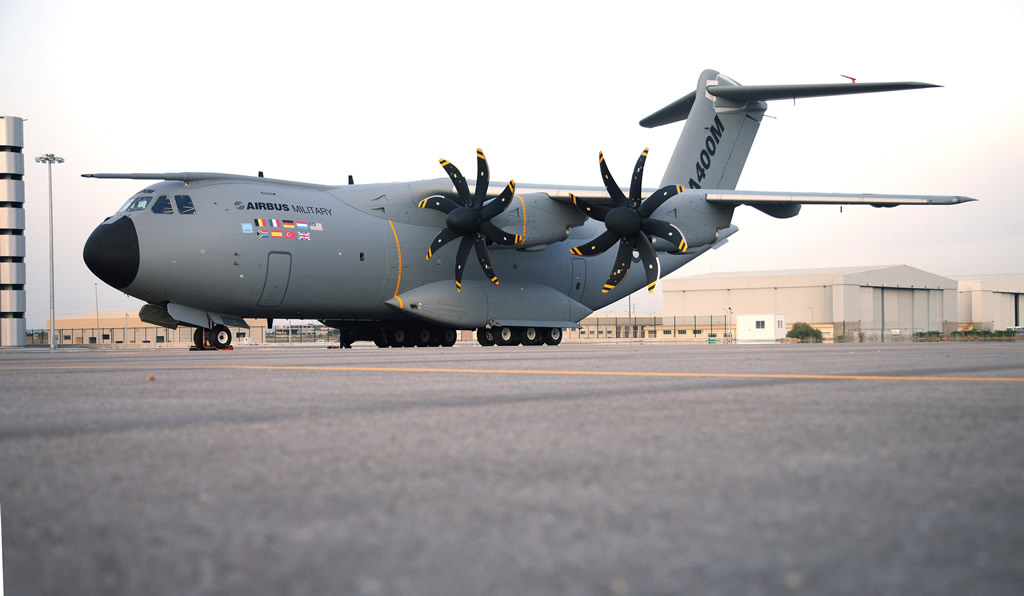
In April 2005, South Africa’s Public Enterprises Minister Alec Erwin expected the cost of the SAAF’s 8 planned Airbus A400M medium-heavy military transport aircraft to be EUR 830 million. That converted to R 6.5 billion at those exchange rates, or about $177.75 million per plane in American dollars. South Africa reportedly intended to take delivery of 8 of the A400Ms from 2010-2014, with a further 6 on option. Ordering those additional 6 aircraft would reportedly have pushed the total contract value to EUR $1.5 billion, or about R11.9 billion at those exchange rates. When the deal was signed in December 2006, the price for 8 aircraft and initial fielding had risen to R 17.646 billion, or almost $2.5 billion: about $308 million per plane.
Meanwhile, South Africa bit the bullet and decided to upgrade its 8-9 aged C-130B Hercules planes. The first SAAF C-130Bs were delivered in 1963, and badly needed additional upgrades and refurbishment.
Subsequent delays to the A400M program were set to either extend the C-130Bs’ service, or force reliance on charters, even as the A400M’s likely costs grew. That SAAF aerial uncertainty has only grown, now that South Africa has become the first country to pull out of the A400M program.
The A400M and South Africa
(click to view full)
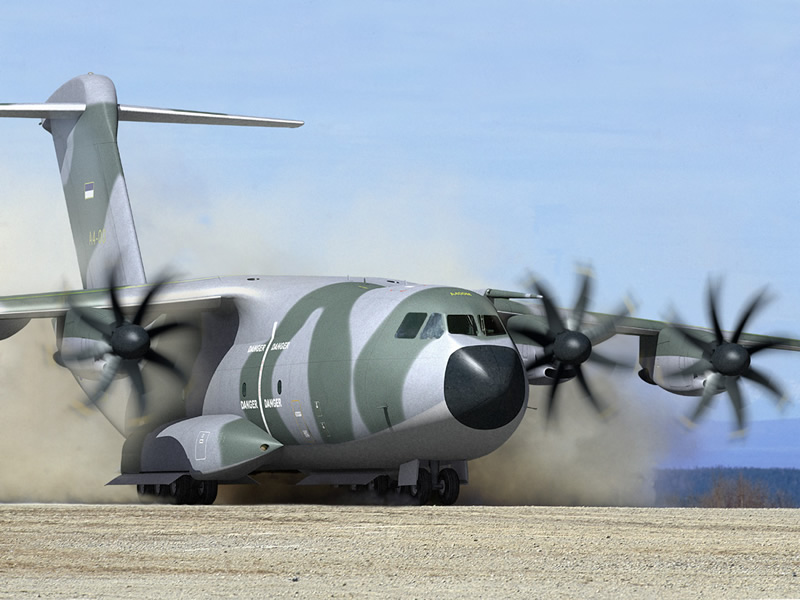
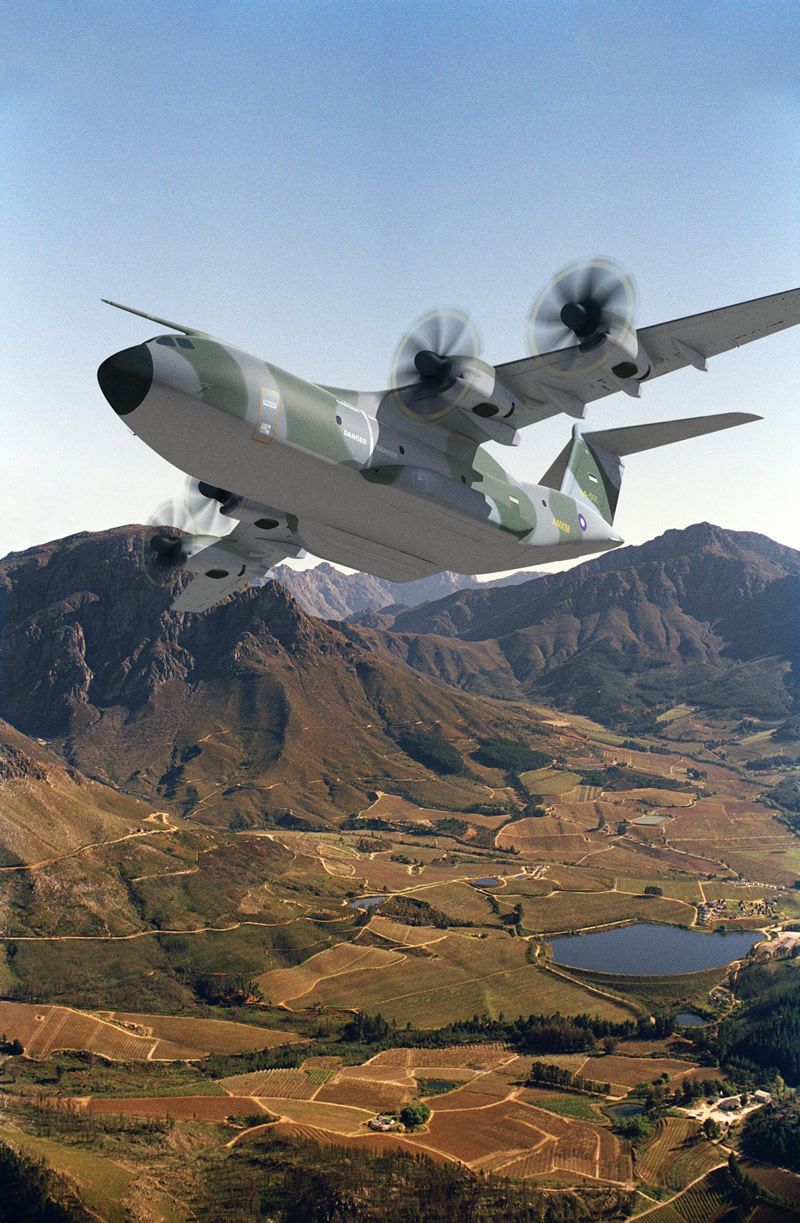
Airbus’ A400M is a EUR 20+ billion program that aimed to repeat Airbus’ civilian successes in the military market. A series of smart design decisions were made around capacity (35-37 tonnes/ 38-40 US tons, large enough for survivable armored vehicles), extensive use of modern materials, multi-role capability as a refueling tanker, and a multinational industrial program; all of which leave the aircraft well positioned to take overall market share from Lockheed Martin’s C-130 Hercules. If the USA’s C-17 is allowed to go out of production, the A400M would also have a strong position in the strategic transport market, with only Russian IL-76 and AN-124 aircraft as competition.
To date, 184 orders have been placed beyond South Africa by Germany (60), France (50), Spain (27), Britain (25), Turkey (10), Belgium (7), Malaysia (4), and Luxembourg (1). Chile has expressed interest in buying 3, but signed no contract.
South Africa needs a certain amount of airlift, but its land forces are fairly mobile on the country’s own terrain using predominantly wheeled vehicles. Transport aircraft are especially useful to the country on peacekeeping operations within Africa, where South Africa has one of the continent’s strongest militaries and largest economies. Those deployments demand rapid delivery of supplies, to areas with very poor transportation infrastructure, over or through areas where security ranges from poor to nil. The A400M’s capacity would allow South Africa to transport any of its armored vehicles except Olifant tanks and GV6 self-propelled artillery, load helicopters with minimal tear-down, and even extend its forces reach using aerial refueling pod additions.
It also offered an opportunity to South Africa’s aerospace industry. Partnership in this global program would allow South African firms to play a small role only, but it would be a small role in a large international project, which was using cutting-edge designs and materials. The required knowledge transfer and technical upgrades were attractive to South African industry, even as the large contracting opportunities proved attractive to the country’s politicians.
The country signed a letter on intent in December 2004, followed by an unfinalized agreement in April 2005 and a finalized contract in December 2006.
The negotiated cost of South Africa’s A400M fleet was high. A combination of delays to the A400M project and insistence by EADS that the development contract with its government customers be rebalanced, threatened to leave South Africa shouldering an inoperative C-130B air transport fleet and higher replacement costs. All at a time when South Africa is struggling with the global recession and large budget deficits. To make matters worse, the contract amount and process were coming under political fire from both South Africa’s nascent opposition party, and elements within the ANC’s own coalition.
In November 2009, South Africa’s government responded to these pressures by saying they would cancel the A400M contract, and explore other solutions.
Contracts and Key Events
(click to view full)
There are a number of South African participants in the A400M program, but the 2 biggest are the Denel Saab Aerostructures joint venture, and Aerosud.
DSA is the design authority for 2 of the A400M’s top shells, which sit in front of and behind the center wing box fuselage section, and for the aluminum/composites wing-fuselage fairings. They also contribute the ribs and spars for the tail fin, and center wing box structural components. The firm expected revenue of R 13 billion from its A400M activities over the next 15 years.
Aerosud is mainly responsible for secondary structures like linings for the nose fuselage, cargo hold, and cockpit, as well as the cockpit rigid bulkhead, nose fuselage galleys, and the wing tips which will contain some defensive systems. That workshare has been estimated at about R 1.5 billion.
Nov 5/09: South Africa’s government announces that they are pulling out of the A400M program, which was on pace to deliver its first aircraft to South Africa in 2014-2016, instead of 2010 as originally planned:
“Cabinet decided to terminate the contract to purchase eight A400 Airbus strategic lift aircraft. This decision follows a review of the contract by the Ministries of Defence and Military Veterans, Finance, Trade and Industry, Science and Technology and Public Enterprises. The termination of the contract is due to extensive cost escalation and the supplier’s failure to deliver the aircraft within the stipulated timeframes. Armscor will be instructed to terminate the programme as soon as possible.
The cost escalation would have placed an unaffordable burden on the taxpayer at a time when the national fiscus is under pressure due to the economic downturn. An amount of R2.9 billion [DID: about $380 million/ EUR 256 million] will be refunded to National Treasury as per the contract provisions.”
Airbus spokespeople express surprise, and the Democratic Alliance Party calls for an investigation of the deal. Meanwhile Denel Saab Aerostructures does not see the cancellation having much effect on their business in the short term. DSA is the design authority for 2 of the A400M’s top shells, which sit in front of and behind the center wing box fuselage section, and for the aluminum/composites wing-fuselage fairings. Canceling those contract would force another firm to re-design those parts, then go through the extensive testing that all aerostructures must face. With the program already under time pressure, that’s a medium term threat at best. Aerosud may be more vulnerable.
The government’s announcement does not discuss any proposed alternative airlifter. Obvious contenders for near-term delivery would include Lockheed’s C-130J, Antonov’s AN-70 or AN-74, China’s Y-8, or possibly smaller airlifters like the C-27J. Another option would be participation in a development program with a delivery horizon of about 2015-2018 like Brazil’s KC-390, or the Russo-Indian Irkut/HAL MRTA; South Africa has close defense and diplomatic relations with both countries. South Africa’s defenceWeb does report that:
“Meanwhile, an industry source says a Lockheed Martin sales-team was recently in SA and was overheard to say there was a local requirement for five of the latest C130J variant of the aircraft. SA currently operates eight of the early B-models. “
See also Democratic Alliance Party release | COSATU release | Defense News | South Africa’s defenceWeb | South Africa’s defenceWeb on industrial impact | Flight International | Reuters Africa | Reuters, via Forbes | Wall St. Journal |
Oct 29/08: South Africa’s Engineering News reports that reports of penalties to Denel Saab Aerostructures for non-performance aren’t true:
“Chapter 4 of South Africa’s Medium Term Budget Statement, released on Tuesday, under the heading “Revised expenditure estimates, 2009/10,” stated “R192-million for Airbus’s (sic) claim against Denel Saab Aerostructures, subject to verification, for DSA’s failure to meet performance targets as part of the 2004 acquisition of eight A400M aircraft”.
“Airbus can confirm that there are definitely no penalties being invoked against DSA, or against Aerosud for that matter,” states European group local spokesperson Linden Birns. “On the contrary, we’ve made more resources available to both companies, to help them meet their performance targets.”… Further, the Department of Public Enterprises (DPE) and DSA have jointly issued a statement affirming that “DSA has met its targets in terms of its contracts” for the A400M.”
A subsequent Engineering News report clarified that the R192 million funding was for aerostructure testing, which must be repeated if components are redesigned. Something that often happens during a program:
“DSA has already contributed to addressing one of the problems faced by the A400M programme – weight… “Our first design was too heavy, but now we’ve gotten the weight down to Airbus’ target. The weight component was reduced by reducing the number of component parts by increasing the complexity of machining to manufacture larger components… The greater saving was in changing material to composites from aluminium which is lighter.”
Oct 20/09: The Democratic Alliance Party proposes a motion in South Africa’s parliament to establish a multiparty ad hoc committee to investigate the Airbus A400M arms deal. A decision is later taken to shelve the proposal, pending the announcement of the final decision to proceed or terminate the Airbus A400M arms deal, following an agreement by members of the Portfolio Committee on Defence and Military Veterans. The DA Party protests in this release.
Oct 16/09: The Democratic Alliance Party issues a formal release, and goes on the offensive. News reports indicate that this position is backed by some organizations with in the ANC’s political constituency, like COSATU. From the release:
“Yesterday the minister claimed that information about the dodgy Airbus A400M arms deal should not have been made public because it was embarrassing and compromised diplomatic relations. But it now emerges that the minister was briefed and informed about the Airbus A400M deal… The key question is this: why, if the minister knew about the massive risk posed by the Airbus A400M arms deal, was the parliamentary portfolio committee on defence and military veterans not informed? The latest revelations about the Airbus A400M arms deal raise even more questions including:
* whose interests were really served with revelations today that deputy correctional services minister Hlengiwe Mkhize and former Major-General Jackie Sedibe are directors of Aerosud, a local company with an interest in the Airbus A400M arms deal;
* what is the real cost of the eight transport aircraft, given the Airbus claim that the R47 billion price tag is exaggerated;
* why was there a failure to provide for maintenance costs of the transport aircraft; and
* why in the first place was there no tender process for the acquisition of the eight Airbus A400M aircraft for the South African Air Force?”
According to an IOL story, Armscor’s general manager of acquisitions Sipho Mkwanazi says that the R47 billion figure included estimates for the full lifetime maintenance cost of the planes, spare parts, retention of skills, and the SANDF having to pay for private freight charters for 6 years while it waits for delivery around 2016.
Oct 14/09: At a meeting of the South African Parliament’s defence committee, Democratic Alliance MP and Shadow Minister for Defence and Military Veterans David Maynier takes up the A400M issue. In response to questions, Armscor CEO Sipho Thomo tells the portfolio committee on defence and military veterans that the cost of the procurement of the eight aircraft has increased to R 47 billion. Maynier has been threatened by the governing ANC with dismissal from the committee a few weeks ago, for his continued investigations into corruption, defense contracts, and executive pay within Armscor; but he is congratulated by ANC MPs for this research.
A payment of R1.1 billion due to Airbus Military in April 2009 has reportedly been withheld by South Africa, pending arbitration and resolution. South Africa’s Business Daily | Key Aero.
Oct 8/09: Airbus Military Sociedad Limitada says that there will be minimal degradation to the aircraft technical baseline, but confirmed a 4-year delay to the A400M program, which could extend to 5 years depending on the Test Flight Programme results. South Africa’s Minister of Defence and Military Veterans adds that:
“It was during this interaction that it became clear that the acquisition costs will increase by more than 25% and another 15 – 20% increase to the initial logistic package which translates to an overall programme cost increase to over R 30 billion [DID: currently $3.955 billion, almost $495 million per plane] by the time we take delivery of the first aircraft.”
May 1/09: South Africa’s Engineering News reports interest in Brazil’s KC-390 tactical transport program among South African industry, but the country is already committed to buying 8-14 of Airbus’ larger A400M transports. Some of the skills involved in fulfilling that A400M order would definitely transfer, but adding a KC-390 order would be fiscally difficult. Excerpt:
“In February, Denel Saab Aerostructures (DSA) CEO Lana Kinley told Engineering News Online that “we are very interested in having Embraer as a customer, and in being a risk-sharing partner on the C-390″. DSA sister company Denel Dynamics is already involved in a partnership with the FAB to develop the A-Darter air-to-air missile.”
(click to view full)
Dec 1/06: South Africa’s A400M contract is finalized, at R 17.64 billion, or $2.467 billion / EUR 1.865 billion at current conversions. That works out to about $308 million for each plane, including the usual initial support, spares, training, etc. that accompanies new fleet introductions. Source.
June 6/06: The first set of South African-manufactured aircraft parts for the Airbus A400M military transport aircraft are delivered to Germany for incorporation into the fuselage of the first A400M aircraft.
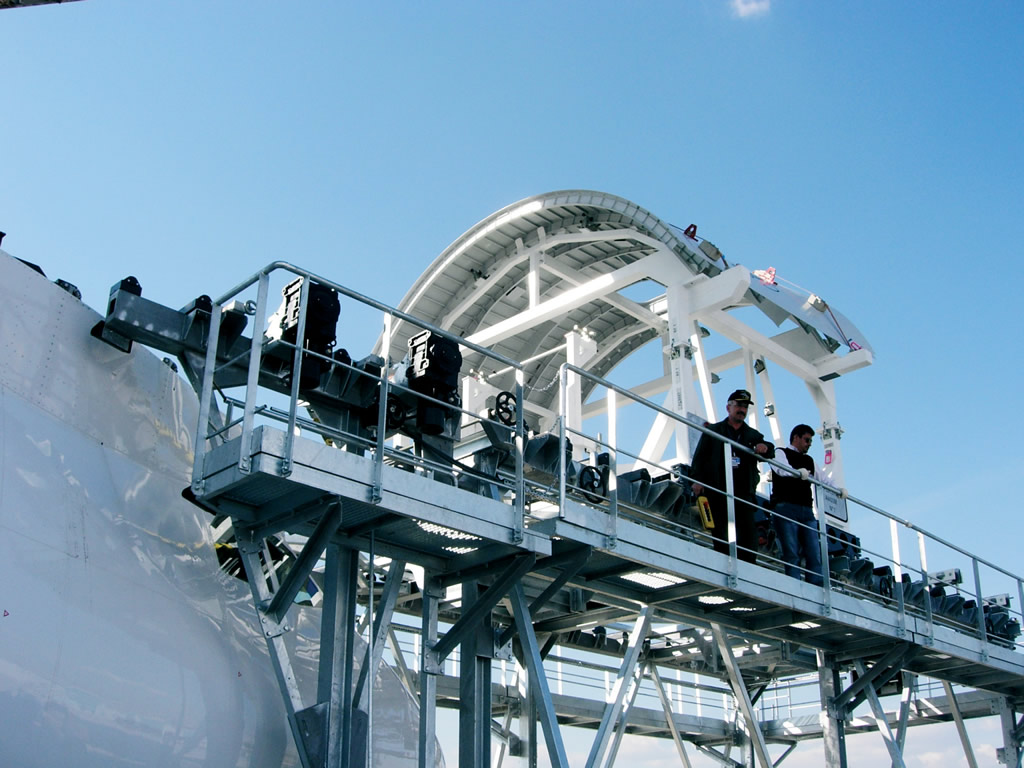
Denel Aviation of Kempton Park, Johannesburg, completed the first set of 100 kg aluminum alloy fuselage top shells (roof sections) last week, as part of a 15-year manufacturing contract worth EUR 20 million (about R160 million), which currently accounts for between 80,000 and 90,000 man-hours annually. It follows an earlier contract for the design of the top-shells. Denel is also responsible for the design engineering and manufacture of several other elements of the aircraft, the largest of which is the carbon composite wing-fuselage fairing. Source.
April 28/05: South Africa signs on to the A400M program with Airbus Military. South Africa’s Public Enterprises Minister Alec Erwin expects the cost of the SAAF’s 8 Airbus A400M medium-heavy military transport aircraft to be EUR 830 million. That converted to R 6.5 billion at those exchange rates, or about $177.75 million per plane in American dollars. South Africa reportedly intended to take delivery of 8 of the A400Ms from 2010-2014, with a further 6 on option. Ordering those additional 6 aircraft would reportedly have pushed the total contract value to EUR $1.5 billion, or about R 11.9 billion at those exchange rates.
The contract would later be finalized on Dec 1//06, at a much higher sum. DID story | Defense Aerospace | South Africa’s Business Report.
Dec 15/04: South Africa states its intention to become part of the A400M program, by signing a Declaration of Intent (DOI). EADS.
Additional Readings
* Airbus Military – A400M Official Site
* Airbus Military (Aug 25/06) – R6bn expected spinoff for SA from military aircraft
* Aerosud Group – A400M Development
* Airforce Technology – A400M (Future Large Aircraft) Tactical Transport Aircraft, Europe
Defence Web South Africa (Oct 20/09) – A400M Conundrums
Options and Alternatives
* DID – The C-130J: New Hercules & Old Bottlenecks
* DID – Embraer’s Multinational KC-390 Tactical Air Transport Program
* Engineering News (May 1/09) – New R12bn aircraft programme in which SA could participate is launched. Refers to Brazil’s KC-390.
* DID – HAL and Irkut’s Joint Tactical Transport Project. they hope the deliver the aircraft between 2015-2020. If Embraer can meet its stretch goal of 2015, the competitive timing could be significant.
* The Aviation Zone – Antonov AN-12 (Cub). Includes information about the Chinese Y-8s.