Showing results 1 - 10 of 22 for the search term(s): saudi shopping spree

Eurofighter’s Future: Tranche 3, and Beyond

Italian Eurofighters

The multi-national Eurofighter Typhoon has been described as the aerodynamic apotheosis of lessons learned from the twin engine “teen series” fighters that began with the F-14 and F-15, continued with the emergence of the F/A-18 Hornet, and extends through to the most recent F/A-18 Super Hornet variants. Aerodynamically, it’s a half generation ahead of all of these examples, and planned evolutions will place the Eurofighter near or beyond parity in electronic systems and weapons.

The 1998 production agreement among its 4 member countries involved 620 aircraft, built with progressively improved capabilities over 3 contract “tranches”. By the end of Tranche 2, however, welfare state programs and debt burdens hd made it difficult to afford the 236 fighters remaining in the 4-nation Eurofighter agreement. A 2009 compromise was found in the EUR 9 billion “Tranche 3A” buy, and the program has renewed its efforts to secure serious export sales. Their success will affect the platform’s production line in the near term, and its modernization plans beyond that.

2006 Saudi Shopping Spree: $2.9B to Upgrade Their M1 Tank Fleet

M1A2 RSLF
Saudi M1A2

In July 2006 the US DSCA informed Congress [PDF] that the government of Saudi Arabia wished to purchase 58 M1A1 Abrams tanks, then upgrade these M1A1s, along with its existing 315 M1A2s, to create 373 M1A2S (Saudi) Abrams configuration main battle tanks. The sale will include kits, spare and repair parts, communications and support equipment, publications and technical data, personnel training and training equipment, contractor engineering and technical support services and other related elements of logistics support. The estimated cost is $2.9 billion.

This program also dovetails well with ongoing Cooperative Logistics Supply Support Agreement, which ensure support and spare parts for their American-made land equipment. This sale and upgrade program will be executed in 3 phases, and is well underway.

2010-12 Saudi Shopping Spree: F-15s, Helicopters & More

F-15S
F-15S & weapons

In October 2010, talks that Saudi Arabia was negotiating a $30-60 billion arms package with the USA were made official with a full multi-billion request that included 84 F-15 Strike Eagles to replace the Kingdom’s Tornado strike aircraft and/or F-15A-D fighters, upgrades for another 70 planes, about 132 UH-60 Black Hawk utility and AH-64 attack helicopters, and armaments to equip them.

This article looks at those requests, their tie-ins, the issues that are part of these potential deals, and related follow-on requests. As is often the case with DSCA announcements, years can pass between the requests and the signed contracts, but these contracts have started to roll in, alongside other significant buys.

Saudi Shopping Spree: A Hardened, Networked National Guard

LAV-25 Combat
LAV-25 in combat

The Saudi Arabian National Guard is seeing a lot of investment lately. In July 2006, the Saudis formally tabled a multi-billion dollar request to buy LAV wheeled APCs and related equipment for its National Guard. October 2010 added a slew of added requests, covering a wide range of transport, scout, and attack helicopters. Other contracts in between have involved missiles, communications, and training. It all adds up to a fairly comprehensive modernization.

Who is the SANG, and why are they a globally significant institution? A must-read article in the Tribune-Libanaise explains:

Grand Salaam! Eurofighter Flies Off With Saudi Contract

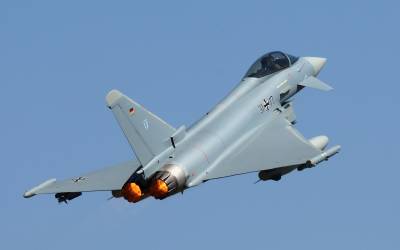
RSAF Eurofighter
RSAF Eurofighter

In 2005 talks were underway for a Saudi purchase of Eurofighter Typhoon Tranche 2 advanced air superiority and strike aircraft from Britain’s BAE Systems – with an important (albeit denied) set of conditions on the Saudi side.

December 2005 saw confirmation that Saudi Arabia had ordered Eurofighter Typhoons, but the 72-plane deal started sinking into the tar sands shortly thereafter. Investigations from Britain’s Serious Fraud Office swirled around a GBP 43 billion oil-for-planes deal from the 1980s called Al-Yamamah (see Appendix A); in return, the Saudis played some hardball of their own. The investigation was eventually called off at the highest levels of government, and later confirmed by the House of Lords. After a period of uncertainty, a contract was finally signed on Sept 11/07. Ironies aside, the price was a bit lower than many expected; even so, it comes with support arrangements that are likely to push the final value quite a bit higher.

This DID Spotlight article covers the Saudi Eurofighter deal, its associated controversies, and related developments.

The Wonders of Link 16 For Less: MIDS-LVTs

Link-16 Display F-15
Link 16 Display
(click to see situation)

Jam-resistant Link-16 radios automatically exchange battlefield information – particularly locations of friendly and enemy aircraft, ships and ground forces – among themselves in a long-range, line-of-sight network. For example, air surveillance tracking data from an Airborne Warning and Control System (AWACS) aircraft can be instantly shared with fighter aircraft and air defense units. More than a dozen countries have installed Link 16 terminals on over 19 different land, sea, and air platforms, making it an interoperability success story.

While recent advancements may make AESA radars the future transmitters of choice, Link 16 is the current standard. The Multifunctional Information Distribution System-Low Volume Terminals (MIDS LVTs) were developed by a multinational consortium to provide Link 16 capability at a lower weight, volume, and cost than the Joint Tactical Information Distribution System (JTIDS). This free-to-view DID Spotlight article throws a spotlight on the program, explaining Link 16, and covering associated contracts around the world.

JHMCS: Fighter Pilots’ “Look & Shoot” Helmets Changing Aerial Warfare

HMD JHMCS Collage
(click to view larger)

In the 1970s, fighter aircraft began to appear with Head-Up Displays (HUD) that projected key information, targeting crosshairs etc. onto a seemingly clear piece of glass. HUDs allowed pilots to keep their eyes in the sky, instead of looking down at their instruments. In the 1990s, another innovation appeared: helmet-mounted displays (HMDs) put the HUD inside the pilot’s helmet, providing this information even when the pilot wasn’t looking straight ahead. The Israelis were already pioneering a system called DASH (Display And Sight Helmet) when a set of former East German MiG-29s, equipped with Soviet HMDs, slaughtered USAF F-16s in NATO exercises. Suddenly, helmet-mounted displays became must-haves for modern fighters – and a key partnership positioned Elbit to take DASH to the next level.

This DID Spotlight article offers insights into the rocky past, successful present, and competitive future of a program that has experienced its share of snags and controversy – but went on to become the #1 helmet-mounted sight in the world. It also details the game-changing effects of Joint Helmet Mounted Cueing Systems on air combat, its production sets and known customers, and all contracts since full-rate production began.

ROVER Sics TacAir on Enemies

JTAC w. ROVER
Start with this…

“ROVER” (Remote Operational Video Enhanced Receiver) is an unimpressive piece of equipment. Mostly, it looks like a ruggedized laptop with antennas. But SpaceWar.com quotes Lt. Col. Gregory E. Harbin, of the 609th Combat Operations Squadron at Shaw Air Force Base, SC, who says “…the ROVER is bringing a phenomenal capability to our people on the ground.” ROVER is the Remotely Operated Video Enhanced Receiver, which receives camera images from nearby aircraft and UAVs (somewhat like Israel’s wrist-mounted V-RAMBO), then integrates them with other US positioning and targeting software.

Staff Sgt. Justin Cry, a Shaw Joint Tactical Air Controller (JTAC), has a job that’s an art form at the best of times. Describing features from the ground to a pilot looking down while flying at high speed is no easy task. According to a Dec 16/05 USAF article, he used the system in Iraq and in New Orleans, and says simply: “I can circle an area on my screen, drawing arrows for emphasis, and what I’m drawing appears on (the pilots’) screens as well.”

ROVER continues to evolve, and is becoming an unheralded but critical piece of equipment in America’s arsenal. This is DID’s FOCUS Article covering the system and its ongoing developments.

Sikorsky’s $7.4-11.6B “Multi-Year VII” H-60 Helicopter Contract

UH-60M
UH-60M: torch passed

In 2005 a full-rate production decision to authorize more than 1,200 UH-60M aircraft was scheduled for 2007, and indeed, on Dec 12/07, Sikorsky Aircraft Corp. signed a 5-year, multi-service contract in Huntsville, AL for a minimum of 537 helicopters to be delivered to the U.S. Army and Navy. The “Multi-Year VII” contract covers UH-60M Black Hawk troop transport and light cargo helicopters, and HH-60M SAR(Search And Rescue) / MEDEVAC(MEDical EVACuation) helicopters. These 2 platforms will replace the Army’s current UH-60 Black Hawk fleet, while the US Navy’s MH-60S and MH-60R Seahawk aircraft will replace the Navy’s existing SH-60B/F Seahawks, HH-60 CSAR(Combat Search and Rescue), UH-3H Sea Kings, CH-46D Sea Knights, and HH-1N Huey SAR helicopters. These new helicopter types are also available to Foreign Military Sales class customers, under the American contract’s advantageous pricing and terms.

Now, substantial orders are being placed – and DID has updated totals and breakdowns.

Saudis Look to USA for Towed Light Artillery

M119
M119 105mm

Sept 21/11: The US Defense Security Cooperation Agency announces Saudi Arabia’s formal request for up to $886 million of equipment to augment the Kingdom of Saudi Arabia’s existing light artillery capabilities. The Royal Saudi Land Forces already have towed 155mm and 105mm howitzers and support vehicles and systems, and DSCA says they will have no difficulty absorbing these additional howitzers into their armed forces. If a contract is negotiated, implementation of this sale will not require the assignment of any U.S. Government or contractor representatives to the Kingdom of Saudi Arabia.

As a Foreign Military Sale mode purchase, any contract will be managed by a US Army department, probably the Rock Island Arsenal, IL. The specific items requested include:

« Older entries  |  

Stay Up-to-Date on Defense Programs Developments with Free Newsletter

DID's daily email newsletter keeps you abreast of contract developments, pictures, and data, put in the context of their underlying political, business, and technical drivers.