

(click to view full)
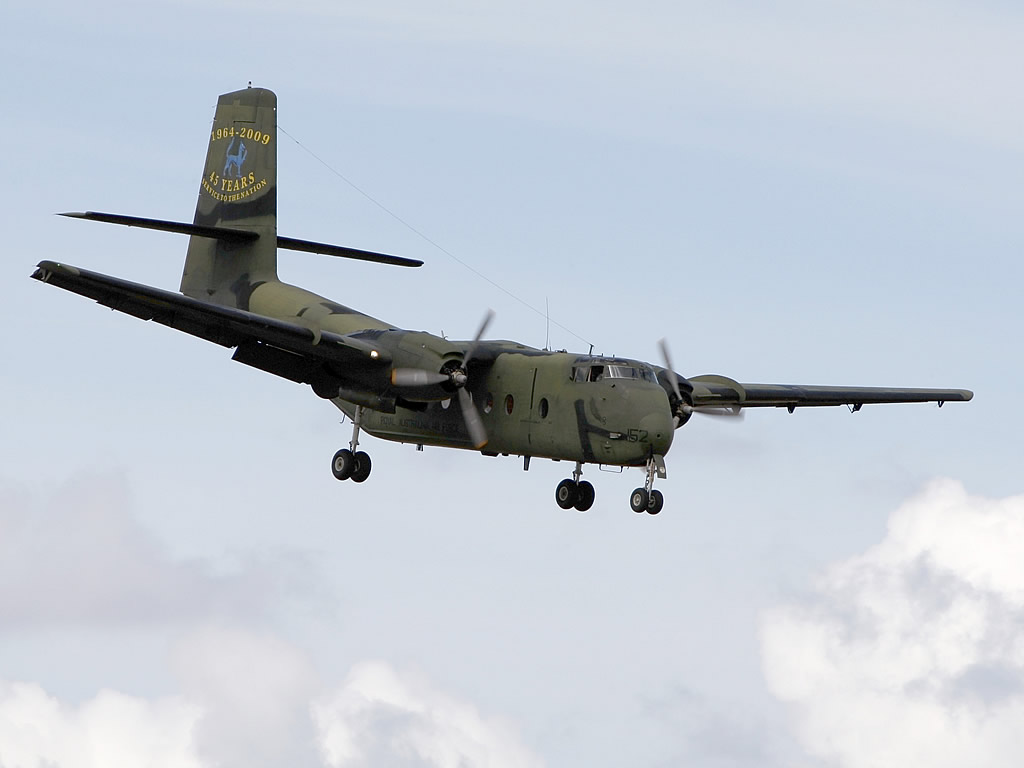
Australia’s 2009 defense white paper made a wide range of commitments, one of which involved replacing the outstanding service provided by Australia’s gull-winged DHC-4 Caribou short takeoff light tactical transports. That particular project had been proposed and delayed repeatedly for over 20 years. In February 2009, the planes it was meant to replace finally had to be retired, after 45 years of service. Without a replacement.
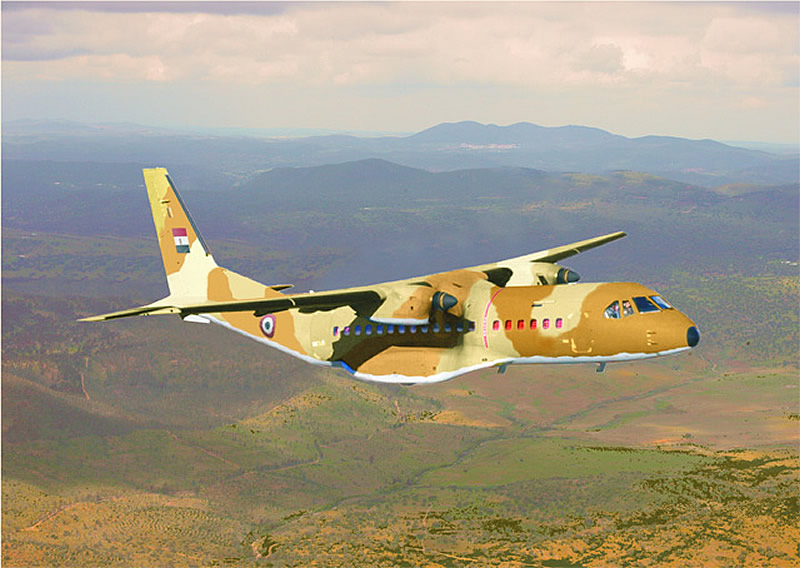
There have been a range of competitions in this class on the international market. While some customers like US Special Forces have chosen Sikorsky subsidiary PZL Mielec’s M-28 Skytruck, most of these competitions are between Airbus Military’s C295, and Alenia’s C-27J Spartan. The Spartan is faster than the C295, and can carry larger and heavier loads, including light helicopters and patrol vehicles. The C-295M offers endurance advantages, and lower operating costs. Neither can match the Caribou’s short take-off performance, but they’re what’s available, and different countries have made different choices. Now, Australia has made its choice: a sole-source C-27J buy, with deliveries slated to begin in 2015.
Contracts & Key Events
2013 – 2014
ANAO report provides costs – and explanations.

(click to view full)
Sept 5/14: Training. L-3 Communications’ Platform Integration Division in Waco, TX receives a maximum $10.1 million, unfinalized contract to provide RAAF personnel with C-27J aircrew and maintenance training.
Work will be performed at Waco, TX and Arlington, TX, and is expected to be complete by Dec 31/17. This award is the result of a country directed sole-source acquisition, and is managed by the 338th Specialized Contracting Squadron at Joint Base San Antonio, Randolph AFB, TX (FA3002-14-D-0014).
May 9/14: Support. L-3 Communications Integrated Systems in Waco, TX received a $7.6 million contract modification, covering Spares Support functions in the USA for the Australian C-27J. That includes spares warehousing, packing, handling, shipping, transportation and item unique identification. Taken together, Australia’s spares contracts are worth $125.9 million, which indicates a solid stock to maintain readiness. That kind of outlay, coupled to a system that ensures the money will be spent as directed, is part of what separates Tier 1 militaries from the rest.
Work will be performed in Waco, TX, and is expected to be complete by November 2017. The USAF Life Cycle Management Center/WLJK at Wright-Patterson AFB, OH, acts as Australia’s FMS agent (FA8625-13-C-6597, PO 0012).
March 13/14: Support. L-3 Communications Integrated Systems in Waco, TX receives a $38 million firm-fixed-price contract modification for RAAF C-27J spare parts (q.v. Dec 13/12), including non-long-lead critical parts.
Work will be performed at Waco, TX and is expected to be complete by March 2015. The USAF Life Cycle Management Center/WLVK at Wright-Patterson Air Force Base, OH manages this contract for their Australian FMS client (FA8625-13-C-6597, PO 0009).
Nov 22/13: Alenia Aermacchi announces that they’ve completed the assembly of Australia’s 1st C-27J at their plant in Turin, Italy:
“…the aircraft’s wing was mated with the fuselage and the engines, landing gear, and other major components were installed. The aircraft is currently undergoing equipment installation and functional tests in preparation for the test flight phase. Roll out and company flights will occur within November, and customer acceptance tests and procedures will follow shortly…. The first aircraft is expected to be delivered to L-3 in the first quarter of 2014, on time and on budget.”
Aug 15/13: ANAO Report. The Australian National Audit Office looks at the AIR 8000 Phase 2 program’s compliance with Financial Management and Accountability regulations, and other procurement rules, at the request of Sen. Johnston [Lib.-WA, Shadow Minister for Defence]. ANAO says that dealings with industry and explanation of the buy could have been better (q.v. May 11/12), but they find that the buy was within the rules, and they believe it has a solid case as best value for money.
So, why the rush, and why the sole-source, direct source buy? It was the old limited-time offer. The US Government’s Joint Cargo Aircraft umbrella contract for C-27Js offered Australia a price that couldn’t be matched by the C-27J’s commercial bidder, in part because the JCA price had been quoted with the assumption of a 100+ plane buy. The catch is that the C-27J’s price would expire when the USA’s JCA truncated contract did, on June 30/12. Australia’s Department of Defense invoked the general exemption clause in the Commonwealth Procurement Guidelines 2008, Paragraph 2.7; even then, the sole-source buy was only possible because Australia’s DMO procurement agency waived the customary program Gate Review until after the contract was signed.
The other issue pushing against a competition was Australia’s stated requirements. A previous “Project AIR 5190” had rejected the C-27J as developmental, but by the time Project AIR 8000 was ready to buy, that issue had been solved. Meanwhile, the C-295 didn’t meet Australia’s interoperability requirements. Its narrower cargo compartment can’t transport the standard sized cargo pallet used in the RAAF’s C-130J and C-17 planes, or carry a number of ADF vehicles. The C-27J barely met those criteria, as it’s forced to remove its cargo loading system in order to carry Special Forces Nary (Supacat) vehicles, but it did meet them. If those requirements disqualified the C-295, it means there was never really any prospect of competition under AIR 8000 Phase 2.
With those issues settled, ANAO offers a new program cost figure: A$ 940.7 million (A$ 882.5 million direct source procurement + A$ 58.2 million intellectual property rights contract with Alenia). That doesn’t square with the government’s May 2012 announcement (A $1.4 billion), or L-3’s own announcement at the time (about $600 million, split between the buy and support/ spares). ANAO are the auditors, so we’re inclined to go with their figure for future reference. ANAO.
ANAO OK
2012
Australia decides to sole-source the C-27J, but has to buy new; Airbus not happy; Spare parts deal; RAAF C-130Hs retired.
(click to view full)
Dec 13/12: Support. L-3 Communications Corp. in Waco, TX receives an $80.3 million firm-fixed price contract for long-lead spare aircraft parts required to support the C-27J. The contract involves foreign military sales to Australia.
Work will be performed in Waco, TX and Torino, Italy, and is expected to be completed by July 29/13. The ASC/WLVK at Wright-Patterson AFB, OH manages this contract, on behalf of its Foreign Military Sale client (FA8625-13-C-6597).
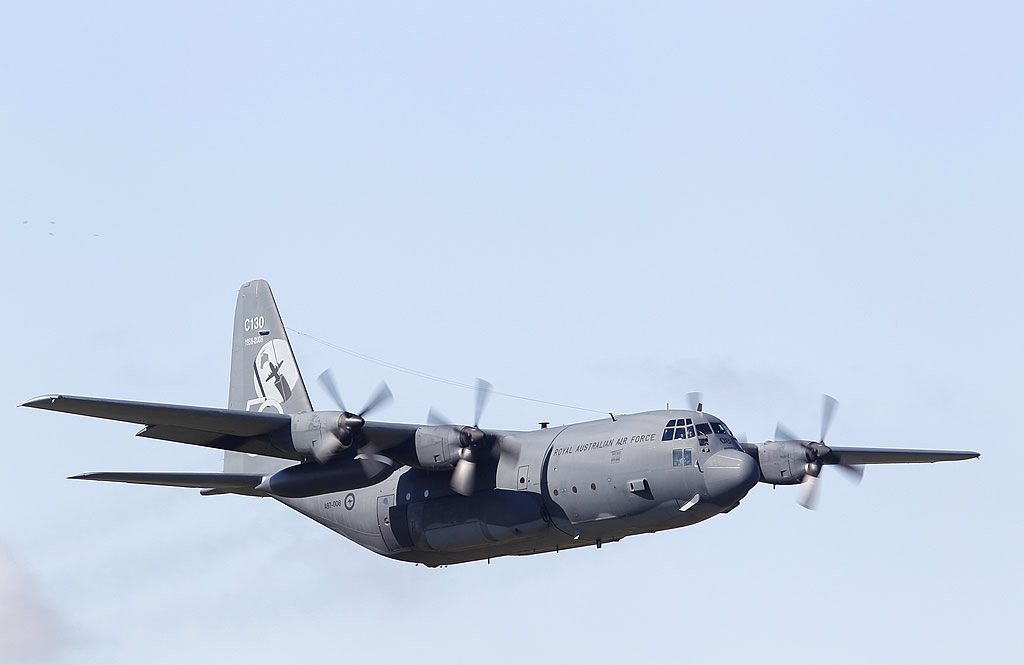
Nov 30/12: C-130H. Australia retires its 12 C-130H aircraft early. It was supposed to happen in 2016, but Australia decided to save maintenance and operating costs. Meanwhile, the country grew its C-17 fleet instead, and will depend on its C-27Js to pick up some of the slack.
Of the 12 C-130Hs, 1 will be kept on the ground at RAAF Base Richmond for training purposes, 4 will be transferred to the Indonesian Air Force, 1 will go to the Air Force Museum at RAAF Base Point Cook, and DoD is “inestigating options” for the other 6. Sources: Australia DoD, “C-130H Hercules retired from service”.
C-130H fleet retired
June 3/12: Licensed. The Australian government announces an A$ 63 million contract with Alenia Aermacchi, bringing total spending on the project so far to around A$ 380 million.
This contract covers some maintenance and training services, plus authorization to have maintenance, training, and aircraft modifications done by 3rd parties. That opens the door for competitive processes, and for Australian companies, but Australia must make those final selections, and established vendors could certainly compete.
May 31/12: Aircraft contract. L-3 Communications Integrated Systems, LP in Greenville, TX receives a $321.8 million firm-fixed-price contract to buy 10 C-27J aircraft, 10 option kits, 1 lot each of production cost and software reports, and 1 lot each of contractor logistic support cost and software reports.
Recall the USD$ 1.275 billion total cost (vid. May 10/12); this is just a portion of that, for the base aircraft. Work will be performed in Greenville, TX, and will be complete by May 24/12. The ASC/WLNJ at Wright-Patterson AFB, OH manages the contract, on behalf of its Australian FMS client (W58RGZ-07-D-0099, 0078).
May 11/12: Controversy. An Airbus Military statement shortly after the announcement sets off a controversy about the award. In brief, it says that by not following a full competitive process, Australia turned down an A$ 400 million sale that would have involved more Australian companies, and could have been delivered within 6 months, instead of an A$ 1.4 billion FMS deal that takes until 2015. Bottom line?
“[The C-27J] will be delivered in 2015 only… and did not achieve the desired reliability or mission availability rates when deployed [by the USA] to Afghanistan. Despite Airbus Military expending considerable resources responding to enquiries and requests for rudimentary information, we are concerned that the outcome may have been pre-determined from the start.”
Australia’s DoD responds. They say there was a competition, but concede that it only went as far as initial requests about basic aircraft data and capabilities, plus costing data. They say that the C-27J won on capabilities, as the DoD/RAAF team concluded that: “The C-27J flies higher, further, faster and can access more airfields in our area of interest… [while the] C-295 is unable to carry some of the equipment [we wanted].” Delivery date isn’t addressed, but presumably the RAAF accepted later delivery in order to get these capabilities.
In terms of cost, DoD responds that their announced A$ 1.4 billion figure includes elements like training, spares, and long-term maintenance that go far beyond the purchase cost. “Airbus would be aware of these essential program costs… through its own experience with the KC-30A [aerial tanker].” Post-award releases can help us evaluate that, though the breakdown must be done by inference. According to L-3’s release, the breakdown is about USD$ 300 million for the aircraft, and another $300 million for initial support and training. By process of subtraction, that leaves about $675 million/ EUR 462 million. Those monies are left to cover Alenia Aermacchi’s long-term maintenance contract, and may also cover some of the defensive items and electronics that the RAAF will be adding. Australia DoD response | The Age | Canberra Times | Plane Talking, with full Airbus statement.
May 10/12: Buying new. The Australian government agrees to buy 10 C-27J Spartan light transports from Alenia, for A$ 1.4 billion (EUR 873 million/ $1.275 billion). Though they’re buying new planes from Alenia’s production line in Italy, the initial purchase and training will be conducted as a Foreign Military Sales (FMS) arrangement with the United States, and L-3 Communications will act as the lead contractor and perform equipment fit-outs. Long-term maintenance, however, will be a direct contract with Alenia.
Overall, it’s an offsetting move for the RAAF, not a Caribou replacement. At the same time, Australia is retiring its 8 remaining C-130H transports early, by 2013. That makes the Spartans a straight substitution for the older C-130H, offering lower per-plane operating costs and RAAF C-130J engine/ avionics commonality. The Australian government also saw its short-field takeoff capability as a competitive differentiator, noting that:
“In Australia, the C-27J can access over 1900 airfields compared to around 500 for the C-130 Hercules aircraft. In our region, the C-27J will be able to access over 400 airfields compared to around 200 for the C-130 Hercules aircraft.”
Australia’s C-27Js will be sent in harm’s way, so they’ll be equipped with missile warning systems, electronic self protection, secure communications, and some internal armoring. The first aircraft are expected to be delivered in 2015 to RAAFB Richmond near Sydney, with Initial Operating Capability scheduled for the end of 2016. Australia DoD | Minister’s speech | Alenia Aermacchi | L-3.
C-27J wins the contract
April 16/12: Approved. Project AIR 8000 Phase 2 gets combined pass government approval, with an A$ 1.403 billion budget. Source: ANAO Report No.3 2013–14.
Approved
Feb 27/12: Better buy new. Alenia Aermacchi CEO Giuseppi Giordo gives an interview at Singapore’s air show, which throws a major wrench in American plans to re-sell the C-27J fleet. The contract itself reportedly has clauses that given Alenia discretion over resales, and if the USAF doesn’t reassign or store the Spartans:
“In fact, we will do our best – not only us, but the Italian government – not to support those planes. They can sell, but as the original equipment manufacturer, I will not give spares, not guarantee configuration control, and so on… First of all, the price that we have with the U.S. government is a very, very, low, low price because to win the competition we had to reduce the price. Second, the volume at the beginning was 145, then 78, then 38, now 21 with firm, fixed price. We are losing money. So, how can I allow the U.S. government to sell 21 airplanes they have in their inventory where I lose money and they also kill my international marketing?”
Alenia is perfectly within its rights here, on all points. It may be possible for a customer to get support anyway, via separate deal with Rolls Royce for the engines, a similar direct relationship approach for avionics, and a combination of locally-engineered and gray market parts. On the other hand, it would be expensive and risky. Defense News | Lexington Institute.
Jan 26/12: Buy used? Preliminary FY 2013 budget materials discuss coming shifts in Pentagon priorities, as the US defense department moves to make future cuts. The USAF’s 38-plane C-27 fleet will now be eliminated entirely, and sold:
“The new strategic guidance emphasizes flexibility and adaptability. The C-27J was developed and procured to provide a niche capability to directly support Army urgent needs in difficult environments such as Afghanistan where we thought the C?130 might not be able to operate effectively. However, in practice, we did not experience the anticipated airfield constraints for C-130 operations in Afghanistan and expect these constraints to be marginal in future scenarios. Since we have ample inventory of C-130s and the current cost to own and operate them is lower, we no longer need – nor can we afford – a niche capability like the C-?27J aircraft. The Air Force and the Army will establish joint doctrine relating to direct support.”
Australia had wanted to interoperate with the USAF’s JCA, and a second-hand JCA sale could guarantee that. Canada has also been touted as an export destination, for its search and rescue needs. Pentagon release | “Defense Budget Priorities and Choices” [PDF]
Jan 11/12: Made-up their minds? Australia’s Herald Sun quotes unnamed “insiders,”who say that Australia’s government intends to sign a sole-source contract for 10 C-27Js in the first half of 2012. Airbus continues to lobby for a formal competition against its C295, touting a $300 million fuel savings over the life of the fleet. On the other hand, Australia wants the planes to inter-operate with the USAF’s Joint Cargo Aircraft C-27J fleet, including the planes’ electronics and communications, and also wants to avoid the delays of another competition.
The deal is rumored to be A$ 1.5 billion, which is larger than the DSCA request, and would have to include additional long term support contracts. The Herald Sun adds that Alenia has offered a lower price for the C-27J if Australia avoids a Foreign Military Sale deal through L-3, but Australia’s push for JCA commonality reportedly scuttled that proposal as well.
2011
Caribous retire without replacement; C-27J Letter of Request sent.
(click to view full)
Dec 19/11: Australia’s LoR has become a formal DSCA request [PDF] to buy up to 10 C-27J Spartan light tactical transports to replace its 14 retired DHC-4s, and partly replace the 12 C-130H Hercules medium tactical transports that Australia intends to retire by 2016.
The cost is estimated at up to $950 million, but actual pricing would depend on negotiations, which can begin after the 15-day notification limit that Australia shares with NATO and other very close allies. Australia is also trying to decide whether or not to pursue a sole-source buy, which may introduce additional delays.
Since they’re buying through the USA, the prime contractor isn’t Alenia, but rather their US Joint Cargo Aircraft contract lead: L-3 Integrated Systems Group in Waco, TX. Australia wouldn’t need any addition US government or contractor personnel in Australia if the sale takes place. What it does want, along with the 10 planes, is:
* 23 Rolls Royce AE2100D2 engines (20 equipped, 3 spares)
* 12 Electronic Warfare Self Protection Suites,type unnamed
* 12 AAR-47Av2 Missile Warning Systems
* 12 ALE-47V Threat Adaptive Countermeasures Dispensing Systems
* 12 APR-39Bv2 Radar Warning Receivers
* 13 AN/APN-241 Radar Systems
* 44 AN/ARC-210 Warrior Very High Frequency/Ultra High Frequency Communication Systems
* 12 KY-100 narrowband/wideband secure communication terminals
* 12 HF 9550 Radios
* 12 APX-119 Identification Friend or Foe (with Mode 4)
* 14 Blue Force Tracker computers that show the location of friendly forces, and allow messaging
* 12 Portable Flight Mission Planning Systems
* Operational Flight Simulator, Fuselage, and Maintenance trainers, as well as other personnel training and training equipment
* Plus other support and test equipment, repair and return, spare and repair parts, aircraft ferry and tanker support to Australia, publications and technical data, and U.S. Government and contractor support.
DSCA request: 10 C-27Js
Oct 19/11: Australia’s government announces that they have sent a formal Letter of Request to the USA re: the C-27J Spartan, to meet the needs of project AIR 8000, Phase 2 with up to 10 planes.
“The capability gap has to date been partially met by the C-130J and C-130H Hercules aircraft, the Interim Light Transport aircraft (8 small Beechcraft King Air 350 aircraft) and helicopters. The C-130H is due to retire in 2013, although Defence is developing a proposal to retain these aircraft until 2016… Due to the pending closure of the production line for US Air National Guard aircraft the Government has authorised Defence to issue a non-binding/ no-commitment Letter of Request seeking price and availability information… Defence anticipates receiving a response to the Letter of Request by February 2012.”
The release says that other aircraft will also be considered, and specifically names Airbus Military’s C-295. On the other hand, it also says that the response to their LoR will determine “whether a broader tender process will be pursued,” implying the possibility of a sole-source buy. Australia DoD | Australian Aviation | Australian Defence Magazine.
Feb 19/09: Labor Party defense minister Joel Fitzgibbon announces the retirement of Australia’s Caribou fleet after 45 years of service in Australia and abroad:
“…the Caribou fleet is suffering badly from a range of ageing aircraft issues, and contains asbestos parts which I am determined to weed out of the Defence Force. Despite its outstanding track record, the Caribou is now well beyond its sustainable life of type. The Caribou fleet suffers from corrosion, fatigue and obsolescence issues that make them increasingly difficult and costly to maintain… struggling to achieve four to five serviceable aircraft at any one time… it is a tribute to the outstanding work of 38 Squadron aircrew, technicians and support personnel that the Caribou has been able to operate as long as it has.”
Project Air 8000 Phase 2 plans to deliver a replacement in 2013. As an interim measure, a leased fleet of 5 more Hawker Pacific B300 King Air twin-turboprops will be used for light air transport tasks with Townsville’s 38 Squadron, who will also get the Army’s 3 King Air 350s. Australia DoD.
Caribous retire,
Beechcraft B200/350s to fill the gap
Additional Readings
Background: Australia’s Efforts
* Australian Government – AIR 8000. Phase 1 was effectively canceled, and its 2 additional C-130J medium transports were replaced by 2 more C-17A heavy transports instead.
* ANAO Report No.3 2013–14 (Aug 15/13) – AIR 8000 Phase 2 — C-27J Spartan Battlefield Airlift Aircraft, Department of Defence [PDF]
* DID – The USA’s C-27J Joint Cargo Aircraft. that contract would prove very consequential in Australia as well.
* DID – Australia’s 2009 Defense White Paper
* Air Power Australia – AIR 5190 – The Perennial Lightweight Project – analysis of an Australian defence acquisition. AIR 8000 Phase 2 predecessor, begun in 1976.
Background: Aircraft
* RAAF – King Air 350 Multi-role Trainer & Transport
* RAAF – DHC-4 Caribou light transport
* Alenia North America – C-27J Spartan Tactical Transport Aircraft
* Airbus Military – C295
* Wikipedia – PZL M28