CH-53K: The U.S. Marines’ HLR Helicopter Program

Sikorsky: CH-53K from LHD
CH-53K concept

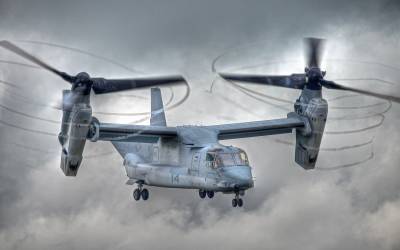
The U.S. Marines have a problem. They rely on their CH-53E Super Stallion medium-heavy lift helicopters to move troops, vehicles, and supplies off of their ships. But the helicopters are wearing out. Fast. The pace demanded by the Global War on Terror is relentless, and usage rates are 3 times normal. Attrition is taking its toll. Over the past few years, CH-53s have been recalled from “boneyard” storage at Davis-Monthan AFB in Tucson, AZ, in order to maintain fleet numbers in the face of recent losses and forced retirements. Now, there are no flyable spares left.

Enter the Heavy Lift Replacement (HLR) program, now known as the CH-53K. It aims to offer notable performance improvements over the CH-53E, in a similar airframe. The question is whether its service entry delay to 2018-2019 will come too late to offset a serious decline in Marine aviation.

Brazil’s F-X2 Fighter Competition

F-5BR
Upgraded F-5EM

Could the words “Brazilian fighter” begin evoking images unrelated to the Gracies? Recent boosts to Brazil’s defense budget could be on its way to accomplishing that and more. The Navy and Army have already received funds to replace broken-down equipment, and new fighters will be a critical centerpiece of the Forca Aerea Brasileira’s efforts.

Boeing’s F/A-18 E/F Super Hornet, France’s Dassault’s Rafale, Saab’s JAS-39 Gripen NG were picked as finalists. But after repeated stalling, the question is whether Brazil will actually place an order, or fold up the competition like the ill-fated 2011 F-X process.

This free-to-view DID Spotlight article covers Brazil’s reborn F-X2 competition, adds its assessment of the competitors’ relative strengths and weaknesses, and covers ongoing events.

Australia’s Next-Generation Submarines

Advertisement
HMAS Waller
Bridge to the future?

In its 2009 White Paper, Australia’s Department of Defence and Labor Party government looked at the progress being made in ship killing surveillance-strike complexes, and at their need to defend large sea lanes, as key drivers shaping future navies. These premises are well accepted, but the White Paper’s conclusion was a surprise. It recommended a doubling of Australia’s submarine fleet to 12 boats by 2030-2040, all of which would be a new successor design that would replace the RAN’s Collins Class submarines.

The surprise, and controversy, stem from Australia’s recent experiences. The Collins Class was designed with the strong cooperation of ThyssenKrupp’s Swedish Kockums subsidiary, and built in Australia by state-owned ASC. The class has had a checkered career, including significant difficulties with its combat systems, issues with acoustic signature and propulsion, major cost growth to A$ 5+ billion, and schedule slippage. Worse still, reports indicated that the RAN can only staff 2 of its 6 submarines. High-level attention led to a report and recommendations to improve the force, but whether they will work remains to be seen. Meanwhile, the nature of Australia’s SEA 1000 future submarine project – and its eventual cost – remain unclear, with estimated costs in the A$ 36-44 billion range. This FOCUS article covers Australia’s options, decisions, and plans, as their future submarine program slowly gets underway.

CAMM Opener for the Naval Missile Market: MBDA & LMCO’s MoU

CAMM-M launch concept
CAMM-M launch

In mid-May 2013, MBDA signed an MoU with Lockheed Martin that has the potential to shake up the naval missile industry. It sounds innocuous: both companies agree to jointly explore the market for the integration of MBDA naval missile systems into Lockheed Martin’s “>MK-41 Vertical Launch System, and ExLS VLS/cell insert. They’ll begin with a late 2013 demonstration involving Britain’s new CAMM-M Sea Ceptor missile, but the implications reach far beyond.

Right now, the naval missile market is divided by launcher type, and many of MBDA’s missiles sit in a DCNS banlieue.

India’s Multi-billion Dollar Scorpene Sub Contract

SSK Scorpene OHiggins Cutaway
Scorpene cutaway

India’s submarine fleet currently consists of 16 boats: 10 Russian SSK Kilo (Sindhugosh) Class, 4 locally built SSK U209 (Shishumar) Class, a leased nuclear-powered Improved Akula Class SSN from Russia (INS Chakra), and its own INS Arihant SSBN. Most of the Kilos have been modernized, but readiness rates for India’s existing submarine fleet sits below 40%, and the U209s will have trouble lasting much beyond 2015. With Pakistan acquiring modern submarines, and Chinese submarine building exploding, expanding India’s submarine fleet became an obvious national priority.

In 2005, India confirmed that it would buy 6 Franco-Spanish Scorpene diesel submarines, with an option for 6 more and extensive technology transfer agreements. Unfortunately, 7 years after that deal was signed, “Project 75″ has yet to field a single submarine. A poor Indian procurement approach, and state-run inefficiency, are pushing the country’s overall submarine force toward an aging crisis. This DID FOCUS article covers the Scorpene deal and its structure, adds key contracts and new developments, and offers insights into the larger naval picture beyond India.

Today’s Special: Turkey Subs

SSK Preveze Class
Preveze Class
(click to view larger)

In 2006 the Turkish SSM procurement agency issued a request for information (RFI) for 4 more diesel-electric submarines. That RFI became an RFP for 6 diesel-electric submarines with air-independent propulsion systems, to replace older boats like Turkey’s U209-based Preveze and Atilay classes.

DID covers the competition, and adds some quick background re: the Turkish Navy’s existing fleet, where its rival Greece stands, and contract developments regarding their new “Cerbe Class”. Turkey has a signed multi-billion Euro contract for HDW’s U214 subs… and are about to add a revolutionary new weapon.

Finmeccanica’s M-346 AJT: Who’s the Master Now?

M346 & Tornado
Tornado refuels M346

Alenia’s Aermacchi’s M-346 advanced jet trainer began life in 1993, as a collaboration with Russia. It was also something of a breakthrough for Alenia Aermacchi, confirming that the Finmeccanica subsidiary could design and manufacture advanced aircraft with full authority quadriplex fly-by-wire controls. Those controls, the aircraft’s design for vortex lift aerodynamics, and a thrust:weight ratio of nearly 1:1, allow it to remain fully controllable even at angles of attack over 35 degrees. This is useful for simulating the capabilities of advanced 4+ generation fighters like the F/A-18 Super Hornet, Eurofighter, and Rafale. Not to mention Sukhoi’s SU-30 family, which has made a name for itself at international air shows with remarkable nose-high maneuvers.

The Russian collaboration did not last. For a while, it looked like the Italian jet might not last, either. It did though, and has become a regular contender for advanced jet trainer trainer contracts around the world – including its biggest potential opportunity, in the USA. For now, however, its biggest customer is Israel.

NH90: Europe’s Medium Helicopter Contender

NH90 TTH and NH90 NFH
NH90: TTH & NFH

The NH90 emerged from a requirement that created a NATO helicopter development and procurement agency in 1992 and, at almost the same time, established NHIndustries (62.5% EADS Eurocopter, 32.5% AgustaWestland, and 5% Stork Fokker) to build the hardware. The NATO Frigate Helicopter was originally developed to fit between light naval helicopters like AW’s Lynx or Eurocopter’s Panther, and medium-heavy naval helicopters like the European EH101. A quick look at the NFH design showed definite possibilities as a troop transport helicopter, however, and soon the NH90 project had branched into 2 versions, with more to follow.

The nearest equivalent would be Sikorsky’s popular H-60 Seahawk/ Black Hawk family, but the NH90 includes a set of innovative features that give it some distinguishing selling points. Its combination of corrosion-proofing, lower maintenance, greater troop or load capacity, and the flexibility offered by that rear ramp have made the NH90 a popular global competitor.

As many business people discover the hard way, however, success can be almost as dangerous as failure. NH Industries has had great difficulty ramping up production fast enough to meet promised deliveries, which has left several buyers upset. Certification and acceptance have also been slow, with very few NH90s in service over a decade after the first contracts were signed. Booked orders have actually been sliding backward over the last year, and currently stand at 474 machines, on behalf of 14 nations.

Switzerland Replacing Old F-5 Fighters with New Gripen

F-5Es Swiss Knife-Edge
Swiss F-5Es

The F-5E/F Tiger II was a follow-on upgrade to the wildly successful F-5 Freedom Fighter, a low-budget aircraft designed to capture the lower tier of the non-Soviet global fighter market in the 1960s and 1970s. A number of countries still operate F-5s, but the airframes are very old. While F-5 owners like Brazil, Chile, Thailand, et. al. have opted for comprehensive refurbishment and upgrades, Switzerland is looking to replace 3 of its 5 Tiger II squadrons with new aircraft under its Tiger-Teilersatz TTE program. The new fighters will partner with the 3 squadrons of upgraded F/A-18C/D Hornets that make up the rest of its fighter fleet.

An initial evaluation RFP was issued to 4 contenders, but Boeing’s withdrawal narrowed the selection to Sweden’s Gripen, France’s Rafale, or EADS’ Eurofighter Typhoon. A 2010 suspension of the competition was followed by a measured revival, thanks to the latest budgets – and now, by a provisional winner. No matter who won, though, left-wing opponents of Switzerland’s military would be working hard to derail the purchase. It’s likely to face a national referendum, just like the 1993 F/A-18 Hornet sale. After the current controversy over fighter evaluations runs its course.

Light Naval Strike: MBDA’s FASGW-H / ANL Missile

ANL/ NH90 Concept
ANL on NH90

Britain needs to replace the old Sea Skua missiles carried by its naval helicopters. France could use a lighter missile than the 655 kg AM39 Exocet – one that could be carried by a wider range of helicopters, and offer a different attack profile. The answer to both needs may lie in a notional 110 kg missile under development by MBDA, as part of a broad 2006 “Team Complex Weapons” arrangement with the UK’s Ministry of Defence.

The question is whether Britain and France can get together and agree on the development framework for the Anti-Navire Leger / Future Anti-Surface Guided Weapon – Heavy (ANL / FASGW-H) missile. Britain needs a strike missile to equip its new AW159 Wildcats, but France can already mount longer-range AM39 Exocets on its Super Puma helicopters, and doesn’t feel a huge sense of urgency about its new NH90-NFH medium helicopters or AS565 Panther light naval helicopters.

  1. 1
  2. 2
  3. 3
  4. 4
  5. 5
  6. 6
  7. 7
  8. ...
  9. 48

Stay Up-to-Date on Defense Programs Developments with Free Newsletter

DID's daily email newsletter keeps you abreast of contract developments, pictures, and data, put in the context of their underlying political, business, and technical drivers.