JHMCS: Fighter Pilots’ “Look & Shoot” Helmets Changing Aerial Warfare

HMD JHMCS Collage
(click to view larger)

In the 1970s, fighter aircraft began to appear with Head-Up Displays (HUD) that projected key information, targeting crosshairs etc. onto a seemingly clear piece of glass. HUDs allowed pilots to keep their eyes in the sky, instead of looking down at their instruments. In the 1990s, another innovation appeared: helmet-mounted displays (HMDs) put the HUD inside the pilot’s helmet, providing this information even when the pilot wasn’t looking straight ahead. The Israelis were already pioneering a system called DASH (Display And Sight Helmet) when a set of former East German MiG-29s, equipped with Soviet HMDs, slaughtered USAF F-16s in NATO exercises. Suddenly, helmet-mounted displays became must-haves for modern fighters – and a key partnership positioned Elbit to take DASH to the next level.

This DID Spotlight article offers insights into the rocky past, successful present, and competitive future of a program that has experienced its share of snags and controversy – but went on to become the #1 helmet-mounted sight in the world. It also details the game-changing effects of Joint Helmet Mounted Cueing Systems on air combat, its production sets and known customers, and all contracts since full-rate production began.

Korea’s F-X Multi-Role Fighter Buys: Phases 2 & 3

F-15K Past, Now, Future
F-15K Poster: apropos?

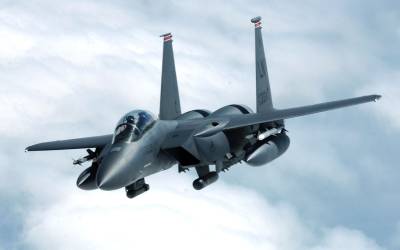
The ROKAF (Republic of Korea Air Force) originally planned to buy 120 advanced, high-end fighters as its next-generation platform, in order to replace its existing fleet of F-4 Phantom IIs and other aircraft. So far, it has bought 60 fighters in 2 phases. Back in 2002, the Republic of Korea Air Force (ROKAF) selected the F-15K advanced derivative of the F-15E Strike Eagle for its Next Generation Fighter Program, and bought 40. In 2008, a 2nd contract was signed for 20 more F-15ks, with slight modifications.

Now the 3rd phase looms, and the question is whether it will be a variant of their existing fleet, or something new. While the DAPA procurement agency dreamed of developing their own “5th generation” aircraft for Phase 3, reality eventually had its say. Now, foreign manufacturers are offering the ROKAF a number of options.

Raytheon’s Standard Missile Naval Defense Family (SM-1 to SM-6)

Advertisement
SM-2 Launch
SM-2 Launch, DDG-77
(click to view larger)

Variants of the SM-2 Standard missile are the USA’s primary fleet defense anti-air weapon, and serve with 13 navies worldwide. The most common variant is the RIM-66K-L/ SM-2 Standard Block IIIB, which entered service in 1998. The Standard family extends far beyond the SM-2 missile, however; several nations still use the SM-1, the SM-3 is rising to international prominence as a missile defense weapon, and the SM-6 program is on track to supplement the SM-2. These missiles are designed to be paired with the AEGIS radar and combat system, but can be employed independently by ships with older or newer radar systems.

This article covers each variant in the Standard missile family, plus several years worth of American and Foreign Military Sales requests and contracts and key events; and offers the budgetary, technical, and geopolitical background that can help put all that in context.

Peru Moves to Maintain, Modernize its Fighter Fleet

F-16s, MiG-29S, Mirage 2000DP
USAF F-16s, FAP MiG-29S
and Mirage 2000DP

Peru’s 12 Mirage 2000C/B and 18 MiG-29S fighters form the backbone of its current multi-role fighter fleet, alongside old SU-22 strike fighters and specialized SU-25 close air support jets. The Mirages were bought from France in 1985, while the MiG-29s arrived via a disastrous 1995 deal with Belarus. Fortunately, Peru patched things up with Russia, and RAC MiG agreed to provide service and support. In 2008, a contract began modernize that MiG fleet to the MiG-29SMT standard. In 2009, Dassault began working with Peru on a comprehensive inspection of the Mirage fleet, coupled with some electronics modernization.

These purchases have been expensive, and a number of observers have questioned their usefulness against more pressing security concerns, like Peru’s fanatical Marxist Sendero Luminoso (“Shining Path”) guerrillas. On the other hand, the FAP still remembers the 1995 Canepa War with Ecuador, and its Russian fighters are stationed very close to that border at Chiclayo and Talara. Its Mirage 2000Ps sit at La Joya near Bolivia and Chile; the 3 countries have a minor 3-way maritime borders dispute, and residual tensions with Chile have been a long-running theme in Peru. This article covers Peru’s ongoing efforts to maintain and improve its core fighter fleet.

Hydra, Awakened: Guided Air-Ground Rockets

Hydra-70 Rocket Collage
(click to view larger)

Sen. Leahy’s [D-VT] worked in the mid-2000s to keep the Hydra 70mm rocket family alive through special appropriations, just in time for the Hydras’ potential on the battlefield to rise again. The key was the addition of low-cost precision guidance, which would expand the number of precision weapons carried by helicopters, aircraft, and even UAVs.

Over the last few years, the US Army’s 2nd attempt at an APKWS 70mm guided rocket had a near-death experience, before righting the program with Navy funding. Meanwhile, private development efforts from Lockheed Martin, Thales TDA, and a raft of international partnerships involving major defense firms and partners in Korea, the UAE, Canada/Norway, and Israel are introducing new competitors into the precision-guided rocket space. This DID FOCUS article covers the most prominent competitors within the guided rocket trend. Their products will sit between full anti-armor missiles like Hellfire, TOW, and Brimstone, and an emerging class of ultra-small precision attack weapons like Northrop Grumman’s Viper Strike, Raytheon’s Griffin, etc.

S-80: A Sub, for Spain, to Sail Out on the Main

S-80 Cutaway
S-80 cutaway, labeled

The CIM-2000 Scorpene class diesel-electric attack submarine partnership was just the first step for Spain’s Navantia, as it joined with France’s DCNS to enter the global submarine market. Now Navantia is building on that base of expertise, to field its own S-80 Class for the Spanish Armada. Spain’s new submarines will be larger boats than Navantia/DCNS’ Scorpene Class, with Air-Independent Propulsion (AIP) systems as standard gear, and completely new designs for both external shape and internal systems.

This article will cover the S-80 submarines’ capabilities and associated key events and contracts – including sub-contracts to American, British, and Italian firms.

Beyond Patriot? The Multinational MEADS Air Defense Program

MEADS Missile Defense
MEADS: air view

The Medium Extended Air Defense System (MEADS) program aimed to replace Patriot missiles in the United States, the older Hawk system in Germany, and Italy’s even older Nike Hercules missiles. MEADS will be designed to kill enemy aircraft, cruise missiles and UAVs within its reach, while providing next-generation point defense capabilities against ballistic missiles. MBDA’s SAMP/T project would be its main competitor, but MEADS aims to offer improved mobility and wider compatibility with other air defense systems, in order to create a linchpin for its customers’ next-generation air defense arrays.

The German government finally gave their clearance in April 2005, and in June 2005 MEADS International (MI) formally signed a contract worth approximately $3.4 billion to design and develop the tri-national MEADS system. In February 2011, however, events began to signal the likely end of the program. This DID FOCUS Article covers that program, and has been converted into a free-to-view article.

Czech L-159s: Cheap to Good Home

L-159As
Runway Buzz: L-159As

Czechoslovakia originally ordered 72 of Aero Vodochody’s sub-sonic L-159A single-seat light attack jets. Their preceding L-39/59 Albatros trainer and light attack aircraft family became the world’s most popular jet trainers during the Cold War, and the L-159A Advanced Light Combat Aircraft was positioned as a modern derivative, offering full combat capability and compatibility with western weapons. The resulting aircraft filled a useful niche for the Czechs, but its overall success always depended on exports.

Unfortunately, the Soviet Union’s demise lost the Albatros family its global market niche, and killed the military aid subsidies that had helped promote it. Worse, the L-159′s program cost grew from CZK 20-30 billion to over 51 billion Koruna. That left the Czech government in a bind. In response, they’ve been trying to keep 24-35 jets for operational use, and sell off 36-47 of the L-159As (one aircraft has been lost), since 2002. They also moved to privatize state-owned Aero Vodochody, which took place in November 2006.

A few 2-seat L-159T conversions have been performed with CzAF funding, as a demonstration of their potential to become dual-role trainer/attack aircraft. That has helped Aero tout the planes to Afghanistan, Bolivia, Colombia, Georgia, Indonesia, Nigeria… and Iraq, where they finally had a breakthrough.

CH-53K: The U.S. Marines’ HLR Helicopter Program

Sikorsky: CH-53K from LHD
CH-53K concept

The U.S. Marines have a problem. They rely on their CH-53E Super Stallion medium-heavy lift helicopters to move troops, vehicles, and supplies off of their ships. But the helicopters are wearing out. Fast. The pace demanded by the Global War on Terror is relentless, and usage rates are 3 times normal. Attrition is taking its toll. Over the past few years, CH-53s have been recalled from “boneyard” storage at Davis-Monthan AFB in Tucson, AZ, in order to maintain fleet numbers in the face of recent losses and forced retirements. Now, there are no flyable spares left.

Enter the Heavy Lift Replacement (HLR) program, now known as the CH-53K. It aims to offer notable performance improvements over the CH-53E, in a similar airframe. The question is whether its service entry delay to 2018-2019 will come too late to offset a serious decline in Marine aviation.

From Dolphins to Destroyers: The ScanEagle UAV

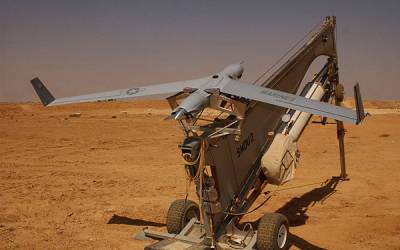
ScanEagle"
ScanEagle launch

ScanEagle’s base Insight UAV platform was originally developed by Washington state’s Insitu, Inc. to track dolphins and tuna from fishing boats, in order to ensure that the fish you buy in supermarkets is “dolphin-safe”. It turns out that the same characteristics needed by fishing boats (able to handle salt water environments, low infrastructure launch and recovery, small size, 20-hour long endurance, automated flight patterns) are equally important for naval operations from larger vessels, and for battlefield surveillance. A partnership with Boeing took ScanEagle to market in those fields, and the USMC’s initial buy in 2004 was the beginning of a market-leading position in its niche.

This article covers recent developments with the ScanEagle UAV system, which is quickly evolving into a mainstay with the US Navy and its allies. Incumbency doesn’t last long in the fast-changing world of UAVs, though. Insitu’s own RQ-21 Integrator is looking to push the ScanEagle aside, and new multiple-award contracts in the USA are creating opportunities for other competitors. Can Insitu’s original stay strong?

  1. 1
  2. 2
  3. 3
  4. 4
  5. 5
  6. 6
  7. 7
  8. ...
  9. 93

Stay Up-to-Date on Defense Programs Developments with Free Newsletter

DID's daily email newsletter keeps you abreast of contract developments, pictures, and data, put in the context of their underlying political, business, and technical drivers.