Indonesia’s Air Force Adds More Flankers

TNI-AU Su-27SK
Indonesian SU-27SK

Indonesia’s turn toward Russian fighters stemmed partly from necessity. Its 12 remaining F-16A/Bs and 16 remaining F-5E/F fighters experienced severe maintenance problems in the wake of a US embargo, triggered by the Indonesian military’s widespread human rights abuses in East Timor. Its 30+ single-seat Hawk 209 sub-sonic light combat aircraft, derived from the trainer jets the TNI-AU also operates, were the country’s only fighter alternative.

A $192 million contract began to address that in 2003, by buying 2 SU-27SK single-seat and 2 SU-30MK twin-seat multi-role fighters from Russia. Indonesia submitted a formal request to buy 24 used F-16s in 2011, but it isn’t backing away from its high-end Flanker fleet. In fact, the TNI-AU has steadily added more. Now, they’re reaching out to their neighbors for training and support.

Rolling Sales: Indonesia Becomes the Latest Buyer of German Tanks

German Leopard 2A6
Leopard 2A6

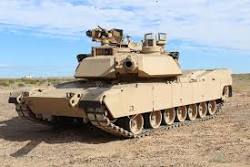
In August 2012, reports emerged that Indonesia had made a deal with Germany to buy heavy tanks and infantry carriers, after the Dutch had demurred. The Indonesian Army has a long record of human rights abuses, which sparked considerable opposition in the Netherlands. In contrast, Germany has been pushing hard for defense exports as a way to keep its defense industrial base busy, and of preserving jobs amidst Europe’s economic slowdown.

In May 2013, those reports were finally confirmed. What is the exact shape of the deal? How will the new vehicles fit with, and compare to, Indonesia’s existing equipment? And how did we get to this point?

Today’s Special: Turkey Subs

Advertisement
SSK Preveze Class
Preveze Class
(click to view larger)

In 2006 the Turkish SSM procurement agency issued a request for information (RFI) for 4 more diesel-electric submarines. That RFI became an RFP for 6 diesel-electric submarines with air-independent propulsion systems, to replace older boats like Turkey’s U209-based Preveze and Atilay classes.

DID covers the competition, and adds some quick background re: the Turkish Navy’s existing fleet, where its rival Greece stands, and contract developments regarding their new “Cerbe Class”. Turkey has a signed multi-billion Euro contract for HDW’s U214 subs… and are about to add a revolutionary new weapon.

AH-64E Apache Block III: The Once and Future Attack Helicopter

AH-64D helos Afghanistan
AH-64 in Afghanistan

With the collapse of the RAH-66 Comanche program, and rededication of its funding into the Armed Reconnaissance Helicopter (ARH) and Light Utility Helicopter (LUH), and other programs, the AH-64 Apache will remain the USA’s primary attack helicopter for several more decades. Apaches also serve with a number of American allies, some of whom have already expressed interest in upgrading or expanding their fleets.

The AH-64E Guardian Block III (AB3) is the helicopter’s next big step forward. It incorporates 26 key new-technology insertions that cover flight performance, maintenance costs, sensors & electronics, and even the ability to control UAVs as part of manned-unmanned teaming (MUT). In July 2006, Boeing and U.S. Army officials signed the initial development contract for Block III upgrades to the current and future Apache fleet, via a virtual signing ceremony. By November 2011, the 1st production helicopter had been delivered. So… how many helicopters will be modified under the AH-64 Block III program, what do these modifications include, how is the program structured, and what has been happening since that 2006 award? The short answer is: a lot, including export interest and sales.

Submarines for Indonesia

U209 Cakra
KRI Cakra
(click to view larger)

Indonesia sites astride one of the world’s most critical submarine chokepoints. A large share of global trade must pass through the critical Straits of Malacca, and the shallow littoral waters around the Indonesian archipelago. That makes for excellent submarine hunting grounds, but Indonesia has only 2 “Cakra Class”/ U209 submarines in its own fleet, relying instead on frigates, corvettes, and fast attack craft.

South Korea’s Daewoo, which has experience building U209s for South Korea, has been contracted for Cakra Class submarine upgrades. Even so, submarine pressure hulls have inflexible limits on their safe lifetime, due to repeated hydraulic squeezing from ascending and descending. The Indonesians have expressed serious interest in buying 3-6 replacement submarines since 2007, with French, German, Russian, South Korean, and even Turkish shipyards in the rumored mix. Other priorities shoved the sub purchase aside, but a growing economy and military interest finally revived it. South Korea was the beneficiary, but further orders may be in store.

Russia’s Yak-130 Trainer & Light Attack Jets

Yak-130
Yak-130

Russia’s air force (VVS) aged badly in the wake of the Cold War, and the lack of replacements soon made itself felt in all areas. One of those areas involved advanced jet trainers, which form the last rung on the ladder before assignment to fighters. Russia’s Czech-made L-29 and L-39 trainers were left with questionable access to spare parts, and a competition that began in the 1990s finally saw Yakolev’s Yak-130 collaboration with Italy’s Finmeccanica beat the MiG-AT in 2002. Unfortunately, Russian budget realities allowed orders for just a dozen early production Yak-130s, even as the VVF’s L-39 fleet dwindled drastically.

The Yak-130′s multi-mission capabilities in training, air policing, and counterinsurgency make it an attractive option for some customers beyond Russia. Initial export successes helped keep Yak-130 production going, via confirmed orders from Algeria (16), and unclear relationships with Kazakhstan, Libya, and Vietnam. In December 2011, however, Russia finally placed a significant order that got production started in earnest. Russia continues to promote the aircraft abroad, and now that the plane’s future is secure, interest and orders are picking up.

Indonesia Wants Maverick Missiles for Training

Mavericks got better eyesight as they aged

The US DSCA notified Congress [PDF] on August 21, 2012 of Indonesia’s request for 18 AGM-65K2 Maverick missiles, 36 TGM-65K2 Captive Air Training Missiles, 3 TGM-65D Maintenance Training Missiles, and the necessary services and ancillaries, for an estimated $25M total. If the request turns into an actual contract, the missiles will equip Indonesia’s F-16s. The contractor is Raytheon Missile Systems in Tucson, AZ.

Indonesia Looking for Trainer/Attack Aircraft

Latest updates: Contract for 2nd set of Super Tucanos.
OV-10
USAF OV-10

As natural resources and exports have fueled its economy, Indonesia has been looking to replace its fleets of BAE Hawk Mk.53 trainer jets, and OV-10F Bronco forward air control/ counterinsurgency aircraft, as part of a more general modernization. That competition was split in 2, and Brazil’s EMB-314 Super Tucano appears to be Indonesia’s choice to replace the OV-10s. To replace the British Hawk trainers, Indonesia is turning to another young aerospace power, as South Korea’s supersonic TA-50 offers both training capabilities and air policing punch.

Part of the rationale for these purchases lies in previous weapon buys. In 2007, the Indonesian Air Force purchased Russian SU-27SK and SU-30MKK fighters. The Flankers would supplement and/or replace fleets of American F-16A/B and F-5E/F Tiger II fighters, whose condition was harmed by a long arms embargo imposed in response to widespread repression and genocide in East Timor. New fighters will need new trainers, and light attack/ forward air control/ surveillance aircraft are a high priority for a huge country with pockets of separatist unrest. Step 1 involved securing the budgets to make the buys. Step 2 involved picking from a list of competitors around the globe:

Continue Reading… »

Indonesia Adding F-16 Falcon Fighters to Join Flankers

F-16A-15 TNI-AU
TNI-AU F-16A

Indonesia’s purchases of Russian SU-27SK and SU-30MKK Flanker-family fighters in 2003 and 2007 got a lot of attention. Now, the country is augmenting those 10 high-end fighters with more advanced models of an older aircraft within its fleet: 24 refurbished F-16s from the USAF.

The F-16 has a checkered history in Indonesia’s TNI-AU. The Indonesian military’s widespread murders and abuses in East Timor led to a 1999 US arms embargo, which created severe maintenance problems with its 12 remaining F-16A/B Block 15s, and its 16 remaining F-5E/F fighters. The US embargo lifted in November 2005, as lingering concerns about human rights accountability were trumped by the needs of a global campaign against Islamic terrorism. Which left Indonesia wondering what to do about its fighter fleet, as its economy picked up speed.

Continue Reading… »

Indonesia Signs $1B+ Defense Credit Agreement With Russia

SSK Kilo Class Iran
Kilo Class

Russian President Vladimir Putin stopped in Indonesia to finalize a $1.2 billion defense agreement and to strengthen economic ties. Indonesia has begun buying Russian equipment, including the recent $335 million purchase of more SU-27/30 Flanker family fighters, but Defence Ministry spokesman Edy Butar Butar told Reuters that no banks had stepped forward yet to finance the deal. The Russian defense package opens a line of credit that will allow Indonesia to buy Russian military equipment during the next 15 years, something they can afford as natural resources have made Russia the world’s second-largest holder of foreign currency reserves after China. A pair of SSK Kilo Class attack submarines, 20 armored vehicles, and 15-22 helicopters are reportedly on the shopping list, as part of larger modernization efforts; meanwhile, President Yudhoyono was blunt about their other reasons for accepting:

“We want to diversify the sources of our equipment. Russia is offering us a generous package, and Russia also does not attach any conditions whatsoever. Russia is all business and does not attach any political conditions and that is the way we like it, and that is why we took up the offer.”

Indonesian Defence Minister (and blogger) Juwono Sudarsono was even blunter:

  1. 1
  2. 2

Stay Up-to-Date on Defense Programs Developments with Free Newsletter

DID's daily email newsletter keeps you abreast of contract developments, pictures, and data, put in the context of their underlying political, business, and technical drivers.