May 09, 2013 14:33 UTC
Latest updates[?]: Taiwan contract; Saudi announcement indicates that their buy may have started in May 2012.
AH-64 in Afghanistan
With the collapse of the RAH-66 Comanche program, and rededication of its funding into the Armed Reconnaissance Helicopter (ARH) and Light Utility Helicopter (LUH), and other programs, the AH-64 Apache will remain the USA’s primary attack helicopter for several more decades. Apaches also serve with a number of American allies, some of whom have already expressed interest in upgrading or expanding their fleets.
The AH-64E Guardian Block III (AB3) is the helicopter’s next big step forward. It incorporates 26 key new-technology insertions that cover flight performance, maintenance costs, sensors & electronics, and even the ability to control UAVs as part of manned-unmanned teaming (MUT). In July 2006, Boeing and U.S. Army officials signed the initial development contract for Block III upgrades to the current and future Apache fleet, via a virtual signing ceremony. By November 2011, the 1st production helicopter had been delivered. So… how many helicopters will be modified under the AH-64 Block III program, what do these modifications include, how is the program structured, and what has been happening since that 2006 award? The short answer is: a lot, including export interest and sales.
Continue Reading… »
May 08, 2013 20:00 UTC
Latest updates[?]: VXX RFP details - but what will Boeing bid?; HMX-1 gets 1st of 12 V-22 Osprey tilt-rotors; FY 2014 budget highlights the cost of delay; GAO report on VXX; Article reorganized.
Aborted landing
In January 2005, the U.S. Navy selected the US101 as the new “Marine One” baseline helicopter, for use by the President of the United States. The US101 is an American variant of AgustaWestland’s successful AW101 multi-mission medium helicopter; it beat out Sikorsky’s S-92 Superhawk, which is already in use as a government VIP transport in countries like South Korea.
That $1.7 billion victory was first endangered, and then destroyed, by ongoing changes from the White House staff. In 2008, the program’s ballooning costs and requirements got a temporary reprieve when US Navy agreed to proceed with the VH-71, despite a cost per aircraft equal or greater than the President’s Air Force One 747s. By June 2009, however, the VH-71 program had shot itself down.
Another round of competition is on the way, and back in 2009 the Pentagon said it was considering buying 2 different helicopters in the VXX follow-on program. Faced with an initial Analysis of Alternatives deemed too expensive, the OSD accepted the Navy’s revised approach in May 2012, setting things in motion for a new program of record.
Continue Reading… »
May 08, 2013 19:20 UTC
Latest updates[?]: KAI borrows the people who write incomprehensible consumer electronics manuals, and announces the ROKAF's follow-on FA-50 order.
T-50 Golden Eagle
South Korea’s T-50 Golden Eagle family offers the global marketplace a set of high-end supersonic trainer and lightweight fighter aircraft. They’re hitting the international market at a good time: just as many of the world’s jet training fleets are reaching ages of 30 years or more, and high-end fighters are pricing themselves out of reach for many countries.
The ROK’s defense industry is advancing on all fronts these days. Its shipbuilding industry, one of the world’s busiest, is beginning to turn out its own LHDs, and even high-end KDX-III AEGIS destroyers. On the armored vehicle front, Korea’s XK2 tank and K9/K10 self propelled howitzer are beginning to win export orders, and its XK-21/KNIFV amphibious infantry fighting vehicle may not be too far behind. All fill key market niches, promising performance at a comparatively inexpensive price. Now its aerospace industry is in flight abroad with the KT-1 turboprop basic trainer, complemented by the T-50 jet trainer, TA-50 LIFT advanced trainer & attack variant, and FA-50 lightweight fighter.
The TA-50 and FA-50 are especially attractive as lightweight export fighters, and the ROKAF’s own F-5E/F Tiger II and F-4 Phantom fighters are more than due for replacement. The key question for the platform is whether it can find corresponding export sales.
Continue Reading… »
May 08, 2013 15:02 UTC
ANL on NH90
Britain needs to replace the old Sea Skua missiles carried by its naval helicopters. France could use a lighter missile than the 655 kg AM39 Exocet – one that could be carried by a wider range of helicopters, and offer a different attack profile. The answer to both needs may lie in a notional 110 kg missile under development by MBDA, as part of a broad 2006 “Team Complex Weapons” arrangement with the UK’s Ministry of Defence.
The question is whether Britain and France can get together and agree on the development framework for the Anti-Navire Leger / Future Anti-Surface Guided Weapon – Heavy (ANL / FASGW-H) missile. Britain needs a strike missile to equip its new AW159 Wildcats, but France can already mount longer-range AM39 Exocets on its Super Puma helicopters, and doesn’t feel a huge sense of urgency about its new NH90-NFH medium helicopters or AS565 Panther light naval helicopters.
Continue Reading… »
May 07, 2013 13:00 UTC
Latest updates[?]: Support contract; US Navy shifting its basing plans out of Hawaii.
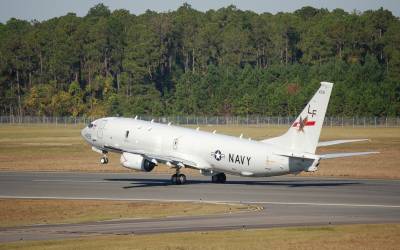
P-8A Poseidon
Maritime surveillance and patrol is becoming more and more important, but the USA’s P-3 Orion turboprop fleet is falling apart. The P-7 Long Range Air ASW (Anti-Submarine Warfare) Capable Aircraft program to create an improved P-3 began in 1988, but cost overruns, slow progress, and interest in opening the competition to commercial designs led to the P-7′s cancellation for default in 1990. The successor MMA program was begun in March 2000, and Boeing beat Lockheed’s “Orion 21″ with a P-8 design based on their ubiquitous 737 passenger jet. US Navy squadrons finally began taking P-8A Poseidon deliveries in 2012, but the long delays haven’t done their existing P-3 fleet any favors.
Filling the P-3 Orion’s shoes is no easy task. What missions will the new P-8A Poseidon face? What do we know about the platform, the project team, and ongoing developments? Will the P-3′s wide global adoption give its successor a comparable level of export opportunities? Australia and India have already signed on, but has the larger market shifted in the interim?
Continue Reading… »
May 06, 2013 15:02 UTC
Latest updates[?]: France preparing to contribute to ground systems budget; Airspace certification problems in Germany, and what they mean for AGS; Do USAF budgets threaten to make AGS an orphan system?
What is it good for?
The Alliance Ground Surveillance (AGS) program began in 1995, and it has taken a very long time. Its MoU was late, its contract will be both late and smaller in scope, and it won’t meet even a revised 2012 – 2014 fielding window. At long last, however, one can be assured that it will exist.T his is DID’s in-depth FOCUS Article covering the AGS program, from its platforms to its program structure to its long-awaited contracts.
The original AGS plan involved an Airbus A321 counterpart to Northrop Grumman’s E-8C Joint Surveillance Target Attack Radar System (J-STARS), a Boeing 707 derivative whose powerful ground-looking Synthetic Aperture Radar (SAR) offers American commanders combat-changing battlefield surveillance and communications. AGS would be a pooled NATO asset, adding 7 RQ-4B Global Hawk UAVs and dedicated ground stations to complement the manned planes. It has since been reduced to just 5 RQ-4 Block 40 Global Hawk UAVs and dedicated ground stations, but could expand again if countries decide to make some of their national surveillance assets part of the program.
Continue Reading… »