CD-Adapco

Iraq’s Interior Ministry Orders PACA Body Armor

Related Stories: Americas - USA, Domestic Security, Middle East - Other, Other Corporation, Soldier's Gear

SV2 vest
SV2 Vest

Protective Apparel Corp. of America in Jacksboro, TN received a $13.5 million firm-fixed price delivery order for body armor. This is an off GSA contract for the Government of Iraq’s Ministry of the Interior security forces.

Work will be performed at Jacksboro, TN and is expected to be complete by Sept 1/08. Bids were solicited via the Web with 15 bids received by the Multi-National Security Transition Command – Iraq’s Joint Contracting Command – Iraq, (MNSTC-I/JCC-I) in Baghdad, Iraq (GS-07F-9075D).

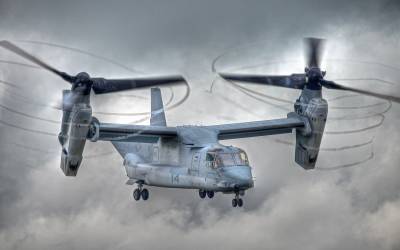
V-22 Osprey: The Multi-Year Program

Related Stories: Americas - USA, Boeing, Contracts - Modifications, Engines - Aircraft, Helicopters & Rotary, Issues - Political, New Systems Tech, Other Corporation, Policy - Procurement, Rolls Royce, Spotlight articles

AIR_V-22_Cutaway.jpg
(click to view full)
DII

The V-22 program has been beset by controversy throughout its 20-year development period, from crashes that have killed more than 20 Marines, to engine stalls, to issues with their AE1107C Liberty engines in Iraq that may lead to the end of Power By the Hour maintenance arrangements, or even replacement of the Liberty engines altogether. DID’s “V-22 Osprey: A Flying Shame?” offers a focused look at a number of specific allegations associated with the program, with material from Pentagon test reports, critical reviews, and the US military’s responses.

Despite these issues, the program continues to move forward. In March 2008, the Bell Boeing Joint Project Office in Amarillo, TX received a $10.4 billion modification that converted the previous advance acquisition contract (N00019-07-C-0001) to a fixed-price-incentive-fee, multi-year contract. The new contract will be used to buy 141 MV-22 (for USMC) and 26 CV-22 (Air Force Special Operations) Osprey aircraft, including associated manufacturing tooling in support of production rates.

This DID article will cover V-22 multi-year purchase contracts, developments that arise after this contract conversion, and associated contracts for key V-22 systems. The latest contract involves 6 “Liberty” engines…

Continue Reading… »

Canada Lays Out Future Defense Plans

Related Stories: Americas - Other, Budgets, Contracts - Intent, Fighters & Attack, Force Structure, Issues - Political, Policy - Procurement

GOV_Canada_DND_Crest.jpg

Canada’s military personnel have a reputation for being well-trained, but the state of their equipment and capabilities had become much bleaker after decades of neglect. Significant emergency purchases were required to secure the equipment needed for operations in Afghanistan, and despite being the second largest country in the world, the state of its military airlift capability was poor and deteriorating at all levels. Recent years have seen something of a turnaround, especially the funding injection and the beginning of major airlift (C-17, C-130J) and helicopter (CH-47D, CH-47F) projects in 2005-2006, and the shift away from wheeled armored vehicles to tracked tanks and M113s. Budget 2006 provided $5.3 billion over 5 years to sustain operations, acquire new equipment, and expand both the Regular and Reserve Forces, and ratcheted planned spending by $1.8 billion annually starting in 2011-2012.

Decades of neglect cannot be fixed overnight, however. Over 50% of the country’s military infrastructure is over 50 years old. On the equipment side, Canada’s Tribal Class destroyers, City Class frigates, CP-140/P-3 maritime patrol aircraft, Buffalo fixed-wing search and rescue aircraft, CF-18 fighter aircraft, and land combat vehicles and systems (other than tanks) will all reach the end of their service lives and need to be replaced at varying times over the next 20 years.

To this end, the Conservative Party of Canada led by Prime Minister Stephen Harper is proposing a long-term funding framework that would increase defense spending by about $600 million per year over the next 20 years. Nevertheless, the nature of its timelines, and of Canada’s political system, must both be considered as one evaluates this plan…

Continue Reading… »

RIM-162 ESSM Missile: Naval Anti-Air in a Quad Pack

Related Stories: Alliances, Americas - USA, Asia - Japan, Australia & S. Pacific, Contracts - Awards, Contracts - Modifications, Europe - Other, FOCUS Articles, IT - Software & Integration, Issues - International, Lockheed Martin, Middle East - Other, Missiles - Surface-Air, New Systems Tech, Other Corporation, Project Management, Protective Systems - Naval, R&D - Contracted, Raytheon, Support & Maintenance, Testing & Evaluation

ORD_RIM-162_ESSM_Sections.jpg
RIM-162: sections
(click to view full)
DII

The RIM-162 Evolved Sea Sparrow Missile (ESSM) is used to protect ships from attacking missiles and aircraft, and is is designed to counter supersonic maneuvering anti-ship missiles. Compared to the RIM-7 Sea Sparrow, ESSM is effectively a new missile with a larger, more powerful rocket motor for increased range, a different aerodynamic layout for improved agility, and the latest missile guidance technology. Testing has even shown the ESSM to be effective against fast surface craft, an option that greatly expands the missile’s utility. As a further bonus, the RIM-162 ESSM has the ability to be “quad-packed” in the Mk 41 vertical launching system, allowing 4 missiles to be carried per launch cell instead of loading one larger SM-2 Standard missile or similar equipment.

The Sea Sparrow was widely used aboard NATO warships, so it isn’t surprising that the ESSM is an international program. The NATO Sea Sparrow Consortium includes Belgium, Canada, Denmark, Germany, Greece, The Netherlands, Norway, Portugal, Spain, Turkey, and the USA – as well as non-NATO Australia. Foreign Military Sales customers outside this consortium include Japan, Korea, and the United Arab Emirates.

This is DID’s FOCUS article for the program, containing details about the RIM-162 Evolved Sea Sparrow missile family, and contracts placed under this program since 1999. The latest addition is a pair of support contracts, plus international orders for associated equipment…

Tanks for the Lesson: Leopards, too, for Canada

Related Stories: After-Action Reviews, Alliances, Americas - Other, Contracts - Intent, Europe - Other, Field Innovations, Issues - Political, Pre-RFP, Spotlight articles, Support & Maintenance, Support Functions - Other, Tanks & Mechanized, Training & Exercises, Transformation, Warfare - Lessons

LAND_Leopard_C2_Mine_Plough_Afghanistan.jpg
Leo C2s, Afghanistan
(click to view full)

It would seem that the Canadian Forces are taking some of the lessons re-learned during Operation Medusa in Afghanistan to heart. Canada’s DND:

“The heavily protected direct fire capability of a main battle tank is an invaluable tool in the arsenal of any military. The intensity of recent conflicts in Central Asia and the Middle East has shown western militaries that tanks provide protection that cannot be matched by more lightly armoured wheeled vehicles…. [Canada’s existing Leopard C2/1A5] tanks have also provided the Canadian Forces (CF) with the capability to travel to locations that would otherwise be inaccessible to wheeled light armoured vehicles, including Taliban defensive positions.”

In October 2003, Canada was set to buy the Styker/LAV-III 105mm Mobile Gun System to replace its Leopard C2 tanks. In the end, however, the lessons of war have taken Canada down a very different path – one that now has them renewing the very tank fleet they were once intent on scrapping with one of the world’s best tanks, and backing away from the wheeled vehicles that were once the cornerstone of the Canadian Army’s transformation plan. This updated article includes a full chronology for Canada’s new Leopard 2 tanks, and adds information concerning DND’s exact plans and breakdowns for their new tank fleet…

JHMCS: Fighter Pilot “Look & Shoot” Helmets’ Upgrade, Ups & Downs

Related Stories: Americas - Other, Americas - USA, Asia - Other, Australia & S. Pacific, Avionics, BAE, Boeing, Contracts - Modifications, Electronics - General, Europe - Other, FOCUS Articles, L3 Communications, Middle East - Israel, New Systems Tech, Official Reports, Policy - Procurement, Procurement Innovations, Project Management, Scandals & Investigations, Simulation & Training, Testing & Evaluation, Transformation, Warfare - Lessons

ELEC HMD JHMCS Collage

(click to view full)
DII

In the 1970s, fighter aircraft began to appear with Head-Up Displays (HUD) that projected key information, targeting crosshairs et. al. onto a seemingly clear piece of glass, so the pilot could keep his eyes on the sky instead of looking down at his instruments. We’ve been wondering when we’d see them in our automobiles ever since. In the 1990s, another innovation appeared: helmet-mounted displays put the HUD inside the pilot’s helmet, providing this information even when the pilot wasn’t looking straight ahead. The Israelis were already using a system called DASH when a set of former East German MiG-29s equipped with HMDs slaughtered USAF F-16s in exercises, and helmet-mounted displays suddenly became must-haves for modern fighters.

The Joint Helmet Mounted Cueing System (JHMCS) projects visual targeting and aircraft performance information on the back of the helmet’s visor, including aircraft altitude, airspeed, gravitational pull, angle of attack, and weapons sighting, enabling the pilot to monitor this information without interrupting the field of view through the cockpit canopy. The system uses a magnetic transmitter unit fixed to the pilot’s seat and a magnetic field probe mounted on the helmet to define helmet pointing positioning. A Helmet Vehicle Interface (HVI) interacts with the aircraft system bus to provide signal generation for the helmet display. This provides significant improvement for close combat targeting and engagement.

A September 2005 exchange with Boeing enabled DID to gain insights into the rocky past, overall state, and future of a program that has experienced its share of snags and controversy – but gone on to become the #1 helmet-mounted sight in the world today. That information fits nicely with DID’s expansion of our coverage to detail the JHMCS’ game-changing effects on air combat, its production sets and known customers, and all contracts since full-rate production began. The latest item is a minor contract to equip USAF F-15Es…

SALIS’ Sibling: NATO’s C-17 Pool Inaugurates In-House Heavy Lift

Related Stories: Alliances, Americas - USA, Boeing, Contracts - Intent, Europe - Other, Force Structure, Interoperability, Northrop-Grumman, Other Corporation, Policy - Procurement, Power Projection, Transport & Utility, United Technologies

AIR_AN-124_and_C-17.jpg
C-17 vs. AN-124
(click to view full)

The long-range C-17 Globemaster III heavy transport aircraft remains the backbone of US Air Mobility Command inter-theater transport around the world, and its ability to operate from shorter and rougher runways has made it especially useful during the Global War on Terror. Recent buys by Australia, Britain, and Canada have broadened the plane’s its global use. Now NATO, who has relied on the SALIS arrangement and its leased super-giant AN-124s from Russia, is looking to buy and own 3-4 C-17s as NATO pooled assets with multinational crews. Participating countries will receive allocated flight hours relative to their participation (a Dutch MinDef release says they expect 500 flight hours per year for EUR 10-15 million per year over 30 years), and thus far they include: Bulgaria, the Czech Republic, Estonia, Finland, Hungary, Italy, Latvia, Lithuania, the Netherlands, Norway, Poland, Romania, Slovakia, Slovenia, Sweden, and the United States.

This order will not materially change the coming shut-down of C-17 production, but it does look like the inauguration of a pool that will fill a gaping hole in Europe’s defense capabilities – its complete lack of heavy airlift. This article will cover NATO C-17 acquisition program, including its structure and ongoing announcements. Program is actually a misnomer so far. There has been talk, and spending bills are being introduced in some countries, but nothing resembling firm contracts yet, despite an originally-planned in-service date of late 2007. While Denmark has dropped out, Finland dropped in, and Latvia is now on board. Now a second official export request has been issued – but the number of planes has dropped…


India’s IGMP Missile Programs

Related Stories: Americas - USA, Asia - India, FOCUS Articles, Industry & Trends, Issues - International, Issues - Political, Middle East - Israel, Missiles - Anti-Armor, Missiles - Anti-Ship, Missiles - Precision Attack, Missiles - Surface-Air, New Systems Tech, Other Corporation, Radars, Russia, Testing & Evaluation

BrahMos
PJ-10 BrahMos
(click to view full)
DII

Back in November 2005, The Hindu newspaper reported that India’s government has given the go-ahead for exporting missiles, and that India’s Defence Research and Development Organisation (DRDO) is looking to market several of its products internationally. The DRDO will participate in international expos as part of its marketing strategy, and government officials have claimed interest from African, Gulf and South-East Asian countries. They have also noted, however, that India’s government would be required to approve any foreign sales to specific countries.

The missile systems in question include:

  • Trishul (“trident”) short-range surface-air missile (SAM)
  • Akash (“sky”) medium-range SAM
  • Nag (“cobra”) anti-armor missile; and the
  • Indo-Russian BrahMos medium-range supersonic cruise missile, which is primarily designed as an anti-ship weapon but can also perform land attack.

DID describes each of these programs, then adds some analysis that offers insights into these long-running missile programs and their competitive prospects. Updates have also been added, including the Indian Air Force’s agreement to begin manufacturing and fielding the Akash system…

$248M in Emergency Funds to Fix US Army Barracks

Related Stories: Americas - USA, Bases & Infrastructure, Contracts - Intent, Policy - Personnel, Scandals & Investigations

Frawley's photo
Welcome home…
(click for article)

In the wake of the scandal described last week in “YouTube Video Leads to Fixes at Ft. Bragg,” the US Army committed itself to walk through inspections of all its bases. On May 7/08, Army Secretary Pete Geren said that the US Army will spend $248 million in emergency funds to fix problems found during inspections of 148,000 rooms at bases worldwide.

Ned Christensen, chief of public affairs for the Army Installation Management Command, says that the US Army aims to have new or renovated barracks housing for 147,700 enlisted Soldiers within 5 years, at an estimated total construction cost for new barracks complexes of about $10.7 billion between 2004-2013. AP report.

The USCG’s National Security Cutters

Related Stories: Americas - USA, Budgets, C4ISR, Coastal & Littoral, Contracts - Awards, Contracts - Modifications, Corporate Innovations, EADS, Electronics - General, Events, FOCUS Articles, Issues - Political, Lockheed Martin, New Systems Tech, Northrop-Grumman, Official Reports, Partnerships & Consortia, Project Methodologies, Raytheon, Scandals & Investigations, Surface Ships - Combat, Transformation

SHIP CGC NSC Bertholf Machinery Trials
NSC 1 Bertholf
(click to view full)
DII

The US Coast Guard’s massive $25 billion Deepwater meta-program (really Deepwater-II given post-9/11 changes) has endured more than its share of ups and downs. Nevertheless, Congressional support remains strong, and efforts are being made to restructure the program and get it back on track. “Voted Off the Island: The USCG’s Deepwater FRC Program” offered an in-depth look into the difficulties faced by the USCG’s Island Class cutter modification program, and by the Deepwater Fast Response Cutter that was supposed to replace it. “US Coast Guard’s Deepwater Effort Hits More Rough Sailing” covers recent program developments more generally.

The Legend Class National Security Cutters are the largest ships in the Deepwater program, and represent the program’s flagship in more ways than one. The 418 foot, 4,300 ton ships will be frigate-sized vessels with a 21 foot draughts1, and are rather larger than the 379 foot, 3,250 ton Hamilton Class High Endurance Cutters (HECs) they will replace. Controversies regarding durability and potential hull fatigue, as well as significant cost overruns, have shadowed the new cutter’s construction. Nevertheless, the program appears to be moving forward.

This DID FOCUS Article covers recent developments concerning the Legend Class cutters. The latest developments include the tempest over TEMPEST, while a Navy review board gives the first of class ship Bertholf a thumbs-up review…