

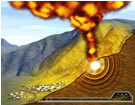
House and Senate conferees working to resolve differences in the FY 2006 appropriations bill have eliminated research funding for the Robust Nuclear Earth Penetrator (RNEP) weapon during the reconciliation process. The funding had been present in the Senate bill, but not in the House bill. Senator Pete Domenici [R-NM] said that “The focus will now be with the Defense Department and its research to earth penetrating technology using conventional weaponry…”
Some background re: the RNEP is in order.
In April 2005, a National Research Council report concluded that there are many hardened targets beyond the reach of current conventional weapons in the U.S. stockpile. It also stated that calculations demonstrated it would be impossible to contain all of the radiation underground from the use of an RNEP, but did note that the number of civilian causalities from the use of an RNEP would be considerably fewer than the use of a surface burst nuclear weapon.
On the other hand, questions were raised re: whether the RNEP’s shockwave effects would be able to burrow deeply enough to be truly effective against buried targets, and the weapons’ ability to fully ‘sterilize’ buried chemical and biological weapons.
The American Institute of Physics has an outstanding roundup on the RNEP issue and its evolution.
UPDATE: Arms Control Wonk debunks the idea that RNEP is being continued under another name. They key actually lies in the quote from Sen. Domenici, above, which referenced redirecting this research into better conventional “bunker buster” warheads instead. Note that opponents of the RNEP made exactly this recommendation. You can read it yourself via the Federation of American Scientists’ in-depth RNEP analysis.