

(click to view full)
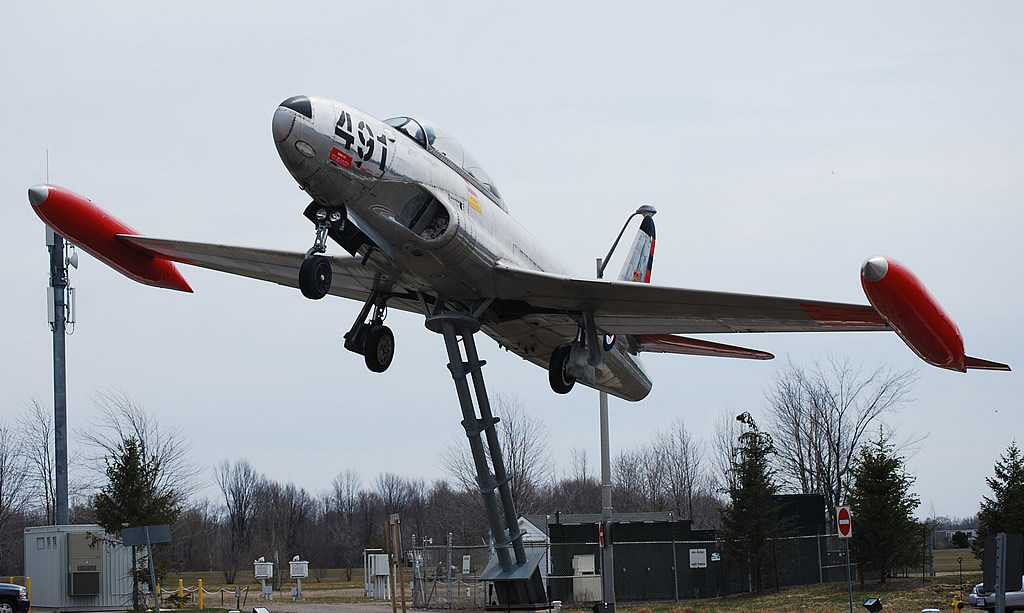
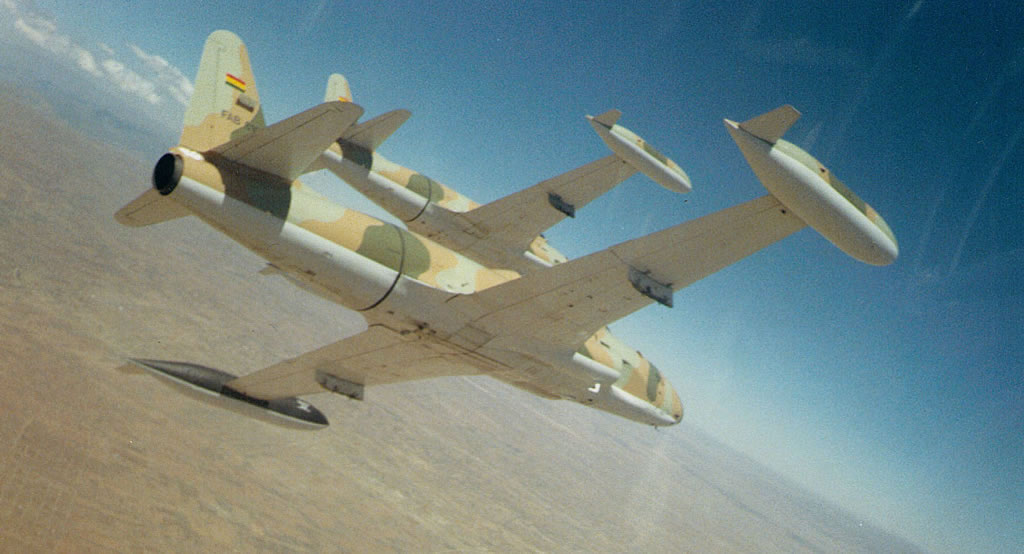
The Fuerza Aerea Boliviana wants to replace its 16 obsolete Lockheed T-33s, a fleet of trainer and light attack jets whose design is derived from the USAAF/ USAF’s first jet fighter, the P-80 Shooting Star. American production ended during the late 1950s, but licensed builds ended later, and it is still in service with some air forces around the world.
Bolivia discussed possible deals for EMB-314 Super Tucano aircraft with Brazil, and spent a great deal of time negotiating with The Czech Republic for some of its surplus L-159 ALCA/ L-159T advanced trainers and light attack jets. Unlike their popular Soviet-era L-39/L-59 counterparts, however, the L-159 was designed for compatibility with NATO equipment, and featured a number of American components. That proved the sale’s undoing. The USA invoked ITAR military technology transfer laws, and blocked the export to Chavez ally Evo Morales’ government.
In response, Bolivia turned to a Chinese/Pakistani joint venture, and will soon receive its jets…
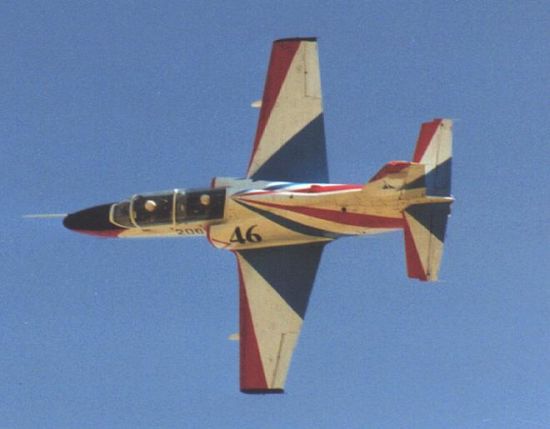
The JL-8/ K8 Karakorum
(click to view larger)
The K-8 Karakorum was jointly developed by China’s Nanchang-based Hongdu Aviation Industry Group (HAIG), and Pakistan Aeronautical Complex (PAC) in the 1990s. The original intent was to replace the Pakistani Air Force’s Cessna T-37 jet trainers, but China also ended up adopting it as its jet trainer (JL-8).
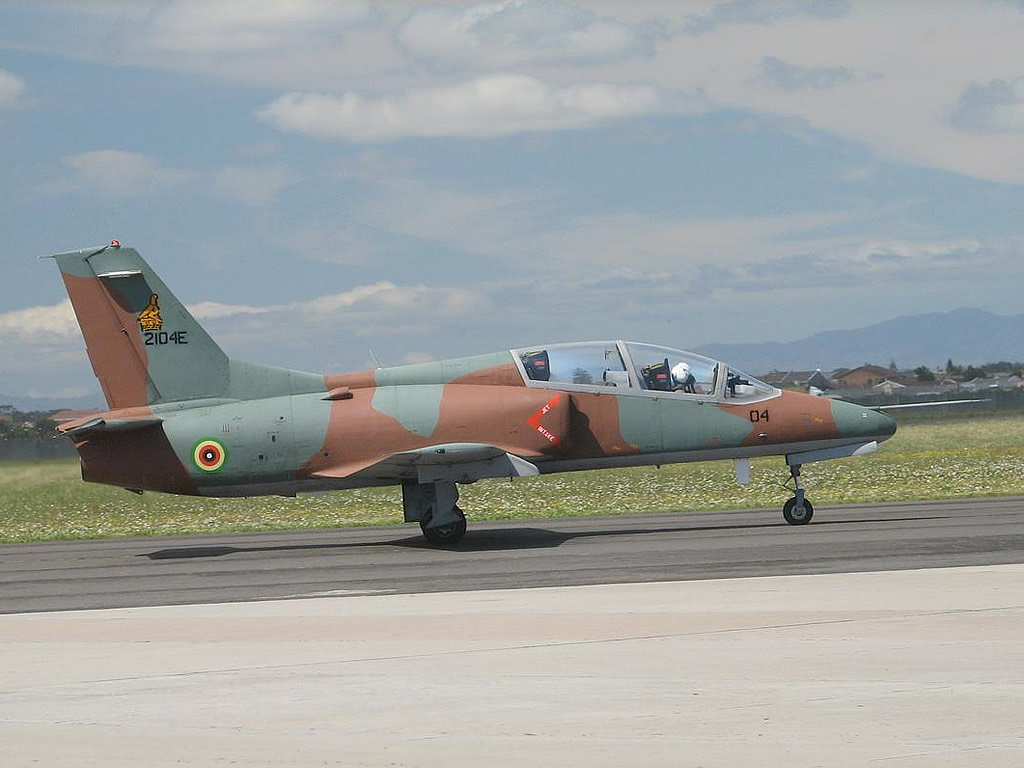
According to Sino Defense, over 500 K-8s have been built since 1993. To date, it has been ordered by Pakistan (120), China (100+), Burma/ Myanmar (4), Ghana (4), Namibia (4), Sri Lanka (6-8, now 3-5), Sudan (12), Zambia (8), and Zimbabwe (12). A modified version is also produced by Egypt as the K-8E (120). Other reported orders include another 8 aircraft for Burma (now 12), Tanzania (6), and a recent order from Venezuela (24).
As one can readily see from the above list, the K-8 is in service with a number of rogue regimes. The jets don’t have weapons built in, but they can be armed. K-8s carry up to 4 under-wing pylons rated at 250 kg each. Options include fuel drop tanks, 23mm cannon pods, unguided rockets, unguided bombs, and even short-range air-to-air missiles.
The aircraft has 3 engine options. The most common by production quantity is China’s WS-11, a licensed copy of the Ukranian Ivchenko AI-25TL turbofan. Aircraft so equipped are reportedly designated L-11s. The AI-25TL reportedly delivers 3,600 – 3,800 pounds thrust, and also equips aircraft for most export customers.
As a 3rd choice, the K-8 is certified to carry an American-made Honeywell TFE731-2A turbofan, which equips Pakistani aircraft. This engine was a case study in the Congressional Cox Report’s 1998 investigation into Chinese espionage, and failures in the government’s adjudication of American export controls. Note that the report did not claim that Honeywell had ever violated export control laws; its target was the laws themselves, and their adjudication in light of Chinese actions and practices.
Contracts and Key Events
(click to view full)
Jan 18/11: The head of Bolivia’s FAB says that the Chinese K-8s will arrive in March 2011. Straits Times.
Oct 2/09: The Bolivian government approves a $57.8 million-dollar purchase of 6 Chinese/ Pakistani K-8 trainers and light attack aircraft. The deal was reportedly finalized on Sept 30/09, and the newspaper La Razon quotes Defence Minister Walker San Miguel as saying that “the president will announce it on October 10.” San Miguel has had to defend the deal, which is come in for criticism by Bolivia’s neighbors. He reportedly said that “The U.S. is not helping and Europe has its own regulations, so we went to China.”
The aircrafts’ declared purpose is counter-narcotics and air surveillance. This very area has been a major irritant in Bolivia’s relations with the USA, due to the government’s support of cocoa leaf production, and refusal to cooperate with international counter-narcotics efforts. From the US State Department Background Brief:
“Bilateral relations have deteriorated sharply during the Morales administration… In June 2008, the government endorsed the expulsion of USAID from Bolivia’s largest coca-growing region… In November 2008, President Morales expelled the Drug Enforcement Administration (DEA) from the country, ending a 35-year history of engagement against narcotics production and trafficking. Bolivia’s international obligation to control illegal narcotics is a major issue in the bilateral relationship. For centuries, a limited quantity of Bolivian coca leaf has been chewed and used in traditional rituals, but in the 1970s and 1980s the emergence of the drug trade led to a rapid expansion of coca cultivation used to make cocaine… In 1988, a new law, Law 1008, recognized only 12,000 hectares in the Yungas as sufficient to meet the licit demand of coca… Bolivia plans to expand legal coca production to 20,000 hectares and stresses development of legal commercial uses for coca leaf. The United States prefers long-term limits that track more closely with current estimated legal domestic demand of around 4,000 to 6,000 hectares. Current cultivation has oscillated between about 23,000 and 29,000 hectares since 2001.”
Reports add that Bolivia is also waiting for 5 US-made H-1 Huey helicopters to be delivered by Brazil, but the delivery is said to be frozen by the need for American export approvals. Pakistan’s The News International | SpaceWar.

(click to view full)
March 17/09: The pro-government La Prensa newspaper reports that the USA has refused export permission for the L159’s to Bolivia. The cited source is a Ministry of Defense spokesman.
Under American law, military exports also require US government permission for any resale. That includes the American equipment installed in these jets. Evo Morales is a close ally of Venezuelan strongman Hugo Chavez, hence hostile to the United States.
Jan 13/09: Bolivia’s air force declares that it will purchase 5 single-seat L-159 light attack fighters and a twin-seat L-159T under the Air Surveillance and Control modernization program. Bolivian President Evo Morales has signed decree 29852, an order that includes the 6 planes, a flight simulator, pilot and maintenance training, spare parts, and other standard support. Despite Morales’ ties to volatile Venezuelan strongman Hugo Chavez, American consent was reportedly forthcoming for re-export of the L-159’s advanced electronics. The deal is worth $57.9 million, and will be paid in 4 installments: $11 million in 2009, and 3 more $15.6 million payments from 2010-2012. After that, matters become less clear.
Czech reports state that the 6 L-159s will have to undergo an overhaul worth over CZK 400 million ($18.7 million) before their transfer to Bolivia, to be paid by the Czech Republic’s Defence Ministry. On the other hand, President Morales’ decree appears to mention new aircraft, so this aspect is still slightly unclear. DID believes that refurbished aircraft are the likely bet, as restarting a production line is far too expensive.
(click to view full)
Bolivia’s long-term intentions are less clear. Some reports peg the FAB’s desired goal as a fleet of 12-18 L-159s. Others cite a goal of 6 L-159 single-seat and 4 two-seat models. Still other sources note that a separate deal for Brazil’s similar EMB-314 Super Tucano turboprops is expected in 2009, once the export financing credits are approved by Brazil’s development bank. Time will tell.
The least clear aspect of this deal concerns the involvement of EADS. Earlier reports described a 3-corner deal structure, and reports indicate that the Czech defense ministry may still be interested in swapping the L-159s with EADS for one EADS-CASA C-295M light tactical transport plane, plus an option for buying another 3 aircraft to replace its aging AN-26s. EADS would then act as the middleman with Bolivia, and transfer its own aircraft to the Czechs in recompense.
At present, however, this arrangement does not appear to be reflected in the current deal; reports state that the designated agent will be the Czech Republic’s Omnipol. Other reports confuse the issue further by mentioning President Morales’ press conference response that he was getting CASA aircraft – but caza (fighter) sounds very similar in Spanish. Praugue Daily Monitor | Decreto Supremo No 29852 [in Spanish] | Bolivia’s La Razon [in Spanish].
March 28/08: The Czech daily Lidove Noviny reports that the 6-month negotiations with Bolivia have failed, because the country does not have enough money for the 6-10 planes involved. Ceske Noviny report [English].
Additional Readings & Sources
* Thanks to subscriber Inigo Guevara, author of Harpia Publishing’s Latin American Fighters, for his assistance.
* Sino Defense – JiaoLian-8 (Karakorum-8) Jet Trainer
* GlobalSecurity – K-8 Karakorum
* AerospaceWeb – CNAMC / PAC K-8 Karakorum Trainer and Light Attack Fighter
* Aero Vodochody – L-159 Combat & Training System
* Wikipedia – T-33 Shooting Star
* US Congress (Jan 3/99) – Report of the Select Committee on U.S. National Security and Military/Commercial Concerns with the People’s Republic of China: Overview. See esp. Chapter 10’s Garrett Engines case study, which references the K-8.