DID »
Aircraft » Archive by category 'Helicopters & Rotary'
07-Aug-2008 15:19 EDT
Related Stories: Americas - USA, Contracts - Intent, Helicopters & Rotary, Middle East - Other, Other Corporation, United Technologies

UH-60L: Leaving the LZ
(lick to view larger)
On July 20/06, the US DSCA announced [PDF format] Saudi Arabia’s official request to buy 24 UH-60L Utility/Assault Black Hawk helicopters, spare and repair parts, communications and support equipment, publications and technical data, personnel training and training equipment, contractor engineering and technical support services and other related elements of logistics support. The UH-60L Black Hawk is currently the USA’s mainstay utility helicopter, serving in various configurations in all operating theaters and theaters of war; the upgraded UH-60M is just entering low-rate production.
Now, that has turned into an actual contract…
Continue Reading… »
06-Aug-2008 14:36 EDT
Related Stories: Americas - USA, Boeing, Contracts - Modifications, Engines - Aircraft, Europe - E.U., GE, Helicopters & Rotary, Issues - Political, New Systems Tech, Other Corporation, Policy - Procurement, Rolls Royce, Spotlight articles

(click to view full)
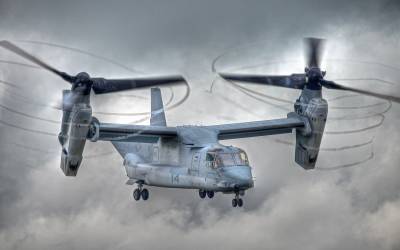
The V-22 program has been beset by controversy throughout its 20-year development period, from crashes that have killed more than 20 Marines, to engine stalls, to issues with their AE1107C Liberty engines in Iraq that may lead to the end of Power By the Hour maintenance arrangements, or even replacement of the Liberty engines altogether. DID’s “V-22 Osprey: A Flying Shame?” offers a focused look at a number of specific allegations associated with the program, with material from Pentagon test reports, critical reviews, and the US military’s responses.
Despite these issues, the program continues to move forward. In March 2008, the Bell Boeing Joint Project Office in Amarillo, TX received a $10.4 billion modification that converted the previous advance acquisition contract (N00019-07-C-0001) to a fixed-price-incentive-fee, multi-year contract. The new contract will be used to buy 141 MV-22 (for USMC) and 26 CV-22 (Air Force Special Operations) Osprey aircraft, including associated manufacturing tooling in support of production rates.
This DID article will cover V-22 multi-year purchase contracts, developments that arise after this contract conversion, and associated contracts for key V-22 systems. The latest contract involves the next phase of the CV-22’s development, as testing and preparation for OpEval continues…
06-Aug-2008 13:26 EDT
Related Stories: Americas - USA, Contracts - Awards, Contracts - Modifications, FOCUS Articles, Forces - Marines, GE, Helicopters & Rotary, IT - Software & Integration, L3 Communications, Lockheed Martin, New Systems Tech, Northrop-Grumman, Other Corporation, Simulation & Training, Thales
The US Marines’ helicopter force is aging on all levels, from CH-46 Sea Knights far older than their pilots to the 1980s era UH-1N Hueys and AH-1W Cobra attack helicopters that make up the Corps’ helicopter assault force. While the V-22 program has staggered along for almost 2 decades under accidents, technical delays, and cost issues, replacement of the USMC’s backbone helicopter assets has languished. Given the high-demand scenarios inherent in the current war, other efforts are clearly required.
Enter the H-1 program, the USMC’s plan to remanufacture 100 of the Marines’ old UH-1N Hueys and 180 of its AH-1W Super Cobra attack helicopters into advanced variants. The new versions would discard the signature 2-bladed rotors for modern 4-bladed improvements, redo the aircraft’s electronics, and add improved engines and weapons to offer a new level of performance. At least, that was the idea. It hasn’t quite worked out that way, and the H-1 program has encountered its own share of delays and issues. Nevertheless, the program survived a recent review, and continues on into the low-rate initial production stage and OpEval Phase II.
This is DID’s FOCUS Article regarding the H-1 program; it will be updated and backfilled as events and opportunity dictate. Recent developments include just under $20 million in testing and support related contracts…
05-Aug-2008 17:50 EDT
Related Stories: Alliances, Americas - USA, Asia - Central, Budgets, Contracts - Intent, Events, Fighters & Attack, Helicopters & Rotary, Issues - Political, Specialty Aircraft, Support Functions - Other

PAF F-16A drops Mk.82s
(click to view full)
On June 30/08, “US GAO Criticizes CSF Aid to Pakistan” discussed some of the tensions inherent in US aid to Pakistan, which has totaled several billion dollars since 2001. In addition to accounting and documentation issues, there have also been several instances in which the Pakistani military’s priorities and uses of its funds have diverged from the counter-terror focus intended by the US government.
Pakistan’s current status as a country with a larger and more active insurgency than Iraq’s has two seemingly paradoxical effects. On the one hand, it raises the stakes when “Coalition Support Funding” and other counter-terror aid is used for other military efforts or prestige projects instead. On the other hand, because the stakes are so high given Pakistan’s ownership of nuclear weapons, the USA’s leverage for dealing with questionable appropriations is reduced to some extent. Aid to Pakistan has always been as much about keeping its military and government on side as it has been about dealing with the Al-Qaeda/Taliban networks that currently control significant sections of the country along the Afghan border.
In late July 2008, all of these tensions exploded into view, as Pakistan proposed to redirect 2/3 of its 2008 aid into modernizing its older F-16 fighter fleet. The PAF wants to bring all of its F-16s to a standard that’s comparable to the new F-16 Block 50/52 aircraft it’s about to receive. The US State Department acquiesced; but Congress seems to be of a different mindset…
Continue Reading… »
03-Aug-2008 19:10 EDT
Related Stories: Americas - USA, Boeing, Contracts - Intent, Force Structure, Guns - Artillery & Mortars, Helicopters & Rotary, Lockheed Martin, Middle East - Other, Missiles - Anti-Armor, Other Corporation, Rockets, Rolls Royce, Shells & Mortar Rounds, Support Functions - Other

SOAR’s AH-6J
(click to view full)
July 30/08: The US Defense Security Cooperation Agency announces Iraq’s formal request to buy 24 helicopters. Based on the request, Iraq seems to be interested in Armed Reconnaissance Helicopters that act as scouts, perform light close air support, and escort other helicopters on dangerous missions.
The IqAF currently relies on a small force of Russia’s popular Mi-8/17 and refurbished Bell “Huey II” helicopters. While the Russian helicopters can be armed, their status as Iraq’s only medium utility helicopters makes them a poor fit for an ARH role. Instead, Iraq looks set to choose between 2 competitors. One is the Bell 407, whose derivative ARH-70A won the competition in America but has run into trouble. The other is Boeing’s AH-6 “Little Bird” light attack helicopters used by US Special Forces, which provided critical fire support during the 1991 “Backhawk Down” incident.
The complete request also includes mortars for land use, but also adds airborne weapons – something the nascent post-Saddam IqAf has not really had to this point. The entire request, which could be worth up to $2.4 billion, includes:
Continue Reading… »
03-Aug-2008 11:29 EDT
Related Stories: Americas - USA, Boeing, Budgets, Contracts - Awards, Design Innovations, Expeditionary Warfare, FOCUS Articles, Forces - Marines, Helicopters & Rotary, Interoperability, Issues - Political, Lobbying, New Systems Tech, Other Corporation, Policy - Procurement, Power Projection, Pre-RFP, Project Methodologies, R&D - Contracted, Specialty Aircraft, Top Stories, Transformation, Transport & Utility, United Technologies

JHL: QTR Concept
(click to view full)
In 2005, the US military and NASA announced the kickoff of the Army-led Joint Heavy Lift program, with the award of 5 contracts for the Concept Design and Analysis (CDA) of a Vertical Takeoff and Landing (VTOL) Joint Heavy Lift (JHL) rotorcraft. This is a futuristic aircraft that’s imagined as having the C-130 Hercules aircraft’s 20 ton cargo capacity, but with the ability to take off and land like a helicopter. No current US military helicopter platform even comes close to that vision, and so the competitors are deploying some radical and different technologies in their attempts to meet these goals. DID covers each of them below.

CH-53E Super Stallion
At the same time, the US Marine Corps’ vital medium-heavy lift CH-53E Super Sea Stallion helicopters are beginning to to wear out their airframes. Hence the HLR Heavy Lift Replacement (HLR) program, aimed at fielding new-build CH-53K aircraft beginning in 2013-2015. The US Air Force, meanwhile, has its AJACS program, which aims to produce a C-130 replacement beginning around 2020.
All 3 programs may face a rough ride ahead. Runaway cost growth on numerous US defense programs, operational demands, and a looming demographic crisis in social programs all work to create budget squeezes, and hence pressures for program consolidation. The USMC’s affordable CH-53X track upgrade was very nearly sidetracked via a merger with he R&D heavy, schedule-uncertain, JHL, and may not be in the clear yet. The USAF’s AJACS program to replace the C-130 Hercules with a modern 20+ ton transport is also facing scrutiny of this sort, and those pressures, too may increase. Conversely, it is also possible that the JHL program could find itself edged out by a pair of more conventional helicopter and aircraft solutions from the USMC and USAF. DID notes the technologies, the politics, and progress to date.
Recent news includes a report that shows just how far away the US military is from a viable competition and winning design…
31-Jul-2008 18:55 EDT
Related Stories: Americas - USA, Boeing, Contracts - Awards, Contracts - Modifications, Helicopters & Rotary, Policy - Procurement, Spotlight articles, Warfare - Trends

Replacement required
(click to view full)
War takes its toll on equipment, as well as men. In some cases, it wears out. In other cases, enemy fire or accidents destroy equipment. The USA has recognized this fact by funding wartime replacement expenditures as supplemental funding, which is outside the normal budgetary process. The intent is that this money will be spent on replacing equipment that has been worn out, damaged or destroyed, or will be used to provide specialized capabilities like MRAP mine-resistant vehicles that are directly related to the demands on the front lines. Admittedly, this hasn’t always been true. Politicians are what they are, and so are large organizations like the military. One area where this ethic has undoubtedly been honored, however, has been the AH-64 Apache attack helicopter fleet.
AH-64s are in very heavy demand as escorts for other helicopters in the war zones, to the point that the AH-64 fleet had logged more than 2 million flight hours by April 2006 – nearly 1/3 of which had been logged after Sept. 11/01. Apaches have also taken losses in combat. Even armor rated to stop 23mm cannon shells may not survive a missile hit, and helicopters are relatively fragile aircraft that can be seriously damaged if they take enough fire in smaller calibers, or endure an unlucky strike in the wrong place.
This article covers US Army Wartime Replacement Aircraft (WRA) AH-64D Longbow buys, which are the only truly new attack helicopters in the America’s inventory. Travis Williams, Boeing’s AH-64D WRA Program Manager helped to put these purchases in context within the overall Apache program, which is preparing for the new Block III model….
- AH-64D Program: Past and Present
- AH-64D WRAs: Program Contracts
- The AH-64’s Future
Continue Reading… »
31-Jul-2008 09:33 EDT
Related Stories: Americas - USA, Avionics, Boeing, Contracts - Awards, Electronics - General, FOCUS Articles, Helicopters & Rotary, IT - Software & Integration, Lockheed Martin, New Systems Tech, Northrop-Grumman, Radars, Signals Radio & Wireless, Support Functions - Other

AH-64 in Afghanistan
(click to view full)
With the collapse of the RAH-66 Comanche program, and rededication of its funding into the ARH-70 Armed Reconnaissance Helicopter (ARH), the UH-145 Light Utility Helicopter (LUH), and other programs, the AH-64 Apache will remain the USA’s primary attack helicopter for several more decades.
On July 14, 2006, Boeing and U.S. Army officials signed a $619.3 million contract for Block III upgrades to the current and future Apache fleet via a virtual signing ceremony in Washington, DC, Huntsville, AL, and Mesa, AZ. Overall AH-64D Longbow Block III improvements, slated for 2008 on, incorporate 25 technology insertions as part of the Army’s future force plan. Previously signed and executed contracts for risk reduction engineering work were valued collectively at $66.1 million, and there has been some advance ordering and development of components like radar units.
So… how many helicopters will be modified under the AH-64 Block III program, and what do these modifications include?
28-Jul-2008 17:28 EDT
Related Stories: Americas - USA, Asia - India, EADS, Europe - France, Helicopters & Rotary, Lobbying, Other Corporation, Partnerships & Consortia, RFPs, Rumours, Spotlight articles

Austrian Alouette-III
(click to view full)
In 2003, India issued an RFP for 197 light helicopters to replace its Army’s aging fleet of Chetaks (Aerospatiale SA316 Alouette III) and Cheetahs (SE316B Alouette II). These helicopters are old designs, but they have consistently proven themselves in high altitude operations, and remain useful as long as their airframe’s remain safe. The problem is, at their age that isn’t a very long time. India’s Army Aviation Corps needs replacements, and wants new helicopters with better performance and support characteristics. These new machines will perform a variety of armed light utility tasks, including ferrying loads of up to 75 kg to troops based at heights of 23,000 feet around Kashmir, the Siachen Glacier, et. al. Operation at these altitudes has traditionally been very challenging for helicopters, owing to reduced rotor lift in the thinning air.
Indian officials were discussing a deal worth between $500-$600 million to buy 60 helicopters outright, with the remaining 137 being built under license by Hindustan Aeronautics Limited (HAL). Eurocopter’s AS550 C3 Fennec and Bell Textron’s 407 competed in the second and final round of summer trials, and as 2007 ticked toward a close, it looked like we had a winner. As often happens in India, however, the process ended up completely derailed. Now, there’s a new RFP – but inside lobbying from HAL has backed India off of its initial goal of 312 foreign helicopters…
27-Jul-2008 12:27 EDT
Related Stories: Britain/U.K., Contracts - Awards, FOCUS Articles, Finmeccanica, General Dynamics, Helicopters & Rotary, Issues - Political, Other Corporation, Procurement Innovations, Project Methodologies, Public Partnering, Support & Maintenance, Transformation

Future Lynx naval
(click to view full)
In 2006, Finmeccanica subsidiary AgustaWestland received a GBP 1 billion (about $1.9 billion at 02/07 rates) contract from the UK Ministry of Defence (MoD) for 70 Future Lynx helicopters. The Lynx is an extremely fast helicopter that entered service in the 1970s and has seen several versions and upgrades over the decades. Lynx helicopters have been used in a number of British Army [AH7 & AH9] and Fleet Air Arm [Mk 8] roles, from reconnaissance and attack to casualty evacuation & troop transport, logistical support, anti-submarine operations; and even command post functions.
The Future Lynx program reflects that. It will provide the British Army with 40 Battlefield Reconnaissance Helicopters (BRH), and the Royal Navy with 30 Surface Combatant Maritime Rotorcraft (SCMR). An option for an additional 10 aircraft can be split in any way desired.
This will become the DID FOCUS Article for the Future Lynx Program, describing its improvements, schedules, and related contracts. Per DID practice, the most recent items will be highlighted in green for reader convenience. The latest developments include the beginning of full airframe production, following a successful design-to-cost program that had better than expected results…