CD-Adapco

Replacing Canada’s Failing CC-130s: 17 C-130Js

Related Stories: Americas - Other, Boeing, Budgets, EADS, FOCUS Articles, Force Structure, Issues - Political, Lockheed Martin, Other Corporation, Policy - Procurement, Power Projection, Pre-RFP, Procurement Innovations, Project Failures, Project Methodologies, Rolls Royce, Support & Maintenance, Think Tanks, Transformation, Transport & Utility, United Technologies

IDGA
Advertisement
AIR CC-130 AAR BC
CC-130 over BC
(click to view full)

DID has covered the growing realization in the US military that its aging aircraft fleet will begin posing serious challenges in the coming years. In a related vein, consider the problems that Canada is currently experiencing. In 2005, Chief of the Defence Staff Gen. Rick Hillier said that “Our [CC-130 E/H] Hercules fleet right now is rapidly going downhill. We know that three years and a little bit more than that, the fleet starts to become almost completely inoperational and we will have to stop supporting operations – or else, not be able to start them.”

The CC-130s are used in a wide variety of roles, from tactical transport to aerial refueling and even search and rescue. The Canadian Forces do not own any other aircraft in a similar class, which makes replacement essential. EADS tried to remain in the running with its Airbus A400M, and other alternatives were proposed, but the specific requirements set by Canada’s Department of National Defense (DND) tended to exclude alternatives. In December 2008, a program worth almost C$ 5 billion got underway to buy 17 of Lockheed’s privately-developed C-130J “Super Hercules” planes.

In this revised Spotlight article, DID can offer additional details regarding the Canadian procurement program, and the thinking behind it; some background that points up the parallels between the issues faced by the Canadians, and the experiences of other air services; and some insight into why the buy took so long, after the C-130J was declared Canada’s preferred choice in an “expedited” process. Despite these delays, and the supposed urgency of the situation, Canada’s DND appeared to be ignoring a USAF offer of early delivery… but that may have changed.

Design & Preparations Continue for Britain’s New CVF Future Carrier (updated)

Related Stories: BAE, Britain/U.K., Budgets, Contracts - Awards, Corporate Innovations, Europe - France, Events, FOCUS Articles, Force Structure, Issues - Political, New Systems Tech, Other Corporation, Partnerships & Consortia, Power Projection, Procurement Innovations, Project Management, Project Methodologies, Rolls Royce, Rumours, Surface Ships - Combat, Thales

SHIP CVF Concept
RN CVF Concept
(click to view full)
DII

In 1998, Britain’s Strategic Defence review (SDR) announced plans to replace the current set of 3 Invincible Class 22,000t escort carriers with 2 larger, more capable Future Aircraft Carrier (CVF) ships that could operate a more powerful force. These new carriers would be joint-service platforms, operating aircraft and UAVs from all 3 services (Navy, RAF, Army) in roles that could include ISR (Intelligence, Surveillance & Reconnaissance), force projection and logistics support, close air support, anti-submarine/ anti-surface naval warfare, and land attack.

Once the new ships of the Queen Elizabeth Class are complete, Britain will possess a full-size carrier force for the first time in several decades. The 65,000t CVF carriers will be equipped with Harrier GR9 and F-35B Lightning II STOVL fighters, along with AEW aircraft and helicopters; but the ships will be upgradeable to handle conventional fixed-wing aircraft and/or unmanned UCAVs during their expected 40-50 year life span.

CVF_Carrier_Comparisons
CVF, De Gaulle, and
Invincible Class
(click to add Nimitz)

The scale of the CVF effort relative to Britain’s past experiences means that the program structure is rather complex. It has passed through several stages already, and is being run and conducted within an industrial alliance framework. There is also a parallel international framework, involving cooperation with France on its PA2 carrier as a larger derivative of the CVF design.

This DID FOCUS article covers that structure and framework, ongoing developments, and the ships themselves as they round toward final design, construction, and fielding. Recent updates include rumors that the project may be facing a budgetary axe…

Norway to Renew Tactical Transport Fleet

Related Stories: Americas - USA, BAE, Contracts - Intent, ECM, Europe - Other, Issues - Political, Lockheed Martin, Other Corporation, Power Projection, Protective Systems - Aircraft, Rolls Royce, Transport & Utility

IDGA
Advertisement
AIR_C-130H_Norwegian_Torbjorn_Kjosvold.jpg
Norwegian C-130H by
Torbjorn Kjosvold
(click to view larger)

Back in February 2007, the Norwegian Forsvarsnett said:

“The Armed Forces have six C-130H Hercules transport aircrafts today [DID: 335 skv, out of Oslo-Gardermoen]. These were bought in 1969 and are outdated. Recent updates have made them able to be operational until 2012-15, but it is now known that the planes need further work done to them still. Therefore the Norwegian government has started investigating the possibility of either renting or buying up to four new planes of the type Hercules C-130J.”

Faced with the prospect of further C-130H refurbishment work on one hand, and entreaties by the A400M consortium on the other, Norway needed to decide what to do. They did, and the decision promptly came under political attack – but a deal is done now for 4 C-130J variants, and the first aircraft has been delivered…

Continue Reading… »

E-2D Hawkeye: The Navy’s New AWACS

Related Stories: ABM, Americas - USA, Asia - India, Avionics, C4ISR, Contracts - Awards, Contracts - Modifications, Events, FOCUS Articles, L3 Communications, Lockheed Martin, New Systems Tech, Northrop-Grumman, Radars, Raytheon, Rolls Royce, Signals Intercept, Cryptography, etc., Specialty Aircraft, United Technologies

PUB E-2D Collage
(click to view full)
DII

Northrop Grumman’s E-2C Hawkeye serves as the US Navy and French Navy’s carrier-capable “mini-AWACS” aircraft. Its primary role is advance warning of incoming aerial threats; ship-based radars are far larger and more powerful, but cannot scan below the angle of the horizon. Secondary roles include strike command and control, land and maritime surveillance, search and rescue, communications relay, and even civil air traffic control during emergencies. E-2C Hawkeyes began replacing previous Hawkeye versions in 1973; they also fly from land bases in the militaries of Egypt, Japan, Mexico, Singapore, and Taiwan; and are flown by the US Naval Reserve in a drug interdiction role. Over 200 Hawkeyes have been produced.

The $17.5 billion E-2D Advanced Hawkeye program aims to build 75 new aircraft with significant radar, engine, and electronics upgrades in order to deal with a world of stealthier cruise missiles, saturation attacks, and a growing need for ground surveillance as well as aerial scans. It looks a lot like the last generation E-2C Hawkeye 2000 upgrade on the outside – but inside, and even outside to some extent, it’s a whole new aircraft.

DID’s FOCUS articles offer in-depth, updated looks at significant military programs of record. This DID FOCUS Article covers the E-2D program, from the new platform and its capabilities to the budgets, contracts, and companies making it all fly. The latest news includes completion of Operational Assessment, as the plane readies for a production decision…

The USA’s New Littoral Combat Ships (updated)

Related Stories: Americas - USA, BAE, Boeing, Budgets, Coastal & Littoral, Contracts - Awards, Contracts - Modifications, Design Innovations, EADS, Eng. Control Systems, Expeditionary Warfare, FOCUS Articles, Force Structure, Forces - Naval, General Dynamics, IT - Software & Integration, Interoperability, Issues - Political, L3 Communications, Lobbying, Lockheed Martin, Materials Innovations, New Systems Tech, Northrop-Grumman, Other Corporation, Partnerships & Consortia, Policy - Doctrine, Power Projection, Procurement Innovations, Project Methodologies, Protective Systems - Naval, R&D - Contracted, Raytheon, Rolls Royce, Sensors - Aquatic, Surface Ships - Combat, Testing & Evaluation, Training & Exercises, Transformation, UUVs & USVs, Warfare - Trends

Littoral Combat Ship (LCS)
General Dynamics Team
Trimaran LCS Design
(click to enlarge)

The Littoral Combat Ship (LCS) is the U.S. Navy’s newest surface combatant class. Optimized for shallow seas and operations within 100 miles of shore, but deployable across the ocean, LCS ships are a centerpiece of the USA’s new focus on littoral warfare. They will help to counter growing “asymmetric” threats like coastal mines, quiet diesel submarines, global piracy, and terrorists on small fast attack boats. They will also perform intelligence gathering and scouting using helicopters and UAVs, offer some ground combat support capabilities, and share tactical information with other Navy aircraft, ships, submarines, and joint units. Swappable “mission modules,” UAV robot aircraft, and robotic UUV and USV vehicles will give these small ships the specialized capabilities they require for each of these roles – and the quick-replace adaptability they need to keep up.

At present, 2 teams are competing for the final LCS design. The General Dynamics team is offering a futuristic but practical high-speed trimaran based on Austal designs and experience. The Lockheed Martin team offers a high-speed semi-planing monohull based on Fincantieri designs that have set trans-Atlantic speed records. Team Lockheed’s efforts have run into serious trouble, including cancellation of the contract for their second ship. The General Dynamics/Austal team hit the same rocks soon afterward, in part because of the US Navy’s unusual proposal for future business arrangements.

DID places recent developments in context by explaining a bit more about the US Navy’s new surface combatant; detailing the teams, key time line events, and contract awards under the program to date; and providing additional resources and links to complete our in-depth coverage. New material appears in green type. The latest updates involve a christening, a commissioning and post-shakedown contract, and mission module acceptance… and the US Navy declining its planned FY 2008 LCS purchase.

US Carrier Pilots’ T-45 Training System (updated)

Related Stories: Americas - USA, Avionics, BAE, Boeing, Britain/U.K., Contracts - Modifications, Delivery & Task Orders, FOCUS Articles, L3 Communications, Middle East - Israel, Middle East - Other, Other Corporation, Rolls Royce, Simulation & Training, Specialty Aircraft, Support & Maintenance

AIR_T-45s_On_Carrier.jpg
Do you feel lucky…?
(click to view full)
DII

DID has covered the T-45 Training System before, which includes T-45 Goshawk aircraft, advanced flight simulators, computer-assisted instructional programs, a computerized training integration system, and a contractor logistics support package. The integration of all 5 elements is designed to produce a superior pilot in less time and at lower cost than previous training systems.

The US Navy uses the Hawk-based T-45TS system to train its pilots for the transition from T-6A Texan II/ JPATS aircraft to modern jet fighters – and carrier landings. This is not a risk-free assignment, by any means. Nevertheless, it is a critical link in the naval aviation chain.

DID recaps its coverage of the complete T45TS system, notes the relevant budgetary figures, and covers its contracts from FY 2006 onward. The latest developments include a Halloween reminder from the Reaper that all things must end…

The 2006 Saudi Shopping Spree: Eurofighter Flies Off With Saudi Contract (updated)

Related Stories: Alliances, BAE, Britain/U.K., Contracts - Awards, Fighters & Attack, Force Structure, Issues - International, Middle East - Other, New Systems Tech, Other Corporation, Policy - Procurement, Rolls Royce, Rumours, Support & Maintenance

AIR_Eurofighter.jpg
RAF Eurofighter
(click to view full)

Back in 2005, DID reported that talks were underway for a Saudi purchase of Eurofighter Typhoon Tranche 2 advanced air superiority and strike aircraft from Britain’s BAE Systems – with an important (albeit denied) set of conditions on the Saudi side.

December 2005 saw confirmation that Saudi Arabia had ordered Eurofighter Typhoons, but the 72-plane deal started sinking into the tar sands shortly thereafter. Investigations from Britain’s Serious Fraud Office swirled around a GBP 43 billion oil-for-planes deal from the 1980s called Al-Yamamah (see Appendix A); in return, the Saudis played some hardball of their own. The investigation was eventually called off at the highest levels of government, and later confirmed by the House of Lords. After a period of uncertainty, a contract was finally signed on Sept 11/07. Ironies aside, the price was a bit lower than many expected; even so, it comes with support arrangements that are likely to push the final value quite a bit higher.

This DID Spotlight article covers the Saudi Eurofighter deal, its associated controversies, and related developments. The latest is the first flight of Saudi Arabia’s first aircraft – even as slow American arms export approvals threaten to become an issue for the deal…


India: LCA Tejas by 2010 - But Foreign Help Sought With Engine

Related Stories: Americas - USA, Asia - India, Engines - Aircraft, Europe - France, FOCUS Articles, Fighters & Attack, GE, Issues - Political, Missiles - Air-Air, New Systems Tech, Other Corporation, Policy - Procurement, Project Management, RFPs, Rolls Royce, United Technologies

AIR_LCA_Tejas_Underside.jpg
Tejas LCA
(click to view full)
DII

India’s fighter strength has been declining in recent years, as the MiG-21s that form the largest component of its fleet are lost in crashes, or retired due to age and wear. Some MiG-21s are being modernized to MiG-21bis ‘Bison’ configuration, while other current fighter types are undergoing modernization programs in order to maintain the fighter force until replacements can arrive. On which note, an ongoing tender has Russian, French, American, Swedish and European manufacturers dueling for a multi-billion dollar, 126+ plane light-medium fighter sale.

This still leaves India without a low-end solution to the twin problems besetting its overall fleet: numbers, and age. The MiG-21bis program adds years of life to those airframes, but that extended lifespan is still quite finite; by 2020, it is very unlikely that any MiG-21s will remain in service. As for the MMRCA program, it may replace some of India’s mid-range fighters – but that still leaves replacement of the MiG-21 fleet unfulfilled. In this environment, the status of the Tejas Light Combat Aircraft (LCA) project matters a great deal to the Indian Air Force’s future prospects, as their level of confidence in its longer-term success will affect their immediate buys. The choices made in the LCA’s design will also affect the lightweight fighter’s export potential, which in turn feeds back into the overall program’s costs and viability for India over its lifetime.

The latest additions to this article include a whirlwind of developments around the indigenous Kaveri engine. As some predicted, the Kaveri engine project’s performance failures have finally killed it as a fighter engine; its place will be filled by GE’s F404 for now, ad a foreign development partnership has been struck with France’s Snecma. The indigenous radar project has also run into severe trouble, so IAI Elta has been tapped as a foreign partner, and Israeli radars are about to be fitted so testing can go forward…

V-22 Osprey: The Multi-Year Program

Related Stories: Americas - USA, Boeing, Contracts - Modifications, Engines - Aircraft, Europe - E.U., GE, Helicopters & Rotary, Issues - Political, New Systems Tech, Other Corporation, Policy - Procurement, Rolls Royce, Spotlight articles

AIR_V-22_Cutaway.jpg
(click to view full)
DII

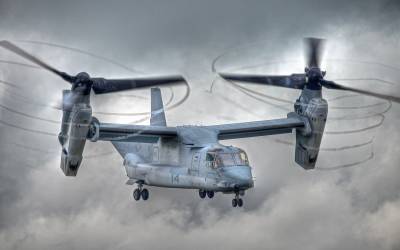
The V-22 tilt-rotor program has been touted as the future of US Marine aviation. It has also been beset by controversy throughout its 20-year development period. Crashes that have killed more than 20 Marines, and engine stalls have not been good publicity for the program. Issues with their AE1107C Liberty engines in Iraq that may lead to the end of Rolls Royce’s Power By the Hour® maintenance arrangement, or even replacement of the Liberty engines altogether.

Despite these issues, and the emergence of more conventional compound helicopter technologies, the V-22 program continues to move forward. In March 2008, the Bell Boeing Joint Project Office in Amarillo, TX received a $10.4 billion modification that converted the previous advance acquisition contract (N00019-07-C-0001) to a fixed-price-incentive-fee, multi-year contract. The new contract now sits at $10.8 billion, and will be used to buy 141 MV-22 (for USMC) and 31 CV-22 (Air Force Special Operations) Osprey aircraft, plus associated manufacturing tooling to move the aircraft into full production.

DID’s “V-22 Osprey: A Flying Shame?” offers a focused look at a number of specific allegations associated with the program, with material from Pentagon test reports, critical reviews, and the US military’s responses. This DID Spotlight article looks at a different slice of the program. It will cover the V-22’s new multi-year purchase contract, associated contracts for key V-22 systems, and program developments that arise after the contract conversion.

The latest contract involves a minor spares contract, and a contract for the V-22 family’s CAMEO maintenance aid…

France & Spain Order New Eurocopter Tiger HAD Variant (updated)

Related Stories: Ammunition, Australia & S. Pacific, Contracts - Awards, Contracts - Intent, EADS, Europe - E.U., Europe - France, Europe - Other, FOCUS Articles, Guns - 20-59 mm direct, Helicopters & Rotary, MBDA, Missiles - Air-Air, Missiles - Anti-Armor, New Systems Tech, Other Corporation, Rockets, Rolls Royce, Sensors & Guidance

Tiger HAP, HAC
Tiger HAP & HAC
(click to view full)
DII

In December 2005, Eurocopter Tiger and the French/European OCCAR organization for armament cooperation signed a formal contract in Bonn, Germany, to create a HAD version of Eurocopter’s Tiger scout/ attack helicopter . This agreement superseded the official launch ITP for the multi-role HAD (Helicoptere Appui Destruction) version of the Tiger, signed on December 8th, 2004 by France and Spain. It also set out initial procurement numbers for Spain. This was followed by the French DGA’s official announcement re: the restructuring of its own 80 helicopter order.

Eurocopter’s Tiger had always had a very odd setup in that it came in two seemingly incomplete versions (HAP and HAC/UHT), severely limiting its flexibility. The new Tiger HAD variant helps to rectify this, and has entered a new stage thanks to testing and ancillary weapons orders from France and Spain. The latest tests involve RAFAEL’s Spike air-ground missile…