Advertisement

Rapid Fire 2012-01-26: 2011 Results Start to Come in for Primes

  • Full 2011 financial results: Textron saw growth at Bell, revenue decrease at Textron Systems. At $7.3B, Bell’s backlog has recovered from a reporting error announced by the company last quarter.
  • Meanwhile General Dynamics generated $32.7B of revenue last year. It has potentially almost 3 years worth of revenue in backlog depending on how its indefinite quantity contracts pan out. Aerospace revenue grew but combat, marine and IT systems lost ground, translating into an almost flat topline for the prime contractor.
  • Raytheon wrapped up 2011 with slightly lower revenue ($24.9B) but higher bookings ($25.2B) than the previous year. Its backlog rose by $700M to $35.3B though most of that growth is not appropriated yet.
  • The RAND Arroyo Center is rather bullish on the potential for UAV logistics applications such as convoy overwatch and other surveillance tasks, but reminds decision makers that bandwidth is going to be critical. Note: the study doesn’t cover the use of UAS for Army resupply, separate research that General Dynamics was tasked with.
  • According to the Guardian the British government is considering selling its RAF Norholt to possibly be converted into a satellite of the nearby Heathrow airport. Philip Hammond was Secretary of State for Transport before he replaced Liam Fox last October.
  • The Stockholm International Peace Research Institute (SIPRI) notes that defense budgets in Latin America have been growing faster than institutional transparency on policy, let alone on spending.
  • BAE Systems and Caterpillar Inc. have signed a 20-year supply agreement to integrate the Cat CX family of transmissions into its HybriDrive parallel propulsion system, and use it to outfit and retrofit heavy trucks. It’s a civilian deal – but the same technologies can be used on military armored vehicles, and the civilian sector is pioneering this technology.
  • The US Army is concerned about Facebook use. Yes, it can endanger lives, they say. People in the security community need to use it responsibly, and they have some tips.

Rapid Fire 2012-01-18: DOTE FY2011

Advertisement
  • J. Michael Gilmor, the Director of Operational Test & Evaluation (DOT&E) within the US DoD released his FY2011 report. Among other changes made in recent months, he notes that his organization now has input at the Joint Capabilities Integration Development System (JCIDS) level to help make sure requirements for new programs are measurable and testable. For reference: FY2010 report.
  • US defense acquisition regulation is updated with a waiver allowing procurement from the UK of certain items that normally have to be sourced from the national [i.e. American] technology and industrial base. This waiver is effective for a year beginning on February 1st and covers air circuit breakers, small welded shipboard anchors and mooring chains, gyrocompasses, electronic navigation chart systems, steering controls, pumps, propulsion and machinery control systems, and totally enclosed lifeboats.
  • DefenceWeb: The USAF says that it knows what went wrong with the RQ-170 Sentinel stealth UAV that Iran captured, and continues to use the type.
  • Lockheed Martin acquired Procerus Technologies, a designer of UAV avionics created in 2004 and based in Utah.
  • House Armed Services Committee (HASC) member Todd Platts (R-PA-19) announced he won’t seek reelection.
  • Video of yesterday’s HASC panel on business challenges within the defense industry embedded below, with John Shoraka of the Small Business Administration (SBA), Linda Hillmer who chairs the Small Business Division at the National Defense Industrial Association (NDIA), and Lynn M. Schubert, President of the Surety & Fidelity Association of America. Hillmer complained about bundling squeezing small businesses in sub-contracting positions:
    Continue Reading… »

Rapid Fire 2012-01-11: Consolidate or Divest?

  • The USAF wants to follow in the US Army’s “Land Warrior” wearable computing vest footsteps. That may not be such a great idea. Then again, riding with gear is different than walking and carrying it.
  • US Army’s next-generation CIRCM effort to protect helicopters against enemy missiles moves ahead. Note that this won’t help against unguided RPG rockets, which have caused the high-profile helicopter losses in Afghanistan.
  • Reuters reports that Textron is another company that might see some corporate action, though divestiture of some of its parts seems more likely than an outright merger. But such talk about the conglomerate is not new and remains speculative.
  • US signs memo with Britain to help them rebuild aircraft carrier capability, after the long hiatus that will follow the recent shelving of their Harriers and carriers.
  • DARPA’s Extended Solids program is organizing a workshop next month to present its goals and attract researchers. First they would like to identify high pressure material phases of molecular compounds that feature interesting (from a DoD perspective) structural, energetic or functional properties. But perhaps more importantly they’re interested in fabrication processes that don’t require ultrahigh pressure and thus can scale at an acceptable cost. And of course the material has to remain in a stable state under ambient temperature and pressure.
  • American logisticians have increased use of the Northern Distribution Network and raised stock levels to mitigate the impact of Pakistan’s closing of border crossings. They had to adapt after Karachi’s port was backed up earlier this month. Of course this is not cost neutral, but military logistics is all about resilience to events such as port closures that can’t be predicted but can be planned against.
  • The US Defense Logistics Agency has worked on making its DLAD acquisition directive more user friendly and is now making it available in HTML and PDF formats.

Rapid Fire 2011-12-02: NAVAIR Procurement Management System

Advertisement
  • JSF PEO Vice Admiral David J. Venlet said in an interview with AOL Defense that ramping up production quickly while completing tests was a “miscalculation” but he has to live with concurrency, though he questions the delivery pace.
  • South Korea unveils a tilt-rotor UAV. Reports say it’s the 1st of its kind, but sharp eyed readers will note that it bears a resemblance to Bell Helicopter’s larger HV911 Eagle Eye. That had been the Korea Aerospace Research Institute partnership until the US Coast Guard program ended in 2005, and Bell dropped out of the partnership. KARI has worked on the “Smart UAV” for 9 years now, and recently partnered with Sikorsky.
  • Dial-A-Boom: Lockheed Martin’s 227mm GMLRS+ rocket successfully tests its new variable effects warhead. The new GPS-guided rocket extends the firing range from 70km (GMLRS) to 120km (GMRLS+), and the new warhead allows the rockets to be used in a wider range of situations.
  • Meanwhile, Raytheon receives the NASA Jet Propulsion Laboratory’s 2011 Large Business Prime Contractor of the Year Award. Nice job.
  • Naval Air Systems Command (NAVAIR) posted a video about their Procurement Management System.
  • The US Senate passed the FY12 defense authorization bill (S. 1867) after blinking in the face of White House veto threats and agreeing to an amendment on detainees accused of terrorism. Next step: conference with the lower chamber to agree on a common version of the bill. Don’t feel rushed, we’re only 2 months into the fiscal year. The House intends to adjourn on Dec. 16 so little will probably be done before early 2012 now.
  • Huntington under pressure to keep its Avondale, LA yard open reports Bloomberg.
  • The US House Committee on Transportation had a hearing about Coast Guard operations in the Arctic. Rep. Rick Larsen (D-WA), the Ranking Member of the House Subcommittee on Coast Guard and Maritime Transportation and also a member of the Armed Services Committee, objects to decommissioning the Coast Guard’s two heavy icebreakers. GAO also released its latest observations on the topic.

Heavy Lifting Down Under: Australia Buys C-17s

C-17 Australia Arrival Display
C-17 #1 Arrives

DSCA request for #6. (Nov 15/11)

In March 2006, the Australian government announced that the Australian Defence Forces would acquire up to 4 new Boeing C-17 Globemaster III strategic airlift planes and associated equipment for A$ 2 billion ($1.49 billion then conversion). In April 2011, Australia upped their order to 5 aircraft, and will soon add a 6th plane to their fleet.

Since that first contract, RAAF C-17As have been rolling off the assembly line, arriving on or ahead of schedule, and flying the (un)friendly skies to support Australia’s military and humanitarian efforts around the globe. The first plane arrived in Australia in December 2006, and the 4th plane arrived in March 2008. Even that didn’t mean C-17 expenses were done. Ongoing maintenance, training facilities, and more must still be paid for. DID chronicles the entire process, and its associated contracts…

JCREW: ITT Wins Contracts for Land Mine Jammers

ITT defense contractor

3,351 CVRJ upgrade kits (Sept 29/11)

On April 2/07, BB&T Capital Markets upgraded EDO Corporation to “buy,” in part because they thought EDO was well positioned to win a part of the $200-$500 million Counter- Radio Controlled Improvised Explosive Device (RCIED) Electronic Warfare (CREW) contracts going forward. Those contracts came through, with awards for the system EDO now calls the CVRJ (CREW Vehicle Receiver/Jammer). The Pentagon refers to Spiral 2.1 Vehicle Mounted CREW systems, which are one element of the DoD’s Joint Counter RCIED Electronic Warfare program.

CREW systems are vehicle mounted electronic jammers designed to prevent the remote detonation of land mines. These are often triggered by off-the-shelf technology like cell phones, in order to avoid visible wires. EDO makes the Warlock jammer, a derivative of its earlier “Shortstop” product. If only these devices were as widespread in movie theaters and performance halls….

It’s Better to Share: Breaking Down UAV GCS Barriers

MQ-1 Predator GCS Balad Air Base Iraq
US “Chair” Force?

$65M to General Atomics. (September 30/11)

UAVs have played a crucial role in gathering intelligence in the US military’s wars in Iraq and Afghanistan. There are thousands of UAVs gathering and distributing valuable data on the enemy, but each system uses its own proprietary subsystem to control the air vehicle as well as receive and process the data. Yet commanders need access to information gathered by all types of UAVs that are flying missions in their area of operation.

Recognizing this shortcoming, the Pentagon began an effort in 2008 to break down the proprietary barriers between UAV systems and create a single GCS that will fly all types of drones.

This free-to-view DID Spotlight article examines the problem of proprietary UAV systems and efforts to break down barriers to sharing vital UAV-generated information.

Rapid Fire 2011-09-30: HMMWV MECV RDTE RFP | French 2012 Budget

  • The US Army released the complete draft RFP for the HMMWV Modernized Expanded Capacity Vehicle (HMMWV MECV) Research Development Test and Evaluation (RDTE) phase. This recap program intends to modernize M1151 and M1152 Humvees. The Industry Daily for source selection is scheduled on October 7 at Selfridge Air National Guard Base (SANG), MI. Up to 3 RDTE contracts will be rewarded out of that 1st phase with a finalized RFP due on Nov. 10. The Production Phase RFP is tentatively scheduled to be released 1QFY13 (i.e. less that 15 months from now) and source from a single producer, with an aim of capping unit manufacturing cost at $180K. According to Defense News, so far the 4 following teams have lined up: Granite Tactical Vehicles/Textron Systems, AM General, BAE Systems and Oshkosh.
  • Lockheed Martin is still pushing for the sale of new F-16 C/Ds to Taiwan, according to Reuters, based on a memo they have seen that the manufacturer sent to US lawmakers. The firm doesn’t seem to believe F-35s to be a credible option.
  • France is working on its 2012 defense budget. The government asked for slightly less than 32 billion euros (about $43B) excluding pension costs. This translates into a 3% increase for “equipment” (procurement and maintenance). New acquisitions would include 11 Rafale jets, 8 NH90 helicopters, 1 FREMM frigate and 100 VBCI infantry vehiclesMinDef, DSI [both in French]. The original 1958 constitution of the Fifth Republic gave very strong powers to the executive branch, but constitutional reforms in past years have increased legislative budgetary review powers. The overall process is still much shorter than the protracted back-and-forths known in the US.
  • The dog ate my homework while I was at my grandma’s funeral. As expected, the US House of Representative approved a short stopgap bill. More voting will be necessary to lengthen the continuing resolution into November, then at some point the budget for the fiscal year starting tomorrow will actually be wrapped up.
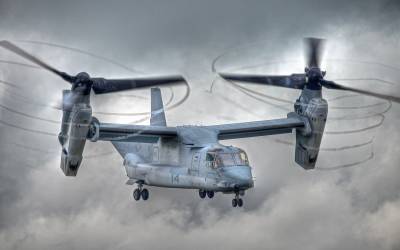
  • The FBI raided Boeing’s Ridley Park, PA plant to charge 37 people with distributing or trying to get prescription drugs such as oxycodone, a powerful opioid painkiller. V-22 Ospreys and CH-47 Chinooks are manufactured there.
  • US Army Gen. Martin Dempsey is replacing Adm. Mike Mullen as Chairman of the Joint Chiefs of Staff. Gen. Raymond T. Odierno replaced Dempsey as Chief of Staff of the Army earlier this month. On Mullen’s departure: WSJ, Stars & Stripes.

Australia’s JP129 Phase 2 UAV Contract: i-View Out, Shadow In

I-View landing
I-View, landing

Australia’s Shadows to arrive early. (July 16/11)

In December 2006, Australia bought a new tactical UAV to go with the Israeli Skylark mini-UAV. Australian Minister of Defence Senator Hill said the Government had agreed to the A$ 145 million (USD $109 million) UAV project to provide its Army with a high precision day and night surveillance and targeting capability.

The initial winner was IAI’s short-range I-View Mk. 250 UAV, but that didn’t last. Issues with the platform led to contract cancellation, and the use of leased solutions as interim options on the front lines. JP 129 didn’t go away, though. Australia is still interested in owning a tactical UAV solution, and an August 2010 deal will get them one…

Rapid Fire: Evening 2011-06-28

  • At the Senate Foreign Relations Committee hearing on President Obama’s unilateral decision to engage US forces in Libya, State Department Advisor Harold Koh stated that Congressional approval was not required due to the ‘limited’ nature of military operations. Ranking Member Senator Richard Lugar (R-IN) responded that the United States’ roles in Libya are significant as it provides the majority of intelligence and air refueling.
  • The Senate Armed Services Committee holds a confirmation hearing for the commander chosen to replace General David Petraeus in Afghanistan, Lieutenant General John Allen.
  • The US Army issues a Request for Information (RFI) to support the development of the Medium Range Multi-Purpose (MRMP) Vertical Take Off and Landing UAS acquisition strategy. The RFI also covers the Army and Navy Medium Range Maritime UAS (MRMUAS) Analysis of Alternatives (AoA) program.
  • The UK Ministry of Defence (MoD) orders 12,500 rugged encrypted tablet personal computers from Software Box Ltd. The £30 million ($48 million) five-year contract also includes maintenance support and forms part of the Joint Asset Management and Engineering Solutions (JAMES) project.
  • Northrop Grumman signs a Global Supply Chain (GSC) Deed with the Australian Ministry of Defence. The deed forms part of a program designed to increase the presence of Australia’s defense industry within global supply chains.
  • Italy takes delivery of its first NH90 NFH naval helicopter, making it the 2nd delivery customer after the Netherlands. But when will the type be fully operational?
  • The US DoD announces that recruitment and retention levels for all four active services and five of six reserve components met or exceeded their year-to-end accession goals.