CH-53K: The U.S. Marines’ HLR Helicopter Program

Sikorsky: CH-53K from LHD
CH-53K concept

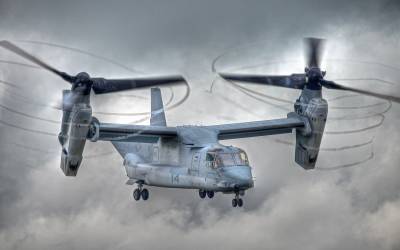
The U.S. Marines have a problem. They rely on their CH-53E Super Stallion medium-heavy lift helicopters to move troops, vehicles, and supplies off of their ships. But the helicopters are wearing out. Fast. The pace demanded by the Global War on Terror is relentless, and usage rates are 3 times normal. Attrition is taking its toll. Over the past few years, CH-53s have been recalled from “boneyard” storage at Davis-Monthan AFB in Tucson, AZ, in order to maintain fleet numbers in the face of recent losses and forced retirements. Now, there are no flyable spares left.

Enter the Heavy Lift Replacement (HLR) program, now known as the CH-53K. It aims to offer notable performance improvements over the CH-53E, in a similar airframe. The question is whether its service entry delay to 2018-2019 will come too late to offset a serious decline in Marine aviation.

P-8i: India’s Navy Picks Its Future High-End Maritime Patrol Aircraft

Tu-142F India Underside
TU-142: headed out

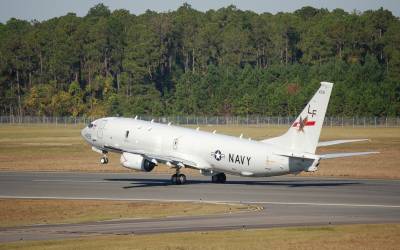
India’s fleet of Soviet-era maritime patrol aircraft has been upgraded, but it needs to be replaced. Indian naval responsibilities are growing, and the 2008 terrorist atrocities in Mumbai made it crystal-clear that control of their coasts was a necessity. Fortunately, they already had a competition underway. In December 2005, after an attempted buy of Lockheed Martin P-3s fell through, India’s navy had floated an RFP for at least 8 new sea control aircraft. Bids from a variety of contenders, including Lockheed Martin, were submitted in April 2007. Subsequent statements by India’s Admiral Prakash suggested that they could be looking for as many as 30 aircraft by 2020.

The plan had been for price negotiations to be completed in 2007, with first deliveries to commence within 48 months. India’s Ministry of Defence has extreme problems with announced schedules, but their existing fleet was wearing out, international requests for India’s maritime patrol help are rising, and Mumbai’s events provided an extra shove. By January 2009, India had picked its aircraft: the 737-derivative P-8i Neptune, a variant of the P-8A that’s readying for service as the P-3′s successor within the US Navy. DID discusses the geopolitical drivers, the current fleet, the known competitors, Boeing’s P-8i, and key contracts and events.

Naval Air, Unmanned: US Navy Flying Toward N-UCAS

Advertisement
UAV X-47B Carrier Takeoff Diagram
UCAS-D/ N-UCAS concept

In early 2006 the future of DARPA’s J-UCAS program seemed uncertain. It aimed to create Unmanned Combat Aerial Vehicles (UCAV) for the USAF and Navy that could approach the capabilities of an F-117 stealth fighter. Boeing’s X-45C was set to face off against Northrop Grumman’s X-47B Pegasus, the program had demonstrated successful tests that included dropping bombs, and aerial refueling tests were envisioned.

J-UCAS was eventually canceled when the services failed to take it up, but the technologies have survived, and the US Navy remained interested. A May 2007 non-partisan report discussed the lengthening reach of ship-killers. Meanwhile, the US Navy’s carrier fleet sees its strike range shrinking to 1950s distances, and prepares for a future with fewer carrier air wings than operational carriers. Could UCAV/UCAS vehicles with longer ranges, and indefinite flight time limits via aerial refueling, solve these problems? Some people in the Navy seem to think that they might. Hence UCAS-D/ N-UCAS, which received a major push in the FY 2010 defense review. Now, Northrop Grumman is improving its X-47 UCAS-D under contract, even as emerging privately-developed options expand the Navy’s future choices as it works on its new RFP.

Huey’s Departure: Thailand’s New Helicopters

UH-60 thailand
US UH-60s during
COBRA GOLD 1997

Thailand’s extensive territories, unrest on its borders, and placement in a zone prone to natural disasters all make helicopters a critical aspect of its military capabilities. About 50 Vietnam-era UH-1H Hueys and similar Bell 212/412s twin-Hueys form the bulk of its force, and a small detachment of S-92 Superhawks serve as transports for the Royal Family, but Thailand needs new helicopters. Unfortunately, newer machines must be bought via Thailand’s limited defense budget and much smaller aid grants, instead of arriving as part of a flood of war-related aid.

Thailand began its efforts by buying a handful of H-60 family helicopters, but rather than standardize, they’re buying a widening variety of helicopters in very small lots. This article chronicles the timeline of Thai requests, buys, and deliveries since 2003.

Import or Die: Taiwan’s (Un?)Stalled Force Modernization

Taiwan military

Despite China’s ominous military buildup across the strait, key weapons sales of P-3 maritime patrol aircraft, Patriot PAC-3 missiles, and diesel-electric submarines to Taiwan had been sabotaged by Taiwanese politics for years – in some cases, since 1997. The KMT party’s flip-flops and determined stalling tactics eventually created a crisis in US-Taiwan relations, which finally soured to the point that the USA refused a Taiwanese request for F-16C/D aircraft.

That seems to have brought things to a head. Most of the budget and political issues were eventually sorted out, and after a long delay, some major elements of Taiwan’s requested modernization program appear to be moving forward: P-3 maritime patrol aircraft, UH-60M helicopters, Patriot missile upgrades; and requests for AH-64D attack helicopters, E-2 Hawkeye AWACS planes, minehunting ships, and missiles for defense against aircraft, ships, and tanks. These are must-have capabilities when facing a Chinese government that has vowed to take the country by force, and which is building an extensive submarine fleet, a large array of ballistic missiles, an upgraded fighter fleet, and a number of amphibious-capable divisions. Chinese pressure continues to stall some of Taiwan’s most important upgrades, including diesel-electric submarines, and new American fighter jets. Meanwhile, other purchases from abroad continue.

E-2D Hawkeye: The Navy’s New AWACS

E-2D Collage

Northrop Grumman’s E-2C Hawkeye is a carrier-capable “mini-AWACS” aircraft, designed to give long-range warning of incoming aerial threats. Secondary roles include strike command and control, land and maritime surveillance, search and rescue, communications relay, and even civil air traffic control during emergencies. E-2C Hawkeyes began replacing previous Hawkeye versions in 1973. They fly from USN and French carriers, from land bases in the militaries of Egypt, Japan, Mexico, and Taiwan; and in a drug interdiction role for the US Naval Reserve. Over 200 Hawkeyes have been produced.

The $17.5 billion E-2D Advanced Hawkeye program aims to build 75 new aircraft with significant radar, engine, and electronics upgrades in order to deal with a world of stealthier cruise missiles, saturation attacks, and a growing need for ground surveillance as well as aerial scans. It looks a lot like the last generation E-2C Hawkeye 2000 upgrade on the outside – but inside, and even outside to some extent, it’s a whole new aircraft.

LAS in, LAS out: Counter-Insurgency Planes for the USA and its Allies

Mauritanian A-29
Winner

The USA needs a plane that can provide effective precision close air support and JTAC training, and costs about $1,000 per flight hour to operate – instead of the $15,000+ they’re paying now to use advanced jet fighters at 10% of their capabilities. Countries on the front lines of the war’s battles needed a plane that small or new air forces can field within a reasonable time, and use effectively. If these 2 needs are filled by the same aircraft, everything becomes easier for US allies and commanders. One would think that this would have been obvious around October 2001, but it took until 2008 for this understanding to even gain momentum within the Pentagon. A series of intra-service, political, and legal fights have ensured that these capabilities won’t arrive before 2015 at the earliest, and won’t arrive for the USAF at all.

The USA has now issued 2 contracts related to this need. The first was killed by a lawsuit that the USAF didn’t think they could defend successfully. Now, in February 2013, they have a contract that they hope will stick. The 3 big questions are simple. Will the past be prologue for the new award? Will there be an Afghan government to begin taking delivery of their 20 planes much beyond 2014? And will another allied government soon need to use this umbrella contract for its own war?

Israeli Plans to Buy F-35s Moving Forward

F-35A Ad

In an exclusive June 2006 interview, Israeli Air Force (IAF) chief procurement officer Brigadier-General Ze’ev Snir told Israeli media that the F-35 Joint Strike Fighter was a key part of their IAF recapitalization plans, and that Israel intended to buy over 100 of the fighters to replace their fleet of over 300 F-16s.

Since then, however, the expected cost of that purchase has more than doubled. Israel’s F-35 contract had to deal with that sticker shock, with issues like the incorporation of Israeli technologies and industrial work, and with major schedule slips in the core F-35 program. Israel was even contemplating delaying its purchase, which would have removed an important early adopter for the Lightning II. In the end, however, Israel decided to forego other fighter options, and became the first foreign buyer of operational F-35s. So, how is the “F-35i” shaping up?

Airbus’ A400M Aerial Transport: Delays and Development

A400M rollout
A400M rollout, Seville

Airbus’ A400M is a EUR 20+ billion program that aims to repeat Airbus’ civilian successes in the full size military transport market. A series of smart design decisions were made around capacity (35-37 tonnes/ 38-40 US tons, large enough for survivable armored vehicles), extensive use of modern materials, multi-role capability as a refueling tanker, and a multinational industrial program; all of which leave the aircraft well positioned to take overall market share from Lockheed Martin’s C-130 Hercules. If the USA’s C-17 is allowed to go out of production, the A400M would also have a strong position in the strategic transport market, with only Russian AN-70, IL-76 and AN-124 aircraft as competition. To date, 174 orders have been placed by Germany (now 53 + 7 options), France (50), Spain (27), Britain (now 22), Turkey (10), South Africa (8), Belgium (7), Malaysia (4), and Luxembourg (1). Chile has expressed an unfinalized interest in 3 planes, but is now likely to buy Brazilian KC-390s instead.

EADS’ biggest issue, by far, has been funding for a project that is more than EUR 7 billion over budget. The next biggest issue is timing, as A400M delivery penalties and Lockheed Martin’s strong push for its serving C-130J Super Hercules cast a pall over the A400M’s potential future. The entire project was under moratorium for over a year as all parties decided what to do, but it’s now moving forward again. This DID Spotlight article covers the latest developments, as the A400M Atlas moves into production.

LCA Tejas: An Indian Fighter – With Foreign Help

LCA Tejas Underside
Tejas LCA

India’s Light Combat Aircraft program is meant to boost its aviation industry, but it must also solve a pressing military problem. The IAF’s fighter strength has been declining as the MiG-21s that form the bulk of its fleet are lost in crashes, or retired due to age and wear. Most of India’s other Cold War vintage aircraft face similar problems.

In response, some MiG-21s have been modernized to MiG-21 ‘Bison’ configuration, and other current fighter types are undergoing modernization programs of their own. The IAF’s hope is that they can maintain an adequate force until the multi-billion dollar 126+ plane MMRCA competition delivers replacements, and more SU-30MKIs arrive from HAL. Which still leaves India without an affordable fighter solution. MMRCA can replace some of India’s mid-range fighters, but what about the MiG-21s? The MiG-21 Bison program adds years of life to those airframes, but even so, they’re likely to be gone by 2020.

That’s why India’s own Tejas Light Combat Aircraft (LCA) project is so important to the IAF’s future prospects. It’s also why India’s rigid domestic-only policies are gradually being relaxed, in order to field an operational and competitive aircraft. Even with that help, the program’s delays are a growing problem for the IAF. Meanwhile, the west’s near-abandonment of the global lightweight fighter market opens an opportunity, if India can seize it with a compelling and timely product.

  1. 1
  2. 2
  3. 3
  4. 4
  5. 5
  6. 6
  7. 7
  8. ...
  9. 20

Stay Up-to-Date on Defense Programs Developments with Free Newsletter

DID's daily email newsletter keeps you abreast of contract developments, pictures, and data, put in the context of their underlying political, business, and technical drivers.