Memorial Day, 2013

MIL_USAF_Memorial_Day_Placing_Flags.jpg
Honor & Reflect
(click to view cartoon)

Monday, May 28th is Memorial Day in the USA. DID honors those who have given all of their tomorrows in American military service; we will not be publishing.

Readers are reminded that in America, the Memorial Day moment of silence takes place at 3:00 pm. It seems that lots of reminders are needed elsewhere in America; a survey commissioned by The National WWII Museum in Washington had only 20% say they were very familiar with the day’s purpose, which is to honor those who have fallen in America’s wars. This function is served by Remembrance Day/ Armistice Day (Nov. 11th) in the British Commonwealth and elsewhere, but in America, November 11th is Veteran’s Day, honoring all who served in the US military.

For additional resources, USAA has a full video that includes Hugh Ambrose (Band of Brothers, The Pacific, etc.), and the American National WWII Museum’s MyMemorialDay.org offers some ideas for honoring this day. One more idea might to be teach our fellow Americans. Email a good treatment of the day to people you know outside the national security field, and encourage them to forward it on.

The International Wideband Global SATCOM (WGS) Program

WGS Collage

The US military needs a bigger data firehose. In an era of streaming data from proliferating UAVs and other persistent surveillance platforms, and the need for control of those systems anywhere in the world, bandwidth is almost as important as fuel. Commercial satellite communications (SATCOM) can fill some of the gaps, but it’s expensive, and may not be available when needed. The Wideband Gapfiller SATCOM (now Wideband Global SATCOM) program began as a way to ease these problems in the near term, but went on to become one of the twin pillars of US military communications, alongside the hardened AEHF constellation. Both satellite types expanded their roles after the super-high bandwidth T-SAT program was canceled. instead, the USA is adding WGS and AEHF satellites in space, even as it makes both programs multi-national efforts here on earth.

WGS is a set of 13-kilowatt spacecraft based on Boeing’s model 702 commercial satellite. These satellites will handle a significant portion of the USA’s warfighting bandwidth requirements, supporting tactical C4ISR(command, control, communications, and computers; intelligence, surveillance, and reconnaissance); battle management; and combat support needs. Upon its 2007 launch into geosynchronous orbit, WGS Flight 1 became the U.S. Department of Defense’s highest capacity communication satellite. WGS F4, launched in January 2012, offers further improvements, as do satellites from WGS F8. The constellation is set to grow to 10, including international participation.

This is DID’s FOCUS Article covering the WGS program’s specifications, budgets, travails, international partnerships, and contracts, with links to additional research materials.

JHMCS: Fighter Pilots’ “Look & Shoot” Helmets Changing Aerial Warfare

Advertisement
HMD JHMCS Collage
(click to view larger)

In the 1970s, fighter aircraft began to appear with Head-Up Displays (HUD) that projected key information, targeting crosshairs etc. onto a seemingly clear piece of glass. HUDs allowed pilots to keep their eyes in the sky, instead of looking down at their instruments. In the 1990s, another innovation appeared: helmet-mounted displays (HMDs) put the HUD inside the pilot’s helmet, providing this information even when the pilot wasn’t looking straight ahead. The Israelis were already pioneering a system called DASH (Display And Sight Helmet) when a set of former East German MiG-29s, equipped with Soviet HMDs, slaughtered USAF F-16s in NATO exercises. Suddenly, helmet-mounted displays became must-haves for modern fighters – and a key partnership positioned Elbit to take DASH to the next level.

This DID Spotlight article offers insights into the rocky past, successful present, and competitive future of a program that has experienced its share of snags and controversy – but went on to become the #1 helmet-mounted sight in the world. It also details the game-changing effects of Joint Helmet Mounted Cueing Systems on air combat, its production sets and known customers, and all contracts since full-rate production began.

Serious Dollars for AEGIS Ballistic Missile Defense Modifications (BMD)

AEGIS-BMD CG-70 Launches SM-3
AEGIS-BMD: CG-70
launches SM-3

The AEGIS Ballistic Missile Defense System seamlessly integrates the SPY-1 radar, the MK 41 Vertical Launching System for missiles, the SM-3 Standard missile, and the ship’s command and control system, in order to give ships the ability to defend against enemy ballistic missiles. Like its less-capable AEGIS counterpart, AEGIS BMD can also work with other radars on land and sea via Cooperative Engagement Capability (CEC), receiving cues from other platforms and providing information to them, in order to create a more detailed battle picture than any one radar could produce alone.

AEGIS has become a widely-deployed top-tier air defense system, with customers in the USA, Australia, Japan, South Korea, Norway, and Spain. In a dawning age of rogue states and the spread of mass-destruction weapons, the US Navy is being pushed toward a “shield of the nation” role as the USA’s most flexible and and most numerous option for missile defense. AEGIS BMD modifications are the keystone of that effort – in the USA, and beyond.

Raytheon’s Standard Missile Naval Defense Family (SM-1 to SM-6)

SM-2 Launch
SM-2 Launch, DDG-77
(click to view larger)

Variants of the SM-2 Standard missile are the USA’s primary fleet defense anti-air weapon, and serve with 13 navies worldwide. The most common variant is the RIM-66K-L/ SM-2 Standard Block IIIB, which entered service in 1998. The Standard family extends far beyond the SM-2 missile, however; several nations still use the SM-1, the SM-3 is rising to international prominence as a missile defense weapon, and the SM-6 program is on track to supplement the SM-2. These missiles are designed to be paired with the AEGIS radar and combat system, but can be employed independently by ships with older or newer radar systems.

This article covers each variant in the Standard missile family, plus several years worth of American and Foreign Military Sales requests and contracts and key events; and offers the budgetary, technical, and geopolitical background that can help put all that in context.

Hydra, Awakened: Guided Air-Ground Rockets

Hydra-70 Rocket Collage
(click to view larger)

Sen. Leahy’s [D-VT] worked in the mid-2000s to keep the Hydra 70mm rocket family alive through special appropriations, just in time for the Hydras’ potential on the battlefield to rise again. The key was the addition of low-cost precision guidance, which would expand the number of precision weapons carried by helicopters, aircraft, and even UAVs.

Over the last few years, the US Army’s 2nd attempt at an APKWS 70mm guided rocket had a near-death experience, before righting the program with Navy funding. Meanwhile, private development efforts from Lockheed Martin, Thales TDA, and a raft of international partnerships involving major defense firms and partners in Korea, the UAE, Canada/Norway, and Israel are introducing new competitors into the precision-guided rocket space. This DID FOCUS article covers the most prominent competitors within the guided rocket trend. Their products will sit between full anti-armor missiles like Hellfire, TOW, and Brimstone, and an emerging class of ultra-small precision attack weapons like Northrop Grumman’s Viper Strike, Raytheon’s Griffin, etc.

Kicking it Up a Notch: Poseidon’s Unmanned MQ-4C BAMS Companion

BAMS ConOps NAVAIR
BAMS Operation Concept

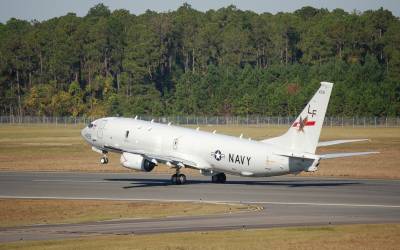
The world’s P-3 Orion fleets have served for a long time, and many are reaching the end of their lifespans. In the USA, and possibly beyond, the new P-8 Poseidon Multi-mission Maritime Aircraft will take up the P-3′s role. While the P-8′s base 737-based airframe offers strong service & maintenance arguments in its favor, the airframe is expensive enough that the P-3s cannot be replaced on a 1:1 basis.

In order to extend the P-8 fleet’s reach, and provide additional capabilities, the Poseidon was expected to work with at least one companion UAV platform. This DID FOCUS Article explains the winning BAMS (Broad Area Maritime Surveillance) concept, the program’s key requirements, and its international angle. We’ll also cover ongoing contracts and key events related to the program, which chose Northrop Grumman’s navalized MQ-4C Triton Global Hawk variant.

S-80: A Sub, for Spain, to Sail Out on the Main

S-80 Cutaway
S-80 cutaway, labeled

The CIM-2000 Scorpene class diesel-electric attack submarine partnership was just the first step for Spain’s Navantia, as it joined with France’s DCNS to enter the global submarine market. Now Navantia is building on that base of expertise, to field its own S-80 Class for the Spanish Armada. Spain’s new submarines will be larger boats than Navantia/DCNS’ Scorpene Class, with Air-Independent Propulsion (AIP) systems as standard gear, and completely new designs for both external shape and internal systems.

This article will cover the S-80 submarines’ capabilities and associated key events and contracts – including sub-contracts to American, British, and Italian firms.

V-22 Osprey: The Multi-Year Buys, 2008-2017

V-22 Cutaway

In March 2008, the Bell Boeing Joint Project Office in Amarillo, TX received a $10.4 billion modification that converted the previous advance acquisition contract (N00019-07-C-0001) to a fixed-price-incentive-fee, multi-year contract. The new contract now sits at $10.92 billion, and will be used to buy 143 MV-22 (for USMC) and 31 CV-22 (Air Force Special Operations) Osprey aircraft, plus associated manufacturing tooling to move the aircraft into full production.

The V-22 tilt-rotor program has been beset by controversy throughout its 20-year development period. Despite these issues, and the emergence of competitive but more conventional compound helicopter technologies like Piasecki’s X-49 Speedhawk and Sikorsky’s X2, the V-22 program continues to move forward. This DID Spotlight article looks at the V-22′s multi-year purchase contract from 2008-12 and 2013-2017, plus associated contracts for key V-22 systems, program developments, and research sources.

From Dolphins to Destroyers: The ScanEagle UAV

ScanEagle"
ScanEagle launch

ScanEagle’s base Insight UAV platform was originally developed by Washington state’s Insitu, Inc. to track dolphins and tuna from fishing boats, in order to ensure that the fish you buy in supermarkets is “dolphin-safe”. It turns out that the same characteristics needed by fishing boats (able to handle salt water environments, low infrastructure launch and recovery, small size, 20-hour long endurance, automated flight patterns) are equally important for naval operations from larger vessels, and for battlefield surveillance. A partnership with Boeing took ScanEagle to market in those fields, and the USMC’s initial buy in 2004 was the beginning of a market-leading position in its niche.

This article covers recent developments with the ScanEagle UAV system, which is quickly evolving into a mainstay with the US Navy and its allies. Incumbency doesn’t last long in the fast-changing world of UAVs, though. Insitu’s own RQ-21 Integrator is looking to push the ScanEagle aside, and new multiple-award contracts in the USA are creating opportunities for other competitors. Can Insitu’s original stay strong?

  1. 1
  2. 2
  3. 3
  4. 4
  5. 5
  6. 6
  7. 7
  8. ...
  9. 115

Stay Up-to-Date on Defense Programs Developments with Free Newsletter

DID's daily email newsletter keeps you abreast of contract developments, pictures, and data, put in the context of their underlying political, business, and technical drivers.