Dec 30, 2011 07:45 UTC
DID would like to wish all of our readers a Happy New Year!
- So, what milestones does India’s Ministry of Defence want to highlight from 2011?
- Dynamint Nobel is still working on its classic Panzerfaust, whose modern versions have proven quite popular. The lightweight versions are strong urban warfare weapons, and the next step is integrating them with remote weapons stations for roles like harbor defense.
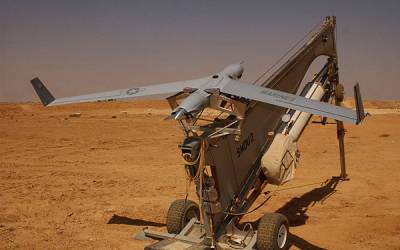
- Switchblade UAVs to launch from subs? While they could retain their kamikaze capabilities, the reality is that sub-launched UAVs are going to be 1-shot items at first. Why not adapt an existing UAV designed for that?
- InnoCentive offers a $15,000 reward for a concept or design of a medical transportation device that would enable a rescuer to quickly and safely transport an injured person away from an active combat site.
- Range remains a significant challenge for nonlethal weapons.
- Aviation Week Intelligence Network really doubts that the US Navy will be able to keep its resolutions about fielding modernized DDG-51 Flight III destroyers. Worse, operations and maintenance costs are going to be a problem for the existing fleet. Meanwhile Walter Pincus is challenging the Navy’s numbers and Bloomberg View bemoans how LCS has turned out so far.
- At least the US Navy is not facing a fire on one of its nuclear submarines, unlike its Russian counterpart yesterday.
- Thursday was not a good day for the Russian military since they also had a Su-24 crash. These crashes have happened like clockwork over the years [in Russian]. Nobody died in either incident yesterday though some people appear to have been injured in the submarine fire.
- Yet another cybersecurity acquisition for Raytheon: Henggeler Computer Consultants, Inc. It’s the 2nd this month and the 10th in the last 4 years.
Nov 08, 2011 23:30 UTC
Latest updates: DARPA’s programs.
Taking on the Cyber Enemy
In response to the growing threats to US military and civilian networks, the Pentagon has unveiling its first formal cyber strategy.
This follows a series of events over the last few years that have escalated cyber attacks against networks and infrastructure to warlike events. For example, an unidentified foreign national penetrated the internal networks of the Department of Defense (DoD) with an infected thumbdrive in 2008. In 2009, a virus known as Stuxnet, suspected of being the product of Israeli-US government collaboration, shutdown an Iranian nuclear power plant. And in 2011, defense contractor Lockheed Martin suffered a major cyber attack that was suspected of being carried out by the Chinese government.
While the Pentagon has struggled to combat these threats, it has also had to fight some within its own ranks, as well as other agencies, for authority in cyberspace. This article focuses on the growing cyber threat to US military and civilian infrastructure and the efforts being made by the Pentagon to deal with these threats.
Continue Reading… »
Nov 08, 2011 18:07 UTC
The steady rise in the number and variety of electronic systems in military equipment has spawned 2 trends. One has been reduced readiness, as multiplying points of failure consistently push readiness rates down and maintenance costs up, for each successive generation of advanced equipment. The other is a security issue, as equipment “obsoletes itself every 18 months, is made in unsecure locations and [in an industry where] we have absolutely no market share influence [any more].”
The defense industry that played such a big role in building Silicon Valley now grapples with ways to ensure that chips and circuits don’t have hidden design codes in them. They’re also grappling with the issue of counterfeit electronics.
Continue Reading… »
Sep 15, 2011 18:56 UTC
The USAF’s Global Combat Support System is their internal web portal, supporting over 800,000 registered users and usinga services-oriented I.T. architecture to deliver everything from information to mission applications and collaboration tools. See this Power Point presentation for more. Lockheed Martin has been GCSS-AF’s prime contractor since 1996, and a recent contract worth up to $791 million could extend that to 2018.
Under the recent award, Lockheed Martin is responsible for maintaining the portal’s underlying IT infrastructure, while extending it with new applications, data services, and infrastructure improvements. The initial contract is for 3 years, with 4 more 1-year options, and most work will take place at Maxwell AFB, AL. Supporting operations and engineering locations will be found at Hill AFB, UT; Wright-Patterson AFB, OH; and Owego, NY. The ESC/HIIK at Maxwell AFB, AL, manages this contract (FA8771-11-D-1006). See also Lockheed Martin.
Aug 25, 2011 14:37 UTC
Tabula Rasa?
On Aug 24/11, the Tobyhanna Army Depot in Tobyhanna, PA announced over $20 million in contracts for 12,263 computers and tablets, to be delivered by the end of November 2011. No eyebrows were raised over Dell’s $7.5 million contract for 354 Latitude E6520 computers and 6,295 Dell OptiPlex small form factor computers (W91QUZ-06-D-0006), but a $13.6 million contract to Iron Bow Technology in Chantilly, VA may attract more scrutiny.
Iron Bow is asked to deliver 5,096 Lenovo tablets; 217 Lenovo think pads; 520 Lenovo think centre computers; 261 Fujitsu computers; and 40 Wyse computers (W91QUZ-06-D-0010). Because the Chinese government owns a significant share of Lenovo’s parent firm, Lenovo computers have been a source of controversy in the past. The US State Department was forced to backtrack on a 2006 purchase of 16,000 computers, pledging to keep them off of networks that handle classified government messages and documents. Iron Bow refused to comment on the deal, or on any security measures they might be able to undertake.
Aug 15, 2011 08:59 UTC
USS Abraham Lincoln
going virtual
The US Department of Defense (DoD) and the individual services are turning more and more to virtualization to improve the efficiency and flexibility of their IT networks. This technology allows multiple virtual machines with different operating systems to run side-by-side on the same physical machine. The main benefit is a decrease in needed hardware, space, and power to perform the same IT operations, thus saving money and weight on military IT systems and platforms.
At the same time, virtualization raises security concerns because traditional IT security products, such as firewalls, do not work in the virtual environment.
Continue Reading… »