05-Nov-2009 15:16 EST
Related Stories: Americas - USA, Contracts - Awards, Contracts - Modifications, Design Innovations, Expeditionary Warfare, FOCUS Articles, Forces - Marines, IT - General, Issues - Political, New Systems Tech, Northrop-Grumman, Other Corporation, Partnerships & Consortia, Policy - Procurement, Power Projection, Procurement Innovations, Project Failures, Project Methodologies, Radars, Raytheon, Surface Ships - Other

LPD-17 cutaway
(click to view full)
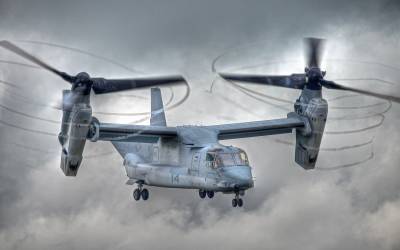
LPD-17 San Antonio class amphibious assault support vessels are a new class of ship which is just entering service with the US Navy. Much like their predecessors, their mission is to embark, transport, land, and support elements of a US Marine Corps Landing Force. What changes are the capabilities and technologies incorporated to perform that mission. This new ship class includes significant internal technology and design upgrades, and is designed to operate accompanying platforms like the V-22 Osprey tilt-rotor aircraft and the Expeditionary Fighting Vehicle amphibious armored personnel carrier.
Between 10-11 scheduled ships of this class are slated to assume the functional duties of up to 41 previous ships, including the USA’s older LSD-36 USS Anchorage class dock landing ships (all decommissioned as of 2004, LSD-36 and LSD-38 transferred to Taiwan) and its LPD-4 USS Austin Class ships (12 built and serving, LPD 14 Trenton now India’s INS Jalashva). The San Antonio class ships may also replace 2 classes of ships currently mothballed and held in reserve status under the Amphibious Lift Enhancement Program (ALEP): the LST-1179 Newport class tank landing ships, and LKA-113 Charleston class amphibious cargo ships.

Welcome to Norfolk…
(click to view full)
Replacing that many existing ships is already a very tall order. While its design incorporates notable advances, the San Antonio Class has also had its share of teething problems. So, too, has the New Orleans shipyard to which most of this contract has been assigned. The number of serious issues encountered in this ship class have been much higher than usual, and more extensive. The initial ships have been criticized for sub-standard workmanship, and it took 2 1/2 years after the initial ship of class was delivered and accepted before any ship of class was sent on an operational cruise. Whereupon the USS San Antonio promptly found itself laid up Bahrain due to oil leaks. Meanwhile, costs are almost twice the originally promised amounts at over $1.7 billion per ship – 2 to 3 times as much as many foreign LPD classes, and more than 10 times as much as Singapore’s 6,600 ton Endeavour Class LPD.
DID’s FOCUS articles offer in-depth, updated looks at significant military programs of record. This is DID’s FOCUS Article for the San Antonio Class, detailing the ships’ unique features and capabilities, its program innovations and issues, ship timelines, and related contracts throughout the program’s history. As has become DID custom, the most recent additions are highlighted in green type. The latest developments include a contract to Raytheon that could be worth over $175 million, and the imminent commissioning of the LPD 21 New York, which contains steel from the destroyed World Trade Center…
02-Nov-2009 08:38 EST
Related Stories: Alliances, Americas - USA, BAE, Britain/U.K., Contracts - Awards, Contracts - Modifications, Design Innovations, ECM, Electronics - General, Engines - Aircraft, Europe - Other, FOCUS Articles, Fighters & Attack, Finmeccanica, GE, Issues - International, Issues - Political, Lobbying, Lockheed Martin, Middle East - Israel, Northrop-Grumman, Official Reports, Other Corporation, Partnerships & Consortia, Policy - Procurement, R&D - Contracted, Radars, Rumours, Security & Secrecy, Sensors & Guidance, Testing & Evaluation, Transformation

F-35A: incoming…
(click to view full)
The F-35 Lightning II is a major multinational program which is intended to produce an “affordably stealthy” multi-role strike fighter that will have three variants: the F-35A conventional version for the US Air Force et. al.; the F-35B Short Take-Off, Vertical Landing for the US Marines, British Royal Navy, et. al.; and the F-35C conventional carrier-launched version for the US Navy. The aircraft is named after Lockheed’s famous WW2 P-38 Lightning, and the Mach 2, stacked-engine English Electric (now BAE) Lightning jet. System development partners included The USA & Britain (Tier 1), Italy and the Netherlands (Tier 2), and Australia, Canada, Denmark, Norway and Turkey (Tier 3), with Singapore and Israel as “Security Cooperation Partners.” Now the challenge is agreeing on production phase membership and arrangements, to be followed by initial purchase commitments around 2008-2009.
This updated article has expanded to feature more detail regarding the $300 billion F-35 program, including other contracts as well as notable events. New material is highlighted by putting it in green type. Recent news includes noise issues in Norway, varying reactions and estimates in response to the 2009 JET report, 2010 budget results, basing decisions in the USA, and 2 senior appointments within the program teams…
01-Nov-2009 18:08 EST
Related Stories: Americas - USA, Australia & S. Pacific, Contracts - Awards, Missiles - Anti-Ship, Northrop-Grumman, Radars, Surface Ships - Combat

AN/SPQ-9B radar
Northrop Grumman Systems Corp. in Melville, NY recently received a pair of contracts from America and Australia for the AN/SPQ-9B radar system. That radar was the main air defense radar on several American destroyer and cruiser classes, but is now relegated to a secondary role on advanced air defense ships. It provides the capability to detect and track low-flying, high-speed, small radar cross-section anti-ship missile targets in heavy clutter environments.
The AN/SPQ-9 radar is currently installed on CG-47 Ticonderoga class guided-missile cruisers, where this track-while-scan radar can be integrated into the Mk 86 gun fire control system (GFCS) or the Aegis Combat Direction System. It is also the primary radar on the LHA-1 Tarawa class amphibious landing ships. As for the AN/SPQ-9B…
Continue Reading… »
29-Oct-2009 17:30 EDT
Related Stories: Africa, Alliances, Americas - USA, Avionics, Boeing, C4ISR, Contracts - Awards, ECM, Europe - France, Events, Fighters & Attack, Force Structure, GE, General Dynamics, Guns - 20-59 mm direct, Issues - Environmental, L3 Communications, Lobbying, Lockheed Martin, Northrop-Grumman, Other Corporation, Policy - Procurement, Protective Systems - Aircraft, Radars, Raytheon, Sensors & Guidance, Signals Radio & Wireless, Specialty Aircraft, United Technologies

French Mirage F1s
(click to view full)
Morocco’s combat air force currently flies 2 squadrons of old F-5s, and 2 squadrons of only slightly newer Mirage F1s; T-37 light jets serve as key transitional trainers. Their neighbor and rival Algeria flies MiG-23s of similar vintage, but the Force Aerienne Algerienne also flies SU-24 Fencer and SU-25 Frogfoot strike aircraft, even more modern and capable MiG-29s, and is set to receive multi-role SU-30MKs as part of a multi-billion dollar weapons deal with Russia.
Morocco can’t beat that array. Instead, they’re looking for replacement aircraft that will prevent complete overmatch, and provide a measure of security. Initially, they looked to France. France’s Rafale is part of a set of European 4+ generation fighters that were developed and fielded during the 1990s-early 21st century, with the aim of surpassing existing offerings among America’s “teen series” fighters, as well as Russia’s Mig-29 Fulcrum and SU-27/30 Flanker family. “Dogfight at the Casbah: Rafale vs. F-16” discussed the French sales slip-ups that cost Dassault its first export order for the 4+ generation fighter. That outcome is now official.
Just to make things worse, the final multi-billion dollar deal involves new-build F-16s, at a price comparable to the rumored figures for the Rafale. Not to mention an accompanying American deal to replace Morocco’s T-37 trainer fleet with T-6Cs, and contracts for air-launched weapons, targeting pods, and C-27J short-haul transports. The latest development includes a DSCA request for CH-47D helicopters…
- Contracts and Key Events [updated]
- Why The F-16? DID Analysis – Dec. 2007
- Additional Readings
Continue Reading… »
22-Oct-2009 20:10 EDT
Related Stories: ABM, Americas - USA, Budgets, Contracts - Awards, FOCUS Articles, IT - Software & Integration, Lockheed Martin, Missiles - Surface-Air, Protective Systems - Naval, Radars, Raytheon, Surface Ships - Combat

AEGIS-BMD: CG-70
launches SM-3
(click to view full)
The AEGIS Ballistic Missile Defense System seamlessly integrates the SPY-1 radar, the MK 41 Vertical Launching System for missiles, the SM-3 Standard missile, and the ship’s command and control system. Like its less-capable AEGIS counterpart, the AEGIS BMD Weapon System can also integrate with other radars on land and sea via Cooperative Engagement Capability (CEC), receiving cues from and providing information to other platforms, in order to create a battle picture that’s more detailed than any one radar could produce alone.
AEGIS has become a widely-deployed gold standard for current western naval defensive systems, and is in service or planned for service with 6 different countries. What does it do? What is AEGIS BMD, and how does it differ? And what enhancements are underway?....
- What Is AEGIS?
- AEGIS Missile Defense Capabilities
- AEGIS BMDS: The Program, 1995 – Present
- Contracts & Updates, FY 2007 – Present
- Additional Readings
Continue Reading… »
22-Oct-2009 16:34 EDT
Related Stories: Americas - USA, BAE, C4ISR, Contracts - Awards, Electronics - General, General Dynamics, IT - General, Logistics, Northrop-Grumman, Other Corporation, Radars, Submarines, Support & Maintenance, Surface Ships - Combat, Surface Ships - Other
The Naval Sea Systems Command’s (NAVSEA) Naval Surface Warfare Center awarded 6 contracts worth up to $475 million to support the center’s Alterations Installation Team (AIT) in their work upgrading hull, mechanical, electrical, and electronic (HME&E) systems on ships and submarines.
The HME&E systems include a broad range of shipboard equipment, everything from transformers and heating/cooling/ventilation systems to C4ISR, radar, and navigation systems…
Continue Reading… »
21-Oct-2009 14:12 EDT
Related Stories: Americas - Other, Americas - USA, Contracts - Awards, Design Innovations, FOCUS Articles, Northrop-Grumman, Other Corporation, Other Equipment - Land, Procurement Innovations, Radars

G/ATOR diorama
(click to view full)
The US military’s long run of unquestioned air superiority has led to shortcuts in mobile land-based air defenses, and the US Marines are no exception. A December 2005 release from Sen. Schumer’s office [D-NY] said that: “Current radar performance does not meet operational forces requirements… consequences could potentially allow opposing forces to gain air and ground superiority in future operational areas.”
One of the programs in the works to address this gap is the G/ATOR mobile radar system. It’s actually the result of fusing two programs: the Multi-Role Radar System (MRRS), and Ground Weapons Locator Radar (GWLR) requirements. When G/ATOR Increment IV becomes operational, it will replace and consolidate numerous legacy radars, including the AN/TPS-63 air surveillance, AN/MPQ-62 force control, AN/TPS-73 air traffic control, AN/UPS-3 air defense, and AN/TPQ-36/37 artillery tracking & locating radar systems.
The latest updates involve background updates based on conversations with Northrop Grumman and the US Marine Corps, and additional funding for the SDD phase…
21-Oct-2009 13:39 EDT
Related Stories: Americas - Other, Americas - USA, Australia & S. Pacific, Britain/U.K., Contracts - Awards, Contracts - Intent, Contracts - Modifications, Electronics - General, Events, FOCUS Articles, General Dynamics, IT - Software & Integration, Lockheed Martin, Missiles - Surface-Air, Other Corporation, Partnerships & Consortia, Policy - Procurement, Protective Systems - Naval, Radars, Raytheon, Sensors - Aquatic, Support & Maintenance, Support Functions - Other, Surface Ships - Combat, Transformation

F100 visits Sydney
(click to view full)
DID’s FOCUS articles offer in-depth, updated looks at significant military programs of record. The Royal Australian Navy took a pair of giant steps in June 2007, when it selected winning designs for its keystone naval programs: Canberra Class LHD amphibious operations vessels, and Hobart Class “air warfare destroyers.” This DID’s FOCUS article offers in-depth research and coverage of the Hobart Class competition and program organization, along with the new “air warfare destroyer’s” capabilities, and associated contracts, and related developments.
Under the SEA 4000 Air Warfare Destroyer program, Australia plans to replace its retired air defense destroyers with a modern system that can provide significantly better protection from air attack, integrate with the US Navy and other Coalition partners, offer long-range air warfare defense for Royal Australian Navy task groups, and help provide a coordinated air picture for fighter and surveillance aircraft. Despite their name and focus, the ships are multi-role designs with a “sea control” mission that also includes advanced anti-submarine and surface warfare capabilities.
Spain’s Navantia made an A$ 11 billion clean sweep, winning both the A$ 3 billion Canberra Class LHD and the A$ 8 billion Hobart Class Air Warfare Destroyer contracts. The new AWD ships were scheduled to begin entering service with the Royal Australian Navy in 2013, but that date has now slipped to 2014-2015. Recent updates involve a number of smaller contracts and progress reports, as well as the resolution of A$ 450 million worth of Australian shipbuilding contracts…
21-Oct-2009 13:10 EDT
Related Stories: Americas - USA, C4ISR, Contracts - Awards, DARPA, Design Innovations, Electronics - General, IT - General, Northrop-Grumman, Other Corporation, R&D - Contracted, Radars, Satellites & Sensors, Science - Basic Research

Big, Hairy, and Audacious
(click to view larger)
The Defense Advanced Research Projects Agency (DARPA) wants to take research on nitride-based electronic devices and integrated circuits – used in tactical radio systems, phased array radar, and satellite communication – to the next level. Or should we say the NEXT level?
That is the name of their research effort: the Nitride Electronic Next Generation Technology (NEXT) Program. The NEXT program is designed to enable revolutionary advances in nitride electronic devices and integrated circuits resulting in their ability to operate at very high frequencies while maintaining extremely favorable voltage breakdown characteristics.
There’ll be no tweaking of existing technology. On its NEXT Web site, DARPA declares: “Specifically excluded is research that primarily results in evolutionary improvements to the existing state of practice.” In other words, only Big, Hairy, Audacious Research need apply…
Continue Reading… »
21-Oct-2009 12:20 EDT
Related Stories: Americas - USA, Contracts - Awards, Protective Systems - Aircraft, Radars, Raytheon
_RWR.jpg)
Raytheon’s ALR-69A(V) RWR
(click to view larger)
Raytheon’s Space and Airborne Systems business received a $19.8 million contract for the continued production of ALR-69A(V) radar warning receivers for the Warner Robins Air Logistics Center at Robins Air Force Base in Georgia.
The contract calls for fabrication and testing of 34 digital receivers under the ALR-69A(V) low-rate initial production program. Deliveries of the systems are expected to begin in March 2011 and end in June 2012.
The ALR-69A(V) is currently installed on US Air Force C-130 transport, F-16 fighter, and A-10 close air support aircraft…
Continue Reading… »