Peru Moves to Maintain, Modernize its Fighter Fleet

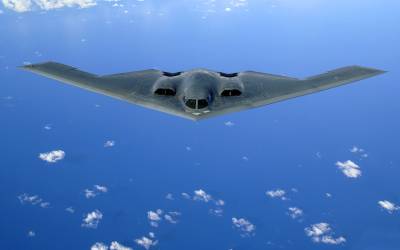
F-16s, MiG-29S, Mirage 2000DP
USAF F-16s, FAP MiG-29S
and Mirage 2000DP

Peru’s 12 Mirage 2000C/B and 18 MiG-29S fighters form the backbone of its current multi-role fighter fleet, alongside old SU-22 strike fighters and specialized SU-25 close air support jets. The Mirages were bought from France in 1985, while the MiG-29s arrived via a disastrous 1995 deal with Belarus. Fortunately, Peru patched things up with Russia, and RAC MiG agreed to provide service and support. In 2008, a contract began modernize that MiG fleet to the MiG-29SMT standard. In 2009, Dassault began working with Peru on a comprehensive inspection of the Mirage fleet, coupled with some electronics modernization.

These purchases have been expensive, and a number of observers have questioned their usefulness against more pressing security concerns, like Peru’s fanatical Marxist Sendero Luminoso (“Shining Path”) guerrillas. On the other hand, the FAP still remembers the 1995 Canepa War with Ecuador, and its Russian fighters are stationed very close to that border at Chiclayo and Talara. Its Mirage 2000Ps sit at La Joya near Bolivia and Chile; the 3 countries have a minor 3-way maritime borders dispute, and residual tensions with Chile have been a long-running theme in Peru. This article covers Peru’s ongoing efforts to maintain and improve its core fighter fleet.

Australia and USA Collaborating on New Small-Ship Radars

ANZAC+ concept
Upgraded ANZAC concept
(click to enlarge)

In August 2005, Australia’s Ministry of Defence reported that Australia and the United States had joined forces by signing a joint agreement to develop active phased array radar technology in Australia. The total development cost was estimated to be approximately A$ 30 million over 3 years. The hope was that it would kick-start a new Australian electronics and systems integration industry, based on S-band active array and X-band phased-array technology, sized for and applied to smaller ships like frigates and corvettes.

Both countries will share the development costs, technical expertise and benefits of the CEAFAR (3D) active phased array radar. This technology is being developed by ACT electronics company CEA Technologies, and has become part of Australia’s ASMD project to make its ANZAC Class frigates survivable against supersonic cruise missiles. Other military and civil applications on land and sea are also possible, given the radar’s characteristics.

2013: Britain Buying Hellfire Missiles

Advertisement
British Apache fires Hellfire
British AH Mk.1

In April 2013, the US DSCA forwarded Britain’s formal export request to replenish its Hellfire missile stocks, which had been drawn down by the fighting in Afghanistan and Libya.

Britain already uses Hellfire missiles on its WAH-64D Apache attack helicopters and MQ-9 Reaper UAVs. The exact missile types they picked for this request are interesting.

Vietnam’s Russian Restocking

SSK Kilo
Kilo Class cutaway

In April 2009, reports surfaced that Vietnam had agreed in principle to a deal with Russia for 6 of its diesel-electric Kilo/ Project 636 Class fast attack submarines. There have been rumors that Vietnam owns 2 ex-Yugoslav mini-submarines for use in commando operations, but the Vietnamese People’s Navy doesn’t own any full size submarines that can take on enemy subs and ships. That’s about to change, thanks to a December 2009 contract.

Nor is that the only change in Vietnam’s military capabilities these days. China’s April 2009 display of naval might is only part of the mosaic influencing Vietnam’s decisions in these matters, as contracts for submarines – and far more – are being signed with its long-time Russian ally.

CH-53K: The U.S. Marines’ HLR Helicopter Program

Sikorsky: CH-53K from LHD
CH-53K concept

The U.S. Marines have a problem. They rely on their CH-53E Super Stallion medium-heavy lift helicopters to move troops, vehicles, and supplies off of their ships. But the helicopters are wearing out. Fast. The pace demanded by the Global War on Terror is relentless, and usage rates are 3 times normal. Attrition is taking its toll. Over the past few years, CH-53s have been recalled from “boneyard” storage at Davis-Monthan AFB in Tucson, AZ, in order to maintain fleet numbers in the face of recent losses and forced retirements. Now, there are no flyable spares left.

Enter the Heavy Lift Replacement (HLR) program, now known as the CH-53K. It aims to offer notable performance improvements over the CH-53E, in a similar airframe. The question is whether its service entry delay to 2018-2019 will come too late to offset a serious decline in Marine aviation.

Royal Guard: LAIRCM Systems for Oman & Qatar’s VVIP Jets

The problem
click for video

On May 15/13, the US DSCA announced a pair of official export requests to provide and install Northrop Grumman’s AN/AAQ-24(V) Large Aircraft Infrared Countermeasures (LAIRCM), for use on Oman and Qatar’s royal flight VVIP jets.

LAIRCM is a defensive system that couples detectors to track incoming missiles, with a laser that locks on to the missile’s seeker. A series of timed laser pulses lead the missile harmlessly astray. That won’t stop a radar-guided S-300, but it isn’t designed to. It’s designed as a defense against the shoulder-fired MANPADS air defense missiles that might be used in a sneak attack, like the one that nailed a DHL airliner over Baghdad in 2003. The specific requests include:

Slovenian Army’s New APCs: Patria’s AMVs

Svarun Presentation
Slovenian “Svarun”

In June 2006, the Slovenian Ministry of Defence picked Patria’s 8×8 wheeled Armored Modular Vehicle (AMV) as the preferred choice for its 135 vehicle armored personnel carrier program. The APCs would come in 4 different versions, including a variant with Patria’s new unmanned NEMO 120mm mortar turret. The deal was worth over EUR 275 million, with deliveries to take place from 2007-2013.

An ongoing bribery investigation led to the resignation of Patria’s President and CEO, and eventually to his arrest. A long-running controversy became a continuous distraction, and there were issues with sub-contractor performance along the way. In 2011, a new government cabinet unanimously voted to try and cancel the deal. In 2012, they succeeded.

India’s Multi-billion Dollar Scorpene Sub Contract

SSK Scorpene OHiggins Cutaway
Scorpene cutaway

India’s submarine fleet currently consists of 16 boats: 10 Russian SSK Kilo (Sindhugosh) Class, 4 locally built SSK U209 (Shishumar) Class, a leased nuclear-powered Improved Akula Class SSN from Russia (INS Chakra), and its own INS Arihant SSBN. Most of the Kilos have been modernized, but readiness rates for India’s existing submarine fleet sits below 40%, and the U209s will have trouble lasting much beyond 2015. With Pakistan acquiring modern submarines, and Chinese submarine building exploding, expanding India’s submarine fleet became an obvious national priority.

In 2005, India confirmed that it would buy 6 Franco-Spanish Scorpene diesel submarines, with an option for 6 more and extensive technology transfer agreements. Unfortunately, 7 years after that deal was signed, “Project 75″ has yet to field a single submarine. A poor Indian procurement approach, and state-run inefficiency, are pushing the country’s overall submarine force toward an aging crisis. This DID FOCUS article covers the Scorpene deal and its structure, adds key contracts and new developments, and offers insights into the larger naval picture beyond India.

INS Vikramaditya: Waiting for Gorshkov…

CV Admiral Gorshkov
Adm. Gorshkov: Before.

This free-to-view DID Spotlight article offers an in-depth look at India’s troubled attempt to convert and field a full-size aircraft carrier, before time and wear force it to retfrb 21/08ire its existing naval aviation and ships.

India faced 2 major challenges. One was slipping timelines, which risked leaving them with no aircraft carriers at all. The other challenge involved Vikramaditya’s 3-fold cost increase, as Russia demanded a re-negotiated contract once India was deeper into the commitment trap. The carrier purchase has now become the subject of high level diplomacy, involving a shipyard that can’t even execute on commercial contracts. A revised deal was finally signed in March 2010, even as deliveries of India’s new MiG-29K naval fighters got underway – but now Russia still has to make good. This article tracks the changes India is making to its new aircraft carrier, key characteristics, and a full history of contracts and events affecting this carrier and its planned aircraft contingent.

Iraq Seeks Armed Reconnaissance Helicopters

Bell 407 Hydras
YRH-70 w. Hydras

In July 2008, the US Defense Security Cooperation Agency announced Iraq’s formal request to buy 24 Armed Reconnaissance Helicopters that act as scouts, perform light close air support, and escort other helicopters on dangerous missions. The DSCA documents also included requests for airborne weapons – which would be a new capability for the nascent post-Saddam air force.

At the time of the requests, the IqAF relied on a small force of Russia’s popular Mi-8/17s, and a handful of refurbished Bell “Huey II” helicopters. While the Russian helicopters can be armed, their status as Iraq’s only medium utility helicopters makes them a poor fit for an ARH role. Instead, Iraq chose between 2 competitors: Bell’s 407, whose derivative ARH-70A won the competition in America but ran into trouble; and Boeing’s AH-6 “Little Bird” light attack helicopters used by US Special Forces. AH-6s are very effective in urban settings, and provided critical fire support during the 1991 “Blackhawk Down” incident. Iraq went on to pick Bell as its its ARH winner, and issued production contracts. Now, details concerning its IA-407 helicopters are beginning to emerge.

  1. 1
  2. 2
  3. 3
  4. 4
  5. 5
  6. 6
  7. 7
  8. ...
  9. 42

Stay Up-to-Date on Defense Programs Developments with Free Newsletter

DID's daily email newsletter keeps you abreast of contract developments, pictures, and data, put in the context of their underlying political, business, and technical drivers.