DID »
Industry » Archive by category 'Contracts - Modifications'
08-Feb-2010 14:16 EST
Related Stories: Americas - USA, Contracts - Awards, Contracts - Modifications, FOCUS Articles, Forces - Marines, GE, Helicopters & Rotary, IT - Software & Integration, L3 Communications, Lockheed Martin, New Systems Tech, Northrop-Grumman, Other Corporation, Simulation & Training, Thales
FY 2011 budget request, $50.4 million for long lead materials. (Feb 5/10)
The US Marines’ helicopter force is aging at all levels, from banana-shaped CH-46 Sea Knight transports that are far older than their pilots, to the 1980s-era UH-1N Hueys and AH-1W Cobra attack helicopters that make up the Corps’ helicopter assault force. While the tilt-rotor V-22 Osprey program has staggered along for almost 2 decades under accidents, technical delays, and cost issues, replacement of the USMC’s backbone helicopter assets has languished. Given the high-demand scenarios inherent in the current war, other efforts are clearly required.
Enter the H-1 program, the USMC’s plan to remanufacture older helicopters into new and improved UH-1Y utility and AH-1Z attack helicopters. The new versions would discard the signature 2-bladed rotors for modern 4-bladed improvements, redo the aircraft’s electronics, and add improved engines and weapons to offer a new level of performance. It seemed simple, but hasn’t quite worked out that way. The H-1 program has encountered its share of delays and issues, but the program survived its review, and continues on into the low-rate initial production stage and Initial Operational Capability.
DID’s FOCUS articles offer in-depth, updated looks at significant military programs of record. This article covers the H-1 helicopter programs’ rationales and changes, the upgrades involved in each model, program developments and annual budgets, the full timeline of contracts and key program developments, and related research sources.
08-Feb-2010 12:34 EST
Related Stories: Americas - USA, BAE, Boeing, Contracts - Awards, Contracts - Modifications, FOCUS Articles, General Dynamics, Guns - Artillery & Mortars, Helicopters & Rotary, Policy - Procurement, Procurement Innovations, Support & Maintenance, Tanks & Mechanized, Trucks & Transport, Warfare - Trends

USMC M1A1 settles a
firefight in Fallujah
(click to view full)
BAE gets $32 million order to RESET 417 M113 APCs. (Jan 26/10)
The RESET process takes used vehicles apart, inspects the parts, then replaces any defective parts and refurbishes the equipment to like-new condition. Sometimes upgrades are also performed. RESET and related processes like remanufacture/upgrades are being performed on M1 Abrams tanks, Bradley IFV/CFVs, HMMWV jeeps, and even helicopters. It usually takes place when the vehicles return from the front lines in Iraq, Afghanistan, and other locations, where sand damage and increased wear have taken their toll.
In truth, many of these vehicles were produced in the 1980s, and are reaching an age where “deep maintenance” is a wise and necessary measure. A July 2006 Washington Times article noted the effect age and wear have had on the USA’s vehicle fleet, and DID has also covered this subject under the wider rubric of the Army’s maintenance overhang. DID believes these efforts are sufficiently important that the consolidated visibility of a FOCUS Article is in order.
Note that this is not a complete list of RESET contracts; DID will seek to backfill its roster as opportunities arise, and newly-added materials will be presented in green as a reader convenience. Recent additions include a contract to reset FMTV medium trucks…
08-Feb-2010 10:01 EST
Related Stories: Americas - USA, BAE, C4ISR, Contracts - Awards, Contracts - Modifications, Delivery & Task Orders, Electronics - General, FOCUS Articles, Guns - 20-59 mm direct, Helicopters & Rotary, L3 Communications, Lockheed Martin, New Systems Tech, Northrop-Grumman, Other Corporation, R&D - Contracted, Raytheon, Sensors & Guidance, Soldier's Gear, T&C - SAIC

Night raid
(click to view larger)
Irvine Sensors snags subcontract to supply clip-on thermal imagers under $37.8 million US Navy special ops night vision contract. (Feb 8/10)
It was Christmas Eve 2007 and US Army Rangers were searching for suspected Al-Qaeda members in Mosul, Iraq. They were using their night vision goggles so they would have the element of surprise on their side. The story, detailed in a USA Today article, dramatically demonstrates the advantage night vision capabilities provide to US troops on the ground in Iraq and Afghanistan.
The Rangers found 2 Al-Qaeda suspects who were holding an 11-year-old Iraqi boy hostage. Using their night vision capabilities, they were able to shoot the suspects without harming the boy. After that encounter, a firefight erupted between the Army rangers and Al-Qaeda insurgents, with 10 insurgents killed, including the head of an assassination cell, and no Army ranger losses. As former General Barry McCaffrey, commander of the US Army’s 24th Infantry Division in the 1991 Desert Storm conflict, commented: “Our night vision capability provided the single greatest mismatch of the war.” It still does.
This DID Focus Article will examine how this technology works, how its military application has developed over years, how the technology is used by troops in the field, as well as major DoD contracts for procuring night vision devices. The latest contract was awarded to Optics 1 to provide Clip on Thermal Imager systems for PVS-15A night goggles…
07-Feb-2010 15:45 EST
Related Stories: Americas - USA, Boeing, Contracts - Modifications, Engines - Aircraft, Europe - E.U., GE, Helicopters & Rotary, Issues - Political, New Systems Tech, Other Corporation, Policy - Procurement, Rolls Royce, Spotlight articles

(click to view full)
$122.5 million for spares and extra engine maintenance. (Feb 5/10)
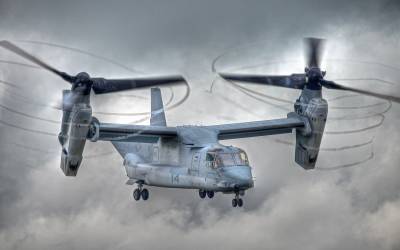
In March 2008, the Bell Boeing Joint Project Office in Amarillo, TX received a $10.4 billion modification that converted the previous advance acquisition contract (N00019-07-C-0001) to a fixed-price-incentive-fee, multi-year contract. The new contract now sits at $10.8 billion, and will be used to buy 141 MV-22 (for USMC) and 31 CV-22 (Air Force Special Operations) Osprey aircraft, plus associated manufacturing tooling to move the aircraft into full production.
The V-22 tilt-rotor program has been beset by controversy throughout its 20-year development period. DID’s “V-22 Osprey: A Flying Shame?” offers a focused look at a number of specific allegations associated with the program, with material from Pentagon test reports, critical reviews, ongoing news reports, and the US military’s responses. Despite these issues, and the emergence of competitive but more conventional compound helicopter technologies like Piasecki’s X-49 Speedhawk and Sikorsky’s X2, the V-22 program continues to move forward. This DID Spotlight article looks at the V-22’s new multi-year purchase contract, associated contracts for key V-22 systems, and program developments that arise after the contract conversion.
07-Feb-2010 12:57 EST
Related Stories: Americas - USA, Boeing, C4ISR, Contracts - Awards, Contracts - Modifications, FOCUS Articles, GPS Infrastructure, General Dynamics, IT - Software & Integration, Lockheed Martin, New Systems Tech, Northrop-Grumman, Other Corporation, Raytheon, Satellites & Sensors, T&C - SAIC

GPS IIIA concept
(click to view full)
$75.9 million to Boeing to support GPS III precursor. (Feb 5/10)
DID’s FOCUS articles offer in-depth, updated looks at significant military programs of record. It’s hard to be more significant than the USA’s Global Positioning System (GPS), which is widely relied upon for civilian uses, including timing services for stock trades and credit card processing. At the same time, military class (M-code) GPS guidance can now be found in everything from cruise missiles and various precision-guided bombs, to battlefield rockets and even artillery shells. Combat search and rescue radios use it, and so does a broadening array of individual soldier’s equipment. Disruption or decay of of the the critical capabilities provided by this line of communication in space would cripple both the US military, and many aspects of the global economy.
GPS-III satellites are a key part of this PTN (Positioning, Timing & Navigation) system’s future plan, offering several improvements over the existing GPS II family. When fully deployed, the current vision for GPS-III is that the new satellites will feature a new L1C civil signal; a cross-linked command and control architecture that allows the entire GPS constellation to be updated from a single ground station; and a spot beam antenna that provides resistance to hostile military jamming while improving accuracy and integrity. GPS III will also have limited interoperability with Europe’s ongoing Galileo GPS-type satellite constellation, per a 2006 agreement involving Lockheed Martin and EADS.
The latest additions include significantly upgraded background and contract information, GAO worries about the USAF’s ability to sustain its GPS capabilities if GPS IIF and IIIA encounter delays, and possible congressional funding cuts for GPS-III’s critical next-generation ground control segment…
- The Existing Array
- The GPS III Program
- Contracts and Key Events [updated]
- Additional Readings
Continue Reading… »
04-Feb-2010 16:35 EST
Related Stories: Americas - USA, Asia - Central, BAE, Britain/U.K., Budgets, Contracts - Awards, Contracts - Intent, Contracts - Modifications, Europe - Other, FOCUS Articles, General Atomics, New Systems Tech, Other Corporation, Partnerships & Consortia, R&D - Contracted, Raytheon, Support & Maintenance, Transformation, UAVs, Warfare - Trends

Reaper, ready…
(click to view full)
Test variants for USAF, USCG; Gorgon stare pod; new Reaper weapon?; Comlink compromise; MQ-9 shootdown. (Feb 2/10)
The MQ-9 Reaper UAV, once called “Predator B,” is somewhat similar to the famous Predator. Until you look at the tail. Or its size. Or its weapons. It’s called “Reaper” for a reason – while it packs the same surveillance gear, it’s much more of a hunter-killer design. Some have called it the first fielded Unmanned Combat Air Vehicle (UCAV).
DID’s FOCUS articles offer in-depth, updated looks at significant military programs of record. The Reaper UCAV will play a significant role in the future USAF, even though its capability set makes the MQ-9 considerably more expensive than MQ-1 Predators, whose price benefits from less advanced design and volume production orders. Given these high-end capabilities, and expenses, one might not have expected the MQ-9 to enjoy better export success than its famous cousin. Nevertheless, that’s what appears to be happening. MQ-9 operators currently include the USA and Britain, who have both used it in hunter-killer mode, and Italy. Other countries are also expressing interest, and international deployments are accelerating.
04-Feb-2010 14:31 EST
Related Stories: Americas - USA, Australia & S. Pacific, Coastal & Littoral, Contracts - Awards, Contracts - Modifications, Design Innovations, FOCUS Articles, General Dynamics, Interoperability, Logistics, New Systems Tech, Official Reports, Other Corporation, Partnerships & Consortia, Power Projection, Pre-RFP, Surface Ships - Other, Transformation, Warfare - Trends

Austal MRV/JHSV concept
(click to view full)
Is program expansion from 8 to 28 ships in the cards? (Feb 3/10)
The US Army and Navy have leased Incat TSV/HSV wave-piercing catamaran ship designs, while the Marines’ charged ahead with very successful use of Austal’s Westpac Express high-speed catamaran. These Australian-designed ships all give commanders the ability to roll on a company with full gear and equipment (or roll on a full infantry battalion if used only as a troop transport), haul it intra-theater distances at 38 knots, then move their shallow draft safely into austere ports to roll them off.
Unsurprisingly, their use has attracted favorable comment and notice from all services. So favorable that the experiments have led to a $1.6 billion program called the Joint High Speed Vessel, which could involve up to 10 ships. These designs may even have uses beyond simple ferrying and transport. DID’s FOCUS articles offer in-depth, updated looks at significant military programs of record, and this article covers JHSV from its inception onward.
03-Feb-2010 17:36 EST
Related Stories: Americas - USA, BAE, Boeing, Budgets, Coastal & Littoral, Contracts - Awards, Contracts - Modifications, Design Innovations, EADS, Eng. Control Systems, Expeditionary Warfare, FOCUS Articles, Force Structure, Forces - Naval, General Dynamics, IT - Software & Integration, Interoperability, Issues - Political, L3 Communications, Lobbying, Lockheed Martin, Materials Innovations, New Systems Tech, Northrop-Grumman, Other Corporation, Partnerships & Consortia, Policy - Doctrine, Power Projection, Procurement Innovations, Project Methodologies, Protective Systems - Naval, R&D - Contracted, Raytheon, Rolls Royce, Sensors - Aquatic, Surface Ships - Combat, Testing & Evaluation, Training & Exercises, Transformation, UUVs & USVs, Warfare - Trends

General Dynamics Team
Trimaran LCS Design
(click to enlarge)
New RFP, FY 2011 budget request, Problems with ship survivability, LCS-2 commissioning, GAO costs report. (Feb 2/10)
Exploit simplicity, numbers, the pace of technology development in electronics and robotics, and fast reconfiguration. That was the US Navy’s idea for the low-end backbone of its future surface combatant fleet. Inspired by successful experiments like Denmark’s Standard Flex ships, the US Navy’s $30+ billion “Littoral Combat Ship” program was intended to create a new generation of affordable surface combatants that could operate in dangerous shallow and near-shore environments, while remaining affordable and capable throughout their lifetimes.
It hasn’t worked that way. In practice, what the Navy wanted, the capabilities needed to perform primary naval missions, and what could be delivered for the sums available, have proven nearly irreconcilable. The LCS program has changed its fundamental acquisition plan several times since 2005, and canceled contracts with both competing teams, without escaping any of its fundamental issues. This public-access FOCUS article offer a wealth of research material, alongside looks at the LCS program’s designs, industry teams procurement plans, military controversies, and contracts.
03-Feb-2010 14:21 EST
Related Stories: Americas - Other, Americas - USA, Asia - India, Australia & S. Pacific, Boeing, Contracts - Awards, Contracts - Modifications, Delivery & Task Orders, Europe - Other, FOCUS Articles, GE, New Systems Tech, Northrop-Grumman, Other Corporation, Partnerships & Consortia, Project Failures, Raytheon, Specialty Aircraft

P-8A Poseidon
(click to view full)
FY 2011 budget request, the US Navy’s self-inflicted 6-month delay, P-8i may have air-air surveillance capability. (Jan 29/10)
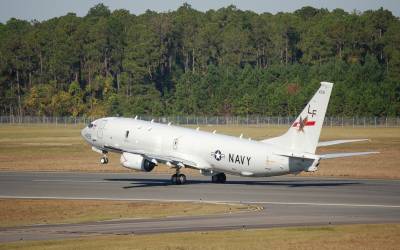
Maritime surveillance and patrol is becoming more and more important, but the USA’s P-3 Orion fleet is falling apart. The P-8A emerged from the ashes of the P-7 Long Range Air ASW (Anti-Submarine Warfare) Capable Aircraft program that was begun in 1988. That program originally envisaged an improved P-3, but cost overruns, slow progress, and interest in opening the competition to commercial designs led to cancellation for default in 1990. The successor MMA program was begun in March 2000, and Boeing beat Lockheed’s “Orion 21” with a design based on the ubiquitous 737 passenger jet.
This is DID’s FOCUS Article concerning the P-8A Poseidon Multi-mission Maritime Aircraft, and it will be updated as events and contracts are announced. Filling the P-3 Orion’s shoes is certainly no easy task. What missions will the new P-8A Poseidon face? What do we know about the platform, the project team, and ongoing developments? Will the P-3’s level of global customer coverage give its successor a comparable level of export opportunities? Australia and India have already signed on, but has the larger market shifted in the interim?
02-Feb-2010 19:38 EST
Related Stories: Alliances, Americas - USA, BAE, Britain/U.K., Contracts - Awards, Contracts - Modifications, Design Innovations, ECM, Electronics - General, Engines - Aircraft, Europe - Other, FOCUS Articles, Fighters & Attack, Finmeccanica, GE, Issues - International, Issues - Political, Lobbying, Lockheed Martin, Middle East - Israel, Northrop-Grumman, Official Reports, Other Corporation, Partnerships & Consortia, Policy - Procurement, R&D - Contracted, Radars, Rumours, Security & Secrecy, Sensors & Guidance, Testing & Evaluation, Transformation

F-35A: incoming…
(click to view full)
FY 2011 budget proposals, withheld performance fees, a change in program leadership, Australian reaction. (Feb 2/10)
The $300+ billion F-35 Joint Strike fighter may well be the largest single global defense program in history. This major multinational program is intended to produce an “affordably stealthy” multi-role fighter that will have 3 variants: the F-35A conventional version for the US Air Force et. al.; the F-35B Short Take-Off, Vertical Landing for the US Marines, British Royal Navy, et. al.; and the F-35C conventional carrier-launched version for the US Navy. The aircraft is named after Lockheed’s famous WW2 P-38 Lightning, and the Mach 2, stacked-engine English Electric (now BAE) Lightning jet. Lightning II system development partners included The USA & Britain (Tier 1), Italy and the Netherlands (Tier 2), and Australia, Canada, Denmark, Norway and Turkey (Tier 3), with Singapore and Israel as “Security Cooperation Partners.” Now the challenge is agreeing on production phase membership and arrangements, to be followed by initial purchase commitments in 2009-2010.
This updated article has expanded to feature more detail regarding the F-35 program, including contracts, sub-contracts, and notable events and reports. New material is highlighted by putting it in green type.