Archives by category >
Partnerships & Consortia (
RSS)
Jun 16, 2013 15:30 UTC
Latest updates[?]: #6 won't be the last - long-lead buy for ship #7; Keel laid for #5.
WMSL-750 Bertholf
The US Coast Guard’s massive $25 billion Deepwater meta-program (really Deepwater-II given post-9/11 changes) has endured more than its share of ups and downs. Nevertheless, Congressional support has remained strong, and efforts are being made to restructure the program and get it back on track. Yet the USCG’s Island Class cutter modification program, and the Deepwater Fast Response Cutter supposed to replace it, have faced many difficulties.
The Legend Class National Security Cutters are the largest ships in the Deepwater program, and represent the program’s flagship in more ways than one. The 418 foot, 4,400 ton ships will be frigate-sized vessels with a 21 foot draughts [1], and are rather larger than the 379 foot, 3,250 ton Hamilton Class High Endurance Cutters (HECs) they will replace. Controversies regarding durability and potential hull fatigue, as well as significant cost overruns, have shadowed the new cutter’s construction. rhe program has survived, and is pushing toward its end in a few years – but will the number of ships bought be enough to help the USCG? This DID FOCUS Article covers the Legend Class cutters’ specifications, program history, and key events.
Continue Reading… »
Jun 09, 2013 20:38 UTC
The future is now
The JMR-TD program is the science and technology precursor to the Department of Defense’s estimated $100 billion Future Vertical Lift program, which is expected to replace between 2,000-4,000 medium class UH-60 utility and AH-64 attack helicopters after 2030.
In reality, FVL will fall far short of that number if it ever goes ahead, but those figures are the current official fantasy. While they’re at it, the Pentagon wants breakthrough performance that includes the same hovering capability as smaller armed scout helicopters, and a 100+ knot improvement in cruising speed to 230+ knots. That’s almost certainly achievable, thanks to new developments that involve very different helicopter designs.
Continue Reading… »
Jun 09, 2013 15:00 UTC
Latest updates[?]: Support contract for LRIP-3's 11 planes; What's the potential significance of China's design data hacks?
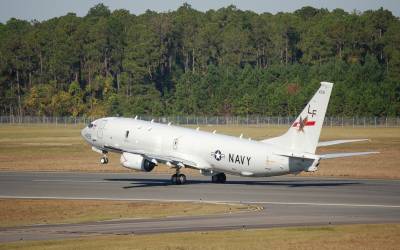
P-8A Poseidon
Maritime surveillance and patrol is becoming more and more important, but the USA’s P-3 Orion turboprop fleet is falling apart. The P-7 Long Range Air ASW (Anti-Submarine Warfare) Capable Aircraft program to create an improved P-3 began in 1988, but cost overruns, slow progress, and interest in opening the competition to commercial designs led to the P-7′s cancellation for default in 1990. The successor MMA program was begun in March 2000, and Boeing beat Lockheed’s “Orion 21″ with a P-8 design based on their ubiquitous 737 passenger jet. US Navy squadrons finally began taking P-8A Poseidon deliveries in 2012, but the long delays haven’t done their existing P-3 fleet any favors.
Filling the P-3 Orion’s shoes is no easy task. What missions will the new P-8A Poseidon face? What do we know about the platform, the project team, and ongoing developments? Will the P-3′s wide global adoption give its successor a comparable level of export opportunities? Australia and India have already signed on, but has the larger market shifted in the interim?
Continue Reading… »
Jun 09, 2013 13:00 UTC
Latest updates[?]: The Bismarck - really?; Full names roster; USNS Choctaw County delivered; JHSV 3 launched; JHSV 4 keel laid.
Austal MRV/JHSV concept
When moving whole units, shipping is always the cheaper, higher-capacity option. Slow speed and port access are the big issues, but what if ship transit times could be cut sharply, and full-service ports weren’t necessary? After Australia led the way by using what amounted to fast car ferries for military operations, the US Army and Navy decided to give it a go. Both services leased Incat TSV/HSV wave-piercing catamaran ship designs, while the Marines’ charged ahead with very successful use of Austal’s Westpac Express high-speed catamaran. These Australian-designed ships all give commanders the ability to roll on a company with full gear and equipment (or roll on a full infantry battalion if used only as a troop transport), haul it intra-theater distances at 38 knots, then move their shallow draft safely into austere ports to roll them off.
Their successful use, and continued success on operations, attracted favorable comment and notice from all services. So favorable that the experiments have led to a $3+ billion program called the Joint High Speed Vessel. These designs may even have uses beyond simple ferrying and transport.
Continue Reading… »
Jun 02, 2013 16:00 UTC
Latest updates[?]: France orders last 34 options; Timeline adds recent events and organizes by country; Order totals updated.
NH90: TTH & NFH
The NH90 emerged from a requirement that created a NATO helicopter development and procurement agency in 1992 and, at almost the same time, established NHIndustries (62.5% EADS Eurocopter, 32.5% AgustaWestland, and 5% Stork Fokker) to build the hardware. The NATO Frigate Helicopter was originally developed to fit between light naval helicopters like AW’s Lynx or Eurocopter’s Panther, and medium-heavy naval helicopters like the European EH101. A quick look at the NFH design showed definite possibilities as a troop transport helicopter, however, and soon the NH90 project had branched into 2 versions, with more to follow.
The nearest equivalent would be Sikorsky’s popular H-60 Seahawk/ Black Hawk family, but the NH90 includes a set of innovative features that give it some distinguishing selling points. Its combination of corrosion-proofing, lower maintenance, greater troop or load capacity, and the flexibility offered by that rear ramp have made the NH90 a popular global competitor.
As many business people discover the hard way, however, success can be almost as dangerous as failure. NH Industries has had great difficulty ramping up production fast enough to meet promised deliveries, which has left several buyers upset. Certification and acceptance have also been slow, with very few NH90s in service over a decade after the first contracts were signed. Booked orders have actually been sliding backward over the last year, and currently stand at 474 machines, on behalf of 14 nations.
Continue Reading… »
May 29, 2013 12:02 UTC
Latest updates[?]: More on collision avoidance, Block 40, civil certification, and AGS - incl. NGC statement.
What is it good for?
The Alliance Ground Surveillance (AGS) program began in 1995, and it has taken a very long time. Its MoU was late, its contract will be both late and smaller in scope, and it won’t meet even a revised 2012 – 2014 fielding window. At long last, however, one can be assured that it will exist. This is DID’s in-depth FOCUS Article covering the AGS program, from its platforms to its program structure to its long-awaited contracts.
The original AGS plan involved an Airbus A321 counterpart to Northrop Grumman’s E-8C Joint Surveillance Target Attack Radar System (J-STARS), a Boeing 707 derivative whose powerful ground-looking Synthetic Aperture Radar (SAR) offers American commanders combat-changing battlefield surveillance and communications. AGS would be a pooled NATO asset, adding 7 RQ-4B Global Hawk UAVs and dedicated ground stations to complement the manned planes. It has since been reduced to just 5 RQ-4 Block 40 Global Hawk UAVs and dedicated ground stations, but could expand again if countries decide to make some of their national surveillance assets part of the program.
Continue Reading… »
May 28, 2013 14:00 UTC
Latest updates[?]: Pentagon cuts program by 3 ships, to 50; Can anyone explain - or believe - the accompanying cost escalation indices?
Austal Team
Trimaran LCS Design
(click to enlarge)
Exploit simplicity, numbers, the pace of technology development in electronics and robotics, and fast reconfiguration. That was the US Navy’s idea for the low-end backbone of its future surface combatant fleet. Inspired by successful experiments like Denmark’s Standard Flex ships, the US Navy’s $35+ billion “Littoral Combat Ship” program was intended to create a new generation of affordable surface combatants that could operate in dangerous shallow and near-shore environments, while remaining affordable and capable throughout their lifetimes.
It hasn’t worked that way. In practice, what the Navy wanted, the capabilities needed to perform primary naval missions, and what could be delivered for the sums available, have proven nearly irreconcilable. The LCS program has changed its fundamental acquisition plan 4 times since 2005, and canceled contracts with both competing teams during this period, without escaping any of its fundamental issues. This public-access FOCUS article offer a wealth of research material, alongside looks at the LCS program’s designs, industry teams procurement plans, military controversies, budgets and contracts.
Continue Reading… »
May 28, 2013 12:52 UTC
Latest updates[?]: Contract to integrate the much-delayed RMS/WLD-1 snorkeling USV with LCS and mission modules.
Old school:
MH-53E & Mk-105 sled
The US Navy currently uses large CH-53/MH-53 helicopters and towed sleds to help with mine clearance work, but they hope to replace those old systems with something smaller and newer. The MH-60S helicopter’s Airborne Mine Counter-Measures (AMCM) system adds an operator’s station to the helicopter cabin, additional internal fuel stores, and towing capability, accompanied by a suite of carried systems that can be mixed and matched. AMCM is actually 5 different air, surface and sub-surface mine countermeasures systems, all deployed and integrated together in the helicopter.
While the US Navy develops AMCM, and complementary ship-launched systems for use on the new Littoral Combat Ships, new minehunter ship classes like the Ospreys are being retired by the US Navy and sold. All in an era where the threat of mines is arguably rising, along with tensions around key chokepoints like the Suez Canal and Strait of Hormuz.
This article explains the components involved (AQS-20, ALMDS, AMNS, OASIS, RAMICS; COBRA, RMS, SMCM), chronicles their progress through reports and contracts, and provides additional links for research.
Continue Reading… »
May 22, 2013 15:57 UTC
Latest updates[?]: ATK's GATR gets evaluation contract from US Special Forces; TALON entries improved.
(click to view larger)
Sen. Leahy’s [D-VT] worked in the mid-2000s to keep the Hydra 70mm rocket family alive through special appropriations, just in time for the Hydras’ potential on the battlefield to rise again. The key was the addition of low-cost precision guidance, which would expand the number of precision weapons carried by helicopters, aircraft, and even UAVs.
Over the last few years, the US Army’s 2nd attempt at an APKWS 70mm guided rocket had a near-death experience, before righting the program with Navy funding. Meanwhile, private development efforts from Lockheed Martin, Thales TDA, and a raft of international partnerships involving major defense firms and partners in Korea, the UAE, Canada/Norway, and Israel are introducing new competitors into the precision-guided rocket space. This DID FOCUS article covers the most prominent competitors within the guided rocket trend. Their products will sit between full anti-armor missiles like Hellfire, TOW, and Brimstone, and an emerging class of ultra-small precision attack weapons like Northrop Grumman’s Viper Strike, Raytheon’s Griffin, etc.
Continue Reading… »
May 21, 2013 16:31 UTC
Latest updates[?]: Has Navantia designed a sinking boat?; Australia rules out S-80 as a possibility; S-80 specifications and Industrial tables.
S-80 cutaway, labeled
The CIM-2000 Scorpene class diesel-electric attack submarine partnership was just the first step for Spain’s Navantia, as it joined with France’s DCNS to enter the global submarine market. Now Navantia is building on that base of expertise, to field its own S-80 Class for the Spanish Armada. Spain’s new submarines will be larger boats than Navantia/DCNS’ Scorpene Class, with Air-Independent Propulsion (AIP) systems as standard gear, and completely new designs for both external shape and internal systems.
This article will cover the S-80 submarines’ capabilities and associated key events and contracts – including sub-contracts to American, British, and Italian firms.
Continue Reading… »
- 1
- 2
- 3
- 4
- 5
- 6
- 7
- ...
- 32
- Older entries»