Advertisement

The USA’s America Class: Carrier Air + Amphibious Assault [LHA-R]

Latest update (Feb 6/12)

FY 2010-2012 budgets; DOT&E report worries about survivability & design; LHA 7 moved back; Long-lead contract.

LHA-R
LHA-R/NAAS Concept

Modern U.S. Navy Amphibious Assault Ships project power and maintain presence by serving as the cornerstone of the Amphibious Readiness Group (ARG) / Expeditionary Strike Group (ESG). LHA/LHD are a key element of the Seapower 21 doctrine pillars of Sea Strike and Sea Basing, transporting, launching, and landing elements of the Marine Expeditionary Brigade (MEB) via a combination of LCAC hovercraft, amphibious transports and vehicles, helicopters, and aircraft.

Designed to project power and maintain presence, LHA-Replacement (LHA-R, aka. LH-X and now the America Class) large deck amphibious assault ships will replace the LHA-1 Tarawa Class. They are based on the more modern LHD Wasp Class design, but initial ships will remove the LHD’s landing craft and well deck. While its LHA/LHD predecessors were amphibious assault ships with a secondary aviation element, it’s fair to describe the LHA-R (now New Amphibious Assault Ship) as escort carriers with a secondary amphibious assault role.

JHSV Fast Catamaran Transport Program Moves Forward

Advertisement
Austal JHSV
Austal MRV/JHSV concept
DII

Hawaii Superferries to supplement JHSV; Cut to program. (Jan 26/12)

When moving whole units, shipping is always the cheaper, higher-capacity option. Speed and port access are the issue, but what if getting there was faster, and full-service ports weren’t necessary? After Australia led the way by using what amounted to fast car ferries for military operations, the US Army and Navy picked up the idea themselves. Both services leased Incat TSV/HSV wave-piercing catamaran ship designs, while the Marines’ charged ahead with very successful use of Austal’s Westpac Express high-speed catamaran. These Australian-designed ships all give commanders the ability to roll on a company with full gear and equipment (or roll on a full infantry battalion if used only as a troop transport), haul it intra-theater distances at 38 knots, then move their shallow draft safely into austere ports to roll them off.

Their successful use, and continued success on operations, attracted favorable comment and notice from all services. So favorable that the experiments have led to a $3+ billion program called the Joint High Speed Vessel. These designs may even have uses beyond simple ferrying and transport.

Frontline Commanders Requesting Renewable Power Options

SkyBuilt THEPS Labeled
WANTED: stuff like this…

US Army initiatives. (Jan 18/12)

On July 25/06 Al-Anbar commander and U.S. Marine Corps Maj. Gen. Richard Zilmer submitted an MNF-W priority 1 request. It pointed to the hazards inherent in American supply lines, and noted that many of the supply convoys on Iraq’s roads (up to 70%, by some reports) were carrying fuel. Much of that fuel wasn’t even for vehicles, but for diesel generators used to generate power at US bases. That is still true, and Afghanistan has even more daunting logistics. By some estimates, shipping each gallon of fuel to Afghanistan requires 7 gallons of fuel for transport.

A number of Pentagon projects use alternative energy at various installations, but Zilmer’s request is believed to have been the first formal request from a front-line commander. Not to mention the first formal request that acknowledges the security dimension of alternative energy sources, in response to the growth of “systempunkt” terrorism and the non-linear battlefield. It has not been the last.

KC-46A USAF Aerial Tanker: From KC-X RFPs to Decision and Execution

Advertisement
KC-135 plane
KC-135: Old as the hills…
DII

DOT&E: KC-46A test schedule & promises “not executable”; USAF disagrees. (Jan 19/12)

DID’s FOCUS articles cover major weapons acquisition programs – and no program is more important to the USAF than its bid to replace its aerial tanker fleet. In January 2007, the big question was whether there would be a competition for the USA’s KC-X proposal, covering 175 production aircraft and 4 test platforms. The total cost for this first phase alone will exceed $25 billion, but America’s aerial tanker fleet demands new planes to replace its KC-135s, whose most recent new delivery was in 1965. Otherwise, unpredictable age or fatigue issues, like the ones that grounded its F-15A-D fighters in 2008, could ground its aerial tankers – and with them, a substantial slice of the USA’s total airpower.

KC-Y and KC-Z contracts may follow in subsequent decades, in order to replace all 530 (195 active; ANG 251; Reserve 84) active tankers, as well as the USAF’s 59 heavy KC-10 tankers that were delivered from 1979-1987. Then again, fiscal and demographic realities may mean that the 179 plane KC-X buy is it for the USAF. Either way, the stakes were huge for all concerned.

In the end, it was Team Boeing’s KC-767 NexGen/ KC-46A (767 derivative) vs. EADS North America’s KC-45A (Airbus KC-30/A330-200 derivative), both within the Pentagon and in the halls of Congress. The financial and employment stakes guaranteed a huge political fight no matter which side won. A fight that ended up sinking, and restarting, the entire program, after Airbus won in February 2008. Three years later, Boeing won the recompete:

More Mistrals sur la Mer: Dixmude, France’s 3rd LHD

FNS Tonnere
FNS Tonnerre [BPC 2],
during sea trials

From contract to delivery, 2009-2012. (Jan 14/12)

In December 2008, reports surfaced that France intended to accelerate production of its 3rd Mistral Class LHD amphibious assault and command ship, as part of a EUR 2.3 billion defense component of France’s economic stimulus package. That deal was finalized on Apr 10/09, and production of the 3rd ship of class is now complete. It is expected to enter service as FS Dixmude in 2012.

Cost figures were not released initially, but the use of commercial cruise ship standards and civilian yards reportedly allowed France to field the first two 21,300t Mistral Class LHDs for about EUR 660 million. By 2010, it emerged that Dixmude would be delivered for about 10% less, or EUR 300 million. That would make each Mistral Class LHD just 25% of the price for a single American 22,700t LPD-17 San Antonio Class amphibious assault and command ship…

Britain’s Future CVF Carriers: the Queen Elizabeth Class

CVF Concept
RN CVF Concept
DII

Vigilance radar pod for AEW?; American EMALS for CVF; Commons PAC report. (Dec 21/11)

Britain’s 1998 Strategic Defence Review (SDR) announced a big leap forward for the Royal Navy: plans to replace the current set of 3 Invincible Class 22,000t escort carriers with 2 larger, more capable Future Aircraft Carrier (CVF) ships that could operate a more powerful force. These new carriers would be joint-service platforms, operating F-35B (now F-35C) aircraft, plus helicopters and UAVs from all 3 services. Roles could include ISR (Intelligence, Surveillance & Reconnaissance), force projection and logistics support, close air support, anti-submarine/ anti-surface naval warfare, and land attack.

The scale of the CVF effort relative to Britain’s past experiences means that the program structure is rather complex. It has passed through several stages already, and is being run and conducted within an industrial alliance framework. There is also a parallel international framework, involving cooperation with France on its PA2 carrier as a derivative of the CVF design. This DID FOCUS article covers that structure and framework, ongoing developments, and the ships themselves as they round toward final design, construction, and fielding…

US MSC Charters Westpac Express Catamaran

WestPac Express at Sea
Westpac, Expressin’

The Westpac Express fast ferry ship has been instrumental in changing the way the US Navy approaches sealift in the Western Pacific. It’s fast enough to substitute for airlift in many cases, and large enough to move a Marine battalion with its gear. Early trials went very well, and the innovative designs and performance of Australian shipbuilders Austal and Incat laid a foundation of manufacturing experience and customer comfort that led to the innovative GD/Austal trimaran design for the new Independence Class “Flight 0” Littoral Combat Ship, while spawning a major acquisition program in the Joint High-Speed Vessel (JHSV).

HSV Westpac Express isn’t a Navy-owned ship; technically, it’s a chartered vessel. In July 2005, we noted an 18-month extension to its charter. In 2006, that service period was extended still further via a new charter, lasting up to 5 years. During that charter’s period, a bankruptcy in Hawaii created an opportunity to buy the Austal-built catamaran Superferry MV Huakai, which will replace Westpac Express in the Pacific. Until then, the USMC needs one more contract extension…

The USA’s New Littoral Combat Ships (LCS)

Littoral Combat Ship (LCS)
General Dynamics Team
Trimaran LCS Design
(click to enlarge)

Class services from each builder; LCS 3 post-production support; Mine-hunting ancillaries. (Dec 19/11)

Exploit simplicity, numbers, the pace of technology development in electronics and robotics, and fast reconfiguration. That was the US Navy’s idea for the low-end backbone of its future surface combatant fleet. Inspired by successful experiments like Denmark’s Standard Flex ships, the US Navy’s $30+ billion “Littoral Combat Ship” program was intended to create a new generation of affordable surface combatants that could operate in dangerous shallow and near-shore environments, while remaining affordable and capable throughout their lifetimes.

It hasn’t worked that way. In practice, what the Navy wanted, the capabilities needed to perform primary naval missions, and what could be delivered for the sums available, have proven nearly irreconcilable. The LCS program has changed its fundamental acquisition plan several times since 2005, and canceled contracts with both competing teams, without escaping any of its fundamental issues. This public-access FOCUS article offer a wealth of research material, alongside looks at the LCS program’s designs, industry teams procurement plans, military controversies, and contracts.

LPD-17 San Antonio Class: The USA’s New Amphibious Ships

LPD-17 labeled
LPD-17 cutaway
DII

Up to $111M for LPD 26/27 electronics. (Nov 22/11)

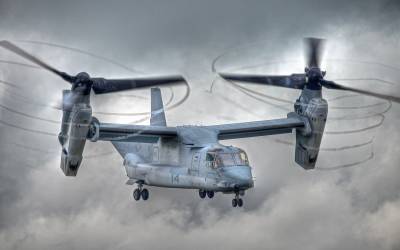
LPD-17 San Antonio class amphibious assault support vessels are just entering service with the US Navy. Between 10-11 scheduled ships of this new class are slated to assume the functional duties of up to 41 previous ships. Much like their smaller predecessors, their mission is to embark, transport, land, and support elements of a US Marine Corps Landing Force. What changes are the ships’ size, their cost, and the capabilities and technologies used to perform those missions. Among other additions, this new ship is designed to operate accompanying platforms like the Marines’ MV-22 Osprey tilt-rotor aircraft, and amphibious armored personnel carriers like the AAV7 Amtracs.

While its design incorporates notable advances, the San Antonio Class has encountered more than its share of teething problems. So, too, has the New Orleans shipyard to which most of this contract was assigned. The number of serious issues encountered in this ship class have been much higher than usual, and more extensive. The initial ships have been criticized, often, for sub-standard workmanship, and it took 2 1/2 years after the initial ship of class was delivered before any of them could be sent on an operational cruise. Whereupon the USS San Antonio promptly found itself laid up Bahrain, due to oil leaks. It has not been the only ship of this class to encounter serious mechanical issues. Meanwhile, costs are almost twice the originally promised amounts, reaching over $1.7 billion per ship – 2 to 3 times as much as many foreign LPDs like the Rotterdam Class, and more than 10 times as much as Singapore’s 6,600 ton Endeavour Class LPD...

The Global C-17 Sustainment Partnership

C-17 Hawaii
C-17 over Hawaii

Award winner. (Dec 8/11)

This in-depth, public-access DII Spotlight Article offers key statistics for the C-17A, explains the Globemaster III Sustainment Partnership’s (GSP) components, and details its contracts. While the C-17 may have limited production time in its future, the C-17 GSP is likely to continue for many years. The rising cost of maintenance has made it a greater concern to the world’s militaries, and new contract vehicles are reflecting that. Under the C-17 GSP, Boeing has total system support responsibility for the big transport aircraft, including materiel management and depot maintenance, for fleets around the world. The goal is total aircraft sustainment support under a single contract, in order to achieve improvements in mission readiness, while reducing operating and support costs.

The initial C-17 GSP contract has grown and broadened, even as Boeing’s customer base grew in the USAF (now 223), Australia (6), Britain (7), Canada (4), India (10-16), Qatar (2-4), NATO (3), the UAE (6) – and possibly Kuwait (1)...