08-Feb-2010 12:34 EST
Related Stories: Americas - USA, BAE, Boeing, Contracts - Awards, Contracts - Modifications, FOCUS Articles, General Dynamics, Guns - Artillery & Mortars, Helicopters & Rotary, Policy - Procurement, Procurement Innovations, Support & Maintenance, Tanks & Mechanized, Trucks & Transport, Warfare - Trends

USMC M1A1 settles a
firefight in Fallujah
(click to view full)
BAE gets $32 million order to RESET 417 M113 APCs. (Jan 26/10)
The RESET process takes used vehicles apart, inspects the parts, then replaces any defective parts and refurbishes the equipment to like-new condition. Sometimes upgrades are also performed. RESET and related processes like remanufacture/upgrades are being performed on M1 Abrams tanks, Bradley IFV/CFVs, HMMWV jeeps, and even helicopters. It usually takes place when the vehicles return from the front lines in Iraq, Afghanistan, and other locations, where sand damage and increased wear have taken their toll.
In truth, many of these vehicles were produced in the 1980s, and are reaching an age where “deep maintenance” is a wise and necessary measure. A July 2006 Washington Times article noted the effect age and wear have had on the USA’s vehicle fleet, and DID has also covered this subject under the wider rubric of the Army’s maintenance overhang. DID believes these efforts are sufficiently important that the consolidated visibility of a FOCUS Article is in order.
Note that this is not a complete list of RESET contracts; DID will seek to backfill its roster as opportunities arise, and newly-added materials will be presented in green as a reader convenience. Recent additions include a contract to reset FMTV medium trucks…
07-Feb-2010 18:49 EST
Related Stories: Alliances, Americas - USA, Asia - Other, Avionics, Budgets, C4ISR, Coastal & Littoral, Contracts - Intent, Force Structure, Issues - International, Issues - Political, L3 Communications, Lockheed Martin, Other Corporation, Policy - Procurement, Radars, Raytheon, Rumours, Signals Radio & Wireless, Specialty Aircraft, Support & Maintenance
Taiwan orders up to 20 medium helicopters, and may be headed for a modernized FFG-7 program. (Feb 3/10)
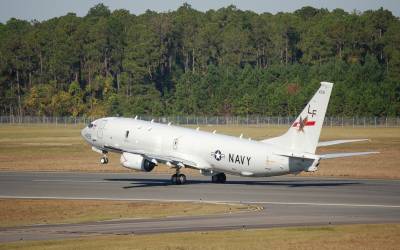
Despite China’s military buildup across the strait, key weapons sales of P-3 maritime patrol aircraft, Patriot PAC-3 missiles, and diesel-electric submarines to Taiwan have been sabotaged by Taiwanese politics for years – in some cases, since 1997. The KMT party’s flip-flops and determined stalling tactics eventually created a crisis in US-Taiwan relations, which finally soured to the point that the USA refused a Taiwanese request for F-16C/D aircraft.
That seems to have brought things to a head. Most of the budget and political issues were eventually sorted out, and after a long delay, some major elements of Taiwan’s requested modernization program appear to be moving forward: P-3 maritime patrol aircraft, Patriot missile upgrades; and requests for AH-64D attack helicopters, UH-60M Black Hawks helicopters, E-2 AWACS planes, minehunting ships, and missiles for defense against aircraft, ships, and tanks. These are must-have capabilities when facing a Chinese government that has vowed to take the country by force, and which is building an extensive submarine fleet, a large array of ballistic missiles, an upgraded fighter fleet, and a number of amphibious-capable divisions.
Chinese pressure continues to stall some of Taiwan’s important upgrades, including diesel-electric submarines and American fighter jets. Meanwhile, other purchases continue…
Continue Reading… »
07-Feb-2010 15:45 EST
Related Stories: Americas - USA, Boeing, Contracts - Modifications, Engines - Aircraft, Europe - E.U., GE, Helicopters & Rotary, Issues - Political, New Systems Tech, Other Corporation, Policy - Procurement, Rolls Royce, Spotlight articles

(click to view full)
$122.5 million for spares and extra engine maintenance. (Feb 5/10)
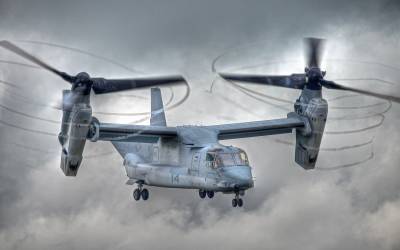
In March 2008, the Bell Boeing Joint Project Office in Amarillo, TX received a $10.4 billion modification that converted the previous advance acquisition contract (N00019-07-C-0001) to a fixed-price-incentive-fee, multi-year contract. The new contract now sits at $10.8 billion, and will be used to buy 141 MV-22 (for USMC) and 31 CV-22 (Air Force Special Operations) Osprey aircraft, plus associated manufacturing tooling to move the aircraft into full production.
The V-22 tilt-rotor program has been beset by controversy throughout its 20-year development period. DID’s “V-22 Osprey: A Flying Shame?” offers a focused look at a number of specific allegations associated with the program, with material from Pentagon test reports, critical reviews, ongoing news reports, and the US military’s responses. Despite these issues, and the emergence of competitive but more conventional compound helicopter technologies like Piasecki’s X-49 Speedhawk and Sikorsky’s X2, the V-22 program continues to move forward. This DID Spotlight article looks at the V-22’s new multi-year purchase contract, associated contracts for key V-22 systems, and program developments that arise after the contract conversion.
07-Feb-2010 14:40 EST
Related Stories: Americas - USA, BAE, C4ISR, Contracts - Awards, Design Innovations, Electronics - General, Forces - Air, Forces - Land, Forces - Marines, Forces - Special Ops, General Dynamics, Materials Innovations, New Systems Tech, Other Corporation, Partnerships & Consortia, Policy - Procurement, RFPs, Raytheon, Trucks & Transport

Oshkosh M-ATV
(click to view full)
$84.7 million for M-ATV explosively formed penetrator kits. (Feb 5/10)
“The Government plans to acquire an MRAP All-Terrain Vehicle (M-ATV). The M-ATV is a lighter, off-road, and more maneuverable vehicle that incorporates current MRAP level [bullet and mine blast] protection. The M-ATV will require effectiveness in an off-road mission profile. The vehicle will include EFP and RPG protection (integral or removable kit). The M-ATV will maximize both protection levels and off-road mobility & maneuverability attributes, and must balance the effects of size and weight while attempting to achieve the stated requirements.”
—US government FedBizOpps, November 2008
Oshkosh Defense’s M-ATV candidate secured a long-denied MRAP win, and the firm continues to remain ahead of production targets. The initial plan expected to spend up to $3.3 billion to order 5,244 M-ATVs for the US Army (2,598), Marine Corps (1,565), Special Operations Command (643), US Air Force (280) and the Navy (65), plus 93 test vehicles; but FY 2010 budgets and purchases have pushed this total higher.
04-Feb-2010 19:47 EST
Related Stories: Americas - USA, Asia - India, Engines - Aircraft, Europe - France, FOCUS Articles, Fighters & Attack, GE, Issues - Political, Missiles - Air-Air, New Systems Tech, Other Corporation, Policy - Procurement, Project Management, RFPs, Rolls Royce, United Technologies

Tejas LCA
(click to view full)
India committing another $1 billion to development; engine partnership contenders expanding and evolving. (Feb 3/10)
India’s fighter strength has been declining in recent years, as the MiG-21s that form the largest component of its fleet are lost in crashes, or retired due to age and wear. Some MiG-21s are being modernized to MiG-21 ‘Bison’ configuration, while other current fighter types are undergoing modernization programs in order to maintain the fighter force until replacements can arrive. On which note, an ongoing tender has Russian, French, American, Swedish and European manufacturers dueling for the MMRCA, a multi-billion dollar, 126+ plane light-medium fighter sale.
This still leaves India without a low-end solution to the twin problems besetting its overall fleet: numbers, and age. The MiG-21bis program adds years of life to those airframes, but that extended lifespan is still quite finite; by 2020, it is very unlikely that any MiG-21s will remain. MMRCA may replace some of India’s mid-range fighters, but that still leaves replacement of the MiG-21 fleet. Hence the Tejas Light Combat Aircraft (LCA) project’s importance to the Indian Air Force’s future prospects. Choices made in the LCA’s design will also affect the lightweight fighter’s export potential, which feeds back into the overall program’s lifetime costs and viability. As time presses, however, India’s rigid domestic-only policies are gradually being relaxed, in order to field an operational and competitive aircraft.
02-Feb-2010 19:38 EST
Related Stories: Alliances, Americas - USA, BAE, Britain/U.K., Contracts - Awards, Contracts - Modifications, Design Innovations, ECM, Electronics - General, Engines - Aircraft, Europe - Other, FOCUS Articles, Fighters & Attack, Finmeccanica, GE, Issues - International, Issues - Political, Lobbying, Lockheed Martin, Middle East - Israel, Northrop-Grumman, Official Reports, Other Corporation, Partnerships & Consortia, Policy - Procurement, R&D - Contracted, Radars, Rumours, Security & Secrecy, Sensors & Guidance, Testing & Evaluation, Transformation

F-35A: incoming…
(click to view full)
FY 2011 budget proposals, withheld performance fees, a change in program leadership, Australian reaction. (Feb 2/10)
The $300+ billion F-35 Joint Strike fighter may well be the largest single global defense program in history. This major multinational program is intended to produce an “affordably stealthy” multi-role fighter that will have 3 variants: the F-35A conventional version for the US Air Force et. al.; the F-35B Short Take-Off, Vertical Landing for the US Marines, British Royal Navy, et. al.; and the F-35C conventional carrier-launched version for the US Navy. The aircraft is named after Lockheed’s famous WW2 P-38 Lightning, and the Mach 2, stacked-engine English Electric (now BAE) Lightning jet. Lightning II system development partners included The USA & Britain (Tier 1), Italy and the Netherlands (Tier 2), and Australia, Canada, Denmark, Norway and Turkey (Tier 3), with Singapore and Israel as “Security Cooperation Partners.” Now the challenge is agreeing on production phase membership and arrangements, to be followed by initial purchase commitments in 2009-2010.
This updated article has expanded to feature more detail regarding the F-35 program, including contracts, sub-contracts, and notable events and reports. New material is highlighted by putting it in green type.
01-Feb-2010 15:01 EST
Related Stories: Americas - USA, Australia & S. Pacific, Britain/U.K., Contracts - Awards, Contracts - Intent, Contracts - Modifications, Europe - Other, FOCUS Articles, Finmeccanica, Force Structure, Forces - Marines, Forces - Special Ops, Issues - Political, Lobbying, Lockheed Martin, New Systems Tech, Official Reports, Partnerships & Consortia, Policy - Procurement, Procurement Innovations, Support & Maintenance, Support Functions - Other, Transport & Utility

RAAF C-130J-30, flares
(click to view full)
$146 million for another year of USAF fleet engine support. (Feb 1/10)
The C-130 Hercules remains one of the longest-running aerospace manufacturing programs of all time. Since 1956, over 40 models and variants have served as the tactical airlift backbone for over 50 nations. The C-130J looks similar, but the number of changes almost make it a new aircraft. Those changes also created issues; the program has been the focus of a great deal of controversy in America – and even of a full program restructuring in 2006. Some early concerns from critics were put to rest when the C-130J demonstrated in-theater performance on the front lines that represented a major improvement over its C-130E/H predecessors. A valid follow-on question might be: does it break the bottleneck limitations that have hobbled a number of multi-billion dollar US Army vehicle development programs?
C-130J customers now include Australia, Britain, Canada, Denmark, India, Iraq, Italy, Norway, Oman, Qatar, and the United States. American C-130J purchases are taking place under both annual budgets and supplemental wartime funding, in order to replace tactical transport and special forces fleets that are flying old aircraft and in dire need of major repairs. This DID FOCUS Article describes the C-130J, examines the bottleneck issue, covers global developments for the C-130J program, and looks at present and emerging competitors.
31-Jan-2010 21:24 EST
Related Stories: Alliances, Americas - USA, Boeing, Contracts - Awards, Corporate Financials, DARPA, Environmental, General Dynamics, Helicopters & Rotary, IT - Cyber-Security, Industry & Trends, Issues - Environmental, Issues - International, Issues - Political, Lockheed Martin, Mergers & Acquisitions, Middle East - Other, Other Corporation, Policy - Doctrine, Policy - Procurement, Raytheon, Signals Radio & Wireless, Submarines, Support & Maintenance, Transport & Utility
- US defense firms felt the economic pressure this quarter, as Rockwell Collins’ profits fell 20% and Lockheed Martin’s earnings were flat, notes the Wall Street Journal. Bucking the trend, Raytheon’s profit rose 20% for the quarter.
- Research and Markets: The market for military tactical radio systems is predicted to grow substantially in the coming years. Also, technical issues with JTRS are driving the need for more legacy radios.
- General Dynamics Electric Boat says it will lay off 434 workers at its Groton, CT, shipyard due to lost submarine maintenance, overhaul and repair work.
- The Pentagon is looking to cut its greenhouse gas emissions for non-combat activities, such as buildings and fleet vehicles, by 34% by 2020.
27-Jan-2010 12:50 EST
Related Stories: Americas - USA, Ammunition, Australia & S. Pacific, Contracts - Awards, Explosives, Issues - Political, Official Reports, Other Corporation, Policy - Procurement, Thales

Mulwala plant
(click to view full)
The plant will now export to New Zealand, as a cornerstone supplier of small arms ammunition. (Jan 18/10)
Although single base propellants have been around for over 100 years, production of this type of propellant only began in Australia during World War 2, when appropriate equipment and know-how were provided under the USA’s Lend Lease Scheme. Prior to this date, all propellants had been of the British double base type. The Mulwala gun propellant facility in New South Wales was set up to produce these commodities, and remains the sole supplier of military-grade propellants and high explosives to the Benalla ammunition plant in northern Victoria. These plants are deemed to be strategic national assets, and produce ammunition for Australia’s Defence Forces; Mulwala also produces low-grade explosives and propellants for a few other customers, including America’s NASA.
Australia isn’t the only country looking to modernize single-source ammunition facilities from World War 2 or earlier. The USA is in the same boat. The Mulwala redevelopment project has finally received full approval, and work will commence shortly – with the assistance of the same firm that owns the USA’s prime (and until recently, only) small caliber military ammunition production facility…
Continue Reading… »
27-Jan-2010 08:37 EST
Related Stories: Americas - USA, Asia - Other, Contracts - Intent, Fighters & Attack, Issues - International, Issues - Political, Other Corporation, Partnerships & Consortia, Policy - Procurement, Russia, Specialty Aircraft, Spotlight articles

Gripen & S-1000
(click to view full)
The RTAF asks for almost $700 million in advance approvals to by batch 2, and upgrade 6 F-16s. (Jan 26/10)
It’s a small, agile fighter that can take off and land on highways, while carrying the latest technologies and weapons. It does very well against NATO’s best aircraft in exercises, comes with a reasonable price tag, and is built for low lifetime operating costs. Unfortunately, in a world where people often buy your weapons because they want you to be their friend, the cachet of having Sweden in your corner isn’t quite what it used to be when their sailors wore those cool horned helmets. As a result, the JAS-39 Gripen is an excellent, reasonably-priced fighter yet it has been struggling for traction in the global marketplace.
A recent sale to Thailand has expanded Saab’s horizons somewhat, as the Gripen beat out the SU-30s favored by the previous Thai government. Lockheed Martin’s F-16 had been considered the leading contender to replace the RTAF’s 15-25 aging F-5B/Es, given Thailand’s extensive history with that aircraft. Other candidates included Russia’s MiG-29, and France’s Rafale. Saab had a very competitive offering on cost and performance, but in order to win, they had to throw in a very significant “something extra”: their Saab 340-AEW AWACS aircraft.