Advertisement

The US Navy’s Mobile Landing Platform Ships (MLP)

MLP concept
MLP concept

Converteam picked for propulsion & power system; Ships named; Keel laid; Article updated. (Jan 19/12)

The Montford Point Class Mobile Landing Platform is intended to be a new class and type of auxiliary support ship, as part of the US Navy’s Maritime Prepositioning Force of the Future (MPF-F) program. They’re intended to serve as a transfer station or floating pier at sea, improving the U.S. military’s ability to deliver equipment and cargo from ship to shore when friendly bases are denied, or simply don’t exist. That’s very useful in disaster situations, and equally useful for supporting US Marines once they’re ashore.

It’s an interesting and unusual concept, one closely connected to the au courant concept of “seabasing”. The final MLP design changed substantially from the initial requirements, which lowered the platform’s cost along with its capabilities. Time will tell if the initial choices and tradeoffs were well-conceived or not. With contracts to build the ships underway, the remaining question is whether the ships can be built to meet the more limited promises that are being made now…

Frontline Commanders Requesting Renewable Power Options

Advertisement
SkyBuilt THEPS Labeled
WANTED: stuff like this…

US Army initiatives. (Jan 18/12)

On July 25/06 Al-Anbar commander and U.S. Marine Corps Maj. Gen. Richard Zilmer submitted an MNF-W priority 1 request. It pointed to the hazards inherent in American supply lines, and noted that many of the supply convoys on Iraq’s roads (up to 70%, by some reports) were carrying fuel. Much of that fuel wasn’t even for vehicles, but for diesel generators used to generate power at US bases. That is still true, and Afghanistan has even more daunting logistics. By some estimates, shipping each gallon of fuel to Afghanistan requires 7 gallons of fuel for transport.

A number of Pentagon projects use alternative energy at various installations, but Zilmer’s request is believed to have been the first formal request from a front-line commander. Not to mention the first formal request that acknowledges the security dimension of alternative energy sources, in response to the growth of “systempunkt” terrorism and the non-linear battlefield. It has not been the last.

Pilum High: The Javelin Anti-Armor Missile

ATGM Javelin Launch Immediate
Javelin, firing
DII

Retrofit and support contracts to USA, UAE, Australia. (Jan 17/12)

The Javelin missile system aimed to solve 2 key problems experienced by American forces. One was a series of disastrous experiences in Vietnam, trying to use 66mm M72 LAW rockets against old Soviet tanks. A number of replacement options like the Mk 153 SMAW and the AT4/M136 spun out of that effort in the 1980s, but it wasn’t until electronics had miniaturized for several more cycles that it became possible to solve the next big problem: the need for soldiers to remain exposed to enemy fire while guiding anti-tank missiles to their targets.

Javelin solves both of those problems at once, offering a heavy fire-and-forget missile that will reliably destroy any enemy armored vehicle, and many fortifications as well. While armored threats are less pressing these days, the need to destroy fortified outposts and rooms in buildings remains. Indeed, one of the lessons from both sides of the 2006 war in Lebanon has been the infantry’s use of guided missiles as a form of precision artillery fire. Javelin isn’t an ideal candidate for that latter role, due to its high cost-per-unit; nevertheless, it has often been used this way. Its performance in Iraq has revealed a clear niche on both low and high intensity battlefields, and led to rising popularity with American and international clients…

Arming RQ-7 UAVs: The Shadow Knows…

Advertisement
RQ-7 flightline
RQ-7 Shadow

What the USMC missed without this; Afghan deployment coming. (Dec 30/11)

By 2007, US Army RQ-7 Shadow battalion-level UAVs had seen their flight hours increase to up 8,000 per month in Iraq, a total that compared well to the famous MQ-1 Predator. Those trends have gained strength, as workarounds for the airspace management issues that hindered early deployments become more routine. Some RQ-7s are even being used to extend high-bandwidth communications on the front lines.

The difference between the Army’s RQ-7 Shadow UAVs and their brethren like the USAF’s MQ-1A Predator, or the Army’s new MQ-1C Sky Warriors, is that the Shadow has been too small and light to be armed. With ultra-small missiles still in development, and missions in Afghanistan occurring beyond artillery support range, arming the Army’s Shadow UAVs has become an even more important objective. It would take some new technology, but that seems to be on the way for the US Army’s RQ-7B Shadow UAV fleet…

Tanks for the Lesson: Leopards, too, for Canada

Leo 2A6 CAN, deployed
Leopard 2A6M CAN
& LAV-III, Afghanistan

Order for Rheinmetall’s Buffalo ARVs. (Dec 20/10)

Canadian Forces took some of the lessons re-learned during Operation Medusa in Afghanistan, directly to heart. Canada’s DND:

“The heavily protected direct fire capability of a main battle tank is an invaluable tool in the arsenal of any military. The intensity of recent conflicts in Central Asia and the Middle East has shown western militaries that tanks provide protection that cannot be matched by more lightly armored wheeled vehicles…. [Canada’s existing Leopard C2/1A5] tanks have also provided the Canadian Forces (CF) with the capability to travel to locations that would otherwise be inaccessible to wheeled light armoured vehicles, including Taliban defensive positions.”

In October 2003, Canada was set to buy the Styker/LAV-III 105mm Mobile Gun System to replace its Leopard C2 tanks. By 2007, however, the lessons of war took Canada down a very different path – one that led them to renew the very tank fleet they were once intent on scrapping, while backing away from the wheeled vehicles that were once the cornerstone of the Canadian Army’s transformation plan. This updated article includes a full chronology for Canada’s new Leopard 2 tanks, adds information concerning DND’s exact plans and breakdowns for their new fleet, and discusses front-line experiences in Afghanistan…

MPLC: Bringing the Boom to Beat the Boom

MPLC
MPLC

In December 2011, Ensign-Bickford Aerospace & Defense in Simsbury, CT received a $10.8 million firm-fixed-price contract for 3,000 Man Portable Line Charge Systems that can fire rope-shaped plastic explosives for remote detonation, and 206 Inert Training Systems. Work will be performed in Graham, KY; Simsbury, CT; and Sterling, CT, with an estimated completion date of April 8/12. One bid was solicited, with 1 bid received by US Army Contracting Command at Aberdeen Proving Ground, MD (W91CRB-12-C-0012).

In August 2011, an FBO.gov RFI explained the rationale behind the MPLC: US forces needed a system for quickly clearing paths through land mines, which was lighter and easier to carry than existing gear. To be specific…

Raytheon Restarts Production of Laser Maverick Missiles

AGM-65E for F-18
AGM-65E onto F/A-18

Testing done, ready to go. (Jan 24/12)

Raytheon is restarting its production line to produce AGM-65E2/L laser-guided Maverick missiles, and will also upgrade existing stocks, in response to demand from the front lines. The AGM-65 rose to its greatest prominence during Desert Storm, when many of TV’s missile-eye views of air strikes came from Mavericks. In truth, it was produced in 3 versions: TV-guided, Imaging Infrared (IIR) guided, and laser-guided. Production continues for the TV and IIR variants, but the Marines’ AGM-65E laser-guided version had gone out of production.

The AGM-65 Maverick was the first general purpose fire-and-forget tactical air-to-ground missile in service with the U.S. Air Force. The JAGM program proposes to replace it, but until then, Maverick remains the default option for jet fighter precision-guided missile strikes. While IIR and TV guidance allow precision attacks, laser guidance generally offers the best accuracy of the 3 against ground targets. Likewise, there are circumstances in which a fully-powered missile is a better choice than an unpowered gliding bomb. The following story from Iraq illustrates…

JDAM: A GPS-INS Add-on Adds Accuracy to Airstrikes

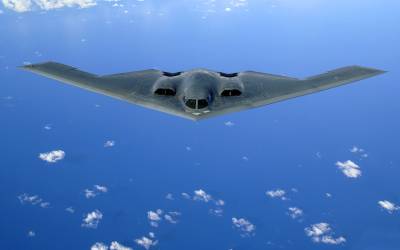
B-2 Dropping JDAM
B-2 drops JDAM
DII

FY 2011-12 budget requests; $100M+ Lot 16 production order; UAE wants a variety of JDAMs. (Dec 2/11)

Precision bombing has been a significant military goal since the invention of the Norden bomb sight in the 1920s, but its application remained elusive. Over 30 years later, in Vietnam, the destruction of a single target could require 300 bombs, which meant sending an appropriate number of fighters or bombers into harm’s way to deliver them. Even the 1991 Desert Storm war with Iraq featured unguided munitions for the most part; the US Air Force did use some laser and TV-guided weapons like Paveway bombs and Maverick missiles, but they were very expensive and only effective in good weather. If precision bombing was finally to become a reality throughout the Air Force, a new approach would be needed. The Joint Direct Attack Munition (JDAM) became that alternative, an engine of military transformation that was also a model of procurement transformation.

DID’s FOCUS articles offer in-depth, updated looks at significant military programs of record. This DID FOCUS Article looks at the transformational history of the JDAM GPS-guided bomb program, the ongoing efforts to bring its capabilities up to and beyond the level of dual-mode guidance kits like Israel’s Spice and Raytheon’s Enhanced Paveway, and the contracts issued under the JDAM program since its inception…

Britain’s Future Frigates: Type 26 & 27 Global Combat Ships

Type 26
Type 26 concept

Major article updates include: Progress on CAMM missile; Planned specifications; Canada shuts the door; Exports to India?; Process as key decision point nears.

Britain’s “Future Surface Combatant” program is slated to replace the existing fleet of Type 22 Broadsword Class and Type 23 Duke Class frigates with 2 new ship classes. Outside attention often focuses on big-ticket ships like aircraft carriers, submarines, and advanced destroyers – but the frigate is the real backbone of most modern navies.

Lord Nelson loved his HMS Victory and her fellow first-rate ships of the line, but he asked the admiralty for more cruisers because he knew their versatile value as the “eyes of the fleet.” Modern multi-role frigates that can engage threats on the water, under water, and in the air fill that same role today, protecting other navy ships or undertaking independent action away from their task group. The Type 26 multi-role frigate will have to fill that niche – but first, its requirements and design must be defined…

Rapid Fire 2011-11-24: 10kW Lasers

  • Cost-effective procurement: How to break over 500 jihadis out of Kandahar prison, for $20,000. As told by the the operation’s planners to the Islamic Emirate of Afghanistan’s “Voice of Jihad.”
  • Israel’s F-35i fleet will be based at Nevatim AB as of 2015, when they’re scheduled to arrive in Israel.
  • VTUAV heli-drones have landed on ships, but can they do it in high waves and low-visibility, using the same harpoon and winch-down system used in naval helicopters? Thales (UAV interfaces, positioning) and DCNS (ship integration and motion prediction, harpoon system) are working on it, using a Boeing H-6U Little Bird.
  • Rheinmetall has used a 10kW laser in a Skyshield 3 turret, coupled with its Skyguard system, to engage mortar rounds, and kill a UAV. They, too, are pushing toward the 100 kW goal, but add that even current systems have proven to be useful. Could lasers show up in a future MANTIS upgrade?