Technology Training - Click Here!

F-18 Super Hornets to Get IRST

Related Stories: Americas - USA, Boeing, C4ISR, Contracts - Awards, Design Innovations, Fighters & Attack, IT - Software & Integration, Lockheed Martin, New Systems Tech, R&D - Private, Sensors & Guidance, Transformation, Warfare - Trends

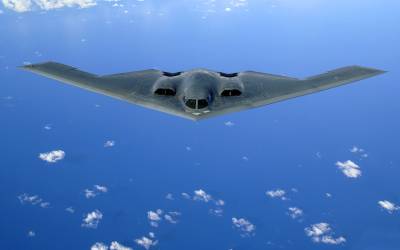
AIR_B-2_Close_View_IR.gif
IRST: B-2, ICU
(click to view full)

The F/A-18 E/F Super Hornet Block IIs are just beginning to enter service, with significantly improved AN/APG-79 AESA radars and other electronic upgrades. Recent years have seen another spreading improvement within global fighter fleets, however: Infa-Red Search & Track (IRST) systems that provide long range thermal imaging against air and ground targets. Most of these deployments have been on Russian (MiG-29 family, SU-30 family) and European (Eurofighter, Rafale) fighters, or special American exports (UAE’s F-16E/F Block 60s, F-15K/SG).

That absence puts American fighters behind an important curve. This IRST approach can defeat radar stealth in some instances, by focusing on engine exhaust or on the friction of the aircraft as it powers through the atmosphere. As F-14 pilots will recall, long range electro-optics also offer positive identification, conferring the ability to use a plane’s missiles to their full ranges, without creating friendly fire concerns. Best of all, IRST offers a passive way to locate and target enemy aircraft – one that won’t trigger radar warning receivers. When coupled with medium-range IR missiles like some Russian AA-10 variants, France’s MICA-IR, or even future versions of AMRAAM NCADE, an IRST system offers a fighter both an extra set of medium-range eyes, and a stealthy air-to-air combat weapon.

A program is beginning that would give American “teen series” fighters this capability, albeit in a somewhat unusual way…

AMRAAM: Deploying & Developing America’s Medium-Range Air-Air Missile (updated)

Related Stories: Americas - USA, Asia - Central, Asia - Other, Boeing, Contracts - Awards, Contracts - Modifications, Design Innovations, Europe - France, Europe - Other, FOCUS Articles, Field Reports, Middle East - Israel, Middle East - Other, Missiles - Air-Air, Missiles - Surface-Air, New Systems Tech, Official Reports, Other Corporation, R&D - Contracted, Raytheon, Support & Maintenance, Warfare - Trends

ORD_AIM-120C_AMRAAM_Launch_From_F-22.jpg
AIM-120C from F-22A
(click for test missile zoom)
DII

Raytheon’s AMRAAM has become the world market leader for medium range air-to-air missiles. It was designed with the lessons of Vietnam in mind, and of local air combat exercises like ACEVAL and Red Flag.

One of the key lessons learned from Vietnam was that a fighter would be likely to encounter multiple enemies, and would need to launch and guide several missiles at once in order to ensure its survival. This had not been possible with the AIM-7 Sparrow, a “semi-active radar homing” missile which required a constant radar lock on one target. To make matters worse, enemy fighters were capable of launching missiles of their own. Pilots who weren’t free to maneuver after launch would often be forced to “break lock,” or be killed – sometimes even by a short-range missile fired during the last phases of their enemy’s approach. Since fighters that could carry radar-guided missiles like the AIM-7 tended to be larger and more expensive, and the Soviets were known to have far more fighters overall, this was not a good trade.

Enter AMRAAM – the AIM-120 Advanced, Medium-Range Air to Air Missile. This DID FOCUS article covers successive generations of AMRAAM missiles, international contracts and key events from 2006 onward, and even some of its emerging competitors. New materials will be highlighted in green type. The most recent additions involve US government approval for 3 Middle East allies to buy AMRAAMs, as well as a request by Chile to buy $145 million worth of AMRAAMs and accessories…

MQ-9 Reaper: The First Operational UCAV?

Related Stories: Americas - USA, Asia - Central, BAE, Britain/U.K., Budgets, Contracts - Awards, Contracts - Intent, Contracts - Modifications, Europe - Other, FOCUS Articles, General Atomics, New Systems Tech, Other Corporation, Partnerships & Consortia, R&D - Contracted, Raytheon, Support & Maintenance, Transformation, UAVs, Warfare - Trends

Reaper Hellfires Paveways
Reaper, ready…
(click to view full)
DII

The MQ-9 Reaper UAV, once called “Predator B,” is somewhat similar to the famous Predator. Until you look at the tail. Or its size. Or its weapons. It’s called “Reaper” for a reason – while it packs the same surveillance gear, it’s much more of a hunter-killer design. The Reaper is 36 feet long, with a 66 foot wingspan. Its maximum gross takeoff weight is a whopping 10,500 pounds, carrying up to 4,000 pounds of fuel, 850 pounds of internal/ sensor payload, and another 3,000 pounds on its wings. Its 6 pylons can carry GPS-guided JDAM family bombs, Paveway laser-guided bombs, Sidewinder missiles for air-air self defense, and other MIL STD 1760 compatible weapons, in addition to the Hellfire anti-armor missiles carried by the Predator. When loaded up with laser-guided Hydra rockets, the Reaper becomes the equivalent of a close air support fighter with less situational awareness, lower speed, and less survivability if seen – but much, much longer on-station time. Some have called it the first fielded Unmanned Combat Air Vehicle (UCAV).

DID’s FOCUS articles offer in-depth, updated looks at significant military programs of record. The Reaper UCAV will play a significant role in the future USAF, even though capability set makes the MQ-9 considerably more expensive than MQ-1 Predators, whose price benefits from less advanced design and volume production orders. Given these high-end capabilities, and expenses, one might not have expected the MQ-9 to enjoy better export success than its famous cousin. Nevertheless, that’s what appears to be happening. MQ-9 operators currently include the USA and Britain, who have both used it in hunter-killer mode, and Italy. Other countries are also expressing interest, and international deployments are accelerating.

As a convenience to readers, new material is indicated in green type. The latest additions include reports of “phone home” problems, Germany going in another direction for UAVs, and the basing of MQ-9s in the Seychelles for anti-piracy missions…

Germany’s F125 Special Forces and Stabilization Frigates

Related Stories: Contracts - Awards, EADS, Europe - Other, Finmeccanica, GE, IT - Software & Integration, New Systems Tech, Other Corporation, Surface Ships - Combat, Transformation, Warfare - Trends

F125 frigate
F125 Concept
(click to expand)

There is general acknowledgment in global naval circles that many future operations are going to involve shallow littoral chokepoints for maritime trade, operations in and around failed states like Somalia, and expeditionary stabilization operations. That realization has driven a number of approaches to naval construction.

In the Netherlands, Royal Schelde’s Sigma Ships are designed in block modules, which can be added or subtracted to build anything from an offshore patrol vessel to a large frigate. Denmark is already building its Flyverfisken Class and Absalon Class ships, which pioneered the mission module concept and can be used in roles ranging ranging from mine or sub hunting, to anti-ship warfare/ land attack, to carrying troops. Sweden’s Visby Class stealth corvettes are attracting renewed American attention, and helped to inspire the American concept of the Littoral Combat Ship – which has been criticized for its cost, and for packing less punch and having less high-end armament flexibility than any competitor.

Germany’s response has been the F125 frigate, which might best be described as an “expeditionary frigate” design. It doesn’t use the Danish or American mission module concept. Instead, it includes a number of features aimed at making it a strong contributor to long international deployments in littoral environments, and to naval support for stabilization operations.

The latest addition involves a key merger, and a satellite terminal contract…

RWS for Italy’s LMVs

Related Stories: Contracts - Awards, Europe - Other, Finmeccanica, Remote Weapons Systems, Warfare - Trends

HITROLE 12.7mm
HITROLE Light
(click to view larger)

Finmeccanica subsidiary Oto Melara and the Italian Ministry of Defense recently signed a sole-source EUR 20 million (currently $29.7 million) contract to acquire 81 HITROLE Light turrets for Italy’s Light Multirole Vehicles (LMV, or Lince). The Linces have served well in Afghanistan, using their blast protection to save lives during land mine attacks. The first HITROLE turret will be delivered for operational testing in about 4 months, with most delivered by the second half of 2010.

Small Remote Weapon Systems (RWS) offer a package of advanced sensors, as well as a 7.62mm or 12.7mm/ .50 caliber machine gun, or a 40mm grenade launcher, all controlled from inside the vehicle, using a joystick and screen. While their field of view is narrower than an exposed human’s, and they do not transmit auditory cues, they do offer long-range day and night surveillance, and protected firepower that is not vulnerable to snipers. Some high-end systems are even stabilized to ensure accurate fire from moving vehicles, though HITROLE does not appear to have this capability. American CROWS/ CROWS-II systems on its Humvee jeeps, many MRAPs, Stryker APCs, and M1A1 TUSK tanks offer just one example of growing RWS usage by armies who are increasingly forced to fight in complex terrain and urban areas. Italy has ordered 1,286 Lince blast-resistant vehicles as of June 2009, however, so 81 RWS systems aren’t – yet – a fleet-wide contract like CROWS.

Triple Canopy’s Catch-22 in Iraq

Related Stories: Americas - USA, Food-related, Guns - Personal Weapons, Issues - Political, Legal, Middle East - Other, Policy - Procurement, Rockets, Scandals & Investigations, Security Contractor, Support Functions - Other, Warfare - Trends

Triple Canopy
(click to visit)

Former Iraq Security Contractors Say Firm Bought Black Market Weapons, Swapped Booze for Rockets” says the ProPublica headline. They’re talking about a firm called Triple Canopy, a security contractor who replaced Blackwater (now Xe) as the US diplomatic service’s bodyguards in Iraq, and also had other contracts in theater to protect allied bases and installations, some of which were covered here.

Allegations and legal depositions state that the firm traded booze for weapons, and bought weapons and vehicles on the black market in Iraq between 2003-2004. At least one of those employees have expressed concern that the money used to buy these items may have ended up in the hands of Iraq’s Islamists, who were connected to criminal enterprises in Iraq at a number of different levels.

The article itself turns out to be more balanced than its headline might indicate, and the detailed accusations are linked to detailed responses; both are worth reading. Beginning with the revelation that significant responsibility for this state of affairs traces right back to the US State Department…

The USA’s New Littoral Combat Ships (updated)

Related Stories: Americas - USA, BAE, Boeing, Budgets, Coastal & Littoral, Contracts - Awards, Contracts - Modifications, Design Innovations, EADS, Eng. Control Systems, Expeditionary Warfare, FOCUS Articles, Force Structure, Forces - Naval, General Dynamics, IT - Software & Integration, Interoperability, Issues - Political, L3 Communications, Lobbying, Lockheed Martin, Materials Innovations, New Systems Tech, Northrop-Grumman, Other Corporation, Partnerships & Consortia, Policy - Doctrine, Power Projection, Procurement Innovations, Project Methodologies, Protective Systems - Naval, R&D - Contracted, Raytheon, Rolls Royce, Sensors - Aquatic, Surface Ships - Combat, Testing & Evaluation, Training & Exercises, Transformation, UUVs & USVs, Warfare - Trends

Littoral Combat Ship (LCS)
General Dynamics Team
Trimaran LCS Design
(click to enlarge)

Exploit simplicity, numbers, the pace of technology development in electronics and robotics, and fast reconfiguration. That was the US Navy’s idea for the low-end backbone of its future surface combatant fleet. Inspired by successful experiments like Denmark’s Standard Flex ships, the US Navy’s $30+ billion “Littoral Combat Ship” program was intended to create a new generation of affordable surface combatants that could operate in dangerous shallow and near-shore environments, while remaining affordable and capable throughout their lifetimes.

It hasn’t worked that way. In practice, what the Navy wanted, the capabilities needed to perform primary naval missions, and what could be delivered for the sums available, have proven nearly irreconcilable. The LCS program has changed its fundamental acquisition plan several times since 2005, and canceled contracts with both competing teams, without escaping any of its fundamental issues.

The latest additions include completion of LCS-2 builder tests, and plans to deploy LCS-1 ahead of schedule…


Pilum High: The Javelin Anti-Armor Missile

Related Stories: Americas - USA, Australia & S. Pacific, Britain/U.K., Contracts - Intent, Contracts - Modifications, FOCUS Articles, Field Innovations, Field Reports, Lockheed Martin, Middle East - Other, Missiles - Anti-Armor, Raytheon, Sensors & Guidance, Warfare - Lessons, Warfare - Trends

ORD ATGM Javelin Launch Immediate
Javelin, firing
(click to view full)
DII

After a series of disastrous experiences in Vietnam trying to use 66mm M72 LAW rockets against old Soviet tanks, the US military developed a renewed seriousness about giving its soldiers shoulder-fired weapons that packed enough punch to face down enemy armor. A number of options like the Mk 153 SMAW and the AT4/M136 spun out of that effort in the 1980s, but it wasn’t until electronics had miniaturized for several more cycles that it became possible to solve the next big problem: the need for soldiers to remain exposed to enemy fire while guiding anti-tank missiles to their targets.

Javelin solves both of those problems at once, offering a heavy fire-and-forget missile that will reliably destroy any enemy armored vehicle, and many fortifications as well. While armored threats are less pressing these days, the need to destroy fortified outposts and rooms in buildings remains. Indeed, one of the lessons from both sides of the 2006 war in Lebanon has been the infantry’s use of guided missiles as a form of precision artillery fire.

Javelin is not an ideal candidate for that latter role due to its high cost-per-unit; nevertheless, it has often been used this way. Its performance in Iraq has revealed a clear niche on both low and high intensity battlefields, and led to rising popularity with international and American clients. This DID FOCUS Article covers the Javelin anti-armor missile system, and associated contracts and key events. The latest items include a $200+ million contract for more Javelin systems…

RESET of the US Army’s Vehicle Fleet Continues

Related Stories: Americas - USA, BAE, Boeing, Contracts - Awards, Contracts - Modifications, FOCUS Articles, General Dynamics, Guns - Artillery & Mortars, Helicopters & Rotary, Policy - Procurement, Procurement Innovations, Support & Maintenance, Tanks & Mechanized, Trucks & Transport, Warfare - Trends

M1A1 Fallujah firefight
USMC M1A1 settles a
firefight in Fallujah
(click to view full)
DII

The RESET process takes used vehicles apart, inspects the parts, then replaces any defective parts and refurbishes the equipment to like-new condition. Sometimes upgrades are also performed. RESET and related processes like remanufacture/upgrades are being performed on M1 Abrams tanks, Bradley IFV/CFVs, HMMWV jeeps, and even helicopters. It usually takes place when the vehicles return from the front lines in Iraq, Afghanistan, and other locations, where sand damage and increased wear have taken their toll.

In truth, many of these vehicles were produced in the 1980s, and are reaching an age where “deep maintenance” is a wise and necessary measure. A July 2006 Washington Times article noted the effect age and wear have had on the USA’s vehicle fleet, and DID has also covered this subject under the wider rubric of the Army’s maintenance overhang. DID believes these efforts are sufficiently important that the consolidated visibility of a FOCUS Article is in order.

Note that this is not a complete list of RESET contracts; DID will seek to backfill its roster as opportunities arise, and newly-added materials will be presented in green as a reader convenience. Recent additions include a contract to reset FMTV medium trucks…

Phalanx CIWS: The Last Defense, On Ship and Ashore

Related Stories: Americas - USA, Asia - Central, Australia & S. Pacific, Contracts - Awards, Guns - 20-59 mm direct, Middle East - Israel, New Systems Tech, Northrop-Grumman, Other Corporation, Protective Systems - Naval, Raytheon, Spotlight articles, Support & Maintenance, Warfare - Trends

ORD_Phalanx_CIWS_Firing.jpg
Phalanx, firing
(click to view full)
DII

The radar-guided, rapid-firing Mk. 15 Phalanx Close-In Weapons System (CIWS, pron. “see-whiz”) can fire between 3,000-4,500 20mm cannon rounds per minute, either autonomously or under manual command, as a last-ditch defense against incoming missiles and other targets. Phalanx uses closed-loop spotting with advanced radar and computer technology to locate, identify and direct a stream of armor piercing projectiles toward the target (see video: MPEG | AVI, with hat tips to the good folks at Digg.com).

These capabilities have made the Phalanx CIWS a critical bolt-on sub-system for naval vessels around the world. The latest fielded development is C-RAM/Centurion, a land-based system designed to defend against incoming artillery and mortars. This DID Spotlight article offers updated, in-depth coverage that describes ongoing deployment and research projects within the Phalanx family of weapons, the new land-based system’s new technologies and roles, and international contracts from FY 2005 onward. As of Feb 28/07, More than 895 Phalanx systems had been built and deployed in the navies of 22 nations.

The latest additions include a program to upgrade Canada’s weapons, and a technical services contract…

Images on Defense Industry Daily

Defense Industry Daily does not own the rights to the images displayed on our site. We use images under "fair use" copyright doctrine, from public sources and private organizations, or use images under Creative Commons/ GNU licenses that make them available to the general public, or with explicit and noted permission. All rights remain with the original image owners.

If you believe that a DID image may violate these conditions, please discuss it with us via an email to editorial@defenseindustrydaily.com

The sizes displayed on DID are the only sizes we have to offer.


Close