May 16, 2013 13:29 UTC
Latest updates[?]: P-8i arrives in India; US DOT&E report on what's left to improve.
TU-142: headed out
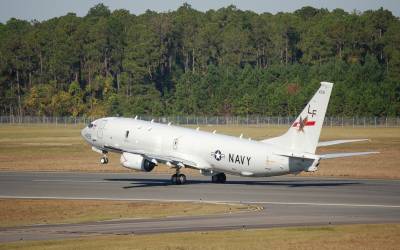
India’s fleet of Soviet-era maritime patrol aircraft has been upgraded, but it needs to be replaced. Indian naval responsibilities are growing, and the 2008 terrorist atrocities in Mumbai made it crystal-clear that control of their coasts was a necessity. Fortunately, they already had a competition underway. In December 2005, after an attempted buy of Lockheed Martin P-3s fell through, India’s navy had floated an RFP for at least 8 new sea control aircraft. Bids from a variety of contenders, including Lockheed Martin, were submitted in April 2007. Subsequent statements by India’s Admiral Prakash suggested that they could be looking for as many as 30 aircraft by 2020.
The plan had been for price negotiations to be completed in 2007, with first deliveries to commence within 48 months. India’s Ministry of Defence has extreme problems with announced schedules, but their existing fleet was wearing out, international requests for India’s maritime patrol help are rising, and Mumbai’s events provided an extra shove. By January 2009, India had picked its aircraft: the 737-derivative P-8i Neptune, a variant of the P-8A that’s readying for service as the P-3′s successor within the US Navy. DID discusses the geopolitical drivers, the current fleet, the known competitors, Boeing’s P-8i, and key contracts and events.
Continue Reading… »
May 15, 2013 14:50 UTC
Latest updates[?]: India's submarine force approaching a crisis.
Scorpene cutaway
India’s submarine fleet currently consists of 16 boats: 10 Russian SSK Kilo (Sindhugosh) Class, 4 locally built SSK U209 (Shishumar) Class, a leased nuclear-powered Improved Akula Class SSN from Russia (INS Chakra), and its own INS Arihant SSBN. Most of the Kilos have been modernized, but readiness rates for India’s existing submarine fleet sits below 40%, and the U209s will have trouble lasting much beyond 2015. With Pakistan acquiring modern submarines, and Chinese submarine building exploding, expanding India’s submarine fleet became an obvious national priority.
In 2005, India confirmed that it would buy 6 Franco-Spanish Scorpene diesel submarines, with an option for 6 more and extensive technology transfer agreements. Unfortunately, 7 years after that deal was signed, “Project 75″ has yet to field a single submarine. A poor Indian procurement approach, and state-run inefficiency, are pushing the country’s overall submarine force toward an aging crisis. This DID FOCUS article covers the Scorpene deal and its structure, adds key contracts and new developments, and offers insights into the larger naval picture beyond India.
Continue Reading… »
May 01, 2013 16:30 UTC
Latest updates[?]: 6th - and maybe final? - ship ordered; Arctic mission; Construction progress; Full acceptance of USCGC Stratton; Article formatting improvements highlight milestones.
WMSL-750 Bertholf
The US Coast Guard’s massive $25 billion Deepwater meta-program (really Deepwater-II given post-9/11 changes) has endured more than its share of ups and downs. Nevertheless, Congressional support has remained strong, and efforts are being made to restructure the program and get it back on track. Yet the USCG’s Island Class cutter modification program, and the Deepwater Fast Response Cutter supposed to replace it, have faced many difficulties.
The Legend Class National Security Cutters are the largest ships in the Deepwater program, and represent the program’s flagship in more ways than one. The 418 foot, 4,400 ton ships will be frigate-sized vessels with a 21 foot draughts [1], and are rather larger than the 379 foot, 3,250 ton Hamilton Class High Endurance Cutters (HECs) they will replace. Controversies regarding durability and potential hull fatigue, as well as significant cost overruns, have shadowed the new cutter’s construction. Nevertheless, the program appears to be moving forward. This DID FOCUS Article covers the Legend Class cutters’ specifications, program history, and key events.
Continue Reading… »
Apr 30, 2013 14:00 UTC
Latest updates[?]: Swift trialing UAVs - and an aerostat blimp; JHSV 2 completes builder's trials; JHSV 3 christened; JHSVs 5-7 named.
Austal MRV/JHSV concept
When moving whole units, shipping is always the cheaper, higher-capacity option. Slow speed and port access are the big issues, but what if ship transit times could be cut sharply, and full-service ports weren’t necessary? After Australia led the way by using what amounted to fast car ferries for military operations, the US Army and Navy decided to give it a go. Both services leased Incat TSV/HSV wave-piercing catamaran ship designs, while the Marines’ charged ahead with very successful use of Austal’s Westpac Express high-speed catamaran. These Australian-designed ships all give commanders the ability to roll on a company with full gear and equipment (or roll on a full infantry battalion if used only as a troop transport), haul it intra-theater distances at 38 knots, then move their shallow draft safely into austere ports to roll them off.
Their successful use, and continued success on operations, attracted favorable comment and notice from all services. So favorable that the experiments have led to a $3+ billion program called the Joint High Speed Vessel. These designs may even have uses beyond simple ferrying and transport.
Continue Reading… »
Apr 22, 2013 14:52 UTC
Latest updates[?]: Archerfish (AMNS) order.
Old school:
MH-53E & Mk-105 sled
The US Navy currently uses large CH-53/MH-53 helicopters and towed sleds to help with mine clearance work, but they hope to replace those old systems with something smaller and newer. The MH-60S helicopter’s Airborne Mine Counter-Measures (AMCM) system adds an operator’s station to the helicopter cabin, additional internal fuel stores, and towing capability, accompanied by a suite of carried systems that can be mixed and matched. AMCM is actually 5 different air, surface and sub-surface mine countermeasures systems, all deployed and integrated together in the helicopter.
While the US Navy develops AMCM, and complementary ship-launched systems for use on the new Littoral Combat Ships, new minehunter ship classes like the Ospreys are being retired by the US Navy and sold. All in an era where the threat of mines is arguably rising, along with tensions around key chokepoints like the Suez Canal and Strait of Hormuz.
This article explains the components involved (AQS-20, ALMDS, AMNS, OASIS, RAMICS; COBRA, RMS, SMCM), chronicles their progress through reports and contracts, and provides additional links for research.
Continue Reading… »
Apr 03, 2013 15:42 UTC
Latest updates[?]: ESM contract for the RAN's Canberra LHDs, and upgraded ANZAC frigates.
Canberra concept
In May of 2006 the Royal Australian Navy announced its decision to expand its naval expeditionary capabilities. HMAS Manoora and Kanimbla would be replaced with substantially larger and more capable modern designs, featuring strong air support. Navantia and Tenix offered a 27,000t Landing Helicopter Dock (LHD) design that resembled the Strategic Projection Ship (Buque de Proyeccion Estrategica) under construction for the Spanish Navy. The DCNS-Thales Australia team, meanwhile, proposed a variation of the 21,300t Mistral Class that is serving successfully with the French Navy.
Navantia’s larger design eventually won, giving the Spanish firm an A$11 billion clean sweep of Australia’s “Air Warfare Destroyer” and LHD programs. These 5 ships will be the core of Australia’s future surface navy. The future HMAS Canberra and HMAS Adelaide will be able to serve as amphibious landing ships, helicopter carriers, floating HQs and medical facilities for humanitarian assistance, and launching pads for UAVs or even short/vertical takeoff fighters.
Continue Reading… »