S-80: A Sub, for Spain, to Sail Out on the Main

S-80 Cutaway
S-80 cutaway, labeled

The CIM-2000 Scorpene class diesel-electric attack submarine partnership was just the first step for Spain’s Navantia, as it joined with France’s DCNS to enter the global submarine market. Now Navantia is building on that base of expertise, to field its own S-80 Class for the Spanish Armada. Spain’s new submarines will be larger boats than Navantia/DCNS’ Scorpene Class, with Air-Independent Propulsion (AIP) systems as standard gear, and completely new designs for both external shape and internal systems.

This article will cover the S-80 submarines’ capabilities and associated key events and contracts – including sub-contracts to American, British, and Italian firms.

Vietnam’s Russian Restocking

SSK Kilo
Kilo Class cutaway

In April 2009, reports surfaced that Vietnam had agreed in principle to a deal with Russia for 6 of its diesel-electric Kilo/ Project 636 Class fast attack submarines. There have been rumors that Vietnam owns 2 ex-Yugoslav mini-submarines for use in commando operations, but the Vietnamese People’s Navy doesn’t own any full size submarines that can take on enemy subs and ships. That’s about to change, thanks to a December 2009 contract.

Nor is that the only change in Vietnam’s military capabilities these days. China’s April 2009 display of naval might is only part of the mosaic influencing Vietnam’s decisions in these matters, as contracts for submarines – and far more – are being signed with its long-time Russian ally.

Australia’s Next-Generation Submarines

Advertisement
HMAS Waller
Bridge to the future?

In its 2009 White Paper, Australia’s Department of Defence and Labor Party government looked at the progress being made in ship killing surveillance-strike complexes, and at their need to defend large sea lanes, as key drivers shaping future navies. These premises are well accepted, but the White Paper’s conclusion was a surprise. It recommended a doubling of Australia’s submarine fleet to 12 boats by 2030-2040, all of which would be a new successor design that would replace the RAN’s Collins Class submarines.

The surprise, and controversy, stem from Australia’s recent experiences. The Collins Class was designed with the strong cooperation of ThyssenKrupp’s Swedish Kockums subsidiary, and built in Australia by state-owned ASC. The class has had a checkered career, including significant difficulties with its combat systems, issues with acoustic signature and propulsion, major cost growth to A$ 5+ billion, and schedule slippage. Worse still, reports indicated that the RAN can only staff 2 of its 6 submarines. High-level attention led to a report and recommendations to improve the force, but whether they will work remains to be seen. Meanwhile, the nature of Australia’s SEA 1000 future submarine project – and its eventual cost – remain unclear, with estimated costs in the A$ 36-44 billion range. This FOCUS article covers Australia’s options, decisions, and plans, as their future submarine program slowly gets underway.

India’s Multi-billion Dollar Scorpene Sub Contract

SSK Scorpene OHiggins Cutaway
Scorpene cutaway

India’s submarine fleet currently consists of 16 boats: 10 Russian SSK Kilo (Sindhugosh) Class, 4 locally built SSK U209 (Shishumar) Class, a leased nuclear-powered Improved Akula Class SSN from Russia (INS Chakra), and its own INS Arihant SSBN. Most of the Kilos have been modernized, but readiness rates for India’s existing submarine fleet sits below 40%, and the U209s will have trouble lasting much beyond 2015. With Pakistan acquiring modern submarines, and Chinese submarine building exploding, expanding India’s submarine fleet became an obvious national priority.

In 2005, India confirmed that it would buy 6 Franco-Spanish Scorpene diesel submarines, with an option for 6 more and extensive technology transfer agreements. Unfortunately, 7 years after that deal was signed, “Project 75″ has yet to field a single submarine. A poor Indian procurement approach, and state-run inefficiency, are pushing the country’s overall submarine force toward an aging crisis. This DID FOCUS article covers the Scorpene deal and its structure, adds key contracts and new developments, and offers insights into the larger naval picture beyond India.

Today’s Special: Turkey Subs

SSK Preveze Class
Preveze Class
(click to view larger)

In 2006 the Turkish SSM procurement agency issued a request for information (RFI) for 4 more diesel-electric submarines. That RFI became an RFP for 6 diesel-electric submarines with air-independent propulsion systems, to replace older boats like Turkey’s U209-based Preveze and Atilay classes.

DID covers the competition, and adds some quick background re: the Turkish Navy’s existing fleet, where its rival Greece stands, and contract developments regarding their new “Cerbe Class”. Turkey has a signed multi-billion Euro contract for HDW’s U214 subs… and are about to add a revolutionary new weapon.

Victoria Class Submarine Fleet Creating Canadian Controversies

SSK-876 HMCS Victoria
HMCS Victoria

Canada’s aging fleet of Oberon class submarines had become simply too old to put in the water. In July 2000, their de facto retirement became official. The question was: what, if anything, would replace them? With long coastlines, and a significant portion of its iced-in northern seas used as running grounds for foreign submarines, Canada’s military believed that giving up its submarine capability was not a viable option for a country that wished to maintain its sovereignty.

Unfortunately, the country’s purchase of 4 second-hand diesel-electric Upholder Class submarines from Britain ran into controversy almost from its inception. In early 2008, controversy flared again as the submarines’ C$ 1.5 billion Victoria Class In-Service Support Contract (VISSC) became an issue. Subsequent revelations concerning spiraling costs, boats in poor condition, and few to no actual submarines in service have kept the fleet controversial to the present day.

Germany Sells Israel More Dolphin Subs

SSK Dolphin in Port
SSK Dolphin Class

In November 2005, reports surfaced that that Germany would sell Israel 2 AIP-equipped Dolphin submarines, to join its existing fleet of 3 conventional diesel-electric Dolphin Class boats. In 2006, the deal for 2 Dolphin AIP boats was finalized at a total of $1.27 billion, with the German government picking up 1/3 of the cost. The new boats are built at the Howaldtswerke-Deutche Werft AG (HDW) shipyard, in the Baltic Sea coastal city of Kiel, with deliveries originally scheduled to begin in 2010. Those have been delayed, and have not begun as of yet.

Reports that an additional sale may be in the offing have now been confirmed, but just absorbing these 3 new boats will be no small challenge for Israel’s “3rd service”…

The USA’s E-6 Fleet: TAke Charge, And Move Out!

E-6B TACAMO
E-6B TACAMO

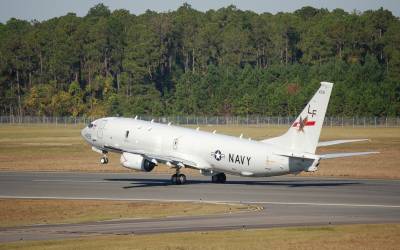
The USA’s E-6 Mercury (aka. TACAMO, as in TAke Charge And Move Out) “survivable airborne communication system” airplanes support their Navy’s SSBN ballistic missile submarine force and overall strategic forces. With the advent of the new “Tactical Trident” converted Ohio Class special operations subs, their unique capabilities become even more useful. The E-6B version also has a secondary role as a “Looking Glass” Airborne National Command Post, and in recent years they have seen use as communications relay stations over the front lines of combat.

Delivery of the first production E-6 aircraft took place in August 1989, with delivery of the 16th and final airplane coming in May 1992. This is DID’s FOCUS Article concerning the E-6 system, which includes details concerning the capabilities and associated contracts. The latest contracts involve important fleet upgrades, as the Navy tries to drag the jet’s systems into the 21st century.

Astute Buy? Britain Spends Big on its Next Fast Submarines

Astute Pre-Launch
Astute, pre-launch

Britain retired its nuclear-powered 4,900t SSN Swiftsure Class fast attack boats in 2010, and has begun phasing out its follow-on 5,300t SSN Trafalgar Class, before the effects of the ocean’s constant squeezing and release start making them dangerous to use. The last Trafalgar Class boat is expected to retire by 2022, and replacements were required. Submarines are considered to be a strategic industry in Britain, which remains committed to nuclear-powered submarines for their entire fleet. As such, there was never any question of whether they’d design their own. The new SSN Astute Class were designed to be stealthier than the Trafalgars, despite having 39% more displacement at 7,400t submerged.

Britain’s 6 Swiftsure and 7 Trafalgar Class boats will eventually find themselves replaced by 7 of the new Astute Class. The new submarine class has had its share of delays and difficulties, but the program continues to move forward with GBP 2.75 billion in contracts over the past week.

Brazil & France in Deal for SSKs, SSN

SSK S30 Tupi
Current: S30 Tupi
(click to view larger)

Brazil’s submarines are seen as a key part of the country’s new national armaments and defense strategy, which was released on Dec 18/08. It places a higher priority on protection of Brazil’s offshore energy reserves, and sees submarines as key players in that effort. The experience of the 1982 Falklands War, in which Argentina’s entire fleet was kept in port by Britain’s nuclear fast attack boat HMS Conqueror, is often cited as instructive.

In 2008, Brazil and France signed an agreement to build 4 diesel-electric submarines (SSK), and provide assistance in developing and fielding the non-nuclear parts of 1 nuclear fast attack submarine (SSN). Key specifics, such as the presence or absence of SSK Air Independent Propulsion technologies, have yet to be made public, but the terms of the agreement leave the possibility open. Reports regarding the submarine deal’s value have varied, but the budget is now set at almost EUR 7 billion. Financing now appears to be in place, and recent releases explain the budgets, the timing, and some of the key players in Brazil’s Prosub program.

  1. 1
  2. 2
  3. 3
  4. 4
  5. 5
  6. 6
  7. 7
  8. ...
  9. 32

Stay Up-to-Date on Defense Programs Developments with Free Newsletter

DID's daily email newsletter keeps you abreast of contract developments, pictures, and data, put in the context of their underlying political, business, and technical drivers.