Ad Council

Czechs Cancel Billion-Dollar Contract for 199 Pandur II APCs

Related Stories: BAE, Britain/U.K., Contracts - Awards, Design Innovations, EADS, Europe - Other, General Dynamics, Guns - 20-59 mm direct, Issues - Political, Missiles - Anti-Armor, New Systems Tech, Other Corporation, Policy - Procurement, Remote Weapons Systems, Spotlight articles, Tanks & Mechanized

Pandur II 8x8 RCWS-30
Pandur II w. RCWS-30
(click to view full)
DII

In January 2006, the Czech Republic selected General Dynamics’ European Land Combat Systems subsidiary Steyr-Daimler-Puch Spezialfahrzeug GmbH of Austria to supply its army with 199 new eight-wheeled Pandur II armored personnel carriers (APCs) between 2007-2012. The vehicles would replace Soviet-era OT-64 SKOT APCs, and would be produced in Austria and the Czech Republic.

As DID noted in its coverage of the initial contenders, the contract includes an option for 35 additional vehicles for a total of 234, and has a potential value of Koruna 23.6 billion ($1-1.4 billion). Steyr’s Pandur II was a finalist, and eventually won the competition. But questions arose, the deal became a political football, and delivery issues jeopardized deal. Steyr recently issued a pair of releases that aim to put the Czech government in a tight spot, while detailing the project’s industrial arrangements… but it wasn’t enough. In the end, 3 issues killed the contract… or did they?

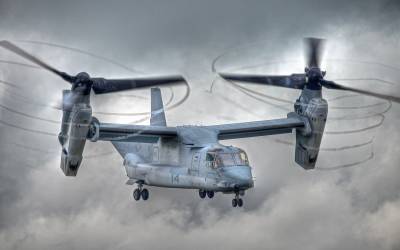
V-22 Osprey: A Flying Shame?

Related Stories: Americas - USA, Boeing, Design Innovations, Events, Forces - Marines, Guns - under 20mm direct, Helicopters & Rotary, Issues - Political, Lobbying, New Systems Tech, Official Reports, Other Corporation, Policy - Procurement, Remote Weapons Systems, Scandals & Investigations, Testing & Evaluation, Think Tanks, Transformation

AIR MV-22 Osprey Tilting Rotor
MV-22 Osprey
(click to view full)

Every once in a while, a defense-related controversy becomes large enough to hit mainstream news outlets. Making the cover of TIME Magazine is often a good sign for world leaders, but it’s almost always a very bad sign for military programs. Especially a program that is just making its combat debut. TIME’s Oct 8/07 cover story “V-22 Osprey: A Flying Shame” pulls few punches:

“The saga of the V-22 – the battles over its future on Capitol Hill, a performance record that is spotty at best, a long, determined quest by the Marines to get what they wanted – demonstrates how Washington works (or, rather, doesn’t). It exposes the compromises that are made when narrow interests collide with common sense. It is a tale that shows how the system fails at its most significant task, by placing in jeopardy those we count on to protect us. For even at a stratospheric price, the V-22 is going into combat shorthanded. As a result of decisions the Marine Corps made over the past decade, the aircraft lacks a heavy-duty, forward-mounted machine gun to lay down suppressing fire against forces that will surely try to shoot it down. And if the plane’s two engines are disabled by enemy fire or mechanical trouble while it’s hovering, the V-22 lacks a helicopter’s ability to coast roughly to the ground – something that often saved lives in Vietnam. In 2002 the Marines abandoned the requirement that the planes be capable of autorotating (as the maneuver is called), with unpowered but spinning helicopter blades slowly letting the aircraft land safely. That decision, a top Pentagon aviation consultant wrote in a confidential 2003 report obtained by TIME, is “unconscionable” for a wartime aircraft. “When everything goes wrong, as it often does in a combat environment,” he said, “autorotation is all a helicopter pilot has to save his and his passengers’ lives.”

Recent developments are about to address one of these concerns, but TIME has hardly been the Osprey’s only critic, or the most thorough. That distinction probably belongs to a report published by the left-wing Center for Defense Information, which makes a number of very specific allegations re: the V-22’s technical and testing failings…

Australia’s Canberra Class LHDs

Related Stories: Australia & S. Pacific, Contracts - Awards, Contracts - Intent, Electronics - General, Europe - France, Europe - Other, Guns - 20-59 mm direct, L3 Communications, Other Corporation, Policy - Procurement, R&D - Contracted, Remote Weapons Systems, Support & Maintenance, Surface Ships - Combat, Thales, Transformation

SHIP_LHD_Canberra_Class_Concept_Cutaway
Canberra concept
(click to view full)

In May of 2006, “Australia Issues Official Tender for A$ 2.0B Large Amphibious Ships Program” covered Australia’s decision to expand its naval expeditionary capabilities, and replace HMAS Manoora and Kanimbla with substantially larger and more capable modern designs featuring strong air support. Navantia and Tenix offered a 27,000t LHD design that resembled the Strategic Projection Ship (Buque de Proyeccion Estrategica) under construction for the Spanish Navy. The DCNS-Thales Australia team, meanwhile, proposed a variation of the 21,300t Mistral Class that is serving successfully with the French Navy.

Navantia’s larger design eventually won, giving the Spanish firm an A$11 billion clean sweep of Australia’s “Air Warfare Destroyer” and LHD programs. These 5 ships will be the core of Australia’s future surface navy, and October 2007 has now seen multi-billion contracts signed for both sets of ships. The latest inclusions involve a combat system & radar integration contract, plus additional information concerning the ships and the program…

Continue Reading… »

Dutch Choose Bushmaster IMVs for Afghan Mission (updated)

Related Stories: Asia - Central, Australia & S. Pacific, Contracts - Awards, Europe - Other, Field Reports, Force Structure, Issues - International, Policy - Procurement, Procurement Innovations, Remote Weapons Systems, Support & Maintenance, Thales, Trucks & Transport, Warfare - Lessons, Warfare - Trends

LAND_Bushmaster_IMV_Dutch_Afghanistan.jpg
Dutch Bushmasters’
first Afghan patrol
(click to view full)

Despite ongoing US procurement of M1151/M1152 Hummers, the retreat from Jeep-like vehicles is accelerating among Western militaries. Insufficiently protected against land mine threats in modern conflict zones, and insufficiently protectable due to inherent design limitations, conventional vehicles like G-Wagens, Land Rovers, and HMMWVs are being replaced in manufacturer lineups and military acquisitions by more protectable truck-based models, or by dedicated mine-resistant patrol vehicles. DID has covered the USA’s ramped-up purchases of M1117 Guardian ASVs, as well as its 15,000+ vehicle MRAP program that includes PVI/RAFAEL Golans, BAE’s RG-31s/RG-33s/Caimans, Force Protection’s Cougars, and Navistar/Plasan’s MaxxPro. We’ve also covered Iraq and Britain’s acquisition of Force Protection’s Cougar variants; Belgium’s buys of Dingo and Iveco Panther vehicles as the mainstays of its future fleet; Bulgaria’s purchase of M1117s; Canada’s emergency buy of RG-31 Nyalas and emergency order for mine clearance vehicles; Denmark’s order for MOWAG Eagle IV vehicles (no longer HMMWV-based like the Eagle III) and Duro trucks; Luxembourg’s Dingo-2 PRV reconnaissance vehicles, Norway and Spain’s emergency procurement of Iveco MLV/Panthers, and the Czech Republic’s November 2007 buy of Dingo-2s and Iveco MLVs. Public tenders for more vehicles will soon be underway in Spain and the Czech Republic, even as nations that were ahead of the curve continue to add to their stocks: Germany’s additional 149 KMW Dingo 2 vehicles, and Australia’s near-doubling of its original order by adding 293 Bushmasters, offer ample evidence of the seriousness with which they view the global trend toward IED land mines in conflict zones.

GEO_Afghanistan_ISAF_British_Zone_Map.jpg
ISAF, S. Afghanistan
(click to view full)

During the summer of 2006, the Netherlands also adopted Australia’s Bushmaster IMV from Thales-ADI, a dedicated mine-resistant patrol vehicle that has proven itself with Australian forces in Iraq, to strengthen its Uruzgun force as NATO takes on greater responsibility in Southern Afghanistan.

The agreement was concluded in close cooperation with TWO friendly foreign governments, and it has just received another order…

Continue Reading… »

Military Transformation Uplink: September 2007

Related Stories: Americas - USA, Asia - India, Asia - Japan, Asia - Other, Australia & S. Pacific, Blimps & LTA Craft, Bombs - Smart, Britain/U.K., C4ISR, Coastal & Littoral, Corporate Innovations, Engines - Aircraft, Europe - France, Europe - Other, Fighters & Attack, Heavy Bombers, Helicopters & Rotary, IT - General, Interoperability, Issues - International, Issues - Political, Laser & EM Weapons, Logistics Innovations, Middle East - Israel, Missiles - Air-Air, Missiles - Ballistic, Missiles - Surface-Air, Official Reports, Power Projection, Procurement Innovations, R&D - Contracted, R&D - Private, Remote Weapons Systems, Russia, Satellites & Sensors, Shells & Mortar Rounds, Simulation & Training, Specialty Aircraft, Support & Maintenance, Surface Ships - Combat, Surface Ships - Other, Tanks & Mechanized, Testing & Evaluation, Transformation, Transport & Utility, Trucks & Transport, UAVs, Warfare - Lessons, Warfare - Trends

Military Transformation Collage

Militaries around the world are moving to modernize and transform themselves to meet the challenges of the 21st century. Our mission is to deliver a regular cross-section of relevant, on-target stories, news, and analysis that will help experts and interested laypeople alike stay up to speed on key military developments and issues. Stories are broken down by military category and presented as fast bullet points that orient you quickly, with accompanying links if you wish to pursue more in-depth treatments.

Some of This Month’s Targets of Opportunity Include: Aging aircraft; F-22; F-35; India’s big fighter contest; 2018 bomber; Next-gen gunships; Japan’s stealth aircraft; JCA – just confusing; Poseidon down under; Boeing’s invisibility man; Odd new satellite; unmanned fighters & swarms; Cell phones & Patriots; Huge IT contracts; DARPA’s Deep Green; Lots of MRAP; FCS spinouts; Fire Ball; Better body armor; Australia’s new fleet; Korea: us too!; Britain’s new carriers; US Navy’s new bills; Russia’s stealthy Stereguschiy; Remote firefighting; Coast Guard cutters; ADVENT of breakthrough jet engines; $1M wearable power prize; Sub-finding ‘shark’; UK’s Grand Challenge & flying saucers; Boeing’s new plane design; DARPA’s robot dog; New Russian nukes; Britain’s new maintenance concept works; Israel prepares; Counter-insurgency air needs; Export controls and their blowback; CSAR-X: rescue me!; And much, much more…

This briefing comes from a team that includes professional publications Defense Industry Daily and The Aviation Week Group, and covers events over the summer season. To contact us with story tips, email transformation, over @windsofchange dot net.

Continue Reading… »

$56.5M to Upgrade Fox NBC-Recon Vehicles

Related Stories: Americas - USA, Bases & Infrastructure, Contracts - Modifications, General Dynamics, Remote Weapons Systems, Support Functions - Other, Tanks & Mechanized, WMD Detection

LAND M93 Fox NBCRS Extended Mast
M93 Fox
(click to view full)

General Dynamics Land Systems Inc. in Sterling Heights, MI received a $56.5 million modification to a firm-fixed-price contract to upgrade 18 Fox Nuclear Biological Chemical Reconnaissance System (NBC-RS) Vehicles from M93 (14) and M93A1 (4) Configurations to M93A1P1. Work will be performed in Sterling Heights, MI; Anniston, AL; Lima, OH; and Germany and is expected to be complete by Sept. 30, 2009. This was a sole source contract initiated on April 24, 2007 by the U.S. Army Research, Development, and Engineering Command at Aberdeen Proving Ground, MD (DAAM01-96-C-0028). General Dynamics release.

The amphibious Fox (Fuchs) vehicle is actually a German design, first fielded in 1979 by a firm that became part of Rheinmetall Landsysteme. The NBC-RS variant, or Spurfuchs in German, has become popular with a number of countries, and is in service with the US Army and Marines. The wedge-shaped cover over the rear door is a key identifier, and all M93 NBS-RS variants have an over-pressure filtration system that permits the crew to operate in a fully protected environment.

LAND M93 Husseiniyah Iraq
Fox in Husseiniyah
(click to view full)

The upgraded M93A1 reduces the crew complement from 4 to 3, and contains an enhanced NBC sensor suite consisting of the M21 Remote Sensing Chemical Agent Alarm (RSCAAL), MM1 Mobile Mass Spectrometer, Chemical Agent Monitor/Improved Chemical Agent Monitor (CAM/ICAM), AN/VDR-2 Beta Radiac, and M22 Automatic Chemical Agent Detector/Alarm (ACADA). The NBC sensor suite has been digitally linked with the communications and navigation subsystems by a dual-purpose central processor system known as the Multipurpose Integrated Chemical Agent Detector (MICAD), which fully automates NBC warning and reporting to other units and integrates with the vehicles Global Positioning System [GPS] and Autonomous Navigation System. The M93A1P1 is the most up-to-date configuration and features a survivability improvement package that includes slat armor, improved protection against land mines, and firepower improvements via the CROWS remote-controlled weapon station.

Canada Converting LAV-III TUAVs to Infantry Carriers

Related Stories: Americas - Other, Contracts - Awards, General Dynamics, Other Corporation, Remote Weapons Systems, Tanks & Mechanized

LAND M1134 Stryker ATGM Firing
M1134 Stryker
(click to view full)

The Canadian Department of National Defence has awarded Genertal Dynamics Land Systems – Canada a C$ 49.2 million (about $46.3 million) contract to take 33 of the 71 LAV-III chassis originally manufactured under a previous contract for LAV-III TOW Under Armour (TUA) vehicles, and use them as infantry carriers, instead of inegrating the Kvaerner TUA turret from older M113s. GDLS Canada will oversee the LAV-III TUAV conversion and act as the lead integrator. Rheinmetall Canada of Saint-Jean-sur-Richelieu, Quebec, will supply the Remote Weapon Station, which will feature a universal gun cradle capable of mounting 5.56, 7.62 and 12.7 mm armaments and a cooled thermal sight system. Delivery of the converted Infantry Section Carriers will occur from June 2008 – March 2009. GDLS release.

LAND_LAV-TUA_Cdn_Royal_Strathcona_Firing.jpg
LAV-TUA
(click to view full)

The LAV-III is known as the Piranha-III in Europe, and is also the base platform for the USA’s Styker family of vehicles; the nearest equivalent to the LAV-III TUAV would be the USA’s M1134 Stryker ATGM. Canada’s LAV-IIIs, however, have displayed mixed performance in Afghanistan. Their mobility and 25mm autocannon fire support has proven useful on the roads and in cities, but the vehicle is unable to handle significant swathes of Afghan terrain, and is prone to high wear if used off-road. That last issue may help to explain the current conversion project instead of options like installing NEMO 120mm mortar turrets, and these mobility issues were also the catalyst for Canada’s recent decisions to deploy Leopard C2 (1A5) tanks in theater, scrap the LAV-III Mobile Gun System and MMEV projects, and purchase Leopard 2A4/2A6 tanks.


Elbit Wins ORCWS Turret Orders

Related Stories: Contracts - Awards, Europe - Other, Middle East - Israel, Other Corporation, Remote Weapons Systems, Sensors & Guidance, Tanks & Mechanized

ORD RWS ORCWS 30 Firing
ORCWS-30, firing
(click to view full)

A number of countries buying new armored personnel carriers, or refurbishing old ones, are abandoning conventional turrets and/or top-mounted machine gun stations in favor of unmanned turrets with multi-spectral sensors (zoom camera, infared/thermal, night vision, et. al.) and launchers for smoke grenades et. al. – all controlled from within the vehicle using a joystick and screen. While there are many competitors at the lower end of the Remote Weapons System field, Israeli firms RAFAEL (RCWS-30, wins include Czech Republic) and Elbit Systems (ORCWS-30, wins include Belgium) have also fielded higher-end offerings that pack 30mm autocannons with 7.62mm coaxial machine guns, and can add anti-armor and/or anti-aircraft missiles for extra punch. These systems add less weight than conventional turrets, don’t offer the same profile exposure, and can even fold flat for air transport.

On July 25/07, Elbit Systems announced a pair of contracts worth $55 million with Eastern European countries for its ORCWS systems…

Continue Reading… »

US Army Orders 165 More Strykers

Related Stories: Americas - USA, Delivery & Task Orders, Field Reports, General Dynamics, Other Corporation, Remote Weapons Systems, Tanks & Mechanized

LAND M1129 Stryker Mortar Carrier Firing
M1129 firing
(click to view full)

July 2/07: The GM-GDLS Defense Group L.L.C. Joint Venture in Sterling Heights, MI receives a delivery order amount of $256.9 million as part of a $5.41 billion firm-fixed-price contract for Stryker family vehicles based on the General Dynamics Mowag LAV-III. Work will be performed in Sterling Heights, MI (60%), and London, Ontario, Canada (40%), and is expected to be complete by Jan. 31, 2010. Bids were solicited via the World Wide Web on April 6, 2000, and 17 bids were received by the U.S. Army Tank-Automotive and Armaments Command in Warren, MI (DAAE07-00-D-M051).

A General Dynamics release adds that this 165-vehicle order calls for 31 Stryker ICV M1126 Infantry Carrier Vehicles, 25 Stryker RV M1127 Reconnaissance Vehicles, 19 Stryker MC M1129 Mortar Carriers, 46 Stryker CV M1130 Command Vehicles, 14 Stryker FSV M1131 Fire Support Vehicles, 11 Stryker ESV M1132 Engineer Squad Vehicles, and 19 Stryker MEDEVAC M1133 Medical Evacuation Vehicles. Additionally, the delivery order calls for 88 Kongsberg Protector Remote Weapons Stations in the Block II Configuration.

Stryker vehicles have performed better than many critics had anticipated on Iraq’s urban battlefields, but recent events indicate that enemy forces may now have a better understanding of its weak points (including limited mine resistance).

Israel Deploying “See-Shoot” RWS Along Gaza

Related Stories: Asia - Other, Design Innovations, Domestic Security, Industry & Trends, Middle East - Israel, New Systems Tech, Other Corporation, Other Equipment - Land, Remote Weapons Systems, Transformation, Warfare - Trends

LAND_Golan_w_Samson-Jr_Fording.jpg
Golan w. Samson Jr. RWS
(click to view full)

Remotely-operated Weapons Systems (RWS) like Recon/Optical’s CROWS, Kongsberg’s Protector, Thales’ SWARM, BAE’s LEMUR, and larger versions like RAFAEL’s RCWS-30 and Elbit’s ORCWS have become popular attachments for combat vehicles. They allow an operator inside the vehicle to look at a screen displaying visual feeds from the RWS sensors, then move and fire the weapon from inside the vehicle.

Which leads to the logical next question: why does the operator have to be that close? South Korea, and now Israel as well, have thought about this and decided that in some cases, the answer is “no reason at all”...

Continue Reading… »