Apr 24, 2013 16:12 UTC
Latest updates[?]: UK A400M program forecast more than $1 billion over approved costs.
A400M rollout, Seville
Airbus’ A400M is a EUR 20+ billion program that aims to repeat Airbus’ civilian successes in the full size military transport market. A series of smart design decisions were made around capacity (35-37 tonnes/ 38-40 US tons, large enough for survivable armored vehicles), extensive use of modern materials, multi-role capability as a refueling tanker, and a multinational industrial program; all of which leave the aircraft well positioned to take overall market share from Lockheed Martin’s C-130 Hercules. If the USA’s C-17 is allowed to go out of production, the A400M would also have a strong position in the strategic transport market, with only Russian AN-70, IL-76 and AN-124 aircraft as competition. To date, 174 orders have been placed by Germany (now 53 + 7 options), France (50), Spain (27), Britain (now 22), Turkey (10), South Africa (8), Belgium (7), Malaysia (4), and Luxembourg (1). Chile has expressed an unfinalized interest in 3 planes, but is now likely to buy Brazilian KC-390s instead.
EADS’ biggest issue, by far, has been funding for a project that is more than EUR 7 billion over budget. The next biggest issue is timing, as A400M delivery penalties and Lockheed Martin’s strong push for its serving C-130J Super Hercules cast a pall over the A400M’s potential future. The entire project was under moratorium for over a year as all parties decided what to do, but it’s now moving forward again. This DID Spotlight article covers the latest developments, as the A400M Atlas moves into production.
Continue Reading… »
Apr 17, 2013 13:00 UTC
Latest updates[?]: With cuts coming to the program, DID lays out the key sub-contractors; Excel download added.
UH-72As: MEDEVAC
DID’s FOCUS articles offer in-depth, updated looks at significant military programs of record. This is DID’s FOCUS Article regarding the US Army’s Light Utility Helicopter program, covering the program and its objectives, the winning bid team and industrial arrangements, and contracts.
The US Army’s LUH is a 346 (315?) helicopter program that will be worth about $2 billion when all is said and done. It aims to replace existing UH-1 Hueys and OH-58 Kiowa utility variants in non-combat roles, freeing up larger and more expensive UH-60 Black Hawk helicopters for front-line duty. In June 2006, a variant of Eurocopter’s EC145 beat AgustaWestland’s AB139, Bell-Textron’s 412EP Twin Huey, and MD Helicopters’ 902 Explorer NOTAR (No Tail Rotor) design. The win marked EADS’ 1st serious military win in the American market, and their “UH-145″ became the “UH-72A Lakota” at an official December 2006 naming ceremony.
Eurocopter has continued to field new mission kits and deliver helicopters from its Mississippi production line, while trying to build on their LUH breakthrough. Their latest effort is an armed scout AAS-72X+ offering, to try and replace Bell’s canceled ARH-70. With the LUH program winding down to its end, follow-on wins will be necessary.
Continue Reading… »
Apr 07, 2013 19:49 UTC
Latest updates[?]: South Korea picks its long-range, air-launched cruise missile - and it's not American; US DSCA requests for 60 F-15SEs or 60 F-35As - but it's not an apples to apples comparison; Eurofighter ups local manufacturing offer; Article improvements.
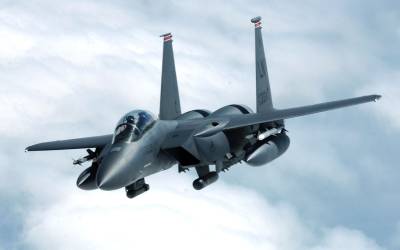
F-15K Poster: apropos?
The ROKAF (Republic of Korea Air Force) originally planned to buy 120 advanced, high-end fighters as its next-generation platform, in order to replace its existing fleet of F-4 Phantom IIs and other aircraft. So far, it has bought 60 fighters in 2 phases. Back in 2002, the Republic of Korea Air Force (ROKAF) selected the F-15K advanced derivative of the F-15E Strike Eagle for its Next Generation Fighter Program, and bought 40. In 2008, a 2nd contract was signed for 20 more F-15ks, with slight modifications.
Now the 3rd phase looms, and the question is whether it will be a variant of their existing fleet, or something new. While the DAPA procurement agency dreamed of developing their own “5th generation” aircraft for Phase 3, reality eventually had its say. Now, foreign manufacturers are offering the ROKAF a number of options.
Continue Reading… »
Apr 04, 2013 12:00 UTC
Latest updates[?]: Tunisia gets its 1st C-130J-30.
RAAF C-130J-30, flares
The C-130 Hercules remains one of the longest-running aerospace manufacturing programs of all time. Since 1956, over 40 models and variants have served as the tactical airlift backbone for over 50 nations. The C-130J looks similar, but the number of changes almost makes it a new aircraft. Those changes also created issues; the program has been the focus of a great deal of controversy in America – and even of a full program restructuring in 2006. Some early concerns from critics were put to rest when the C-130J demonstrated in-theater performance on the front lines that was a major improvement over its C-130E/H predecessors. A valid follow-on question might be: does it break the bottleneck limitations that have hobbled a number of multi-billion dollar US Army vehicle development programs?
C-130J customers now include Australia, Britain, Canada, Denmark, India, Israel, Iraq, Italy, Kuwait, Norway, Oman, Qatar, South Korea, Tunisia, and the United States. American C-130J purchases are taking place under both annual budgets and supplemental wartime funding, in order to replace tactical transport and special forces fleets that are flying old aircraft and in dire need of major repairs. This DID FOCUS Article describes the C-130J, examines the bottleneck issue, covers global developments for the C-130J program, and looks at present and emerging competitors.
Continue Reading… »
Apr 03, 2013 16:28 UTC
Latest updates[?]: Army requests project hold, inquiry into Brigadier V S Sani; MoD asks vendors to extend bids through 2013.
Austrian Alouette-III
How safe are the Indian Army’s aging fleets of Chetaks (Aerospatiale SA316 Alouette III) and Cheetahs (SA315B Alouette II/III mix)? These old designs have consistently proven themselves in high altitude operations, and remain useful as long as their airframes remain safe. The problem is that at their age, the safety margin is pretty slim. Or worse.
In 2003, India issued an RFP for 197 light helicopters estimating a deal worth between $500-$600 million to buy 60 helicopters outright, with the remaining 137 being built under license by Hindustan Aeronautics Limited (HAL). Eurocopter’s AS550 C3 Fennec and Bell Textron’s 407 competed in the second and final round of summer trials, and as 2007 ticked toward a close, it looked like we had a winner. As often happens in India, however, the process ended up completely derailed. A new RFP out for a successor “Reconnaissance and Surveillance Helicopter program” (RSH) went out in 2008, and testing was done in 2010. Has the RSH competition gone the way of the 1st aborted contract, even as India’s high altitude border posts struggle for adequate support?
Continue Reading… »