Technology Training - Click Here!

LPD-17 San Antonio Class: The USA’s New Amphibious Ships (updated)

Related Stories: Americas - USA, Contracts - Awards, Contracts - Modifications, Design Innovations, Expeditionary Warfare, FOCUS Articles, Forces - Marines, IT - General, Issues - Political, New Systems Tech, Northrop-Grumman, Other Corporation, Partnerships & Consortia, Policy - Procurement, Power Projection, Procurement Innovations, Project Failures, Project Methodologies, Radars, Raytheon, Surface Ships - Other

LPD-17 labeled
LPD-17 cutaway
(click to view full)
DII

LPD-17 San Antonio class amphibious assault support vessels are a new class of ship which is just entering service with the US Navy. Much like their predecessors, their mission is to embark, transport, land, and support elements of a US Marine Corps Landing Force. What changes are the capabilities and technologies incorporated to perform that mission. This new ship class includes significant internal technology and design upgrades, and is designed to operate accompanying platforms like the V-22 Osprey tilt-rotor aircraft and the Expeditionary Fighting Vehicle amphibious armored personnel carrier.

Between 10-11 scheduled ships of this class are slated to assume the functional duties of up to 41 previous ships, including the USA’s older LSD-36 USS Anchorage class dock landing ships (all decommissioned as of 2004, LSD-36 and LSD-38 transferred to Taiwan) and its LPD-4 USS Austin Class ships (12 built and serving, LPD 14 Trenton now India’s INS Jalashva). The San Antonio class ships may also replace 2 classes of ships currently mothballed and held in reserve status under the Amphibious Lift Enhancement Program (ALEP): the LST-1179 Newport class tank landing ships, and LKA-113 Charleston class amphibious cargo ships.

SHIP_LPD-17_USS_San_Antonio_Arrives_Norfolk.jpg
Welcome to Norfolk…
(click to view full)

Replacing that many existing ships is already a very tall order. While its design incorporates notable advances, the San Antonio Class has also had its share of teething problems. So, too, has the New Orleans shipyard to which most of this contract has been assigned. The number of serious issues encountered in this ship class have been much higher than usual, and more extensive. The initial ships have been criticized for sub-standard workmanship, and it took 2 1/2 years after the initial ship of class was delivered and accepted before any ship of class was sent on an operational cruise. Whereupon the USS San Antonio promptly found itself laid up Bahrain due to oil leaks. Meanwhile, costs are almost twice the originally promised amounts at over $1.7 billion per ship – 2 to 3 times as much as many foreign LPD classes, and more than 10 times as much as Singapore’s 6,600 ton Endeavour Class LPD.

DID’s FOCUS articles offer in-depth, updated looks at significant military programs of record. This is DID’s FOCUS Article for the San Antonio Class, detailing the ships’ unique features and capabilities, its program innovations and issues, ship timelines, and related contracts throughout the program’s history. As has become DID custom, the most recent additions are highlighted in green type. The latest developments include a contract to Raytheon that could be worth over $175 million, and the imminent commissioning of the LPD 21 New York, which contains steel from the destroyed World Trade Center…

Galileo GPS Project Faces More Certain Future

Related Stories: Americas - USA, Asia - China, Britain/U.K., Budgets, C4ISR, EADS, Europe - E.U., Events, FOCUS Articles, GPS Infrastructure, IT - Cyber-Security, Industry & Trends, Interoperability, Issues - International, Issues - Political, Lobbying, New Systems Tech, Official Reports, Other Corporation, Project Failures, Projections & Assessments, R&D - Contracted, Satellites & Sensors

Satellite Galileo System Concept
Galileo concept
(click to view full)
DII

The European Union is cooperating with a number of outside investors to replace the USA’s free Global Positioning System service with an alternative under their own control. In addition to civilian GPS (the Open Service), services to be offered include a paid Commercial Service (with accuracy greater than 1 meter), and a Public Regulated Service (PRS)/ Safety of Life Service (SoL) for use by security authorities (police, military, etc.) and safety-critical transport applications (air-traffic control, automated aircraft landing, etc.). PRS/SoL aims to offer Open Service quality, with added robustness against jamming and the reliable detection of problems within 10 seconds.

Organizational issues and shortfalls in expected progress pushed the “Galileo” project back from its originally intended operational date of 2007 to 2013-14 – and doubts persist in several quarters about its economic model, even as security issues arise regarding China’s COMPASS project. After a public-private partnership model failed to agree among themselves or with the EU’s desired terms, the organization gained initial-stage approval for its plan to finance the program with tax dollars instead of the expected private investments. Political issues were overcome, albeit with some protest, by raiding other EU accounts for over EUR 3 billion (about $5.35 billion) in funds, rather than asking for more money from member states.

The latest set of updates cover developments in Galileo, and in related programs like GIOVE and EGNOS. While the project’s base funding is now more secure, its ability to remain within budget faces issues, as does the expected launch timetable. Recent events may even lead to a smaller Galileo constellation…

P-8 Poseidon MMA: Long-Range Maritime Patrol, and More

Related Stories: Americas - Other, Americas - USA, Asia - India, Australia & S. Pacific, Boeing, Contracts - Awards, Contracts - Modifications, Delivery & Task Orders, Europe - Other, FOCUS Articles, GE, New Systems Tech, Northrop-Grumman, Other Corporation, Partnerships & Consortia, Project Failures, Raytheon, Specialty Aircraft

P-8 MMA, changed wing
P-8A Poseidon
(click to view full)
DII

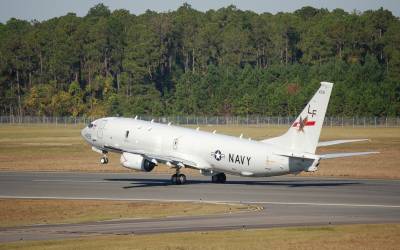
The P-8A emerged from the ashes of the P-7 Long Range Air ASW Capable Aircraft program that was begun in 1988. That program originally envisaged an improved P-3 Orion design, but cost overruns, slow progress, and interest in opening the competition to commercial designs led to cancellation for default in 1990. The successor MMA program was begun in March 2000, and Boeing beat Lockheed’s “Orion 21” for the contract with a design based on the ubiquitous 737 passenger jet.

This is DID’s FOCUS Article concerning the P-8A Poseidon Multi-mission Maritime Aircraft, and it will be updated as events and contracts are announced. Filling the P-3 Orion’s shoes is certainly no easy task. What missions will the new P-8A Poseidon face? What do we know about the platform, the project team, and ongoing developments? Will the P-3’s level of global customer coverage give its successor a comparable level of export opportunities? Australia and India have already signed on, but has the larger market shifted in the interim?

In the latest news, Saudi Arabia is looking to add itself as an export customer…

NH90: Europe’s Medium Helicopter Contender

Related Stories: Australia & S. Pacific, Contracts - Awards, Design Innovations, EADS, Engines - Aircraft, Europe - France, Europe - Other, Events, FOCUS Articles, Finmeccanica, GE, Helicopters & Rotary, Issues - International, Issues - Political, Middle East - Other, New Systems Tech, Official Reports, Other Corporation, Partnerships & Consortia, Policy - Procurement, Procurement Innovations, Project Failures, Project Methodologies, Project Successes, Projections & Assessments, Public Partnering, R&D - Contracted, Rolls Royce, Simulation & Training, Testing & Evaluation

NH90 TTH and NH90 NFH
NH90: TTH & NFH
(click to view full)
DII

The NH90 emerged from a requirement that created a NATO helicopter development and procurement agency in 1992 and, at almost the same time, established NHIndustries (62.5% EADS Eurocopter, 32.5% AugustaWestland, and 5% Stork Fokker) to build the hardware. The NATO Frigate Helicopter was originally developed to fit between light naval helicopters like AW’s Lynx or Eurocopter’s Panther, and medium-heavy naval helicopters like the European EH101. A quick look at the NFH design showed definite possibilities as a troop transport helicopter, however, and soon the NH90 project had branched into 2 versions, with more to follow. The nearest equivalent would be Sikorsky’s popular H-60 Seahawk/ Black Hawk family, but the NH90 includes a set of innovative features that give it some distinguishing selling points.

While battlefield damage to composite airframes can be more difficult to repair in the field, the combination of corrosion-proofing, lower maintenance, greater troop or load capacity, and the flexibility offered by that rear ramp have made the NH90 a popular global competitor. As many business people discover the hard way, however, success can be almost as dangerous as failure. NH Industries has had great difficulty ramping up production fast enough to meet promised deliveries, which has left several buyers upset. Orders currently stand at 507 machines, on behalf of 14 nations.

This is DID’s FOCUS Article, offering an in-depth look at the multi-national NH90 program, its customers, and its chronology from 1995 to the present day. The most recent additions cover developments, timelines, and controversies in Australia, the Netherlands, Norway, and Germany since January 2009…

Project Failure: Australia’s ALR 2002 Protection System

Related Stories: Australia & S. Pacific, BAE, ECM, Issues - Political, Official Reports, Project Failures, Protective Systems - Aircraft, Raytheon, Rumours, Scandals & Investigations

AIR_F-18_RAAF_Scenic_Beach.jpg
All they’re ready for?
(click to view full)

On Sept 12/06, The Sydney Morning Herald reported that Australia’s A$ 400 million ALR2002 project, aimed at putting radar and infared missile warning systems (RWRs) in Australia’s helicopters, transports and F/A-18s, had ended in at least partial failure with the scrapping of F/A-18 integration under the HUG 2.3 upgrade program. Sticking with the offering from
BAE Systems Australia’s electronic warfare division, they said, would deliver the project at least 2 years late and A$ 200 million over budget.

In response, a decision was formally announced on Nov 13/06. RAAF F/A-18A/B fighters would not use “Project Echidna’s” system, but its helicopters and C-130s would. More than 4 years after the original Phase 2A award, the scope of fielding for “Project Echidna” is about to be reduced again…

Continue Reading… »

ASDS Mini-Sub Program Sinks, As Replacement Rises

Related Stories: Americas - USA, Britain/U.K., Budgets, Coastal & Littoral, FOCUS Articles, Forces - Special Ops, Issues - Political, New Systems Tech, Northrop-Grumman, Project Failures, R&D - Contracted, Submarines

NAVY_ASDS_Surfacing.jpg
ASDS
(click to view full)
DII

In a program that began with great promise but soon spiraled out of control, Northrop Grumman has been building ASDS “Advanced SEAL delivery System” mini-subs as successors to the previous SDV (SEAL/Swimmer Delivery Vehicle) carried on US Benjamin Franklin class (SSBN-640) attack submarines.

In the end, however, technical, reliability, and 400% cost overrun issues proved insuperable. The ASDS program was canceled for all intents and purposes on April 6/06, but the existing boat was retained and improvements attempted. That has been cut short with the destruction of ASDS-1, and a less ambitious replacement program is beginning to take shape…

Australia’s Troubled E-737 “Wedgetail” AWACS Program

Related Stories: Americas - USA, Australia & S. Pacific, BAE, Bases & Infrastructure, Boeing, C4ISR, Contracts - Awards, Contracts - Intent, Corporate Financials, Events, Issues - Political, Lockheed Martin, Middle East - Israel, New Systems Tech, Northrop-Grumman, Other Corporation, Project Failures, R&D - Contracted, Radars, Raytheon, Specialty Aircraft, Testing & Evaluation, Transformation

E-737 NSW
E-737 Wedgetail
over New South Wales
(click to view full)
DII

The island continent of Australia faces a number of unique security challenges that stem from its geography. The continent may be separated from its neighbors by large expanses of ocean, but it also resides within a potential arc of instability, and has a number of important offshore resource sites to protect. Full awareness of what is going on around them, and the ability to push that awareness well offshore, are critical security requirements.

“Project Wedgetail” had 3 finalists, and the winner was a new variant of Boeing’s 737-700, fitted with an MESA radar from Northrop Grumman. That radar exchanges the traditional AWACS rotating dome for the E-737’s stationary antenna and its “top hat” look.

Project Wedgetail’s flight has not been smooth. DID’s FOCUS articles offer in-depth, updated looks at significant military programs of record. This one covers contracts, events, and key milestones within Australia’s E-737 program, from inception to the current day. The latest developments include much more precise information regarding the radar’s problems…


Calls Grow for Pentagon Audit

Related Stories: Americas - USA, Budgets, Financial & Accounting, Issues - Political, Legal, Project Failures

MISC_Accounting_Old_Style.jpg

Back in February 2006, “The Pentagon’s Broken Book-keeping” discussed the depth of the problems inherent in trying to audit that organization. It’s not that the US Department of Defense fails audits. The problem is more fundamental: it is not currently possible to audit it, and any comprehensive audit would be a first-ever event in modern times.

This topic can seem trivial, but the Pentagon’s accounting problems are not limited to issues of day to day functioning. They also go right to the heart of the American political system’s ability to properly evaluate and learn from procurement decisions over the long term.

On June 18/09, U.S. Senators John McCain (R-AZ), Dr. Tom Coburn (R-OK), and Chuck Grassley (R-IA) introduced bill S.1287, the Department of Defense Financial Accountability Act of 2009, which sets a progressive deadlines for the Department of Defense to undergo a complete audit of its financial statements. DID offers more information about the bill, and excerpts from a special supplement to the Pentagon’s FY 2010 budget documents…

Continue Reading… »

The UK’s Watchkeeper ISTAR UAV

Related Stories: Air Reconnaissance, Boeing, Britain/U.K., C4ISR, Contracts - Awards, Contracts - Modifications, FOCUS Articles, Industry & Trends, Middle East - Israel, New Systems Tech, Official Reports, Other Corporation, Partnerships & Consortia, Policy - Doctrine, Project Failures, Project Successes, RFPs, Radars, Sensors & Guidance, Thales, Transformation, UAVs

AIR_UAV_Watchkeeper_WK450.jpg
Watchkeeper 450
(click to view full)
DII

Britain has given the green light to the Watchkeeper Unmanned Aerial Vehicle Program. The initial August 2005 contract award to Thales UK was worth around GBP 700 million, and the program expected to create or sustain up to 2,100 high-quality manufacturing jobs in the UK. The Watchkeeper platform is based on Elbit Systems’ Hermes 450 UAV platform, and executed via a joint venture.

Watchkeeper will be an important system, working as the likely medium-range mainstay within a complementary suite of manned (vid. ASTOR Sentinel R1) and unmanned (Buster, Desert Hawk, MQ-9 Reaper) aerial Intelligence Surveillance Target Acquisition Reconnaissance (ISTAR) systems. This will make it a core element of the UK Ministry of Defence’s Network-Enabled Capability strategy.

Recent developments include the successful completion of the program’s UK testing facility…

LHD 8 Ship Delayed, NGC to Foot the Bill

Related Stories: Americas - USA, Electronics - General, Eng. Control Systems, New Systems Tech, Northrop-Grumman, Project Failures, Support Functions - Other, Surface Ships - Combat, Testing & Evaluation

LHD-8 construction
LHD 8 construction
(click to view full)

LHD 8 Makin Island is under construction in Pascagoula, MS as the last ship of America’s Wasp Class amphibious assault carriers. While many of its characteristics are similar to its sister ships, there are also differences. For one thing, it will be a no-steam, all electric ship, including electric propulsion, all driven by 2 GE LM2500+ gas turbines and 6 diesel-electric generators. Other features will include central machinery control using fiber optics, upgraded communications systems including tele-medicine, structural modifications required to host and service the MV-22 Osprey tilt-rotor aircraft, and self-defense improvements including the SSDS Mk 2 Mod 3A unified combat system controlling Phalanx Block 1B guns, RIM-116B RAM short-range missiles, and RIM-162 Evolved Sea Sparrow missiles.

The keel was laid in February 2004, but all these changes meant that about 67% of the previous line drawings, and 75% of the test procedures, needed to be modified for Makin Island. Then Hurricane Katrina hit the in-progress ship hard. The labor pool also took a hit, with up to 1/3 of the Gulf Coast personnel leaving the area and the company. The pool of electrical professionals was especially hard hit, with 55-60% of the LHD 8’s current labor force under the 4-5 year threshold for experienced workers.

Even so, Katrina hit in August 2005. Which is why Northrop Grumman was surprised at the slowness of its integration and testing progress during final construction in 2008, as part of the ship’s preparation for sea trials. That led to a comprehensive review and audit – and a bill of $320-360 million to fix the ship, which will be footed by Northrop Grumman…

Continue Reading… »

Images on Defense Industry Daily

Defense Industry Daily does not own the rights to the images displayed on our site. We use images under "fair use" copyright doctrine, from public sources and private organizations, or use images under Creative Commons/ GNU licenses that make them available to the general public, or with explicit and noted permission. All rights remain with the original image owners.

If you believe that a DID image may violate these conditions, please discuss it with us via an email to editorial@defenseindustrydaily.com

The sizes displayed on DID are the only sizes we have to offer.


Close