


Guest Article by Dr. Dennis Jensen, MP
The US refusal to sell the F-22 Raptor to its main allies is a matter of grave concern to many around the world and is an issue exacerbated by the possible termination of the Raptor project before it even delivers the number of aircraft demanded by the American military itself.
There seem to be no dissenting voices to the view that the Raptor is far and away the best air dominance fighter on the planet. But key US allies – particularly Australia, Britain, Japan and, although with a very different relationship, Israel – have been told the Raptor is simply too good for them, and that they will have to be content with the F-35 Joint Strike Fighter (and a hobbled export model at that, to ensure even America’s closest friends remain inferior in the skies).
Now there have been many serious concerns raised about the JSF, and specifically its ability to meet the air defence requirements of some intended client states such as Australia. Some critics suggest this aircraft will never be a match for the new Russian-origin aircraft and air defence systems already proliferating in the Asia-Pacific, and so will fail both as a deterrent and as a counter in any conflict. But even giving the JSF the benefit of the doubt, its staunchest proponents quite openly concede it will be found lacking against the Raptor.
To foist this inferior “Little Brother” of the Raptor on close long-term allies is akin to a motorcycle dealer telling a customer they can buy only a 50cc scooter. Unfortunately, such light-hearted analogies fail to convey the gravity of the issue…
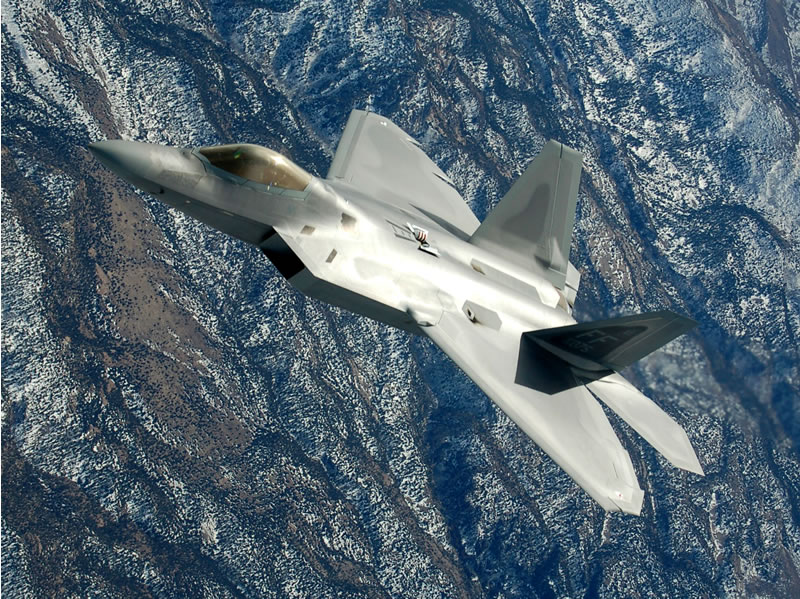
(click to view full)
The block on selling the Raptor to US allies supposedly safeguards America’s national security interests. But US assessments have repeatedly given key allies a clean bill of health in terms of security leaks and, in the case of the Australian military, it was found to pose no greater risk in operating the F-22 than the US Air Force itself. That risk assessment indicated that fighter jet technology passed to Australia might fall into the hands of unauthorized parties through either the downing of aircraft, or through espionage – the same risks faced by the US.
Although the domestic political dimension of decisions such as that which blocks sales of the Raptor to allies, is well understood among America’s allies, it is nonetheless a slap in the face to friends who have been unswerving for many years in their loyalty to the US , and who have paid high prices to maintain the relationship.
Australia, for instance has steadfastly supported the US for decades.
Our troops fought alongside each other in World War One, World War Two, Korea, Vietnam, Iraq and now in Afghanistan.
Our intelligence services continue to work hand-in-hand with those of the US, and US-led electronic intelligence gathering operations have always enjoyed Australia’s full and practical support. Only last week, the Australian parliament whole-heartedly backed legislation to recognize the special security status of the Pine Gap facility, a joint intelligence-gathering operation between the US and Australia.
Such cooperation has come at great material and political cost to Australia, but it has been deemed worthwhile to not only maintain but strengthen security ties with the US.
To be told that such support is welcome, but that reciprocal respect will not be forthcoming is, quite frankly, an insult. It would not be surprising if similar sentiments were expressed by other key US allies, particularly Japan.
Furthermore, with the permanent US air combat presence in Asia now confined to a handful of bases on the continent’s periphery, and other states (particularly China and India) rapidly developing their military strength, it is essential America’s allies possess strong air defense systems to maintain regional security and, thus, sustain peace in the region.
The refusal to export the Raptor is an impediment to this objective. The present state of affairs does no credit to any of the parties concerned.
It reflects badly on the US for its shabby treatment of allies which are being told to pay top dollar for inferior military hardware.
And it shames those allies, such as Australia which have pathetically accepted the suggestion they should accept the scraps from America’s table, and pay through the nose for the privilege to do so!
This is the grim future being contemplated by US allies as they await the decision by the new Obama administration by March 1 on whether to terminate the F-22 project.
A decision to end the program will not only be to the detriment of the allies – the US military will also be caught short, with its air power composition in disarray because of a critical shortfall in the number of F-22s it needs to maintain global air superiority, and likely a subsequent increase in the number of inadequate JSFs it does not need and cannot use effectively in any real conflict.
It is a complex issue to be decided in the first weeks of the Obama administration, and there is a risk of it not being given the consideration required amid myriad other concerns, particularly the economic crisis.
So the importance of the matter cannot be overstated. Production of the Raptor must continue. To do otherwise could quite likely cause major shifts in global balances of power, with all the perils that entails. And that is in not in the interests of America or its closest friends.
Dennis Jensen is an Australian Federal Member of Parliament representing a constituency in Perth [Lib – Tangney], and a former defence research scientist.
Related Readings
* DID FOCUS Article – F-22 Raptor: Procurement and Events
* DID FOCUS Article – F-35 Joint Strike Fighter
* DID Spotlight – The F-35’s Air-to-Air Capability Controversy. Offers an in-depth look into the issues, and into RAND’s famous Pacific Vision 2008 briefing.
* DID Spotlight – The Australian Debate: Abandon F-35, Buy F-22s?. In depth coverage, with material from all sides of the Australian debates.
* Dennis Jensen, MP (Jan 9/09) – Defence Boss Challenged to Debate on Flawed fighter Jets. “He is evasive at times, misrepresents my allegations in some cases, and is simply wrong on other points. I challenge Air Vice-Marshal Harvey to debate this issue with me in public.”
* Dennis Jensen, MP (Nov 11/08) – Grave Concerns Over Planned Fighter Purchase