

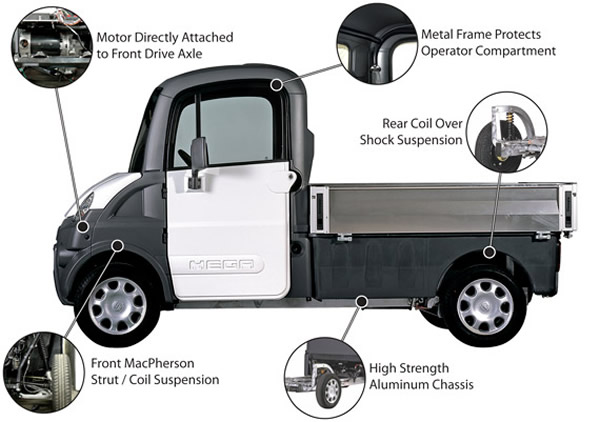
Environmental Leader relays a Gannett’s Army Time article, which states that the US Army plans to order 400 electric vehicles from sources like Columbia ParCar Corp., Native American Biofuels International, and other manufacturers in 2009. Quantities are expected to rise to 4,000 in FY 2010, and may total 10,000 by the time the program ends. Deputy assistant Army secretary for energy and partnerships Paul Bollinger believes each vehicle would use an average of about $400 in electricity per year, and save about 2,875 gallons of fuel.
In many ways, this order fits the potential niche for what Clayton Christensen calls a “disruptive technology.” Find a niche for a radically new product where its limitations (50 mile range, about 900-1,000 pound capacity) matter less than its benefits (cost savings, lower greenhouse gas emissions). The second step is the tricky part, as the new technology must then put itself on a growth curve that allows it to match or overtake the existing technology’s capabilities over time, or come close enough to take significant markets away from its predecessor. If you’ve ever seen an hydraulic excavator that doesn’t use cables, you’ve seen a winner in this sort of techno-strategic process.
From the Army’s point of view, the buy comes with costs as well as benefits. Conventional jeeps, Hummers et. al. can be redeployed for front-line use if that’s deemed to be necessary. These electric cars cannot. On the other hand, if one accepts the thesis that the non-linear battlefield is sharply limiting the usefulness of quasi-combat vehicles like the Hummer, G-Wagen, and Land Rover, then a sharp division becomes the expected result. New vehicles are fielded for the front lines that are more expensive, but designed to handle a full range of combat threats. Hence the JLTV program, Iveco’s popular MLV, and others. At the low end, more unmodified civilian vehicles, base-only vehicles etc. would help save money in “safe” domestic areas. In between, some civilian vehicles may be modified into specialist protection vehicles, and leverage their commonality into orders under specific circumstances.