Advertisement

Rapid Fire 2012-02-09: MDAP Technical Reviews

  • Pakistan received its 18th and final new F-16C/D Block 52 fighter, and its 1st 2 upgraded F-16 fighters, under a multi-billion set of deals with the USA and Turkey.
  • Yes, RFPs that include For Official Use Only (FOUO) documents can be published on fbo.gov, as has been done by the Department of Homeland Security in this example.
  • The US Defense Acquisition University gathered in one place information on all the technical reviews affecting major programs, from the Initial Technical Review during the Material Solution Analysis, all the way down to the In-Service Review done each year for sustained programs. The choice of a Flash interface that you cannot copy and paste from is questionable, but the application does let the user get a good sense of how a program is meant to unfold and what each review should accomplish.
  • Rolls-Royce’s revenue grew by 4% to £11.3B (about $17.9B) in 2011. Their defense aerospace sales grew 5% to £2.2B, though the defense order book size decreased (by 7%), contrarily to civilian bookings.
  • The United States and Japan agreed to untie the planned relocation of US Marines within Okinawa, and the move of some of those forces to Guam. These plans have been stuck for years because of a complex mix [PDF] of local, national and bilateral reasons.
  • The report recently published by the British House of Commons’s Defence Committee on operations in Libya highlights the capability gap between the US and other NATO members. It is however upbeat about how cooperation with France unfolded. For reference: Italian data on Libyan operations.
  • House Armed Services Committee Vice Chair Mac Thornberry [R-TX] is not sold on reversability. Video below:
    Continue Reading… »

Rapid Fire 2012-02-08: Uncertainty is Certain

Advertisement
  • Todd Harrison at the Center for Strategic and Budgetary Assessments (CSBA) reviews options [PDF] for DOD to handle sequestration. “If this downturn in defense spending is like previous downturns, the FY 2013 budget projection the administration is about to release may prove to be highly optimistic.”
  • The US Senate Armed Service Committee’s (SASC) most important hearing this month will take place on Feb. 14 to get started with the FY13 budget and get briefed on the latest FYPD 5-year plans. The March schedule is set to receive testimony by department between March 1st and March 20.
  • US Senators representing Alaska Mark Begich [D, SASC member] and Lisa Murkowski [R-] introduced legislation (S. 2073) seeking to prohibit the Air Force from moving an F-16 squadron from Eielson AFB to Elmendorf and wrote to Secretary of Defense Panetta.
  • There’s often talk of friction between DOTE (DOD’s Operational Test and Evaluation) and the acquisition community. Case in point of people apparently talking past each other: how can you really assess a whole ship or submarine’s sustainment metrics before launching the lead ship at sea? DOTE wants more data upfront during the IOT&E initial phase while this acquisition officer argues they should settle for modeling and analysis until FOT&E follow-ups.
  • Navistar Defense, Indigen Armor and SAIC are teaming up to bid on the Ground Mobility Vehicle 1.1 (GMV 1.1) program.
  • John J. “Jack” Evans [PDF] has been assigned as deputy director, naval warfare (NW) within DOD Acquisition. He was previously PEO submarines at the Naval Sea Systems Command. Darlene J. Costello, Principal Director Strategic and Tactical Systems (S&TS) was also wearing the NW hat until now.
  • Robert S. “Steve” Miller is Hawker Beechcraft’s new CEO. Very recently the president of their defense division retired.
  • The Canadian Foreign Policy Journal published a special issue [paid content] on the F-35 with headlines that include: “costly mistake”, “Strategically superfluous, unacceptably overpriced.” Please do tell how you really feel.

Rapid Fire 2012-02-07: Kendall Wants Data

  • Recently-confirmed US defense acquisition Under Secretary Frank Kendall (pending Senate approval) discussed with the Center for Strategic and International Studies (CSIS) the implications of DOD’s strategic guidance and what’s coming for FY13. He confirmed he is aiming for continuity from his predecessor and former boss Ashton Carter’s Better Buying Power, and spoke with candor about contracting schemes such as concurrency or fixed-price awards going in and out of fashion at the Pentagon with equal fervor. But it doesn’t seem to matter much whether low-rate initial production is done on a cost-plus or fixed-price basis. In the end, what does really work? On the sign out of Kendall’s door: “In God we trust; all others must bring data.” Audio | PDF transcript.
  • Some acquisition requests are more urgent than others. Dealing with pressing operational requirements is what the Joint Rapid Acquisition Cell (JRAC) does within DOD, as well as some offices within the services such as the Army’s PEO-C3T.
  • While Frank Kendall was calling F-35 concurrency “acquisition malpractice”, Carl Levin [D-MI] and John MCain [R-AZ] – respectively Chairman and Ranking Member of the Senate Armed Services Committee (SASC) – sent a letter [PDF] to the Secretary of Defense questioning his decision to take the F-35B off probation. Along with 13 other questions, they want to know whether there are dissenting voices within DOD that might have been ignored to reach that decision. From a much more tactical perspective, the F-35s grounded because of defective parachutes are flying again [PDF] now that the issue has been sorted out.
  • The Office of the US Secretary of Defense Comparative Testing Office (CTO) has made a Broad Agency Announcement (BAA) to declare its intention to fund a number of innovative technologies in the tactical realm, from aircrew protection to non-lethal weapons to munition improvements and more. FBO | CTO templates.
  • Airlift provider Global Aviation Holdings Inc. is filing for Chapter 11. Press release | WSJ.
  • The U.S. Army Training and Doctrine Command is running a survey to get feedback from soldiers about the Improved Physical Fitness Uniform (IPFU), while the Army Medical Research and Materiel Command is to evaluate bioelectric bandages. This looks less painful than it sounds.

Rapid Fire 2012-02-06: HASC Budget Hearing Schedule

Advertisement
  • Former US Navy Secretary and DOD UnderSec Gordon England opines: “The base defense budget, somewhat over 3 percent of our gross domestic product, isn’t the problem and can’t be the solution.”
  • White House Press Secretary Jay Carney insists Secretary of Defense Panetta and President Obama are on the same page. That is, if you ignore the fact they repeatedly made mutually exclusive statements about whether to proceed with budget sequestration.
  • The Congressional Research Service offers a historical perspective [PDF] on the concept of a “hollow force.” They conclude that it can be argued this phrase “is inappropriate under present circumstances.”
  • The House Armed Services Committee (HASC) has a hearing scheduled at 3pm ET this afternoon on the contracting and regulatory issues of doing business with DOD, though they didn’t yet announce who will testify. Meanwhile the Defense Appropriation Subcommittee released its hearing schedule [PDF] until the end of March with a focus on the FY13 budget.
  • The CSBA think tank is running a survey on military compensation. The Stimson Center likes the idea, Veterans of Foreign Wars, not so much.
  • According to Les Echos [in French], defense is going to bear the brunt of budgetary cuts in 2012 that the French government should announce later this week. This in front of a backdrop which might sound familiar: a tepid economic growth forecast and a presidential election.
  • The US Army’s Natick Soldier Systems Center is working on making Individual First Aid Kits (IFAK) easier to carry around and use.

Rapid Fire 2012-02-02: USAF Aircraft Redundancy Plans

  • US Secretary of the Air Force Michael Donley and Air Force Chief of Staff Gen. Norton Schwartz released a short whitepaper [PDF] outlining its priorities and choices within forthcoming budget constraints. It states: “More than 280 aircraft have been identified [...] for elimination [...] over the next five years. This includes 123 fighters (102 A-10s and 21 older F-16s), 133 mobility aircraft (27 C-5As, 65 C-130s, 20 KC-135s, and 21 C-27s), and 30 select ISR systems (18 RQ-4 Block 30s, 11 RC-26s, and one E-8 damaged beyond repair)”
  • The US-China Economic and Security Review Commission had hearings last week on what China’s quest for global resources – water, fossil fuel, mineral, fish – means for the United States. Transcripts | Video.
  • Andrew Davies from the Australian Strategic Policy Institute (ASPI) thinks it is unlikely that the Australian Defence Force (ADF) will make a big rebasing effort to the country’s north. ASPI also released an economic and strategic analysis [PDF] pondering whether Australia should build warships.
  • The Canadian Forces updated their casualty statistics covering their presence in Afghanistan from April 2002 to December 31, 2011.
  • The US House Committee on Foreign Affairs will have its second hearing on “Export Controls, Arms Sales, and Reform: Balancing U.S. Interests” next Tuesday, Feb. 7, 10am. Marion Blakey, President & CEO of the Aerospace Industries Association (AIA) and Mikel Williams, CEO if DDi, will testify. The ADS trade association in the UK is concerned about the potential impact of ITAR changes on its members.

Rapid Fire 2012-02-01: No, This Doesn’t Make Your Backlog Look Fat

  • Dassault Aviation released the most terse and self-restrained press release ever in the wake of the Rafale’s final selection for India’s MMRCA. The French business press and stock market were less subdued, but it is not a signed contract just yet. More details to come.
  • Northrop Grumman reported sales of $26.4B in 2011, a $1.7B or 6% drop from 2010. Its aerospace, electronic and information systems all shrunk by a few percentage points while revenue from the smaller Technical Services dropped by 16%. Among other programs, lower-than-anticipated F-35 deliveries weighted on the aerospace division. The company has revisited the criteria it uses to state its total backlog. This change contributes $3B out of a $7.3B backlog decrease from the previous year, and brings the total down by 15.6% to $39.5B with a 59% funding ratio. NG excludes unexercised contract options and unfunded Indefinite Delivery Indefinite Quantity (IDIQ) orders from its backlog numbers.
  • L-3 Communications’ sales for 2011 decreased by $511M (3%) to $15.2B. Growth in the C3ISR segment was not enough to compensate for lower sales elsewhere in the conglomerate. The funded backlog lost $396M (3.6%) to $10.7B.
  • The US DoD announced [PDF] $18M in funds to 6 recipients for operational energy capability improvement.
  • Catherine Ashton, head of the European Defence Agency (EDA), urged EU members to pool and share defense resources more aggressively but such calls have not been heeded much so far. Alignment of the British, French and Germans in the same project has proven elusive.
  • The British MoD published its latest procurement and technology whitepaper [PDF], stating the intent to maintain science and technology spending at 1.2% or more of the defense budget. The report does mention in passing the EDA as well as NATO’s “Smart Defence” initiative, but its framework for cooperation with other countries will “generally favour bilateral collaboration on technology, equipment, and support issues, as we believe this offers the best balance of advantages and disadvantages. We will, however, continue to work multilaterally, for example through NATO or the EU, where this offers a clear benefit to the UK.” Coming later this year, a 10-year equipment plan.
  • Defense Undersecretary for Policy Michelle Flournoy spoke at the Reserve Officers Association Symposium in the 1st video below. She toed the now familiar line from Panetta’s DoD. Flournoy will leave DOD at the end of the week.
  • In the 2nd video below, CSBA’s Todd Harrison on the impact of projected FY13 cuts on the US Navy’s equipment and personnel:
    Continue Reading… »

Rapid Fire 2012-01-31: BRAC Big Refusal Action Committee

  • Some F-35s were grounded last week for a few days until replacement ejection seats are received. Parachutes were improperly packed, said [PDF] the F-35 Joint Program Office (JPO).
  • The F-35 is what the Air Force plans to use for close-air support in place of A-10 squadrons lined up for closure. Between this and cancellation of the C-27J, the Army is sure to be delighted. This is likely to be contentious in Congress, though opposition to another BRAC will be much stronger. But are talks of another round of base closures just a clever sideshow?
  • To what extent an army should have its own aviation is an old question revisited by the Center for Land Warfare Studies in India.
  • If you look at defense spending relative to GDP, per capita, or as a percentage of total government spending, then the US remains way ahead of the European Union, as shown in data gathered [PDF] by the European Defence Agency.
  • Section 231.205-18 of US defense acquisition regulations (DFARS) was amended to require major contractors to report independent research and development (IR&D) projects to the Defense Technical Information Center (DTIC). The rule is effective as of Jan. 30, 2012 and applies to “those contractors whose covered segments allocated a total of more than $11,000,000 in IR&D/Bid and Proposal (B&P) costs to covered contracts during the preceding fiscal year.” Here is the DTIC website where contractors are asked to upload their data.
  • MV22s scheduled to be deployed at the U.S. base in Okinawa, Japan, will run test flights to address local residents’ concerns about noise levels.
  • A student at the US Naval Postgraduate School is assessing the data-gathering potential of solar-powered, wave-propelled unmanned surface vehicles that might provide a cheap, mobile alternative to moored buoys for maritime surveillance.

Rapid Fire 2012-01-30: These Are Not the Cuts You’re Looking For

  • Australian Defence Minister Stephen Smith told reporters the Department will review their JSF purchase timetable, in light last week’s confirmation that the US will take it slow.
  • Jim Maslowski, President at Hawker Beechcraft Defense and a former US Navy Rear Admiral, is retiring tomorrow. Meanwhile retired USMC Gen. James E. Cartwright joined Raytheon’s board and former US Deputy Secretary of Defense William J. Lynn III has been confirmed as DRS Technologies’ new Chairman and CEO.
  • EADS plans a big round of top management changes, in the usual balancing act between Germany and France: Tom Enders will replace Louis Gallois as CEO while Arnaud Lagardere take over as Chairman of the Board from Bodo Uebber.
  • Opinions on the Pentagon’s budget preview: FPI, CRFB, Heritage, Stimson Center, and a video from CSIS at the bottom of this entry. CSIS ran these slides [PDF] during the talk that include a few multi-decade charts showing how previous drawdowns were executed. They’re not sold on booking $60B in efficiency savings before said savings are realized.
  • Iraq’s future F-16IQ pilots have begun training in the USA. And Iraq’s officials have begun protesting the presence of American (unarmed) UAVs they’re saying they haven’t authorized.
  • A Heron TP UAV crashed yesterday in Israel during tests, apparently because of a human error.
  • “It’s not a case of IEDs on the battlefield. IEDs are the battlefield.” Says Joint IED Defeat Organization (JIEDDO) Director Lt. Gen. Michael D. Barbero quoting an officer in Afghanistan.
    Continue Reading… »

Rapid Fire 2012-01-27: FY13 DoD Budget Guidance

Top Pentagon officials gave a briefing yesterday on major budget decisions ahead of the FY13 President Budget request coming on Feb. 13. Highlights among the outlined priorities [PDF]:

  • A relatively stable topline at $613.4B, made of a $525B baseline plus $88.4B overseas contingency operations (OCO). The former is a couple billion dollars below the FY10 actual budget and reflects a 5% decrease from the FY12 request, but in reality is just $6B below what DoD ended up getting last year. The OCO funds are 25% lower than last year’s $117.8B request but they remain at a pretty sizable level now that troops have left Iraq. Again, a significant part of the cuts Panetta and House Republicans have most vocally objected to are actually found in a) reductions vs. baseline growth previously projected by DoD – as opposed to net cuts – and b) a drop in war funding which arguably makes sense when you’re withdrawing troops from combat.
  • Force and infrastructure adjustments, starting with a new base realignment and closure (BRAC) process. The last one dates from 2005 and wrapped up only very recently. Well, almost. Also, the start of a 5-year process that aims to lower active troops to 490,000 for the Army and 182,000 for the Marines; and a 10% reduction in the number of Air Force tactical air squadrons from today’s 60. A new BRAC is sure to open a whole new can of worms in Congress.
  • Slowing down JSF procurement – again – to allow for more testing and address the laundry list of issues outlined in the latest DOT&E report [PDF]. This decision reflects the conclusions of the Concurrency Quick Look Review [PDF] that talked of a “lack of confidence in the design stability” and of the “concurrency driven consequences of the required fixes.”
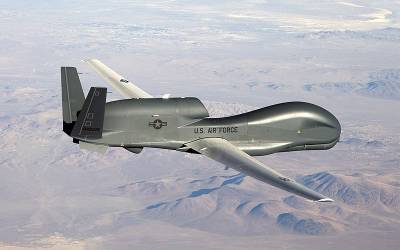
  • Retirement or divesting of 27 C-5As, 65 C-130s and 38 C-27s. Cancellation of Global Hawk Block 30 (not the whole program). Early retirement of 7 cruisers; delayed or reduced production of 14 ships, spread between LHA, LCS, JHSV, Virginia-class sub. Termination of the Defense Weather Satellite System (DWSS). Reduction in JAGM funding. Focus on JLTV rather than HMMWV Recap.
  • Adjustments to pay raises shouldn’t start until 2015. Health care fees, co-pays and deductibles for retirees on the other hand will start to rise earlier. Beyond that, DoD is asking Congress to establish a commission to review military retirement. What could go wrong with that?

DID will obviously follow budget developments closely as they unfold and further details are made available. For reference, the FY12 DoD budget documents are found here. In other news:

Rapid Fire 2012-01-26: 2011 Results Start to Come in for Primes

  • Full 2011 financial results: Textron saw growth at Bell, revenue decrease at Textron Systems. At $7.3B, Bell’s backlog has recovered from a reporting error announced by the company last quarter.
  • Meanwhile General Dynamics generated $32.7B of revenue last year. It has potentially almost 3 years worth of revenue in backlog depending on how its indefinite quantity contracts pan out. Aerospace revenue grew but combat, marine and IT systems lost ground, translating into an almost flat topline for the prime contractor.
  • Raytheon wrapped up 2011 with slightly lower revenue ($24.9B) but higher bookings ($25.2B) than the previous year. Its backlog rose by $700M to $35.3B though most of that growth is not appropriated yet.
  • The RAND Arroyo Center is rather bullish on the potential for UAV logistics applications such as convoy overwatch and other surveillance tasks, but reminds decision makers that bandwidth is going to be critical. Note: the study doesn’t cover the use of UAS for Army resupply, separate research that General Dynamics was tasked with.
  • According to the Guardian the British government is considering selling its RAF Norholt to possibly be converted into a satellite of the nearby Heathrow airport. Philip Hammond was Secretary of State for Transport before he replaced Liam Fox last October.
  • The Stockholm International Peace Research Institute (SIPRI) notes that defense budgets in Latin America have been growing faster than institutional transparency on policy, let alone on spending.
  • BAE Systems and Caterpillar Inc. have signed a 20-year supply agreement to integrate the Cat CX family of transmissions into its HybriDrive parallel propulsion system, and use it to outfit and retrofit heavy trucks. It’s a civilian deal – but the same technologies can be used on military armored vehicles, and the civilian sector is pioneering this technology.
  • The US Army is concerned about Facebook use. Yes, it can endanger lives, they say. People in the security community need to use it responsibly, and they have some tips.