10-Mar-2010 15:11 EST
Related Stories: ABM, Alliances, Americas - USA, Budgets, EADS, Europe - Other, FOCUS Articles, Issues - International, Lockheed Martin, MBDA, Missiles - Surface-Air, New Systems Tech, Northrop-Grumman, R&D - Contracted

MEADS: air view
(click to view full)
MEADS gets NSA approval to use Italian crypto/IFF, and German T/R modules pass testing, but US Army reportedly doesn’t want it any more. (March 10/10)
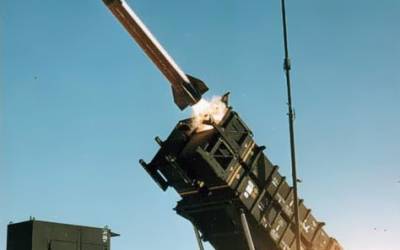
The Medium Extended Air Defense System (MEADS program aims to replace Patriot missiles in the United States, the older Hawk system in Germany, and Italy’s even older Nike Hercules missiles. MEADS will be designed to kill enemy aircraft, cruise missiles and UAVs within its reach, while providing next-generation point defense capabilities against ballistic missiles. MBDA’s SAMP/T project would be its main competitor, but MEADS aims to offer improved mobility and wider compatibility with other air defense systems, in order to create a linchpin for its customers’ next-generation air defense arrays.
The German government finally gave their clearance in April 2005, and in June 2005 MEADS International (MI) formally signed a contract worth approximately $3.4 billion to design and develop the tri-national MEADS system. This DID FOCUS Article covers that program…
09-Mar-2010 09:32 EST
Related Stories: Americas - Other, BAE, Britain/U.K., Budgets, EADS, Europe - France, Europe - Other, Events, Issues - International, Issues - Political, Official Reports, Other Corporation, Policy - Procurement, Pre-RFP, Rumours, Russia, Spotlight articles, Transformation

Upgraded F-5BR
(click to view full)
Paper reports bid pricing; government denies, says no decision yet. (March 9/10)
Could the words “Brazilian fighter” begin evoking images unrelated to the Gracies? A proposed 50% boost to Brazil’s defense budget could be on its way to accomplishing that, and more. While the Navy and Army are also in line for funds to replace broken-down equipment, the fighters will be a critical centerpiece of the Forca Aerea Brasileira’s efforts. The 36+ aircraft buys under consideration are mostly the same set of 4+ generation fighters that were considered last time: Boeing’s F/A-18 E/F Super Hornet, Dassault’s Rafale, EADS’ Eurofighter, Lockheed Martin’s F-16 Block 60, Saab’s JAS-39 Gripen NG, and Sukhoi’s SU-35. The Gripen, Rafale, and Super Hornet were picked as finalists, and along the way, the Brazilian competition became much more important to at least one of that trio.
This free-to-view DID Spotlight article covers Brazil’s reborn F-X competition, adds its assessment of their offers’ relative strengths and weaknesses, and covers ongoing events. Before the competition was done, the Brazilian government anointed Dassault’s Rafale as its preferred choice. Then an Air Force evaluation appears to have ranked it dead last. Which has now led to an amended report…
08-Mar-2010 22:41 EST
Related Stories: Americas - USA, Asia - Other, Boeing, Britain/U.K., Budgets, Contracts - Awards, Daily Rapid Fire, Issues - International, New Systems Tech, Surface Ships - Combat, Surface Ships - Other
- Incoming US Coast Guard Commandant Papp’s honest memo [PDF] re: operational impact of their 2011 budget causes a stir.
- The US Navy commissions the DDG-51 Arleigh Burke-class guided missile destroyer DDG-105 Dewey at the Naval Weapons Station in Seal Beach, CA.
- US Army’s “mad scientist” conference considers enemies’ ability to blend existing, future technologies to disrupt superior forces.
- UK institute condemns Cambodia’s plans for private businesses/ individuals to sponsor military units. The practice was widespread in Britain until 1871.
07-Mar-2010 20:03 EST
Related Stories: Americas - USA, Asia - China, Budgets, Coastal & Littoral, Corporate Financials, Daily Rapid Fire, Europe - France, General Dynamics, Lockheed Martin, Other Corporation, Outer Space, Russia, Satellites & Sensors, Support Functions - Other
- Israel adding overlapping surveillance systems, RWS, along Gaza border.
- As cluster munitions treaty prepares to activate on Aug 1/10, US DoD states that “The United States is not a party to the Convention on Cluster Munitions and is not bound by its obligations…”
07-Mar-2010 19:12 EST
Related Stories: Africa, Aircraft, Alliances, Asia - Other, Britain/U.K., Budgets, Corporate Financials, EADS, Europe - France, Europe - Other, Events, Partnerships & Consortia, People, Rumours, Spotlight articles

A400M rollout, Seville
(click to view full)
Contract re-negotiation final, capabilities reduced, Spanish threat to Britain, EADS’ loss provisions, MSN1 flies to France. (March 6/10)
Airbus’ A400M is a EUR 20+ billion program that aims to repeat Airbus’ civilian successes in the full size military transport market. A series of smart design decisions were made around capacity (35-37 tonnes/ 38-40 US tons, large enough for survivable armored vehicles), extensive use of modern materials, multi-role capability as a refueling tanker, and a multinational industrial program; all of which leave the aircraft well positioned to take overall market share from Lockheed Martin’s C-130 Hercules. If the USA’s C-17 is allowed to go out of production, the A400M would also have a strong position in the strategic transport market, with only Russian IL-76 and AN-124 aircraft as competition. To date, 184 orders have been placed by Germany (60), France (50), Spain (27), Britain (25), Turkey (10), South Africa (8), Belgium (7), Malaysia (4), and Luxembourg (1); and Chile has expressed an unfinalized interest in 3 planes.
EADS firm’s biggest issue, by far, has been funding for a project that is more than EUR 7 billion over budget. The next biggest issue was timing, as A400M delivery penalties and Lockheed Martin’s strong push for its serving C-130J Super Hercules cast a pall over the A400M’s potential future. The entire project has been under moratorium for over a year as all parties decided what to do. Cancellation was not a realistic contractual option for most customers, but late deliveries could be refused, giving both Airbus and its customers negotiating leverage. This DID Spotlight article covers the latest developments, as the A400M project slides toward a new agreement, and production.
07-Mar-2010 15:49 EST
Related Stories: Americas - USA, Avionics, BAE, Boeing, Budgets, Contracts - Awards, Issues - Political, Lockheed Martin, Transport & Utility

C-130 AMP cockpit
(click to view larger)
The USA’s C-130E/H fleet suffers from 2 key problems: (1) many aircraft, especially Air National Guard planes, aren’t flyable, or won’t remain so much longer; and (2) their avionics are too old to meet modern standards for flight in civil airspace.
The 1st problem is being addressed by major structural rework, inspections, and groundings. The 2nd problem was supposed to be addressed by the C-130 AMP program, begun in 2001 in order to improve aircraft fight-readiness, flight times, flexibility, and fuel use. Higher than expected costs have left the US military considering program cancellation, however, even as initial AMP contracts, and progress, continue to inch along…
02-Mar-2010 17:10 EST
Related Stories: Americas - USA, Asia - Japan, Australia & S. Pacific, Boeing, Budgets, Contracts - Awards, Contracts - Modifications, Delivery & Task Orders, Engines - Aircraft, FOCUS Articles, Fighters & Attack, Issues - International, Issues - Political, Lobbying, Lockheed Martin, Official Reports, RFPs, Support & Maintenance, Support Functions - Other, Transformation, United Technologies

Into that good night
(click to view full)
Over $500M for improvements, SDV-only small business solicitation, Russia’s PAK-FA. (March 2/10)
The 5th-generation F-22A Raptor fighter program has been the subject of fierce controversy, with advocates and detractors aplenty. On the one hand, the aircraft offers full stealth, revolutionary radar and sensor capabilities, dual air-air and air-ground SEAD (Suppression of Enemy Air Defenses) capabilities, the ability to cruise above Mach 1 without afterburners, thrust-vectoring super-maneuverability… and a ridiculously lopsided kill record in exercises against the best American fighters. On the other hand, critics charge that it’s too expensive, too limited, and cripples the USAF’s overall force structure. Meanwhile, close American allies like Australia, Japan and Israel, and other allies like Korea, are pressing the USA to abandon its “no export” policy. Most already fly F-15s, but several were interested in an export version of the F-22 in order to help them deal with advanced – and advancing – Russian-designed aircraft, air-to-air missiles, and surface-to-air missile systems.
This DID FOCUS Article covers both sides of the F-22 controversies in the USA and abroad, and it will also be updated over time to cover and backfill contracts and events related to the F-22A Raptor program. This article has been restored to full public access, as F-22 program winds down to its end.
02-Mar-2010 12:07 EST
Related Stories: Americas - USA, Boeing, Budgets, Contracts - Awards, Contracts - Modifications, Design Innovations, Lobbying, New Systems Tech, R&D - Contracted, R&D - Private, Spotlight articles, Testing & Evaluation, Transformation, UAVs

X-45C, F/A18F, F-15E
(click to view full)
Classified program creates X-45C delays, as Boeing & Lockheed Martin “pause” bomber cooperation. (March 2/10)
In 1998, Boeing began a revolutionary development program: create an unmanned aircraft that was about the size of the USAF’s F-117 stealth fighter, with similar performance, better stealth, and better range. DARPA’s J-UCAS program launched Boeing’s X-45A and Northrop Grumman’s X-47B Unmanned Combat Air Vehicles (UCAVs), which went on to perform tests that included multiple UCAV flights, bomb drops, and other aviation firsts.
J-UCAS was effectively killed in 2006, though it went on to spawn the Navy’s UCAS-D competition. NGC’s X-47B Pegasus won, but the Pentagon’s back-and-forth over the USAF’s Next-Generation Bomber program will either create a big opening for UCAVs, or allow Boeing to lever new advances it makes in stealthy UCAV design for its bid. Not so coincidentally, Boeing is using company funds to put its X-45C back on track, as the “Phantom Ray”...
25-Feb-2010 13:49 EST
Related Stories: Alliances, Americas - USA, Asia - Other, Avionics, Budgets, C4ISR, Coastal & Littoral, Contracts - Intent, Force Structure, Issues - International, Issues - Political, L3 Communications, Lockheed Martin, Other Corporation, Policy - Procurement, Radars, Raytheon, Rumours, Signals Radio & Wireless, Specialty Aircraft, Support & Maintenance
Chinese economic pressure, US DIA report, Javelin missile contract. (Feb 25/10)
Despite China’s military buildup across the strait, key weapons sales of P-3 maritime patrol aircraft, Patriot PAC-3 missiles, and diesel-electric submarines to Taiwan have been sabotaged by Taiwanese politics for years – in some cases, since 1997. The KMT party’s flip-flops and determined stalling tactics eventually created a crisis in US-Taiwan relations, which finally soured to the point that the USA refused a Taiwanese request for F-16C/D aircraft.
That seems to have brought things to a head. Most of the budget and political issues were eventually sorted out, and after a long delay, some major elements of Taiwan’s requested modernization program appear to be moving forward: P-3 maritime patrol aircraft, Patriot missile upgrades; and requests for AH-64D attack helicopters, UH-60M Black Hawks helicopters, E-2 AWACS planes, minehunting ships, and missiles for defense against aircraft, ships, and tanks. These are must-have capabilities when facing a Chinese government that has vowed to take the country by force, and which is building an extensive submarine fleet, a large array of ballistic missiles, an upgraded fighter fleet, and a number of amphibious-capable divisions. Chinese pressure continues to stall some of Taiwan’s important upgrades, including diesel-electric submarines and American fighter jets. Meanwhile, other purchases continue…
Continue Reading… »
24-Feb-2010 13:05 EST
Related Stories: Americas - USA, Britain/U.K., Budgets, Coastal & Littoral, FOCUS Articles, Forces - Special Ops, Issues - Political, New Systems Tech, Northrop-Grumman, Project Failures, R&D - Contracted, Submarines

ASDS
(click to view full)
Private sector to the rescue? (Feb 23/10)
In a program that began with great promise but soon spiraled out of control, Northrop Grumman has been building ASDS “Advanced SEAL delivery System” mini-subs as successors to the previous SDV (SEAL/Swimmer Delivery Vehicle) carried on US modified Benjamin Franklin Class [SSBN-640] special warfare submarines.
In the end, however, technical, reliability, and 400% cost overrun issues proved insuperable. The ASDS program was canceled for all intents and purposes on April 6/06, but the existing boat was retained and improvements attempted. That was cut short with the destruction of ASDS-1, and a less ambitious replacement program is beginning to take shape… even as the private sector steps in to help.