

(click to view full)
India’s stalled defense procurements have become an international joke, but they’re not funny to front-line participants. The country’s attempts to buy simple artillery pieces have become infamous, but their current problem with trainer aircraft is arguably a more significant wound.
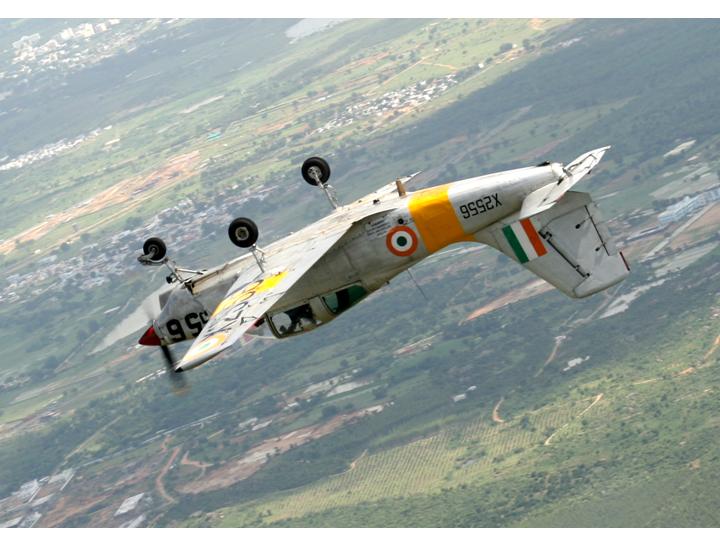
You can’t produce pilots properly without appropriate training, but the IAF’s fleet of 114 locally-designed HPT-32 Deepak basic trainers has been grounded since August 2009, because they aren’t seen as reliable enough or safe enough to fly. Since then, equally aged HJT-16 Kiran jets are being used for both Stage-I and Stage-II fighter training. That yawning gap has added urgency to a replacement buy, but progress has been predictably slow. With its high-end Hawk AJT jet trainer deals behind them after 20+ years of effort, can the IAF take the next step, and plug the hole in the middle of its training? In May 2012, it did.
India’s Trainer Choice(s)
Basic Training: Pilatus Wins the Competition
(click to view full)
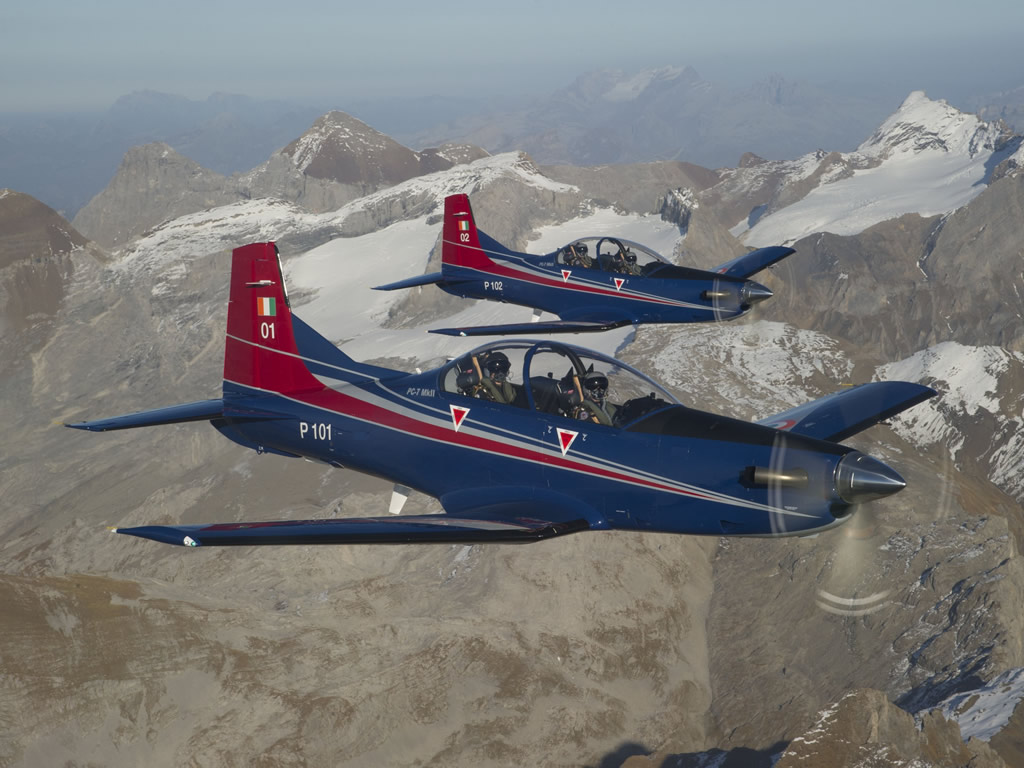
By June 2011, Switzerland’s Pilatus had emerged as the IAF’s preferred basic choice with their PC-7 Mark II, which is in wide international use with over 20 air forces. The PC-7 Mark II, introduced in 1994, adds all of the avionics advances and some airframe changes from the P-9M, but uses a very cost-efficient Pratt & Whitney Canada PT6A-25C engine. The engine provides less power, in return for a lower price and lower operating costs. Ejection seats, an anti-g system, and On-Board Oxygen Generating System (OBOGS) help round out its capabilities; and the plane is still touted as being suitable for aerobatics, tactical flying, and night flying. All of these things mark a sharp step up from the HPT-32.
Overall, Pilatus has touted the PC-7 as a trainer that can cover both basic and intermediate training roles, at very low operating costs. In recent years they’ve backed off a bit, emphasizing the PC-9M and PC-21 turboprops as their advanced trainer offerings. On the other hand, the PC-7 Mark II’s original South African customer uses it as the sole lead-in to the same Hawk Advanced Jet Trainer that India flies. Like the HPT-32s, PC-7s can be armed, and this has been done by a number of customers.
To win, Pilatus beat Korean Aerospace’s KT-1 and Hawker Beechcraft’s T-6C in the finals. Embraer’s EMB-314 Super Tucano armed trainer, Finmeccanica’s M-311 jet trainer, and Grob’s G-120 TP didn’t make it past the technical trials.
In May 2012, the IAF has signed a contract to import 75 PC-7s from Pilatus in fly-away condition, and the planes were formally inducted into the IAF in February 2013. Some Indian pilots trained on the PC-7s in Switzerland, then returned to India as trainers themselves.
A HAL proposal for a locally developed “HTT-40 trainer” also lost out at some point in this process, but it has been revived under political pressure as a developmental program. The problem, as a May 2013 article in the Daily Mail explains, is timing:
“As per the project report submitted by the company in 2011, it had promised to deliver two aircraft by 2019 and 10 by 2021. At this rate, the IAF can begin training on home-built [HTT-40s] only by 2022…. The Defence Acquisition Council had mandated IAF to exercise the [38-plane option] clause to buy more aircraft from the foreign vendor only if HAL’s HTT-40 does not take off before the delivery of first Pilatus PC-7. With first Pilatus arriving in February and HTT-40 nowhere in sight, the IAF will go for 38 more PC-7s.”
HAL wants the government to mandate the HTT-40 as the IAF’s only trainer option beyond the initial 75 PC-7s, but the IAF disagrees vigorously, citing timing problems, training volume needs, and HAL’s known problems handling their workload on other programs. Even so, state-owned HAL has managed to block the intended February 2013 approval for the PC-7 contract’s 38-plane option clause. India’s government continues to dither over any means of moving forward, whether that means buying from Switzerland and moving on, having HAL build 106 PC-7s under license, or mandating the HTT-40.
Intermediate Trainers: HAL’s IJT

(click to view full)
India’s current intermediate training curriculum rests on a dwindling stock of HJT-16 Kiran jets. They were first introduced in 1968, though another 65 Kiran Mk.IIs entered service beginning in 1985. They serve as the bridge between existing basic flight trainers, and the IAF’s advanced Hawk Mk.132s.
HAL received a 1999 contract to develop the HJT-36 Sitara as an intermediate trainer successor, but the firm has missed its 2007 in-service date very badly, and a number of crashes have raised concerns. HAL is contracted to deliver 12 limited series production aircraft and 75 production IJTs, but the Sitara still hasn’t achieved initial certification as of late 2013, and remains saddled with serious aerodynamic issues.
The question is whether the plane can enter service by 2015, and whether it will be safe if it does. A mid-2014 admission that major redesigns are required casts serious doubt on both requirements.
The PC-7 fleet performs the intermediate training role in other countries, and the threat of choking the IAF’s pilot training pipeline may be crippling enough to force a potential opportunity. As of mid-2014, the IAF is floating a foreign RFI for an intermediate trainer that can also serve in counter-insurgency roles. The IAF is already flying one – but India has a long political history of pursuing indigenous programs well past the point of crisis.
Contracts & Key Events
2014 – 2019
HAL admits IJT must be redesigned; IAF looks abroad for IJT options; PC-7s noticeably improving IAF training.

(click to view full)
September 6/21: Headed For Certification Clearance Hindustan Aeronautics has completed the spin and night flight testing portion for the HTT-40 basic trainer and the light aircraft will head for certification clearance. Intended to replace the HPT-32 (Hindustan Piston Trainer), the HTT-40 is a basic training aircraft developed for the first stage of the training of rookie pilots in the Indian Air Force.
May 2/19: Flight Tests Recommence Hindustan Aeronautics Ltd resumed flight tests of the HJT-36 Sitara twin-seat aircraft. Testing had been put on hold for three years after the aircraft encountered problems on the spin test flights in 2016. HAL developed the Sitara for the Intermediate Jet Trainer program, which aims to produce a direct replacement for the Indian Air Force Kiran. The production of the Kiran ended in 1989. HAL received a 1999 contract to develop the HJT-36 Sitara as an intermediate trainer successor, but the firm has missed its 2007 in-service date very badly, and a number of crashes have raised concerns. The aircraft that flew recently features a repositioned vertical fin and other design changes. It is possible that, if the new configuration proves up to customer expectations, the Indian Air Force may buy 73 serial examples. Working out remedies to improve spin characteristics for an otherwise promising and mature design required extensive wind testing on scale models. During the past three years, HAL also addressed issues of excessive airframe weight, while its program partners in Russia had more time to improve the engine that powers the HJT-36.
June 2/16: Hindustan Aeronautics Limited’s (HAL) Hindustan Turbo Trainer-40 (HTT-40) has made its maiden flight after much delay. The Indian indigenous trainer will see at least 70 of the aircraft procured by the Indian Air Force despite the service’s preference for the Swiss built Pilatus PC-7 Mark II. Funding for the HTT-40 had been blocked by the Defense Ministry after the IAF claimed that the trainer would be too expensive, too heavy, and that it will not meet their need.
Aug 5/14: IJT. Defence Minister Shri Arun Jaitley makes it official, in response to a Rajya Sabha question:
“HAL, which has been developing the Intermediate Jet Trainer (IJT), as a replacement for the Kiran aircraft, has not so far been able to resolve critical wing and airframe Design & Development issues related to stall and spin.
In order to meet the emergent situation created due to inordinate delay in the IJT project, IAF has already initiated the process for extending the technical life of the Kiran aircraft. The IAF has also initiated action to look for alternate options for the IJT.”
See March 30/14 for that RFI. Sources: India MoD, “Replacement of Intermediate Trainer Planes of the IAF”.
July 5/14: IJT redesign. Shiv Aroor’s exclusive report says that HAL is looking for foreign help to redesign the HJT-36 Sitara, and offers some excerpts from the RFI:
“The HJT-36 aircraft presently weighs around 4150 Kg in its Normal Training Configuration…. HAL is envisaging achieving maximum possible weight reduction / optimisation for the aircraft…. The design of the above need to be revisited, analyzed and the scope for weight reduction / optimization studied while ensuring the required strength, stiffness & fatigue criteria…. Towards this HAL is looking forward for partnership / technical assistance / consultancy from a well experienced airframe design house…. This weight reduction / optimization study must be comprehensive, encompassing all the Structure, Mechanical Systems & Electrical Avionics Systems.”
In light of this call for help, it becomes very doubtful that the plane can enter service by 2015 – a date that would already be 8 years late. Indeed, it’s legitimate to question whether the design will ever meet the IAF’s criteria. Whether or not the IAF opens another competition (q.v. March 30/14) will be a political decision. Sources: Livefist, “EXCLUSIVE: Totally Cornered, HAL To Re-design Lumbering Intermediate Trainer”.
May 8/14: PC-7. Pilatus explains how important the PC-7 Mk.IIs have been to India. The translation needs a bit of work, but the gist is very clear. Available, reliable aircraft make a huge difference to pilot training quality:
“Due to the excellent endurance, low maintenance and reliability of the PC-7 MkII aircraft, the Indian Air Force supported by Pilatus has been able to maintain a very high availability rate on the flight line since the introduction of the new platform. Thanks to this, the Indian Air Force is already planning to advance their plans to enhance the number of student pilots by 150% from the next course…. Furthermore, the PC-7 MkII has enabled the Indian Air Force to increase the basic training syllabus in terms of flight hours by 220% compared to the old syllabus and increase the solo content from only 1 to 14 sorties.”
So far, India has taken delivery of 35 PC-7 trainers since the contract was signed in May 2012, and the remaining 40 are being flown in on an accelerated monthly schedule. A Fixed Base Full Mission Simulator is now operational at Dundigal, with a 2nd simulator and other training systems scheduled to be operational by the end of 2014. Overall, the PC-7 MkII fleet has achieved more than 12,000 flying hours, and accumulated well over 24,000 landings since deliveries began in February 2013. Sources: Pilatus, “Indian Air Force Pilatus PC-7 MkII Fleet Clocks Record Performance”.
March 30/14: IJT competition? The IAF has reportedly published a non-binding global RFI regarding intermediate (Stage-II) jet trainers “for a primary task of Stage–II training of Pilots and also capable to undertake a secondary task of Counter Insurgent Operations” (sic).” The specifications seem to aim directly at some of the HJT-36 Sitara’s problem areas:
“Stalling. An unmistakable natural stall warning should be available, irrespective of the configuration. (b) Spinning. The aircraft must be resistant to spin but it should be possible to perform intentional spin upto six turns to either side and recover safely thereafter. The aircraft behavior in the spin should be predictable and consistent. (c) Aerobatics The IJT should be capable of performing loops, barrel rolls, rolls, combination maneuvers and negative ‘g’ flight without adverse effects on the engine and aircraft structure. The aircraft should be capable of sustained inverted flight for at least 30 seconds at sea level at maximum takeoff power…. The aircraft should be capable of carrying at least 1000 kg of external load. The aircraft should be equipped with a minimum of five hard points and each hard point on the wing should be stressed to carry at least 300 kg stores. The aircraft should be, free from buffet, dutch roll, snaking and wing rock during air to ground weapon training. The aircraft should be capable of employing the following armament: (a) Gun. A light weight gun/ gun-pod with adequate ammunition for at least 5 sec of firing time. (b) Rocket Pods. Reusable rocket pods. (c) Bombs. Should be able to carry at least 4×250 kg retarded or ballistic bombs. The stations should be capable of employing Carrier Bomb Light Stores (CBLS) type of dispensers for carriage of practice bombs (25 lbs and 3 Kg).
Defense News says that the RFI was reportedly sent to Russia’s Yakolev; Italy’s Alenia Aermacchi; Korea Aerospace Industries (KAI); Boeing, Northrop Grumman and Beechcraft; and Sweden’s Saab. That’s a strange list, if true. Boeing, Northrop Grumman, and Saab don’t really have current products in this space. Russia’s Yak-130 is a different class, overlapping India’s existing high-end Hawk AJT fleet; ditto KAI’s supersonic T-50 jet. Beechcraft doesn’t make jet trainers, just a T-6C turboprop which is designed for the basic-intermediate role, as is KAI’s KT-1. Ironically, these 2 turboprops were the finalists that Pilatus beat with the PC-7 Mk.II. The only real jet candidate would be Alenia, whose M-311 jet trainer didn’t even make the finals against Pilatus’ PC-7 Mk.II.
If India demands jets, the PC-7 wouldn’t qualify, but the hardpoint requirements may be within the PC-7’s 1,000 kg capacity. There have been efforts to arm the HJT-36 (q.v. Feb 19/11), but it isn’t clear how successful they have been. Sources: Livefist, “HAL’s IJT Delayed, IAF Scouts Foreign Source” | Defense NEws May 2014, “India Looks Abroad for New Jet Trainer”.
Feb 10/14: IJT. Defence Minister Shri AK Antony admits that the HJT-36 IJT isn’t going to arrive any time soon:
“The Intermediate Jet Trainer (IJT) is planned to replace Kiran Mk-I. Due to repeated revisions in the time line set for the Initial Operational Clearance (IOC) of IJT, and also considering the present state of the project regarding induction of the IJT in Indian Air Force (IAF), it has been decided to extend the use of Kiran Mk-I.
After the study of the fatigue life spectrum of Kiran Mk-I aircraft, the Regional Centre for Military Airworthiness (Aircraft) has recommended extension of Total Technical Life of the aircraft. This will help IAF to utilize the fleet till 2017-18, though in gradually reducing numbers.”
Sources: Indian MoD, “Replacement of Kiran Aircraft” | India’s Economic Times, “5th gen fighter aircraft project with Russia delayed: A K Antony”.
Jan 20/14: Next BTA? Ajai Shukla pens an oped that looks at HAL’s arguments for the HTT-40, while dismissing any concerns raised by the other side. That isn’t very valuable in and of itself, and makes his “full” cost figures suspect. On the other hand, he details the IAF’s counter-proposal: INR 24.05 billion (about $393 million) for 10 more full PC-7 imports, and 96 license-assembled PC-7 Mk.IIs at IAF’s 5 Base Repair Depot in Sulur, Tamil Nadu: 28 semi-knocked down kits, and 68 fully knocked-down parts sets.
There is merit to his point that lifetime costs are larger than purchase costs. An India unable to produce its own spares locally does leave itself at the risk of paying more, and subject to currency fluctuations. The core argument involves pinning down the potential differences, and then asking whether the IAF’s training fleet is both economically small enough, and militarily important enough, to justify the tradeoffs in exchange for a no-risk solution. The IAF says yes, and makes an argument. Shulka won’t address the question.
The most interesting point Shulka makes is that the original Basic Trainer Aircraft RFP only covered 75 fully built aircraft. Could a competitor snarl the proceedings by citing the failure to include a local-assembly under Transfer of Technology option, on the basis that they would have won had it been part of the tender? Anywhere other than India, the answer would be no. Separate contracts are separate. In India? Who knows. Sources: Business Standard, “Is indigenisation just a slogan?”
2012 – 2013
PC-7 Mk.II contract signed, plane inducted; HAL fighting to push its HTT-40, attacks procurement process and stalls follow-on basic trainer buy; KAI’s procurement challenge fails; India’s weak currency becomes a problem.
[youtube:v=oKbvhB4OxQg]
Dec 18/13: HTT-40. Minister of State for Defence Shri Jitendra Singh replies to a Parliamentary question in India’s Rajya Sabha upper chamber, and attaches a number to HAL’s basic trainer attempt. It’s a bit less than previous reports (q.v. April 15/13):
“HAL has sanctioned an amount of Rs.176.93 crore [DID: INR 1.77 billion, currently about $29 million] for preliminary design phase and detailed design phase activities of Hindustan Turbo Trainer-40 (HTT-40) aircraft. IAF has expressed reservations over acquiring the HTT-40 developed by HAL and has recast its proposal from ‘Make’ category to ‘Buy and Make’ category to procure the balance 106 Basic Trainer Aircraft (BTA).”
Source: India MoD, “Use of HTT-40 Trainer by IAF”.
Oct 14/13: Build to print? The IAF is forwarding what seems to be a compromise proposal: have HAL build the last 106 PC-7 Mk.II trainers, using blueprints supplied by Pilatus. Sources:
Oct 10/13: IJT. HAL is having serious flight and safety problems with its HJT-36 Intermediate Jet Trainer. The plane has an inherent asymmetry that makes the aircraft roll around 16 degrees during stall trials. That’s very dangerous to trainee pilots, and has forced the suspension of stall testing. HAL is still saying that they hope to get the HJT-36’s Initial Operational Clearance (IOC) by the end of December 2013, but “insiders” don’t consider that very likely.
HAL is contracted to deliver 12 limited series production aircraft and 75 production IJTs, but the IJT program has been in trouble for several years now. The original IOC date was supposed to be 2007, but a string of crashes (q.v. April 29/11) and other problems have pushed the likely date back by 7 years or more. It’s not a very good advertisement for HAL’s “MTT-40” lobbying, and the longer-term question is whether continued IJT problems will push effective fielding beyond the old HJT-16 fleet’s safe life. Sources: Indian Express, “HAL struggling with jet trainer project”.
July 30/13: Currency exchange. India’s Business Standard follows up on its earlier report about HAL’s HTT-40 trainer offer by discussing an IAF clarification, but won’t quote that clarification or link to it. That’s bad practice and questionable ethics, especially when other sources note the IAF statement’s citation of persistent delays and problems across all of HAL’s aircraft production programs. With that said, the Business Standard makes an important point along the way.
The flyaway price of each PC-7 Mk.II trainer in the contract is reportedly SFR 6.09 million. Since payment is linked to delivery, India’s declining rupee is steadily making each subsequent trainer more expensive. The IAF had given a mean figure of INR 300 million for the 2014 delivery year, but on May 24/12 when the contract was signed, the conversion worked out to INR 360.8 million each. Today’s conversion is INR 394.7 million – a 9.4% cost hike. India’s RBI is stepping up its defense of the currency as it approaches record lows, but a current account deficit amounting to 4.8% of GDP requires broader policy changes to avert further decline.
Currency exchange factors weren’t part of the cost figures in IAF Air Chief Marshal N A K Browne’s letter to Defence Minister A K Antony earlier this month, and the letter also gave wrong information regarding some basic specifications like the PC-7’s flight speed. That’s bad form indeed, and could become a club in the Minister’s hands if he wishes to pursue this issue. India’s Business Standard | India Today | Reuters.
July 29/13: Changed standards. India’s Business Standard reports that the IAF changed a number of key specifications for its trainer competition, after laying down a more stringent Preliminary Air Staff Qualitative Requirements (PSQR) for the HTT-40. Items changed include zero-zero ejection seats (lowered to 0/60), instructor visibility levels from the rear cockpit, the ability to the instructor to simulate front-seat instrument failures in flight, glide ratio reduced from 12:1 to 10:1, and the need for a pressurized cabin.
The report adds an important missing piece, which seems to explain HAL’s sudden ability to offer their HTT-40 for 42% less: lower standards. India’s critical shortage of IAF basic trainers pushed the service to look abroad, rather than risk serious damage to pilot training while waiting for a developmental plane. Once that decision is made, it’s entirely normal to set performance requirements to a standard that invites more competitors and better deals. Especially when dealing with established offerings, whose performance has proven more than adequate to train thousands of pilots in air forces all around the world.
These moves are especially notable because India has had serious problems with a number of important military programs, which remain in limbo to this day because of poor (and often late) framing of unusual requirements with no reference to the marketplace, followed by rigid insistence that vendors provide off-the-shelf, unmodified solutions. Current high-profile casualties of that approach include India’s LUH/RSH light helicopter program, a body armor program for soldiers, the lightweight assault rifle program, 2 armored personnel carrier programs that included an urgent deployment need, upgrades to India’s BMP-2 APCs, new anti-tank missiles, the QR-SAM and MR-SAM air defense programs, and 155mm towed and self-propelled howitzers. Taken together, this is a huge and serious set of gaps in India’s military capabilities, and adding basic flight training to this list would have been catastrophic.

Lower standards could allow a legitimate price reduction from HAL, though one has to acknowledge that estimates for an airplane that exists only on paper are wildly unreliable. In contrast, bids from abroad involved tested, in-production aircraft that are known to be able to meet both performance and cost specifications. Those considerations also factor in to vendor ratings, if the buyer is competent. India’s Business Standard.
April 15/13: I’m sorry, Danuj, you can’t do that. India’s Business Standard reports that the option for 37 more PC-7 Mk.II trainers is being stalled by HAL. The state-owned firm is demanding that the IAF buy 108 of their undeveloped HTT-40 trainer instead, in order to meet India’s requirement for a total of 183 basic trainers.
They’re leaning on defense minister Antony’s recent fetish for India-only production, in order to avoid “corruption” in defense procurement. We use fetish here in its traditional sense: a key component of animist magic that is performed as a placebo, in return for tangible recompense. To review:
After a long history of late or deficient performance on other aircraft programs, and a INR 600 million per trainer bid (vid. Dec 19/12) that got them thrown out of the competition, HAL has miraculously discovered that they can offer the HTT-40 for just INR 350 million per plane, a 42% reduction that’s suddenly cheaper than Pilatus’ proven INR 385 million figure. This will include development of an armed HTT-40, and HAL is also claiming lower life-cycle costs.
Bids for blueprints-only aircraft tend to be followed by “unexpected” price hikes once political commitment makes it hard to back out. That same commitment dynamic may be driving HAL itself, after their corporate investment of about INR 2 billion (about $36 million) to develop the HTT-40. The corresponding life cycle cost estimates are also likely to be too low, and experience shows that truthful figures require a flying fleet like Pilatus’, not paper promises without a prototype.
Meanwhile, the Indian Air Force will find it difficult to train its pilots, because HAL is lobbying to block planes the IAF says it needs, by making promises it almost certainly can’t keep. All in return for money and political favors. Which, somehow, doesn’t qualify as corruption. India’s Business Standard, ”
HAL’s trainer pitted as Rs 4,500 cr cheaper than Swiss Pilatus trainer” | UK Daily Mail India, “HAL’s trainer aircraft headed for disaster as development costs soar”.
March 13/13: IJT. In a Parliamentary reply, Minister of State for Defence Shri Jitendra Singh says that:
“Indian Air Force (IAF) has signed two contracts with HAL for delivery of 12 Limited Series Production Intermediate Jet Trainer (IJT) aircraft and 73 Series Production IJT aircraft. The IJT aircraft is presently targeted to be inducted in IAF in the year 2014 onwards.”
That would make 15 years from initial contract to induction for HAL’s HJT-36 Sitara intermediate trainer jet, which is already late. Even so, 2014 gives the IAF a very narrow window in which to shelve this project, and they probably won’t. The opportunity, such as it is, is that the IAF envisaged possible orders of 200-250 IJTs, for use in “Intermediate Stage 2” training. That leaves about 115-160 aircraft as potential pickups for a rival like the PC-7 MkII, if HAL’s IJT runs into delivery, service, or cost issues.
Feb 4/13: Options clause. India’s Business Standard reports the IAF will exercise their contract option to buy another 37 Pilatus trainers at the same price, which is reportedly INR 300 million per plane. This brings India’s Swiss-made order total to 112:
“A top IAF official told Business Standard, “The contract for 75 Pilatus trainers, which was signed last year, includes an options clause that allows India to order an extra 50 per cent of the contracted number of aircraft (i.e. 37 trainers) at the same price as the first 75 trainers. We will exercise this options clause this month.”
Feb 2/13: the first 3 Indian PC-7 Mk.IIs arrive at the Air Force Academy in Dundigal, near Hyderabad. They were flown in by the Swiss pilots. MSN India | WebIndia123.
1st PC-7s arrive
Dec 19/12: HHT-40s and IJTs. India’s Business Standard reports that HAL had also been a contender in the basic trainer competition, with a proposal to develop and build 106 “Hindustan Turbo Trainer – 40” (HTT-40) planes. The problem was that HAL was about twice as expensive as foreign-built aircraft, at Rs 60 crore per plane. Basic trainers aren’t exactly a strategically vital competency, so that was it for HAL. The paper even suggests that additional PC-7 Mk.IIs beyond the initial 75 could be manufactured in Switzerland.
The other question the paper raises involves the IAF’s missing solution for “Stage 2” intermediate training, between the PC-7 and the jet-powered Hawk AJT. Pilatus touts their plane as being effective through Stage 2, but HAL continues its 14-year old quest to develop an Intermediate Jet Trainer. A 2011 crash has set that option back again, and more problems or unfavorable cost comparisons could earn the PC-7 another slice of business.

(click to view full)
May 24/12: PC-7 contract. India and Pilatus sign a contract for 75 PC-7 MkII turboprop aircraft, their integrated ground based training system, and a comprehensive logistics support package. The contract also contains an option clause for extending the contract to 105 planes. Indian reports place the initial contract value at INR 29 billion, but Pilatus rates it higher, at “in excess of 500 million” Swiss Francs. In dollar terms, it’s worth over $525 million.
Delivery of the PC-7s and their associated training systems is scheduled to begin by the end of 2012, and the 30-plane option clause will expire in May 2015. As part of this contract, Pilatus will establish in-country depot level maintenance capabilities at Hindustan Aeronautics Limited (HAL), which will allow the IAF to fix the planes in country, instead of having to send them back to Switzerland. Pilatus has also entered into the required 30% value industrial offset contract, and says that it is “our intention to leverage the offset opportunity to establish manufacturing capability for the region in support of our business plans for India.”
It’s a very good week for Pilatus, who just won a 55 plane order from Saudi Arabia for 55 of its top of the line PC-21 trainers. India’s contract is the largest single contract in the company’s history, and will extend Pilatus’ global fleet of turboprop trainers to more than 900 aircraft. IANS | PTI | Swissinfo | Flight International.
PC-7 contract
May 2-3/12: KAI aside. India’s Minister of Defence Shri AK Antony, in a written reply to Shri PiyushGoyal in Rajya Sabha:
“The proposal for procurement of Basic Trainer Aircraft for the Indian Air Force (IAF) is awaiting consideration of the Cabinet Committee on Security (CCS)… A representation submitted by M/s Korea Aerospace Industries (KAI), one of the bidders, has been found to be devoid of merit.”
Korean Air Industries (KAI) had alleged flaws in the selection procedure, on the grounds that Pilatus’ bid was incomplete. Antony’s written response sets off a flurry of reports, indicating that the PC-7 deal’s major bottleneck has been cleared. India MoD | Times of India | Flight International | Jane’s.
2009 – 2011
HPT-32 basic trainer fleet in crisis; Pilatus picked as preferred; HJT-36 crash.

(click to view full)
July 18/11: Indian media reports that Pilatus’ rivals are pressing the Indian government to keep their aircraft in the race, but the IAF is sticking by its preference. The PC-7 Mk.II is said to be a lot less expensive than the most modern offerings like Pilatus’ PC-21. That was a key to its win, but it’s also a plane in wide use around the world.
Pilatus is conducting commercial negotiations with the Indian government, after which India’s parliament must approve the budget for the deal. If the billion-dollar, 181 plane deal is approved, 75 aircraft would reportedly be delivered by Pilatus in flyaway condition, with another 106 to be built by HAL in India. India Strategic | Flight International.
June 18/11: Contract details. The daily Le Temps reports that Pilatus Aircraft is about to sign a record SFR 850 million (about $1.01 billion) deal to supply 75 PC-7 MkII trainers to the Indian Air Force (IAF), which could eventually be extended to as many as 200 of the single-engined turboprops.
Pilatus declined to comment on the report that the trainer had been selected as the winner of offers invited by India in 2009 for a new trainer. Aviation Week offered quotes that stressed the absence of a deal, quoting Indian chief of air staff, Air Marshal P.V. Naik as saying that:
“Of the three short-listed firms from the U.S. [T-6], Korea [KT-1] and Switzerland [PC-7 Mk.II], the bid made by Pilatus has emerged the lowest… We have started price negotiations with the Swiss vendor for supplying 75 aircraft…”
Other contenders that didn’t make the IAF’s short list reportedly included Grob’s G-120 TP, Embraer’s EMB-314 Super Tucano, and Finmeccanica’s jet-powered M-311. See The Hindu | France 24 | Oman Tribune | Aviation Week.
April 29/11: IJT. HJT-36 prototype #S-3466 crashes in the Krishnagiri district of Tamil Nadu. It’s the 3rd crash in 4 years for the intermediate flight trainer, which was supposed to become operational in 2007. A crash at Aero India 2007 had a plane swerve off the runway just as the pilot was getting airborne; and in February 2009, the 2nd prototype landed on its belly. DNA, “IJT aircraft crashes for third time in 4 years”.
IJT crashes
Feb 19/11: IJT. HAL is looking to arm the HJT-36 Sitara, and is reportedly inviting bids to give the platform a 12.7-mm gun pod with 200 roun
d capacity on its in-board wing stations. That makes sense, since the Sitara will be used for primary weapon training of pilots in gunnery, rocketry, bombing and weapon aiming. The bad news? Initial Operational Clearance is slated for June 2011, and the plane is entering final tests. This seems a bit late to be looking at such fundamental capabilities. Sources: Livefist, “Effort To Arm Indian Stage-2 Trainer Begins”.
Oct 2/09: An Indian Express report says that India is urgently seeking up to 180 trainer aircraft to replace or augment its trainer fleet at all levels, in the wake of problems with the lower-tier HPT-32 fleet and contract issues with its upper-tier Hawk AJT program.
The report adds that a plan to buy 40 additional Hawk AJTs has hit a roadblock, due to differences over price between BAE and the IAF.
Oct 1/09: HPT-32s. Plans to phase out India’s grounded HPT-32 basic trainer fleet will intensify India’s needs for trainer aircraft at all levels. Indian Express quotes Air Chief Marshal P V Naik:
“The IAF lost two experienced instructors in a fatal crash of HPT-32 this year. We have ordered an inquiry and a study on the aircraft, as we have had a lot of problems since their induction in 1984. We hope to use it only till 2013-14″…
Sept 2/09: HPT-32s. India’s Business Standard:
“The Indian Air Force (IAF) is desperately short of aircraft for training its flight cadets. With the entire fleet of basic trainers – the HPT-32 Deepak – grounded after a series of crashes, advanced training is suffering equally due to unexpected delays in the manufacture of the Hawk advanced jet trainer (AJT) in India…
Trainer crisis
Additional Readings
* Bharat Rakshak – HAL HJT-36. Photos. “The first flight of the HJT-36 was done on 7th March 2003 by Sqn Ldr Baldev Singh (Retd), Chief Test Pilot (Fixed Wing (FW)) of HAL. He took up the IJT on its maiden flight, which lasted for about 20 minutes.”
* Pilatus – PC-7 Mark II. The main site defers to the PC-9M for Advanced/Intermediate training roles, but countries like South Africa are already using PC-7 Mk.IIs all the way up to Hawk Advanced Jet Trainer transition.
IAF Fighters
* DID – India Ordering, Modernizing SU-30MKIs.
* DID – India’s M-MRCA Fighter Competition.