

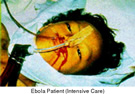
Even government programs are subject to the logic of the industry in which they’re embedded, and TIME Magazine reports that the US federal government’s $5.6 billion, 10 year Project Bioshield may be finding that out the hard way.
Because bringing a new drug to market through the regulatory thicket can take 10 years and cost up to $800 million, and drug patents have fixed expiry periods, a drug company’s “pipeline” of potentially effective new drugs with large markets is its most important asset. As TIME notes, therefore, none of the big firms are keen on diverting research from potential blockbusters to drugs for exotic germs like ebola and smallpox (q.v. “The Demon in the Freezer“) which may be stockpiled and used only in an emergency. Companies are also leery of huge liability risks in the USA’s lawsuit-happy culture if biodefense vaccines and treatments are ever administered. Meanwhile, the smaller firms are finding the government contracting process too opaque and slow to be a reliable option. The result is a program with few awards, and no successes to date.
Of course, the folks TIME spoke to have arguments for funding their own (or the reporter’s) preferred pieces of the pie instead. Deserved cynicism aside, the lesson of industry dynamics as a critical factor to consider when designing a program should be clear. DefenseTech has further links and information, as well as its own clear political position on this subject.