

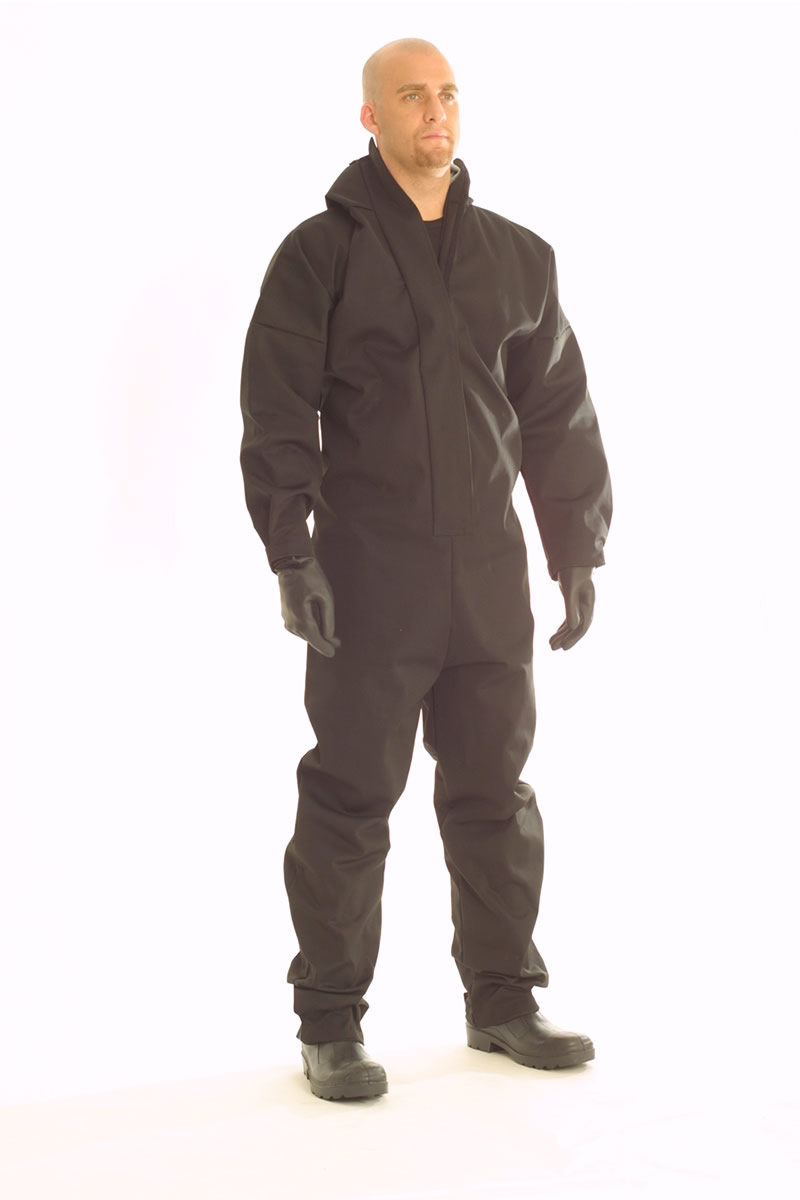
(click to view full)
Ever since World War 1, operations in chemical environments have been a standard scenario for many of the world’s armies. With the invention of nerve gas, the risks multiplied further. Its ability to kill on contract required complete exposure protection, and the dawn of the nuclear era added the ability to operate in irradiated areas as a key criterion for NBC(Nuclear, Biological, chemical) protective equipment like the USA’s MOPP and JSLIST gear. Even so, protection against ionizing radiation is limited.
Meanwhile, more peaceful uses of atomic energy were also creating a need for civilian clothing. Aside from those annoying lead bibs we all wear at the dentist, health professionals who use radiation treatments or work around X-rays can end up in a heavy shrouded lead vest with matching gloves and goggles. One South Florida physician hated them. In response, he eventually developed a fabric he calls Demron, a lightweight polymer composite of woven and non-woven materials comprising polyurethane, polyvinylchloride and a mixture of high-atomic-number salt particles that either absorb or disperse radiation. It’s cool to the touch, lightweight, and provides much more freedom of movement.
Tests at the Lawrence Livermore National Laboratory, the Georgia Institute of Technology, and the Columbia University College of Physicians and Surgeons have all been positive, and Dr. DeMeo’s firm Radiation Shield Technologies (RST) of Coral Gables, FL recently announced its first contract. NATO is funding a $250,000 contract for 250 Demron suits that will be deployed by the Ministry for Emergency Situations of the Republic of Belarus, which was affected by the nearby Chernobyl reactor incident in the Ukraine. That’s an incredibly small contract by DID’s standards, but the technology is interesting and shows promise for use in combination with suits like the JSLIST, or in first-responder body suits, tactical vests, suppression blankets, tents, and other military and home security applications.