

(click to view full)
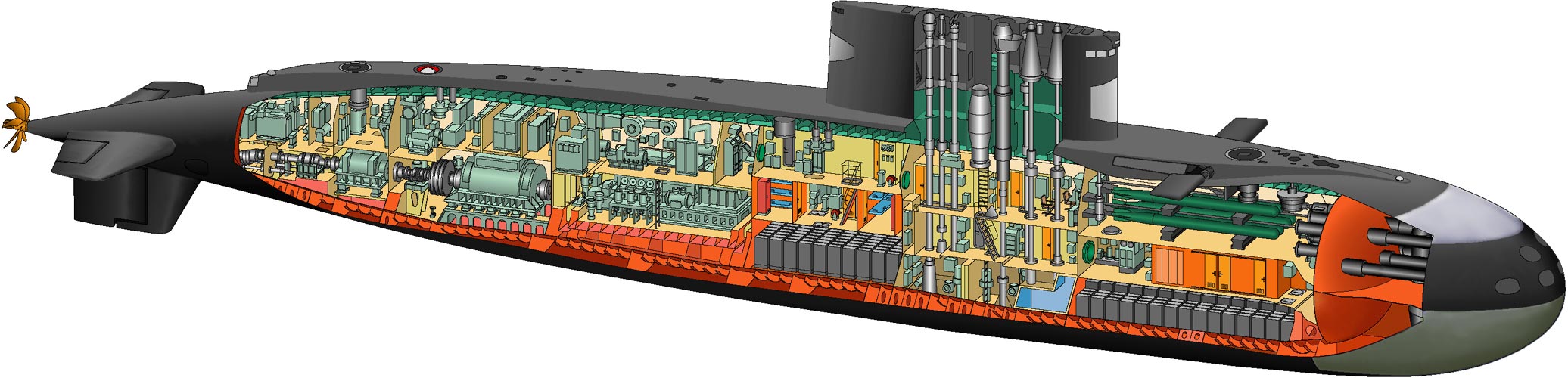
In April 2009, reports surfaced that Vietnam had agreed in principle to a deal with Russia for 6 of its diesel-electric Kilo/ Project 636 Class fast attack submarines. By December 2009, it was an inflection-point deal for a capability that Vietnam has never had before. By November 2013, the new submarines had begun to arrive.
Nor is that the only change in Vietnam’s military capabilities these days, courtesy of their long-standing relationship with Russia. There have been some outside deals for items like maritime surveillance floatplanes, and a Dutch deal will provide high-end frigates. For the most part, however, Vietnam’s new combat power in the air, at sea, and on land is coming from Russia. China’s displays of naval might are only part of the mosaic influencing Vietnam’s decisions in these matters.
Vietnam’s New Military Buys: Considerations & Conclusions
(click to view full)
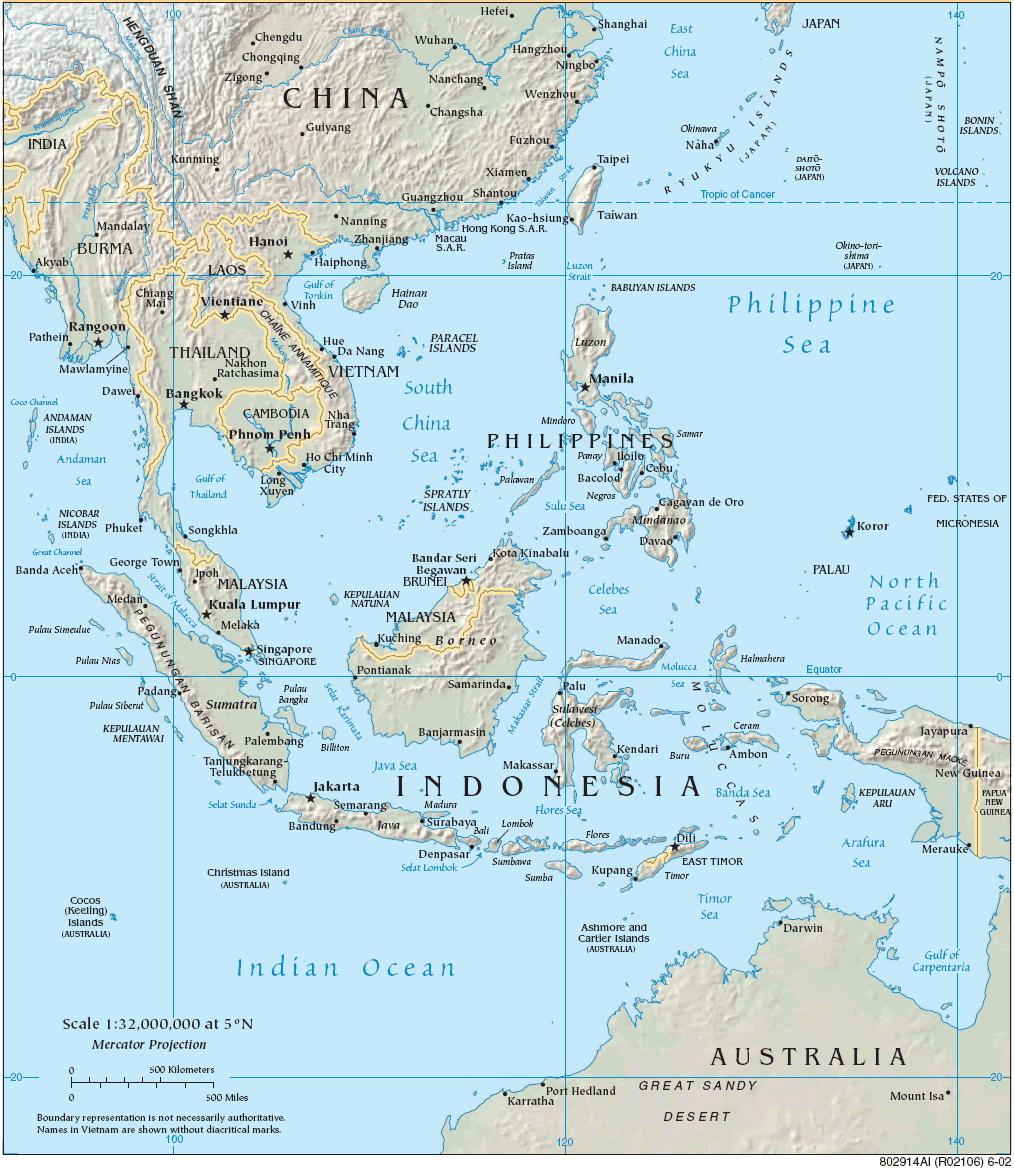
China’s 2009 display of naval might certainly marks an increased shift toward “forward defense” farther from its borders, a policy that must eventually include China’s trade lifeline to Vietnam’s south, through the Straits of Malacca. It also underlined a growing gap between China’s increasingly advanced ships and high capacity hovercraft, and Vietnam’s fleet of older Soviet and even American ships.
Ownership of the Spratly Islands remains very much in dispute, and Vietnam and China share a centuries-long history of mutual distrust and occupation. Recent punctuations of that animosity include the 1979 3rd Indochina War; this was followed by a significant skirmish in 1981, and a naval skirmish over the Spratly Islands in 1988. Today, Vietnamese protests over a Chinese bauxite mine in Vietnam, and media disobedience over the Spratly Islands issue, serve as a reminder that the 1989 treaty has not changed the relationship’s underlying fundamentals.
Key Platforms
Submarines

(click to view full)
China itself has adopted a strategy of building up a submarine force to counter a superior surface opponent (the US Navy). It’s entirely logical for Vietnam to adopt a similar approach vis-a-vis China, especially given that China’s lifeline of raw materials and exported goods from and to Africa, the Middle East, Europe, and parts of Asia passes right by Vietnam’s doorstep.
Aside from Thyssen Krupp Marine’s U209 family of submarines, the Russian Kilo Class are the world’s most widely exported subs. They’re known for a level of quietness that’s significantly better than other Russian designs, and have been produced in the Project 877EKM, and the Project 636M “Improved Kilo” / Varshavyanka Class variant that Vietnam is receiving. Countries operating or ordering these submarines include Russia, Algeria, China, India, Iran, Poland, and Romania.
There had been some speculation that Vietnam’s emphasis on shallow water operations, and proximity to the Straits of Malacca, might have made DCNS’ novel 885t, $200 million Andrasta Class of “pocket submarines” attractive. Instead, Vietnam appears to have opted for a longer-range, higher capacity 3,000t submarine from its tried and true Russia partner. They can be armed with 533mm heavy torpedoes, mines, and/or the 3M54 Klub-S family of missiles. The Improved Kilo Class boats will be named:
* HQ-182 Hanoi (delivered)
* HQ-183 Ho Chi Minh City (testing complete 2014-01)
* HQ-184 Hai Phong (launched 2013-08, arrival 2014)
* HQ-185 Khanh Hoa (arrival 2015)
* HQ-186 Da Nang (arrival 2015)
* HQ-187 Ba Ria-Vung Tau (arrival 2016)
Other Naval

(click to view full)
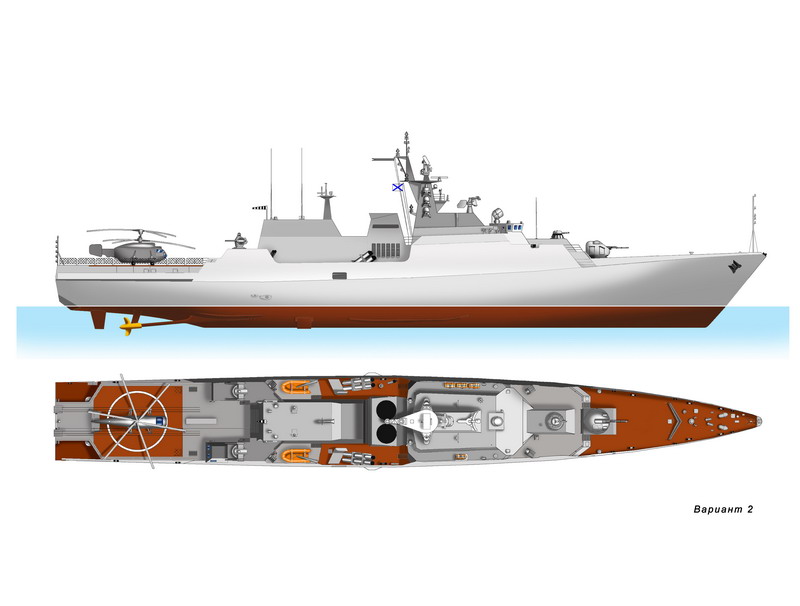
The new submarines are the most important new Russian addition to Vietnam’s capabilities, but they are not alone. A mixed set of 6 stealthy Gepard 3.9/Dinh Tien Hoang Class light frigates will add surface warfare and patrol punch. The first pair optimized for surface attack are already delivered, plus orders for 2 model emphasizing anti-submarine warfare, and 2 upgraded ships with undetermined capabilities as yet.
Gepard 3.9 frigates. These ships are a combined diesel-turbine export version of Russia’s Project 11611 (Tartarstan) frigates, which serve in the Caspian fleet. The 102m/ 2,100t design sits in the grey area between small frigates and large corvettes, and despite their 5,000nm endurance, they’re best suited to local maritime patrol and interdiction. Their stealth-enhanced ship design and 8 sub-sonic Kh-35E anti-ship missiles make them potentially dangerous adversaries in littoral regions; other armament includes 1 AK-176 76mm main gun, 2x AK-630 family multi-barrel 30mm automated guns, and 12-20 mines. There’s space at the back of the ship for a Ka-27 helicopter, but no hangar.
Air defense is handled by a Palma turret derived from the land-based SA-19 Tunguska, carrying twin AO-18KD multi-barrel 30mm cannons and 8 SOSNA-R 9M337 hyper-velocity laser beam rider missiles. An optical turret in the Palma’s center handles fire control, and a command module includes the 3Ts-99/Positiv ME1 target detection 3D radar. It’s mounted in place of the 9K33M “OSA-M”/SS-N-4 Gecko twin-launcher missile system installed on Russia’s frigates, and provides a maximum air defense reach of 10 km and 19,500 feet altitude, with a 2nd kill zone out to 4 km for the 30mm guns.
The ASW ships can be expected to carry 533 mm torpedo tubes, depth charges, and an RBU-6000 12-barreled Anti-Submarine rocket launcher.
This size and weapons array may not be much to get excited about, relative to other international frigate designs, but it will make them Vietnam’s most capable combat ships until the Dutch Sigma Class frigates arrive. There has been talk about including Shtil-1 air defense missiles with a 50 km range on the last 2 ships, in place of the Palma turret. Adding those would quadruple the ships’ air defense radius, but the ship’s overall changes would need to extend beyond that mounting.
Molniya/ Project 12418 FAC. These missile-armed Fast Attack Crafts, derived from the Tarantul-class Soviet corvette design, will help modernize a fleet that’s mostly made up of aging Soviet FACs, and captured American ships from the Vietnam War. The new ships are small, at just 550t full load, but they pack a very dangerous set of 8 sub-sonic Kh-35E anti-ship missiles, or 4 Moskit/ SS-N-22 Sunburn supersonic anti-ship missiles. Up to 10 may be built under the 2010 contract.
An agreement to license-build the Russian Kh-35 anti-ship missile adds extra impetus to Vietnam’s maritime modernization.
Air Force: SU-30MKs, and…?
(click to view full)
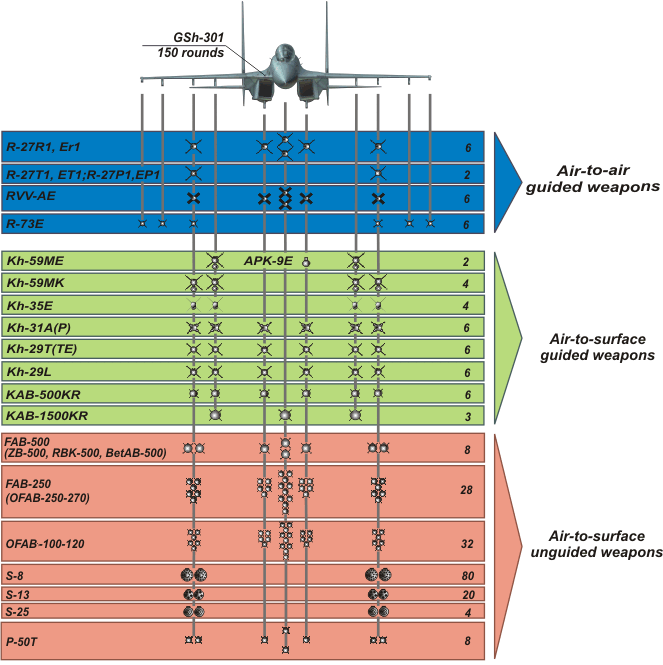
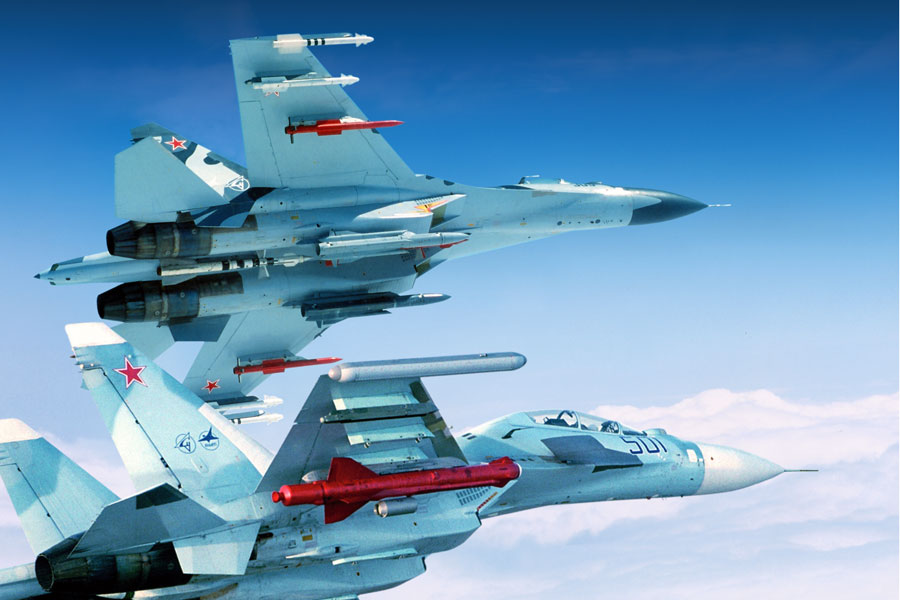
Vietnam’s air force is still reliant on the same core platform that formed their high end during the Vietnam war: the MiG-21. Swing-wing SU-22M4 strike and close air support fighters are only slightly newer. After that, there’s a sharp technological break to SU-27 air superiority fighters. Vietnam is slowly extending that modernized base with newer multi-role SU-30 planes from the same fighter family, strengthening air defenses and adding a long-range strike capability. They need that kind of firepower, given China’s own set of SU-30/J-11s, and the existence of flash-points like the Spratleys far from the mainland. The question is how they manage to balance that qualitative improvement with the need for fighter numbers, as the MiGs and SU-22s age out.
Note that even the most modern fighters will be limited without AWACS/ AEW support for wider awareness and coordination, and patrol ranges around key disputed territories like the Spratlys will be limited without mid-air refueling platforms. The bad news is that Vietnam doesn’t have a lot of budget to spare, and its ground forces are also in need of significant upgrades. The good news is that options like the Airbus/IAI C295 AEW, BAe 146 tanker conversions, and IAI Bedek’s K-767 tanker conversion of used commercial aircraft are creating new lower-cost options.
Contracts and Key Events
This section covers only Vietnamese contracts with Russia. As the “Additional Readings” section notes, Russia is not Vietnam’s exclusive arms provider – but it is the country’s most important defense relationship.
2014 – 2017
May 1/17: Vietnam has started to take delivery of some components needed for the assembly of three RV-02 medium-range radars. The system is an improvement on the Vostok-E VHF radar made by Belarus, of which Hanoi bought 20 of the radars as an asymmetric warfare strategy against stealth fighters from China including the J-20 and J-31 over the disputed South China Sea. Acceptance and commission checks were conducted by engineers from Vietnam’s Examination Council of the PK-KQ Technical Institute.
April 18/17: A delegation from Vietnam’s Defense Ministry has visited the Kazan Helicopter plant in Russia, amid expressions of interest in procuring a number of civilian and military model helicopters for the South-east Asian nation. Models being sought include the Mi-17V-5, Mi-38 and Ansat helicopters, and the visit to the plant was in order to discuss terms of delivery. Vietnam has been in talks with several nations, including India and the US, over acquisitions of new defense platforms and training, as it looks to beef up capabilities to deter against neighboring China.
June 28/16: While the lifting of the US arms embargo on Vietnam may have led some to believe there would be an immediate rush to purchase US hardware, Hanoi seems more interested in acquiring weaponry from Japan instead. Kawasaki Heavy Industries’s P-3C maritime patrol aircraft, a license built version of the Lockheed Martin P-3 Orion, is currently being swapped out for the newer indigenous P-1 and offers a cheaper alternative to getting them second-hand from Lockheed Martin. Another advantage Vietnam hopes to tap into is Japan’s expertise in operating the P-3. The JMSDF has deployed its P-3s to Danang, Vietnam for exercises, and the Vietnamese have experience working with Japanese crew.
May 27/16: Just days after the lifting of the US arms embargo, Vietnam look like they may request F-16s and P-3 Orions from Pentagon’s excess defense articles (EDA) program. Hanoi may also look into purchasing US made UAVs alongside the aircraft to improve its air defense and maritime security capabilities in order to enhance its position in the South China Sea. It’s also likely that the government will look to achieve a similar P-3 deal given to Taiwan including torpedoes (banned under the embargo) and an F-16 EDA procurement given to Indonesia.
May 24/16: US President Barack Obama has announced the lifting of a decades long arms embargo on Vietnam. Speaking in Hanoi with Vietnamese President Tran Dai Quang and under a looming bust of Communist leader Ho Chi Minh, Obama said that the move will end a “lingering vestige of the Cold War” and pave the way for more-normal relations between the two countries. The move comes as Vietnam looks to recenter allies amid a growing spat with China over ownership of islands in the South China Sea, while also looking to lessen their reliance on Russian weapons manufacturers, factors that may make Hanoi one of Washington’s new best friends in the region.
January 5/16: Vietnam has received possession of two more Su-30MK2 fighters, bringing the current number now operated to to thirty two. Dubbed the King Cobra, the Vietnamese Air Force hopes to have this increased to thirty-six by the end of 2016. The latest order, for twelve jets, was signed in 2013 and worth $600 million. Flight training for the aircraft is being provided by the Indian Air Force, who also operate the Russian made aircraft in their own military. In the past, India has trained Vietnamese naval personnel in operating Russian Kilo-class submarines.
Dec 10/14: Submarines. HQ-184 Hai Phong is reportedly on its way to Vietnam, after technical acceptance was signed on Dec. 4. The rest of the project appears on track: sea trials for boat #4 started in June, while the keel of #6 was laid in May.
Source: Russia Beyond the Headlines: Admiralty Shipyards provide Vietnamese Navy with third Project 636.1 submarine, Vietnam media relaying Russian sources.
Dec 8/14: Fast Attack Crafts. HQ 377 and HQ 378, the first 2 of 6 Molniya fast attack, are handed over by Ba Son Corporation for induction by the Vietnamese navy. The ships had been tested in April and delivered in June. The government seems to support Ba Son’s request to build a new, more modern shipbuilding factory.
Sources: Nhan Dan: Ba Son Corporation urged to complete, hand over missile boats | Tuoi Tre News: Vietnam to boost defense development, improve military combat capacity | Vietnam Breaking News: Vietnam to build more Russian missile boats | Asitimes: Vietnam holds technical test for its first 2 domestically-made high-speed missile boats.
Aug 27/14: SU-30s. Russia & India Report says that negotiations are underway to deepen Vietnam’s training relationship with India, progressing beyond subs to include its 36 SU-30MK2 jets by 2015. Malaysia already trains with India, as their SU-30MKM jets have a lot in common with the IAF’s SU-30MKIs. Vietnam’s SU-30MKs lack canards and thrust vectoring, but India is a logical pairing:
“India and Vietnam are likely to sign a defence agreement, under which Vietnamese pilots will be trained to operate Russian-built Sukhoi fighters, sources in the Indian Defence Ministry told RIR. The agreement is likely to be signed when Indian President Pranab Mukherjee visits the Southeast Asian country in September. The details are being finalised during the on-going visit of Indian External Affairs Minister Sushma Swaraj to Vietnam, the sources said…. India will also consider the sale of the Indo-Russian BrahMos missiles to Vietnam [DID: q.v. Dec 3/13 entry], although a deal is not imminent, the sources added.”
Adding the air-launched, supersonic BrahMos to Vietnam’s arsenal would make Indian training the only sensible solution, while greatly increasing Vietnam’s strike reach and capabilities. Sources: Russia & India Report, “India to train Vietnamese pilots to fly Sukhoi fighters”.
April 23/14: Frigates. Russia’s Nudelman Precision Engineering Design Bureau confirms that the “People’s Army of Vietnam Navy” (Maoist heritage, much?) will equip its Project 11661 Gepard anti-submarine light frigates with the same Palma air defense and CIWS system that sits on the first 2 surface warfare frigates. The ships are scheduled for delivery in 2017, and given the space constraints involved in a 2,100t platform, it’s always interesting to see what can and can’t stay when they’re equipped for a new role. Sources: IHS Jane’s Navy International, “Vietnam to arm new Gepard-class frigates with Palma CIWS”.
April 1/14: Frigates. Vietnam’s 2nd batch of Gepard frigates are scheduled for delivery in 2017, according to Zelenodolsk Shipyard’s annual financial statements. That set is supposed to be optimized for anti-submarine duties. Sources: IHS Jane’s Defence Weekly, “Vietnam to receive two more Gepard frigates in 2017”.
Feb 27/14: Frigates. Vietnam has reportedly ordered 2 more Gepard Class/ Project 11661K frigates from Russia’s Gorky Shipyard, which will bring their fleet to 6.
None of the announcements discuss terms, or mention which variant Vietnam is buying this time. The small 2,100t frigates have space limitations, which forces some role-based equipment tradeoffs. Current orders involve 2 Gepards ordered in 2006 and optimized for surface strike with anti-ship missiles (q.v. March 5/11), plus 2 frigates ordered in 2011 and equipped as anti-submarine specialists (q.v. Dec 7/11). There have been unconfirmed reports that subsequent ships would add Russia’s SA-17 derived 3S90E Shtil-1 naval anti-aircraft missile system, providing much wider air defense out to 50 km. Sources: Vietnam.NET, “First of a New Class Patrol Ships Laid Down at Zelenodolsky Shipyard in Russia” | Defense Update, “First of a New Class Patrol Ships Laid Down at Zelenodolsky Shipyard in Russia” | Defense Studies, “Second Batch of Gepard Equipped with Sthil-1 Missile”.
2 more frigates
Jan 16/14: Submarines. Vietnam’s 2nd submarine, HQ-183 Ho Chi Minh City, completes operational tests in Russia and receives its checkout certificate. It will be loaded onto a barge, and is expected to arrive in Vietnam around May 3/14.
HQ-184 Hai Phong was launched on Aug 28/13, and is also expected to be delivered to Vietnam in 2014. HQ-186 Khanh Hoa is due in 2015, and HQ-185 Da Nang can be inferred as also arriving that year. HQ-187 Ba Ria Vung Tau is due in 2016. Sources: Bao Dat Viet, “Tau ngam HQ-185 Da Nang ha thuy ngay 28/3” | Thanh Nien News, “Vietnam’s second Russian submarine completes testing” | Vietnamnet, “Russia hands over the second submarine to Vietnam”.

(click to view full)
Jan 10/14: Tanks. Vietnam is reportedly investigating the possibility of upgrading at least some of their existing fleet of about 480 T-72 main battle tanks, and buying T-90s to begin replacing their force of almost 1,000 elderly T-55s. Due diligence has reportedly been done with India’s T-90s, which also face the ravages of hot climates.
The problem is cost. T-72 upgrades can be sourced from a number of countries besides Russia, but top of the line new tanks are costly. If new armored personnel carriers also have to be bought for Vietnam’s armored formations, the entire project gets very expensive very quickly. On the other hand, defeats on land are very, very expensive when you have a large and aggressive neighbor on your border, and a long history of animosity. Tanks may not be the whole answer, but Vietnam will have to spend money to upgrade its land forces in some way.
Vietnam’s armored forces include various models of Russian and Chinese equipment, which means their fleets are fragmented as well as old. Consolidation of any sort would be helpful, though their terrain means that light vehicles can be as important as heavy armor. Israel has been talking to Vietnam about military deals, and one wonders if they’ve discussed conversion of the T-55s into refurbished Achzarit heavy APCs. Sources: Tinnong, “Viet Nam xem xet mua xe tang T-90 cua Nga”.
Jan 3/13: Submarines. HQ-183 Hanoi is unloaded from the Dutch Rolldock Sea carrying vessel into Cam Ranh Bay, Vietnam. Sources: Vietnam.NET, “In pictures: Hanoi submarine arrives at Cam Ranh port” | Thanh Nien, “First Russian-made submarine arrives in Vietnam” (also several pictures) | Vietnam.NET, “Vietnam’s most modern submarine launched” | Taiwan’s Want China Times, “Vietnam receives its first Russian Kilo-class submarine”.
1st sub arrives
2012 – 2013
12 more SU-30MK2s; Kh-35 anti-ship missile partnership; Singapore partnership for submarine rescue; Vietnam will need help with training and maintenance.
(click to view full)
Dec 3/13: Weapons. Vietnam has reportedly placed an official request for a derivative of the Russian SS-N-26 Oniks missiles that already equip a couple of its shore batteries:
“Vietnam formally requested India to supply the Indo-Russian BrahMos cruise missiles at a meeting in New Delhi, informed sources told RIR. The request was made when Vietnam Communist party general secretary Nguyen Phu Trong visited the Indian capital, the sources said, adding that the Southeast Asian country was looking at enhancing security cooperation with India… During Phu Trong’s visits, requests were also made to India for submarine training and for conversion training for Vietnamese pilots to fly Sukhoi-30 aircrafts.”
The PJ-10 Brahmos is also a supersonic, radar-guided, medium-range anti-ship and strike missile. Vietnam’s current and planned ships aren’t good platforms for BrahMos, and Vietnam already has similar SS-N-26 shore batteries in place. A buy from India could deploy mobile shore batteries, but the most likely interest involves the developmental air-launched BrahMos, designed to be carried by SU-30 fighters. That would add about 300 km of strike range to Vietnam’s fighters, using a lethal threat to both enemy ships and shore installations. Deploying that combination would be almost as significant as Vietnam’s new submarines in shifting the South China Sea’s overall balance of power. Sources: Russia & India Report, “Vietnam looking to purchase BrahMos cruise missiles”.
Nov 7/13: Submarines. The Improved Kilo Class boat HQ-183 Hanoi is handed over to the Vietnam Navy in Russia, where its crew has been undergoing training. It will be loaded onto a barge on November 11/13, and prepared for shipment to Vietnam.
At the same time, representatives from Russia and Vietnam sign a document that will transfer a new submarine sailor training center in Cam Ranh Bay to the Vietnam Navy in January 2014, when the Hanoi and its cadre arrive at Cam Ranh Bay. By the end of 2014, Vietnam is expected to have 3 of its 6 ordered submarines. Sources: Vietnam Bridge, “Russia hands over Cam Ranh submarine sailor training center to Vietnam” | RIA Novosti, “Russia to Deliver 2 More ‘Black Hole’ Subs to Vietnam in ’14”.
Oct 25/13: Infrastructure. Vietnam officially inaugurates a maintenance line in Da Nang’s “Factory A32” for Su-27 and Su-30 fighters. Other countries have had real problems waiting for Russian support, so moving more of that support in-country will boost the fighter fleet’s availability. Sources: People’s Army Newspaper Online, “Maintenance line for Su-27 and Su-30 fighters unveiled”.
Sept 26/13: Infrastructure. Vietnam is committing to a ship repair facility in Cam Ranh Bay that can handle Russian ships by 2015. It’s a win for their ally, but Vietnam is also trying to turn Cam Ranh Bay into a broader maritime service center. US Military Sealift Command ships have received repairs and basic maintenance there over the last couple of years.
Strong naval maintenance capabilities for Russian designs is also a big asset to a force that operates Russian ships almost exclusively. Sources: RIA Novosti, “Vietnam Sets 2015 Deadline for Soviet, Russian Ship Repair Facility”.
Sept 24/13: Frigates. Russia’s Zelenodolsk shipyard has begun construction on Vietnam’s next Gepard Class 2,100t light frigates, which will be optimized for anti-submarine warfare instead of surface attack (q.v. Dec 7/11). Sources: RIA Novosti, “Russia Starts Building 2 Frigates for Vietnamese Navy”.
Sept 6/13: Submarines. Singapore and Vietnam sign a Memorandum of Agreement regarding submarine rescue. If there’s an accident involving a Vietnamese submarine, Singapore’s 85m, 4,300t submarine rescue and support ship MV Swift Rescue will steam over with its submersible rescue vessel, Deep Search and Rescue Six (DSAR 6).
Singapore operates its own set of ex-Swedish diesel-electric submarines: 4 old but modernized and “tropicalized” Challenger/ Sjoormen Class boats, and 2 modern Archer/ Vastergotland Class Air Independent Propulsion boats that received similar treatment. Sources: RSN – Assets – Ships | RSN – Assets – Submarines | Singapore MINDEF, “Republic of Singapore Navy and Vietnam People’s Navy Sign Submarine Rescue Memorandum of Agreement”.
Submarine rescue agreement
August 21/13: SU-30s. Interfax and RIA Novosti report, and Vietnam confirms, that a new contract signed earlier this month will lead to the delivery of another batch of 12 SU-30MK2s by 2015. When added to 2 earlier contracts, Vietnam’s SU-30MK2 fleet will rise to 32 fighters.
Sources differ in their reporting of this contract’s value, worth $450 million or $600 million depending on whom you ask. The higher value is similar to the previous batch of 12 planes, and is probably the fully-loaded cost with support and parts, but excluding weapons. This is about the level of detail you can publicly expect from such countries. Communist Party of Vietnam.
12 SU-30MK2s
July 5/13: Submarines. Russia’s Interfax says that Vietnam’s 2nd submarine, Ho Chi Minh City, has returned to Admiralty Shipyards of St. Petersburg after series of sea trials. The 1st sub, Hanoi, was launched in August 2012 (vid. Aug 28/12 entry), and both are scheduled for handover to the Vietnamese Navy later in 2013. Earlier reports had targeted the end of 2012 for Haoi’s handover.
Note that the photograph in the linked article is not a Kilo Class sub. Thanh Nien News.
May 21/13: SU-30s. A Tuoi Tre News article offers some revealing information, alongside the classic Stakhanovite paeans.
“Living in rented houses, many of the [SU-30 maintenance] staff have to work as part time teachers in local schools to earn extra income for their families. They even use their own money to buy devices to test tools of their own invention before submitting ideas to leaders.”
Needless to say, economic conflicts of interest among the maintenance staff for your nation’s premiere air asset offers all kinds of potential vulnerabilities.
May 17/13: SU-30s. A Tuoi Tre News article discussed the propensity of Vietnamese pilots to stay in the aircraft and try to land, even if the failure is very serious. Materiel worth more than people? That does seem to be part of the attitude, but if so, it’s a long-standing predisposition:
“For example, three-star colonel and pilot Dao Quoc Khang managed to save his Su-27 when its engines broke down just seconds after taking off…. in April last year, captain and chief of Air Strike Regiment 935 Nguyen Xuan Tuyen and flight head Nguyen Gia Nhan saved a Su-30MK2 while they were on a regular patrol over East Sea and its engines suddenly stopped working when it was 600km from the coast. “….We told ourselves in our minds that we are responsible for keeping the US$50 million asset of the State in one piece. It is made from the labor of citizens. And we must protect it at any price, even if that means our lives,” pilot Tuyen said.”
In fairness, ejecting 600 km from the coast is near-certain death, given Vietnam’s limited search and rescue resources. So the brave and selfless-sounding justification doesn’t actually change their decision, and is the sort of thing you’d expect in an article that quotes political commissars with a straight face. Or is the mentality in the pilot’s justification real? That’s the interesting question.
March 29/13: Submarines. Rubin design bureau general director Igor Vilnit pledges to deliver the 1st Project 636M Improved Kilo Class submarine to Vietnam “in 2013 as scheduled.” Odd. Earlier reports from RIA Novosti (vid. Aug 28/12) had the handover taking place at the end of 2012.
The first boat has been built by Admiralteiskie Verfi shipyard in St. Petersburg, Russia, and is undergoing sea trials. All 6 boats are due for delivery by 2016. What isn’t addressed in these reports is Vietnam’s recruiting, training, infrastructure, and maintenance preparations. As Vietnam’s Australian neighbors have discovered the hard way, neglect of any of these 4 “invisible” elements leads to an undeployable submarine force. Vietnam has the advantage of beginning with a proven, tested submarine design, but in all other areas, they’re building from a very low foundation. RIA Novosti.
Oct 26/12: SU-34s? Phun.vn cites a report from the mysterious site “Periscope 2,” wherein it’s suggested that Vietnam plans to replace its fleet of 50 or so aged SU-22 strike aircraft with SU-34s, and that export approval will be given immediately, once it’s requested. The report also suggests that Saab JAS-39 Gripens will replace the VPAF’s even older fleet of 150 or so MiG-21s, that L-159s may replace existing L-39 trainers alongside Vietnam’s reported Yak-130 options, and that Vietnam may be interested in C295-AEW planes.
All of the above are possible, and militarily reasonable choices. Even the L-159 could be reasonable, if bought second-hand as a dual role trainer and MiG-21 fill in, to give the VPAF a dual Russian & Western fleet with appropriate weapon options. The thing is, “reasonable” doesn’t mean “likely”, and DID could find no other reports along these lines. Any of the non-trainer deals would be quite expensive, and Vietnam’s economy is a bit shaky these days. In addition, all of the non-Russian equipment would require export approval for American military items.
We throw this item in for reader interest, with a strong caution concerning its reliability. Phun.vn [in Vietnamese].
Aug 28/12: Submarines. Russia’s RIA Novosti reports that the Admiralteiskie Verfi shipyard in St. Petersburg has launched Vietnam’s 1st Project 636 diesel-electric submarine. The boat is due for handover to Vietnam by the end of 2012.
July 27/12: Political. Vietnam says that Russia can set up a base in Cam Ranh Bay, but it would be a maintenance base, not a military base. Vietnam is trying to promote Cam Ranh as a ship maintenance center, and has even worked on ships from US Military Sealift Command. Sources: RIA Novosti, “Vietnam Ready to Host Russian Maritime Base”.
June 21/12: Fighters. Vietnam is conducting air patrols over the disputed Spratly Islands, using its long-range Su-27 fighters.
“Hong Lei, spokesman for the Chinese foreign ministry, protested against the patrols by Vietnamese Su-27 fighters over the disputed Spratly islands in the South China Sea at a press conference in Beijing…. The flights by fighters from the Vietnam People’s Air Force over the Spratlys are routine and will continue, according to the Vietnamese military officials.”
State-owned China Radio International makes some valid points when it cites reasons not to be too concerned about Vietnam’s Su-27s: payload limitations, the lack of AWACS support for wider awareness and coordination, and the lack of mid-air refueling platforms. On the other hand, there’s no denying that the Su-27s and Su-30s offer Vietnam a leap forward in both air superiority and strike roles. With that foundation in place, it’s possible for Vietnam to begin closing some of the other gaps in coming years. Sources: Taiwan’s Want China Times, “Beijing downplays threat of Vietnam’s air force”.
March 29/12: Sub training from India? Singapore’s Asia Times:
“For full-scale underwater warfare training, it appears Vietnam will turn to India. The two countries have been engaged in high-level military talks with special emphasis on maritime cooperation. Since the Indian navy also employs Kilo-class submarines, New Delhi would be well suited to train Vietnamese crews. China responded warily to this bilateral warming trend in both words and deeds when a Chinese warship reportedly confronted an Indian navy vessel leaving a Vietnamese port in August… Moscow will reportedly build a submarine base for Vietnam at strategic Cam Ranh Bay, a one-time American and later Soviet naval base…”
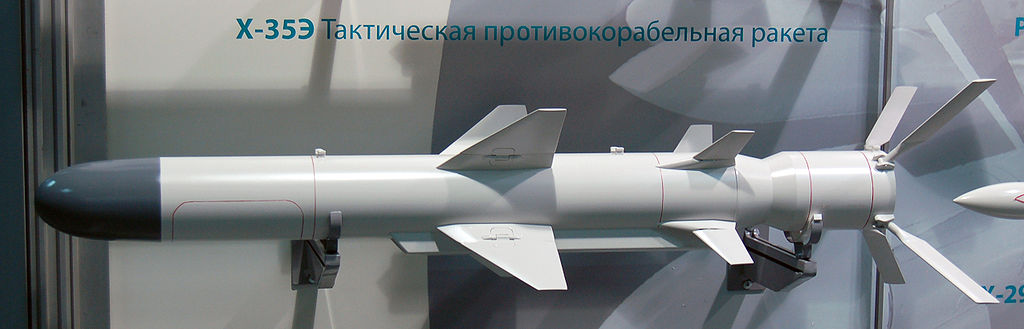
Feb 15/12: Kh-35. RIA Novosti reports that Vietnam will begin joint production of a modified SS-N-25 Switchblade/ Kh-35 Uran subsonic anti-ship missile, whose base characteristics are similar to the American xGM-84 Harpoon. The project is described as similar to joint Russian-Indian production of the PJ-10 BrahMos missile, which was derived from the supersonic SS-N-26 Yakhont.
The Kh-35 can be launched from Ka-27 naval helicopters, ships, or shore batteries, but haven’t been integrated with Vietnam’s new SU-30MK model fighters, or its forthcoming Kilo Class submarines. Even so, this joint venture will give Vietnam assured low-cost production and support for an important element of naval deterrence in the South China Sea.
The Kh-35 looks set to become Vietnam’s mainstay anti-ship missile for its navy, and a joint project also gives them a base to make changes. India undertook to integrate Brahmos with its Su-30MKI fighters, for example, and Vietnam’s air force may have similar plans for their modified Kh-35 project. The urge to use locally-built weapons in new ships also seems to be deep-seated. Kilo Class submarines are already configured for 3M54 Klub family (SS-N-27) missiles, and only time will tell what the Vietnamese plan to do with this shared technology.
KH-35 missile partnership
2009 – 2011
Vietnam orders 6 Improved Kilo Class subs, 12 SU-30MK2 fighters, 2 Gepard Class ASW frigates; 2 Gepard/ Dinh Tien Hoang Class surface warfare frigates delivered; Vietnam begins building Molniya FACs locally; China’s underwater neighborhood getting crowded.
(click to view full)
Dec 7/11: ASW Frigates. Rosoboronexport and the Zelenodolsk Gorky Plant have finished shipping Vietnam’s 1st 2 Gepard Class frigates, and have just signed a contract for 2 more. That isn’t a surprise, as reports from March 2010 were already discussing a set set. Unlike the first set, however, this next 2 will concentrate on anti-submarine warfare, rather than surface attack missions.
Vietnam’s example may also be creating ripples in the region. Gorky Plant Deputy Director Sergei Rudenko adds that Vietnam’s neighbor Cambodia has expressed its own interest in the Gepard Class. Interfax-AVN.
2 more Gepard Class frigates
Oct 25/11: FACs. Vietnam is beginning to get assembly kits and components for its Molniya/ Project 12418 missile-armed fast attack craft. They’re working under the technical supervision of the “Almaz” Central Maritime Design Bureau in St. Petersburg, and the OJSC Vympel shipbuilding plant. Russia has built 2 for Vietnam, and Vietnam is building its first 4 boats of class, with an option for 4 more. The ships are small, at just 550t full load, but they pack a very dangerous set of 4 Moskit/ SS-N-22 Sunburn supersonic anti-ship missiles, or 8 of the sub-sonic Kh-35E anti-ship missiles.
Deliveries of parts to Vietnam, which began in 2010 under a $30 million contract, will continue through 2016. ITAR-TASS (Google Translate).
Vietnam begins assembling FAC boats
Oct 20/11: Patrol boats. Vietnam signs acceptance certificates for the last 2 of 4 Project 10412/ Svetlyak Export Class patrol boats at Almaz Shipbuilding Firm. The 390t class was originally developed for the KGB’s border guards, mounting an AK-176M 76.2mm cannon, an AK-630 30mm gatling gun, and a mount for very short range SA-16/SA-18 anti-aircraft missiles.
The first 2 ships were delivered to Vietnam in 2002, and the 2 follow-on order ships were laid down in June 2009. Unfortunately, repeated issues with key components, including the Arsenal AK-176M gun mounts, delayed construction. The ships will be moved to St. Petersburg, and embarked on a transport ship for shipping to Vietnam. RusNavy.
Aug 22/11: Frigates. The Gepard Class frigate Ly Thai To [HQ-012] arrives at Cam Ranh Bay. Sources: Defense News, “Vietnam Receives Second Russian-Made Frigate”.
March 5/11: Frigates. The Vietnamese Navy officially accepts the 1st Gepard class frigate from Russia, naming it the Dinh Tien Hoang, after the first Vietnamese emperor. Vietnam became the class’ 1st export order with a contract for 2 ships in December 2006, and the HQ-011 Dinh Tien Hoang was launched in August 2009. HQ-012 Ly Thai To, the 2nd frigate in the order, was launched in March 2010, and has been in sea trials since August 2010.
The Gepard 3.9 ships are a combined diesel-turbine export version of Russia’s Project 11611 (Tartarstan) frigates, which serve in the Caspian fleet. The 102m/ 2,100t design sits in the grey area between small frigates and large corvettes, and despite their 5,000nm endurance, they’re best suited to local maritime patrol and interdiction. Their stealth-enhanced ship design and sub-sonic Kh-35E anti-ship missiles make them potentially dangerous adversaries in littoral regions, and other armament includes 76mm and 30mm guns, 533mm torpedoes, depth charges, and a 9K33M “OSA-M”/SS-N-4 missile system for air defense. This size and weapons array may not be much to get excited about, relative to other international frigate designs, but it will make them Vietnam’s most capable combat ships. DatViet report [Google translate] | AvWeek Ares.
Gepard Class frigate accepted
March 27/10: RIA Novosti reports that Chinese admirals are beginning to grasp the implications of advanced diesel-electric attack submarines in the hands of several regional neighbors, located right near China’s shipping lifelines.
Vietnam’s Kilo Class, Malaysia’s Scorpene Class, and Singapore’s Vastergotland Class submarines are all on China’s Southeast Asian radar. In the background, Indonesia continues to express its intent to buy Kilo Class submarines of its own.
Postscript: Indonesia eventually ended up buying a modern South Korean variant of the German U209.
March 25/10: Submarines. It’s good to be a good customer. Russian defense minister Anatoly Serdyukov says that Russia will help Vietnam build the submarine base it needs to house its new Kilos, provide a loan to help buy rescue and auxiliary vessels and planes for Vietnam’s navy, and build a ship repair yard. That yard would benefit the Russians, too, as it could service visiting Russian navy ships.
Vietnam’s geographic position could make its service yard attractive to other navies as well, giving other countries even more reason to focus on relations with the Southeast Asian nation. A good service yard could wind up being as important to Vietnam’s geo-political position as the submarines themselves. Associated Press | China’s Xinhua.
March 23/10: Russia’s Voice covers growing ties between Russia and Vietnam, which is becoming one of Russia’s biggest arms customers:
“Vietnam backs multilateral cooperation with Russia especially in military defense, stated Vietnam’s president Nguyen Minh Triet during talks with Russia’s Defense Minister Anatoly Serdyukov in Hanoi. “Each of Russia’s victories is like our own, the president said, and we support Russia in the Georgian conflict.” The president said that the US decision not to deploy its ABMs in Eastern Europe is also a victory for Russia… Anatoly Serdyukov noted that Vietnam is Russia’s strategic partner and Russia is ready to train Vietnamese personnel at the Russian Defense Ministry’s academies.”
March 16/10: Frigates. Russia’s Zelenodolsk PKB shipyard launches Vietnam’s 2nd Project Gepard 3.9 light frigate into the River Volga. In May 2010, the warship will sail to St. Peterburg and then travel by sea to Vietnam for sea trials. The 1st ship in the order was launched in August 2009.
A separate report indicates that Vietnam could be preparing to order 2 more light frigates of this type. ITAR-TASS [in Russian] | ITAR-TASS Arms [in Russian].
Feb 10/10: SU-30s. Interfax reports the signing of a formal contract between Russia and Vietnam for 12 SU-30MKK fighters, for delivery in 2011-2012, plus associated weapons, service, and support. The deal is reportedly worth $1 billion, and is signed the day after a Russian contract to build Vietnam’s first nuclear plant.
The exact state of the contract is less than clear, so we’re sticking with Dec 15/09 as the date. Agence France Presse | AP | RT | Straits Times.
(click to view full)
Dec 15/09: Shortly after Vietnam makes its defense white paper public, reports indicate that it has ordered 6 Improved Kilo Class submarines and 12 SU-30MKK fighter jets from Russia, during a visit to Moscow by Prime Minister Nguyen Tan Dung.
Russia’s Interfax news agency quoted an unnamed Defense Ministry official on Dec 15/09, who said the submarines were improved “Project 636” types, and gave the deal’s value at of $2 billion, with delivery taking place at a rate of 1 submarine per year. The Sukhoi Su-30MK2 fighter jet deal was valued at $600 million, and would raise Vietnam’s SU-27/SU-30 family fleet to 20 fighters.
Vietnam also invited Russia to help build its 1st nuclear power plant, and hopes to begin construction in 2014 and put it on line by 2020. The country has been growing its manufacturing capacity in recent years, partly at China’s expense, and needs to improve its electric grid in tandem. Vietnam’s Thanh Nien News | RIA Novosti | Agence France Presse | Associated Press | BBC News | China’s Xinhua | Agence France Presse analysis.
12 SU-30s & 6 Improved Kilo submarines
Dec 4/09: Russia’s RIA Novosti reports:
“According to the Vedomosti business daily, Moscow and Hanoi are close to sign deals on the purchase of six Kilo class diesel-electric submarines and 12 Su-30MK2 Flanker-C multirole fighters. The submarine contract, worth an estimated $1.8 billion, includes the construction of on-shore infrastructure and training of submarine crews and will be the second largest submarine contract concluded by Russia since the Soviet era after the 2002 deal on the delivery of eight subs to China.”
April 27/09: Initial media reports. The submarine deal’s value is reported to be around $1.8 billion, and the SSKs would be built at Admiralty Shipyards in St. Petersburg. In addition to submarines, the Vietnamese Navy order is said to include new heavyweight torpedoes and missiles (most likely Klub family) to arm them.
This is a big step forward. There have been rumors that Vietnam owns 2 ex-Yugoslav mini-submarines for use in commando operations, but the Vietnamese People’s Navy doesn’t own any full size submarines that can take on enemy subs and ships.
Some of the Russian reports note that these 6 submarines were once planned for Venezuela, adding that Russia’s Rosoboronexport canceled the deal following Hugo Chavez’ meeting with US President Barack Obama. That must be judged an extraordinarily thin public rationale for canceling a $1.5+ billion purchase. A sinking global oil market, and Venezuela’s growing economic dependence on its declining oil production for revenue, are far more likely reasons for any delay and/or shift. See: RIA Novosti | MosNews | St. Petersburg Times | Singapore Straits Times | Defpro.
Additional Readings
* Haze Grey – World Navies Today: Vietnam
* Naval Technology – SSK Kilo Class (Type 636) Attack Submarine, Russia
* Rubin Design Bureau – Project 636. “Improved Kilo”/ Varshavyanka Class.
* Zelenodolsk Shipyard – Frigate of 11661 project “Gepard – 3.9”
* Air Force Technology – Su-30MK Multi-Role Two-Seater Fighter Aircraft, Russia
* Army Technology – T-72S Main Battle Tank, Russia
* The Armor Site – Russian T-90/T90S Main Battle Tank
* Military Today – Achzarit Heavy Armored Personnel Carrier. An option for converting the large fleet of T-55s?
News and Views
* Unbiased Jottings (April 1/13) – Maritime Contours: India – Vietnam & India-Japan Relationships. The site is by Indian Rear Admiral S Kulshrestha (ret.)
* Tuoi Tre News (May 21/13) – Caretakers of Sukhoi jet fighters in Vietnam
* Tuoi Tre News (May 17/13) – The ‘Air cobra’ of Vietnam’s air force
* The Diplomat (Nov 1/12) – Vietnam’s Underwater Anti-Access Fleet
* Reuters (Feb 10/12) – Vietnam seen courting Western arms deals. Israel is also in this mix, and can leverage experience with nearby clients in India, Thailand, and Singapore.
* DID (Oct 30/11) – More than the Sum of Its Parts: Dutch SIGMA Ships for Vietnam?
* DID (May 5/10) – Vietnamese Navy Orders DHC-6 Twin-Otter 400s. The durable float planes are a clever choice for short-range maritime surveillance.
* Reuters (Dec 14/09) – U.S. eyes Vietnam, Libya arms sales. The focus at this point is on “non-lethal” equipment, in Vietnam’s case, the focus is on maritime patrol aircraft, coastal radar systems, and English language training..