

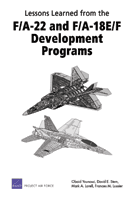
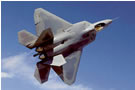
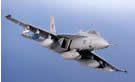
Since the late 1980s, the U.S. Air Force has pursued the F/A-22 Raptor supersonic stealth fighter that incorporated numerous breakthrough technologies, while the US Navy developed the F/A-18E/F Super Hornet based on the existing F/A-18. Unsurprisingly, the F/A-22 program has experienced significant cost growth and schedule delays and is still in the testing stage. In contrast, the Super Hornet completed its development on cost and without significant delays, and has already been used in combat.
RAND’s Project Air Force looked at both programs with the intent of understanding how each project’s history turned out the way it did, what underlying factors might be at work, and what lessons might be learned.
The RAND Project Air Force team who compiled this report for the USAF examined the acquisition strategies employed by the F/A-22 and F/A-18E/F programs from their inception through the demonstration and validation (Dem/Val) and EMD phases. While they acknowledge the qualitative differences between the two projects, they also believe that their divergent project histories have lessons to teach acquisition decision-makers.
Some of these ‘lessons’ will seem blatantly obvious; nevertheless, the details of their execution and complications within each program make for useful reading. Recommendations include:
* Early, realistic cost and schedule estimates set the program on the right path for the rest of the development program.
* A stable development team structure, proper team expertise, clear lines of responsibility and authority, and a lead contractor responsible for overall program progress are critical to program success.
* An experienced management team and a group of contractors with prior business relationships (as opposed to a new partnership/ consortium/ team) help eliminate early management problems.
* Concurrent development of new technology for the airframe, avionics, and propulsion adds significant risk.
* Reducing the cost and risk of avionics should be a key focus of the concept development phase. Avionics is a considerable cost driver of modern weapon systems, and new concepts should be demonstrated along with the new airframe designs.
* Preplanned, evolutionary modernization of high-risk avionics can reduce risk and help control costs and schedules.
* Careful monitoring of airframe weight is important. Airframe weight instability is an early indicator of problems.
* Earned value management (EVM) data should be used to monitor and manage program costs at the level of integrated product teams (IPTs).
The RAND site has a home page for the report can be found here, along with links to the PDF format summary and even the entire 100-page PDF format report.
Additional Readings
* The Project On Government Oversight (Oct 18/05) – RAND New F/A-22 Report. A few related thoughts and links via their blog.
* D-N-I (Dec 16/99) – Why the Super Hornet is a Super Failure. Takes a very different view than RAND did.