


(click to view full)
The Space Based Infrared System (SBIRS)-High satellite program is a key component of the USA’s future missile alert system, designed to give maximum warning and monitoring of ballistic missile launches anywhere in the world. The new satellites will replace the existing Defense Support Program (DSP) fleet. Their infrared sensors have 3x the sensitivity of DSP and 2x the revisit rate, while providing better persistent coverage.
Unfortunately, the program has been beset by massive cost overruns on the order of 400%, technical challenges that continue to present problems, and uncertainties about performance. Despite these problems, the U.S. Air Force is proceeding with the program, and has terminated potential alternatives and supplements. However, as part of a January 2015 effort to institute cost reforms, the Air Force will weaken requirements for the program, and at least three other major procurement programs.
SBIRS – High: Current State
[youtube:v=mDTnl4E9FiY]
The SBIRS team is led by the Infrared Space Systems Directorate at the U.S. Air Force Space and Missile Systems Center, Los Angeles Air Force Base, CA. Lockheed Martin Space Systems in Sunnyvale, CA is the SBIRS prime contractor. Northrop Grumman Electronic Systems in Azusa, CA as the payload subcontractor, and Lockheed Martin Information Systems & Global Services in Boulder, CO is the ground system subcontractor.
SBIRS-High GEO are satellites, while SBIRS-High HEO (High Elliptical Orbit) are payloads hosted on spacecraft with classified launch dates. At present, 2 HEO are in service, and a 3rd HEO payload is prepping for launch. The first SBIRS High HEO payload was declared operational in November 2008.
The first SBIRS-High GEO satellite launch was pushed back many times, thanks to significant program delays that moved the initial launch back from 2002. SBIRS GEO-1 wasn’t delivered to Cape Canaveral until March 2011, and the launch actually took place in May 2011.
Increment 1 of the program used the SBIRS Control Segment and User Segment, operating with DSP satellites, to handle current military capability. Initial Operational Capability was attained Dec 18/01, consolidating the operations of the “DSP” and “Attack” and “Launch Early Reporting to Theater” missions.
It was eventually joined by SBIRS payloads in space, currently referred to as “SBIRS Effectivity 5,” which has been deemed both operationally effective (performance) and operationally suitable (maintained and supported). As of March 2014, SBIRS HEO-1 and HEO-2 are in use, and so are SBIRS GEO-1 and GEO-2.
The program’s final state is Increment 2, which is covered below.
SBIRS: Budgets & Next Steps
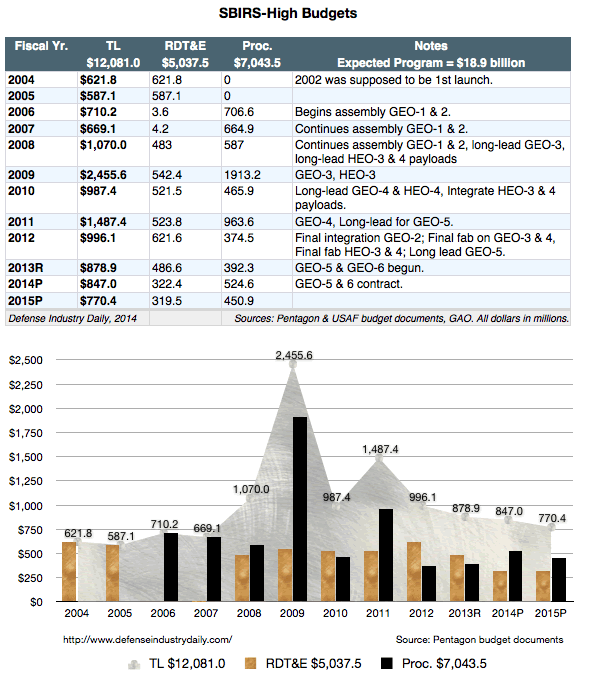
About 12 years after the 1st SBIRS satellite was supposed to launch, the Pentagon still has a lot of work to do en route to the final Increment 2. That state will include 2 hosted SBIRS HEO payloads, and 4 satellites in geosynchronous orbit. Increment 2 also involves new ground system software and hardware for consolidated data processing across DSP and SBIRS, and improved SBIRS performance.
The first step is fixing GEO-1. Other software problems took precedence, so GEO-1 launched without event recovery software intended to re-establish ground control in case of a failure. Given successful recovery software testing of GEO-2, the USAF plans to upload the software to GEO-1 in Q4 2014.
SBIRS GEO-3 and GEO-4 have run into a number of problems that have added costs and delays: GEO-3 will be delivered in September 2015 now.
The Block 10 mobile ground system (MGS) software increment is expected to be delivered in March 2016. It will let the USAF process integrated data from the DSP, SBIRS HEO sensors and SBIRS GEO, with fully-tuned sensor data that’s cleared of background noise like irrelevant light sources. The tuning feature was originally supposed to wait until 2018.
GEO-4 will be delivered in September 2016 now.
MGS Block 20 software is expected to achieve certification in June 2018. The program plans to fully meet operational requirements in 2019.
GEO-5 and GEO-6 will be in storage for quite some time after they’re delivered, since they’re scheduled to replace GEO-1 and GEO-2 at the end of their useful lives. These satellites will feature further improvements, including a Unified S-Band uplink frequency with a modulation scheme to the existing L-Band Space to Ground Link System.
Alternatives, Interrupted

According to US GAO auditors, the SBIRS program has suffered from immature technologies, unclear requirements, unstable funding, underestimated software complexity, poor oversight, and other problems that have resulted in billions of dollars in cost overruns and years in schedule delays. The cost of the program has ballooned from an original $4.8 billion estimate to over $18.8 billion. Normally, this kind of performance would produce program cancellation, but the USAF had no alternatives for a mission that must be carried out: early detection of ballistic missiles, and detection of nuclear detonations.
In 2006 the USAF finally began a parallel effort known as the Alternative Infrared Satellite System (AIRSS). AIRSS/3GIRS was intended to ensure that the nation’s missile-warning and defense capabilities could be sustained, even in SBIRS-High failed. It showed early progress, and could have provided a less expensive supplement to the SBIRS-High constellation. By the time 3GIRS began to show progress, however, SBIRS was beginning to show adequate performance, and was now too far advanced to cancel. The USAF has continued to develop some of the ideas in 3GIRS via research and demonstrations involving commercially hosted payloads, but SBIRS will fulfill the missile warning role going forward.
Contracts and Key Events
SBIRS acquisition is led by USAF Space and Missile Systems Center’s Infrared Space Systems Directorate at Los Angeles AFB, CA and USAF Space Command operates the system from Colorado. Lockheed Martin is the SBIRS prime contractor, and Northrop Grumman is the payload integrator.
Note that many of the program’s problems occurred before FY 2009. They are not included here for the time being.
FY 2014 – 2018
Contract for GEO-5 and GEO-6.
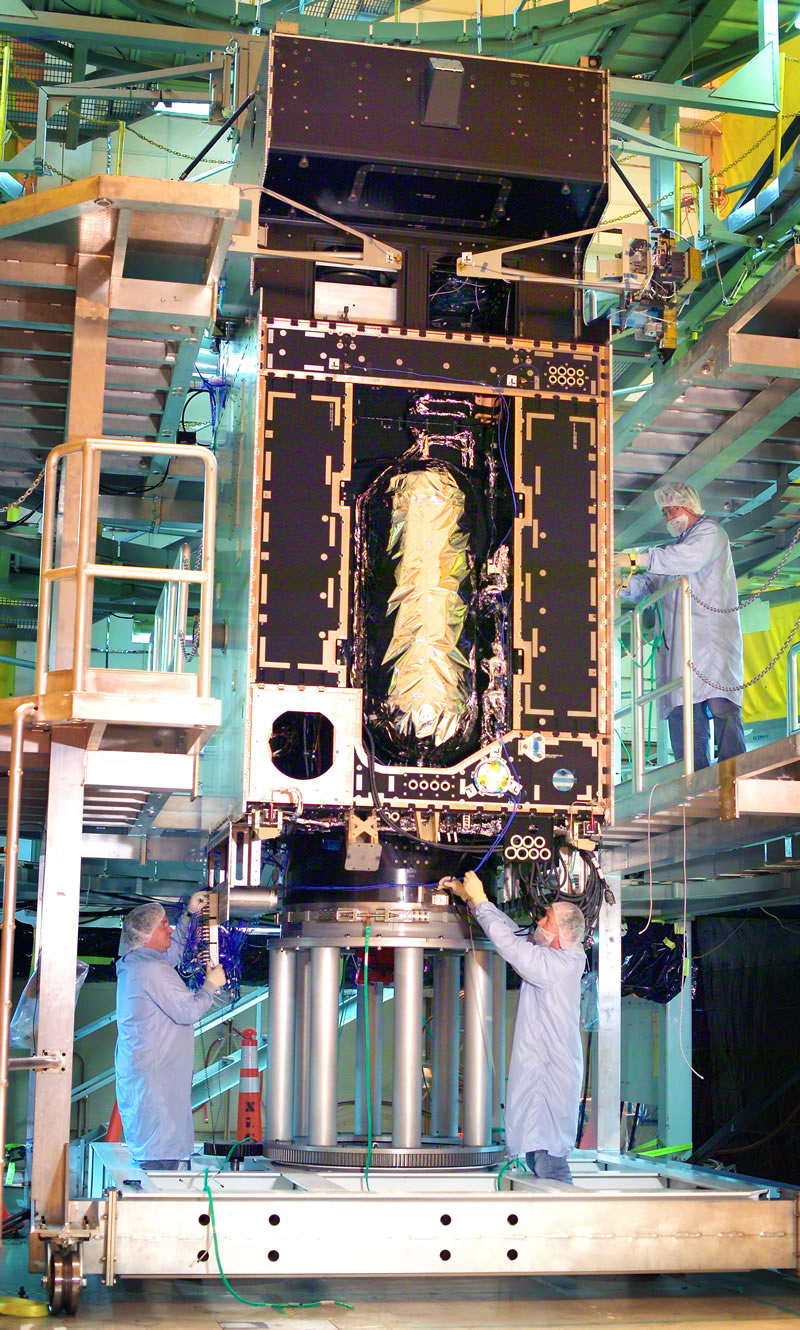
(click to view full)
FY 2018-2019
February 21/19: Satellite contract to ULS The US Air Force contracted United Launch Services with $441.8 million for launch services to deliver the Silent Barker, BIRS GEO-5, and SBIRS GEO-6 missions to their intended orbits. United Launch Services is a joint venture of Lockheed Martin and Boeing that provides launch services for aircrafts and missiles. Silent Barker is a classified space situational awareness program by the Air Force Space Command and the National Reconnaissance Office. SBIRS (Space Based Infra Red Sensor) GEO is the geostationary component of the SBIRS-High program. The SBIRS-High satellite program is a key component of the USA’s future missile alert system, designed to give maximum warning and monitoring of ballistic missile launches anywhere in the world. The current contract will include launch vehicle production, mission integration, mission launch operations/spaceflight worthiness, and mission unique activities for Silent Barker and SBIRS GEO-5, with an option for an additional SBIRS GEO-6 launch service. Work will be performed at Centennial, Colorado; and Cape Canaveral, Florida. Silent Barker is expected to be completed by March 2022, and SBIRS GEO-5 is expected to be completed by March 2021. The Air Force divided $739 million in launch contracts between United Launch Services and SpaceX for six national security missions slated for 2021-2022.
August 16/18: SBIRS replacement underway The US pace and Missile Systems Center is ordering new missile defense satellites. Lockheed Martin will manufacture the three Next Generation Overhead Persistent Infrared Geosynchronous Earth Orbit Space Vehicles at a cost of $2.9 billion. The satellites will be a follow on to the US Space Based Infrared System (SBIRS) program. The SBIRS architecture includes a resilient mix of satellites in geosynchronous earth orbit (GEO), payloads in highly elliptical orbit (HEO), as well as ground-based hardware and software. The integrated system supports multiple missions simultaneously, while providing robust performance with global, persistent coverage. The Next-Gen OPIR will succeed the current SBIRS by providing improved missile warning capabilities that are more survivable against emerging threats. This order supplements a similar contract to be awarded to Lockheed Martin, that sees for the production of two polar space vehicles. The contract encompasses a variety of tasks ranging from requirements analysis to a system critical design review. Work will be performed at Lockheed’s facility in Sunnyvale, California, and is expected to be completed by April 30th, 2021.
FY 2009 – 2015
March 3/15: The Air Force Space and Missile Systems Center finished a three-day test of the Increment 2 ground control system for SBIRS. The Increment 2 system features a single control center to operate all three types of satellite, with a single backup system.
Jan 23/15: With U.S. Commerce Department commercial satellite image resolution limits being somewhat lifted starting in February, the National Geospatial-Intelligence Agency (NGA) is moving to exploit what is expected to be a flood of additional imagery resources with quicker update frequencies.
Jan 16/15: As part of its effort to institute cost reforms, the U.S. Air Force will weaken requirements for the space-based infrared system (SIBRS), among others.
Sept 30/14: GEO-4. Northrop Grumman delivers the SBIRS GEO-4 satellite payload, which will now be integrated with the SBIRS GEO-4 satellite bus in final assembly, integration and test at Lockheed Martin’s Sunnyvale, CA facility. Sources: Lockheed Martin and NGC Sept 8/14, “Lockheed Martin and Northrop Grumman Deliver Payload for Fourth SBIRS Missile Defense Early Warning Satellite”.
Sept 30/14: Support. Lockheed Martin Space Systems in Sunnyvale, CA receives a $44.2 million contract modification for SBIRS FY 2014 studies and systems modifications, contractor logistics support, and sustainment of the baseline system. $21.1 million in FY 2014 USAF missile budgets are committed immediately.
Work will be performed in Boulder, CO; Sunnyvale, CA; Azusa, CA; Buckley AFB, CO; and Schriever AFB, CO, and is expected to be complete by Sept 30, 2015. The USAF Space and Missile Systems Center Infrared Space Systems Directorate Contracting Division, El Segundo, CA, manages the contract (FA8810-13-C-0017, PO 0029).
Sept 30/14: Support. Lockheed Martin Space Systems in, Sunnyvale, CA receives a $37.4 million contract modification to for SBIRS studies directed in response to deficiencies, failures or evolving requirements; changes in external user data needs or interfaces; or changes in technology. All funds are committed immediately, using FY 2013 USAF O&M budgets.
Work will be performed at CO Springs, CO; Boulder, CO; and Greely, CO, and is expected to be complete by Sept 30/16. Fiscal 2013 operations and maintenance funds in the amount of $37,438,157 are being obligated at the time of award. Space and Missile System Center, Los Angeles AFB, CA, manages the contract (FA8810-13-C-0002, PO 0031).
Sept 5/14: GEO-5/6. A $42.9 million contract modification will improve GEO-5 and GEO-6 with dual-band telemetry, offering better tracking and communications. This includes the addition of a Unified S-Band uplink frequency, and a modulation scheme to the existing L-Band Space to Ground Link System uplink. Lockheed Martin will redesign the interfacing, software, power, thermal, and structures accordingly for the new transponder box and cabling. $10.7 million in FY 2012 USAF missile budgets are committed immediately.
Work will be performed at Sunnyvale, CA, and is expected to be complete by July 31/21 (FA8810-13-C-0001, PO 0003).
June 24/14: GEO-5/6. Lockheed Martin Space Systems Co. in Sunnyvale, CA receives a $1.8635 billion contract modification, in order to finish SBIRS Geosynchronous Earth Orbit 5 and 6 satellites, and provide performance incentives. The contract modification also includes adding options for acoustic testing, launch vehicle integration, launch and early on-orbit testing, and contractor operations support. Total contracts announced to date for SBIRS GEO-5 and GEO-6 add up to a maximum of $2.4017 billion, or $1.2 billion per satellite:
* $1,863.5M main contract
* $42.9M to redesign & improve telemetry, communications, and uplinks (Sept 5/14)
* $20.0M to accelerate production (May 20/14)
* $42.4M for engineering & advance buys (Sept 19/13)
* $284.4M for advance buys (Feb 20/13)
* $66.6M for engineering (Dec 19/12)
* $81.9M for engineering and advance buys (Oct 25/12)
$655 million is committed immediately: $266 million in FY 2013 missile budgets and $389 million in FY 2014 missile budgets. This contract is not multi-year (FA8810-13-C-0001, PO 0001). Sources: Pentagon | Lockheed Martin, “U.S. Air Force Awards Lockheed Martin Contract For Next Two SBIRS Missile Defense Early Warning Satellites”.
GEO-5 & GEO-6
May 30/14: HEO-4. Lockheed Martin Space Systems Center in Sunnyvale, CA receives an extra a $41.2 million contract modification to add HEO-4 launch and early on-orbit test (LEOT) capabilities to the HEO-3 baseline, bringing the total contract to $3.215 billion. “This HEO 3/4 transition concept of operations is required to support the HEO 3/4 payloads transition to the Increment 2 operational baseline.”
$36.5 million in USAF FY 2013 RDT&E funds is committed immediately. Work will be performed until Sept 30/18 at Sunnyvale and Azusa, CA; and in Boulder, Aurora, and Colorado Springs, CO (FA8810-08-C-0002, PO 0075).
May 20/14: GEO-5/6. Lockheed Martin Space Systems Center in Sunnyvale, CA receives a $20 million modification to accelerate production of SBIRS GEO 5 and GEO 6; specifically, they’re buying planning and production, and parts including hinges, valves, structures and special test equipment. This brings the contract to $346.8 million so far.
All funds are committed immediately, using FDY 2013 USAF missile budgets. Work will be performed at Sunnyvale, CA and is expected to be complete by June 19/16 (FA8810-13-C-00001, P00004).
May 12/14: GEO-4. Lockheed Martin has completed the propulsion module for SBIRS GEO-4, and is now proceeding with satellite assembly, integration and test. Sources: Space Daily, “Propulsion Module For SBIRS GEO-4 Satellite Completed”.
April 17/14: SAR. The Pentagon finally releases its Dec 31/13 Selected Acquisitions Report, which says that SBIRS 5 & 6 may cost less than expected. They still have to finalize that contract, however:
“Subprogram costs for the Block Buy (GEO 5-6) decreased $460.9 million (-11.9%) from $3,869.3 million to $3,408.4 million, due primarily to a reduced estimate to reflect a fixed price contract proposal for GEO 5-6 (-$362.4 million) and Congressional and sequestration reductions (-$118.5 million).”
Slight cost decrease for GEO-5/6
March 31/14: GAO Report. The US GAO tables its “Assessments of Selected Weapon Programs“. Which is actually a review for 2013, plus time to compile and publish. SBIRS is projected to cost $18.886 billion overall (incl. $11.806 billion RDT&E, $6.817 billion Procurement), which is a 393% increase over the original $4.8 billion price tag. Meanwhile, there’s still a fair bit of work to do on the constellation:
“The program launched the first satellite without event recovery software intended to re-establish ground control of the satellite in the event of an unforeseen failure, so that other software issues could be addressed. Given successful recovery software testing on the second GEO satellite, the Air Force plans to upload the software to the first satellite in the fourth quarter of 2014.
The Block 10 software ground system increment is expected to be delivered in March 2016, and is intended to facilitate processing of integrated data from the Defense Support Program satellites, HEO sensors and GEO satellites now on-orbit. According to the program, this software delivery will also provide the capability for fully-tuned starer sensor data, which means that the data returned from the satellites will be cleared of background noise, such as irrelevant light sources. This capability was previously planned for inclusion in a subsequent Block 20 software delivery which is expected to achieve certification in June 2018. The program plans to fully meet operational requirements in 2019.”
GAO Report & Overall costs
March 12/14: GAO Report. The US GAO offers details of the USA’s major military space programs, in GAO-14-382T – “Space Acquisitions: Acquisition Management Continues to Improve but Challenges Persist for Current and Future Programs.” SBIRS is projected to cost $18.9 billion overall, a 393% increase over the original $4.8 billion price tag.
The production contract for GEO-5 and GEO-6 is slated for “early 2014,” but hasn’t arrived yet. The GEO-3 satellite is expected to deliver to the USAF in late 2015, but the program won’t hit Full Operational Capability until 2019 (HEO payloads + 4 GEO satellites + completion of first 2 software blocks + delivery of mobile ground assets.
March 4-11/14: FY15 Budget. The US military slowly files its budget documents, detailing planned spending from FY 2014 – 2019. SBIRS figures are incorporated into the updated table and chart above, which now has an accompanying chart.
Jan 28/14: DOT&E Testing Report. The Pentagon releases the FY 2013 Annual Report from its Office of the Director, Operational Test & Evaluation (DOT&E). SBIRS Effectivity 5 is deemed operationally effective and suitable, ever since the Air Force resolved an open deficiency identified a classified December 2012 report.
DOT&E can say that GEO-1’s scanning sensor payload is meeting accuracy and sensitivity requirements, being least as capable as legacy DSP sensors, while providing detection over a given location 2x as frequently. That last statistic matters, given a missile’s short boost time. Overall, GEO-1’s presence improved accuracy of both strategic and theater missile warning mission data, while improving the missile defense mission. SBIRS support was functional and effective, and no major problems were observed during the integrated and operational test periods.
The department did add that the USAF “continues to address problems identified… with the overall system, technical intelligence missions, and specific Information Assurance postures.” Of 9 DOT&E previous recommendations, the USAF satisfactorily addressed 1, is in the process of addressing 5, and made insufficient progress with 3.
Nov 25/13: GEO-2. SBIRS GEO-2 receives USAF Space Command’s Operational Acceptance, 8 months after its March 19/13 launch from Cape Canaveral. Sources: LMCO, “Lockheed Martin-Built SBIRS GEO-2 Missile Defense Early Warning Satellite Certified for Operation”.
FY 2013
GEO-2 delivery and launch. Work on GEO 5 and 6. HEO-3 delivery.
[youtube:v=KKRIeUoVXuA]
click for video
Sept 30/13: Support. Lockheed Martin Space Systems Co. in Sunnyvale, CA has been awarded a sole-source $48.6 million contract for SBIRS HEO/ GEO’s FY 2014 flight operations support (FOS) and factories support. Lockheed Martin will provide ongoing sustainment, using FOS in SBIRS Auxiliary Support Center and SBIRS Payload On-Orbit Test Sustainment. This includes ongoing sustainment of the flight software and databases, labs infrastructure, and performance trending of the payload.
Work will be performed at Sunnyvale, CA, and is expected to be complete by Sept 30/14. FY 2014 USAF operations and maintenance funds will be obligated when they become available. The USAF Space and Missile Systems Center’s Infrared Space Systems Contracts Division at Los Angeles AFB, CA manages the contract (F04701-95-C-0017).
Sept 27/13: Support. Lockheed Martin Space Systems Co. in Sunnyvale, CA receives a $96.3 million contract modification for SBIRS contractor logistics support, including operations crew support and organizational and depot maintenance. Funds will be committed if needed.
Work will be performed in Boulder, CO and at Buckley AFB< CO, and is expected to be complete on Sept 30/14. No funds are being obligated at time of award. The USAF Space and Missile Systems Center’s Infrared Space Systems Contracts Division at Los Angeles AFB, CA manages the contract (FA8810-13-C-0002, PO 0011).
Sept 26/13: Australia. Northrop Grumman Electronic Systems Intelligence Surveillance in Azusa, CA, receives a $12.1 million contract for the Australian Mission Processor Phase 3 (AMP 3). Northrop Grumman will design, develop, procure, test, install, and integrate the AMP 3 system, which will be capable of processing both DSP and SBIRS GEO satellite infrared data. The contractor will also provide 3 years of ongoing contractor logistics support.
Work will be performed in Azusa, CA, and is expected to be complete by March 2018. This award is the result of a sole source acquisition, as a 100% unclassified foreign military sales to the Government of Australia. The USAF Space and Missile Systems Center’s Infrared Space Systems Contracts Division at Los Angeles AFB, CA manages the contract (FA8810-13-C-0005).
Australia AMP-3
Sept 19/13: GEO-5 & 6 Ph2a. Lockheed Martin Space Systems in Sunnyvale, CA receives a $42.4 million contract modification for GEO-5 and GEO-6 one-time engineering and long-lead materials. When added to past long-lead contracts (q.v. Feb 20/13) the total is now $408.7 million. The next order after February’s was supposed to be the main buy, but this order seems to have intervened.
All funds are committed immediately, using FY 2011 and 2012 funds. Work will be performed at Sunnyvale, CA, and the contract extends to June 19/16 (FA8810-13-C-0001, PO 0002).
July 1/13: HEO-3 delivery. Lockheed Martin delivers the 3rd HEO to the Air Force. The first 2 HEOs had been delivered in 2004 and 2005; this one is the 1st from the SBIRS Follow On Production Program (SFP), 3 1/2 years after its critical design review. Sources: Lockheed Martin, July 1/13 release.
June 28/13: Ground systems. Lockheed Martin Space Systems Co. in Sunnyvale, CA receives a $75.2 million modification to SBIRS’ S2E2, Increment 1’s FY 2013 – 2016 Contractor Logistics Support, Legacy Sustainment, and Combined Task Force Support contract. All funds are committed immediately, and the total cumulative face value of the contract is $181.1 million.
They’re going to change the current Mobile Ground System (MGS) to enable processing of older DSP and new SBIRS GEO mission data, and let them perform limited contingency SBIRS GEO satellite command. They’ll also provide maintainer and (limited) operator training, and replace the existing Intermediate Maintenance Facility with the Maintenance and Operations Support Suite used for pre-deployment preparation on the S2E2 MGS Force Packages.
Work will be performed at Colorado Springs, CO, Boulder, CO, and Greeley CO, and is expected to be complete by by Jan 31/17. The USAF Space and Missile Systems Center Infrared Space Systems Directorate’s Contracting Division manages the contract (FA8810-13-C-0002, PO 0003).
May 17/13: GEO-1. Air Force Space Command declared GEO 1 operational, and recommends Integrated Tactical Warning and Attack Assessment (ITW/AA) certification of the asset to USSTRATCOM. Sources: Lockheed Martin, July 1/13 release.
GEO 1 operational
April 15/13: Budget Request. The belated FY2014 budget request submitted by the Administration makes few changes to the outlook for Space Based Infrared System (SBIRS) High EMD. The total requested in RDTE funding is down by $5 million from the previous year’s president budget, to $352.5 million. The FY15 budget is raised by almost $39 million to $279.9 million, but FY16 and FY17 are both significantly below the previous FYDP. Total cost to complete comes at $10.25 billion. EMD awards for FY 2014 are scheduled for October 2014 (which is actually already in FY15) for $230 million.
The main focus of the year is ground system development rather than space components, with Block 10 Mission Control Station (MCS) fit up (vid. April 4/11 entry) throughout 2013, following its 2012 CDR. Block 10 integration and test will then come in 2014/15.
Source: DoD Comptroller / USAF: PE 0604441F exhibit R-2.
March 28/13: GAO Report. The GAO issues its assessment of the Pentagon’s Selected Weapon Programs, and seems to take the program office’s word for it that SBIRS has turned the page:
“The 1st GEO satellite demonstrated outstanding overall data quality during its trial period. Despite the data quality, the satellite experienced a delay to operational certification to address a sporadic recurrence of a known spacecraft issue. The second satellite continues to prepare for its March 2013 initial launch capability. The ground system is mature and performing well. Program leadership recently approved the ground system completion baseline, which delivers all SBIRS ground capability required to meet system performance requirements. The production program’s cost and schedule performance is stabilizing [emphasis: DID].”
But it’s not all rosy:
“The Air Force is projecting a cost overrun of $438 million for these two satellites and a satellite delivery delay of 14 months. The estimated delivery dates for the 3rd and 4th satellites are now late 2015 and 2016.”
GEO-1 & 2 overruns
March 19/13: GEO-2 launch. Launch for SBIRS GEO-2, on board a United Launch Alliance Atlas V 401 rocket, the same type that launched SBIRS GEO-1. The 40-minute launch window opened at 5:21 pm EDT, and the launch took place immediately. All systems are working normally, and GEO-2 has achieved its launch objectives with a successful separation.
The company also used the launch to hold a STEM education event at a nearby school, touting careers in science and technology. Good idea. ULA mission page | Full live mission coverage | USAF | Lockheed Martin | STEM promotion.
GEO-2 launch
March 15/13: Support. Lockheed Martin Space Systems Company, Sunnyvale, CA is being awarded a $105.9 million cost-plus incentive-fee and fixed-price incentive-firm contract for this tranche of SBIRS contractor logistics support, legacy sustainment, and combined task force support. FY 2013 funds are being used to pay for this year’s efforts.
Work will be performed in Colorado Springs, CO, and is expected to be complete by Sept 30/16. USAF SMC’s ISK at Los Angeles AFB, CA manages the contract (FA8810-13-C-0002).
Feb 20/13: GEO-5 & 6 Ph2. A $284.4 million fixed-price incentive firm target contract covers the 2nd stage of advance procurement for SBIRS GEO 5-6, per the Sept 10/12 entry.
The contract uses FY 2011 and 2012 funds, and completes long-lead item buys for these birds at $366.3 million ($183.15M per satellite). The 3rd stage will involve satellite production under a fixed-price contract structure. Work will be performed in Sunnyvale, CA, and is expected to be complete by June 19/16 (FA8810-13-C-0001).
Jan 29/13: Lockheed Martin Space Systems Co. in Sunnyvale, CA receives a $58.4 million contract modification for the “Space Based Infrared Systems Follow-on Production Program,” using FY 2013 funds. USAF SMC later explains that it produces, launches, and transitions to operations SBIRS HEO-3, HEO-4, GEO-3 & GEO-4.
Work will be performed in Sunnyvale, CA, and is expected to be complete by April 28/16 (FA8810-08-C-0002, PO 0054).
Jan 17/13: DOT&E testing. The Pentagon releases the FY 2012 Annual Report from its Office of the Director, Operational Test & Evaluation (DOT&E). SBIRS is included, but DOT&E focuses on “SBIRS Effectivity 5,” which includes the SBIRS ground architecture, GEO-1, HEO-1 & 2, and the legacy DSP systems. They say that Effectivity 5 is operationally effective, but not yet operationally suitable in terms of maintenance, readiness, etc. What’s the problem? Sorry, that’s only in the classified report. They will say this:
“Integration of GEO-1 into the operational constellation improved accuracy of both strategic and theater missile warning mission data and did not degrade overall mission performance. SBIRS also demonstrated improved performance against the missile defense mission. SBIRS support to the technical intelligence and battlespace awareness missions was functional and effective. There were no major problems observed during the integrated and operational test periods. The SBIRS enterprise system accomplished its strategic and theater missile warning missions, successfully detecting and reporting all missile events during both real-world and simulation scenarios during these test periods. The SBIRS GEO-1 scanning sensor payload is meeting accuracy and sensitivity requirements, based on developmental and integrated test activities. It is at least as capable as legacy DSP sensors, while providing detection over a given location twice as frequently… [which] enables the ability to determine target missile type with higher confidence….”
Jan 15/13: GEO-2. GEO-2 is delivered by C-5 transport aircraft to Cape Canaveral, FL, for an Atlas V rocket launch scheduled on March 14/13. Lockheed Martin.
Jan 8/13: Lockheed Martin Space Systems in Sunnyvale, CA receives a is being awarded a $13 million contract modification for “Space Based Infrared System high component.”
Work will be performed in Sunnyvale, CA, and is expected to be complete by March 2013. The USAF Space and Missile Center at Los Angeles AFB, CA manages the contract (F04701-95-C-0017).
Dec 19/12: GEO-5 & 6. Lockheed Martin Space Systems in Sunnyvale, CA receives a $66.6 million contract modification for initial engineering associated with SBIRS GEO 5 & 6.
Work will be performed in Sunnyvale, CA, and is expected to be complete by Jan 19/16. US SMC’s IS at Los Angeles Air Force Base, CA manages the contracts (FA8810-12-C-0001, PO 0001).
Oct 25/12: GEO-5 & 6 Ph1. Lockheed Martin Space Systems in Sunnyvale, CA receives an $81.9 million contract to begin initial work on SBIRS GEO-5 and GEO-6. Work is to be complete by Aug 21/15.
This satellite buy will come in 3 phases. In this 1st phase, Lockheed Martin will complete initial engineering activities to update obsolete parts from previous designs, and buy select “long lead” spacecraft parts so they’ll be ready at the beginning of the assembly phase. Phases 2 & 3 will fund the rest of the long lead-time parts, as well as fixed-price satellite production. Grouping the buy this way allows for better economies of scale, and the parties hope to save money (FA8810-12-C-0001). See also Lockheed Martin, who says that SBIRS GEO-2 is scheduled for launch in March of 2013.
Oct 3/12: Operational Testing. The USAF announces that SBIRS GEO-1 and its associated ground system is certified to enter operational testing. That sounds like a small step, but it means that for the first time, live SBIRS GEO scanner data will be injected into existing missile warning networks. U.S. Strategic Command certification of the GEO 1 satellite and ground processing elements for full operational use is expected later this fall.
As one might imagine, ballistic missile warning satellites get tested a lot before they begin providing warning data. Those tests have been ongoing since its launch in May 2011, and the final test event reportedly ran the SBIRS system through a gauntlet that compressed nearly 10 years worth of simulated operational use into a high-intensity 2 month test period.
FY 2012
GEO 1 performs well.
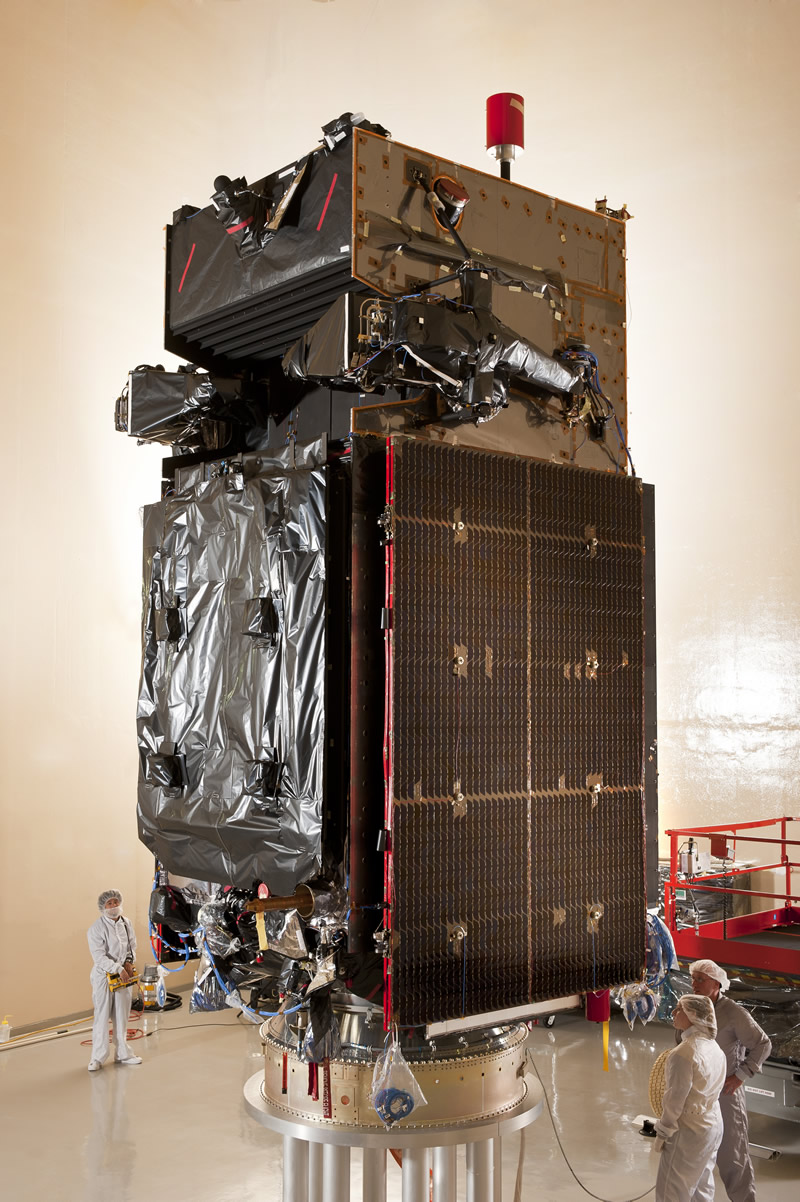
(click to view full)
Sept 25/12: Support. Lockheed Martin Space Systems in Sunnyvale, CA receives a $54.2 million contract modification for SBIRS sustainment support. Work will be performed in Colorado Springs, CO; Boulder, CO; and Aurora, CO until March 31/13. US SMC’s ISK at Los Angeles Air Force Base, CA manages the contracts (F04701-95-C-0017, PO 0747)
Sept 24/12: Ground systems. Lockheed Martin Space Systems in Sunnyvale, CA receives a $12 million contract modification for sustainment & modifications to SBIRS Increment 1 ground system in Boulder, CO. Work is expected to be completed by Sept 30/14. USAF SMC’s ISK at Los Angeles Air Force Base, CA manages the contracts.
Sept 10/12: GEO-5 & 6. Lockheed Martin Space Systems Co. in Sunnyvale, CA receives an $81.9 million cost-plus incentive fee contract to begin work on SBIRS GEO 5 & 6. Under this 1st phase, Lockheed Martin will complete non-recurring engineering activities, and buy select long lead spacecraft parts. The follow-on 2nd phase contract will fund procurement of the remaining long lead parts. The 3rd contract will involve satellite production under a fixed-price contract structure.
Work will be performed in Sunnyvale, CA, and will be complete by Aug 21/15. The USAF SMC/IS at Los Angeles Air Force Base, CA manages the contract (FA8810-12-C-0001). Lockheed Martin.
March 21/12: GAO report. The GAO says that USAF satellite programs are improving, but still cites some issues for SBIRS. From “DOD Faces Challenges in Fully Realizing Benefits of Satellite Acquisition Improvements” :
“The first of six SBIRS geosynchronous earth orbit (GEO) satellites successfully launched in May 2011, after a roughly 9 year delay… program officials are predicting a 1-year delay on production of the 3rd and 4th GEO satellites due in part to technical challenges, parts obsolescence and test failures. Along with the production delay, program officials are predicting a $438 million cost overrun for the 3rd and 4th GEO satellites… DOD will not be able to fully utilize the data collected from [GEO-1’s] staring sensor because the ground segment software that is to process the sensor’s data is not planned to be fully functional until at least 2018.”
March 19/12: GEO-1 Performance. The USAF seems to be very happy with its new satellite:
“On-orbit performance of the first GEO-1 satellite has proven superb. At the payload level, the GEO sensors are detecting targets 25 percent dimmer than requirements with an intensity measurement that is 60 percent more accurate than specifications. The payload pointing is nine times more precise than required, which is a key confidence measure for achieving a system level line-of-sight accuracy well within specification… interim mission performance results indicate that the system already demonstrates the ability to meet more than 90 percent of Air Force Space Command’s performance requirements for operational use. The remaining performance refinements are on track to be completed prior to the formal testing campaign slated to begin in June… This first GEO satellite is expected to be certified for operations by U.S. Strategic Command by the end of 2012.”
Performance report
Dec 13/11: Testing. Lockheed Martin announces that they’re done with thermal vacuum testing on SBIRS GEO-2. It’s the last of 7 key environmental tests, clearing the way for delivery to Cape Canaveral and launch aboard a Delta V rocket.
Lockheed Martin adds that SBIRS GEO-1, launched on May 7/11, has completed its initial calibration and testing activities, and “is performing as expected.”
FY 2011
GEO 1 launch. Cost increases. HEO. Ground systems.
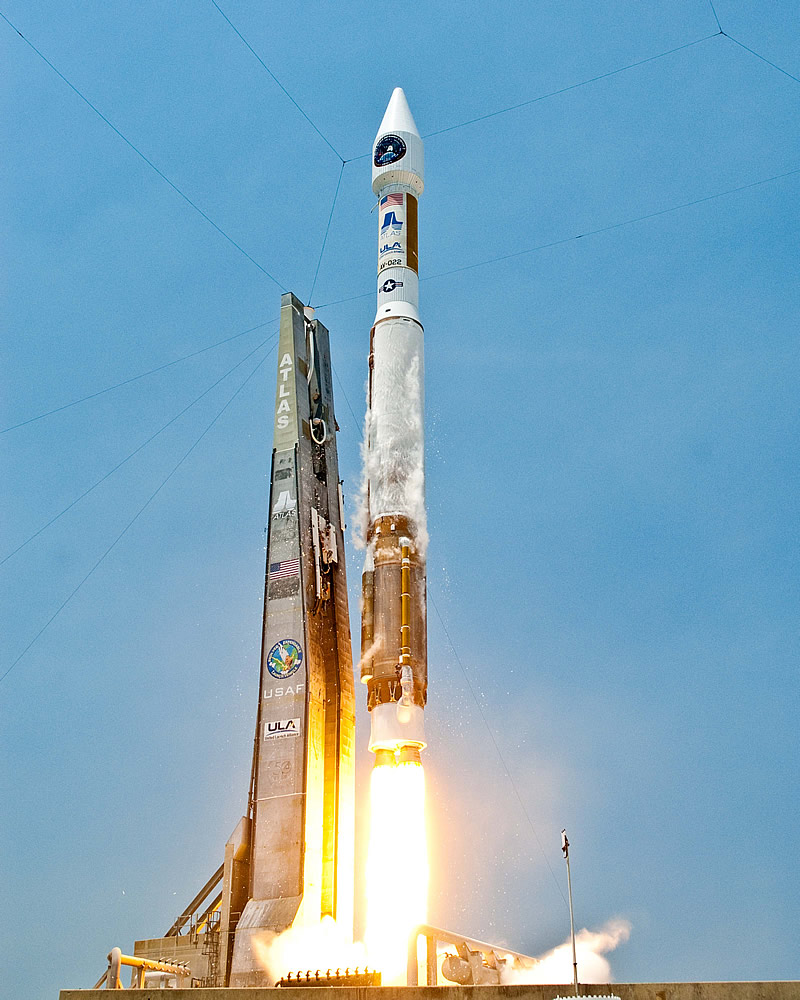
(click to view full)
Sept 29/11: Spares. Lockheed Martin Space Systems in Sunnyvale, CA receives an $11.9 million cost-plus-fixed-fee and cost-plus-award-fee contract modification “to procure the first set of spares specific for focal plane assembly hardware for [SBIRS-High]… into acceptance tested focal plane units. This effort also includes production of the next set of material necessary to fill a new spares kit, to include at least two new sensor chip assemblies.” The Infrared Space Systems Directorate at the USAF’s Space and Missile Systems Center in El Segundo, CA manages this contract (FA8810-08-C-0002, PO 0026).
DID asked them why a satellite needs spares at all, and they explained that the SBIRS payload assemblies undergo buildup and testing on the ground, before launch. If a primary part fails during this testing, the program would be in trouble without qualified spares, because they take a long time to build (long lead-time item). Having a spare available reduces risks to the overall satellite production schedule, because an acceptance-tested focal plane unit, or other available spare, can just be swapped in.
Sept 26/11: Support. Lockheed Martin Space Systems Co. in Sunnyvale, CA received a $94.8 million cost-plus-award-fee contract modification, exercising 2 options that deliver SBIRS-High logistics and sustainment support in FY 2012. Work will be performed in Boulder, CO at the Space and Missile Systems Center. The SBIRS Directorate at Los Angeles AFB, CA manages the contract (F04701-95-C-0017, PO 0710).
Sept 26/11: HEO upgrades. Lockheed Martin Space Systems Co. in Sunnyvale, CA receives an estimated $12.2 million cost-plus-award-fee contract to upgrade the 2 HEO strings to be capable of operating 2-3 HEO satellites, while maintaining the health and safety of the offline HEO. They’ll use software based on the Interim Test Center’s geosynchronous orbit initial operations software baseline. The SMC/ISK at Los Angeles AFB, CA manages the contract (FA8810-08-C-0002, PO 0033).
July 19/11: Ground systems. Lockheed Martin Corp. in Sunnyvale, CA wins a $24.5 million cost-plus-fixed-fee SBIRS EMD contract modification. This FY 2011 contract covers hardware and software modifications that will lay the groundwork for the overall SBIRS Survivable/Endurable Evolution (S2E2) program upgrade in FY 2012 and beyond.
After some discussion with the USAF Space and Missile Systems Center’s Infrared Space Systems Directorate, we can clarify S2E2’s purpose: it evolves the satellite’s Mobile Ground System (MGS) capabilities from the previous DSP satellite system. The SBIRS program originally planned to develop its own MGS element, but cost growth on SBIRS-High has forced a change of plans to less expensive upgrades of existing systems. Considering the kind of information these ground systems are processing, mobility remains the ultimate defense against pre-emptive strikes that could silence these missile launch warnings. The S2E2 modification will become part of the program of record’s baseline, and will be reported in documents like the Pentagon’s Selected Acquisition Reports.
Lockheed Martin will pick a FY 2011 antenna platform subsystems vendor, and support the SBIRS program with a mobile ground system 2nd path radio upgrade, as well as FY 2011 S2E2 engineering and labs development. Work will be performed in Boulder, CO, and is expected to be complete in December 2012. The USAF Space and Missile Systems Center in Los Angeles AFB, CA manages this contract (F04701-95-0017).
June 27/11: Testing. Lockheed Martin Space Systems Company in Sunnyvale, CA receives an $8.2 million cost plus award fee contract modification to implement Phases 2-4 of the HEO Functional Test Article (HFTA) Phase I study. The SMC/ISK at Los Angeles AFB manages the contract (FA8810-08-C-0002, PO 0029).
June 14/11: Layoffs. Layoffs at Lockheed Martin Space Systems. This branch of the firm employs around 16,000 employees in 12 states, but intends to shed 1,200 employees by year-end, including a 25% cut in middle management to reduce impacts elsewhere. LMSS’ Sunnyvale, CA; Pennsylvania; and Denver, CO sites will be hardest hit, and the firm’s release says that it’s pushed in part by several of their major programs moving beyond the labor-intensive development phases.
Space Systems says it will offer “eligible” salaried employees an opportunity for a voluntary layoff, plus career transition support for all affected employees. Lockheed Martin.
May 20/11: GEO-1 on-orbit. SBIRS GEO-1 reaches geosynchronous orbit – passing the damaged but climbing AEHF-1 communications satellite on the way. Initial checkout tests are positive. Aviation Week | UPI.
May 7/11: GEO-1 launch. After weather conditions forced a postponement of the May 6/11 launch, SBIRS GEO-1 successfully blasts off from Cape Canaveral, FL aboard an Atlas V 401 configuration rocket. The 401 configuration consists of an RD AMROSS RD-180 booster, a Centaur upper stage with a PW Rocketdyne RL-10A engine, and a 4-meter payload fairing. USAF | ULA [incl. video] | Lockheed Martin.
GEO-1 launched
April 15/11: Program SAR. The Pentagon’s Selected Acquisitions Report ending Dec 30/10 includes SBIRS High. The program is being expanded, but cost increases haven’t stopped, either:
“Program costs increased $2,459.6 million (+16.3 percent) from $15,115.6 million to $17,575.2 million, to fully fund the fifth and sixth Geosynchronous Earth Orbit (GEO) satellites (GEOs 5 and 6) (+$1,883.6 million), plus associated support requirements in fiscal 2018 (+$212.7 million). There are additional increases to complete the Engineering, Manufacturing, and Development (EMD) space segment effort for GEOs 1 and 2 integration, launch, early orbit test, and check out (+$206.8 million), and to complete the EMD ground effort to satisfy the August 1996 Operational Requirements Document requirements (+$717.1 million). This completes the final block (Increment 2) of the SBIRS ground segment capability, which funds fiscal 2016 and beyond, and reflects total acquisition cost. These increases are partially offset by a revision in the acquisition strategy from full funding to a block buy for GEOs 5 and 6 (-$520.9 million).”
SAR
April 11/11: GEO-1. Successful completion of spacecraft fueling for SBIRS GEO-1. Its propulsion system is a dual-mode design. It operates as a pressure-regulated bipropellant (hydrazine and nitrogen tetroxide) system of fuel and oxidizer for use during orbital transfer, and a monopropellant hydrazine system for use on station.
April 4/11: Ground systems. Lockheed Martin Corp. in Sunnyvale, CA receives a $460.4 million contract modification, which pays to revise SBIRS’ ground development and delivery strategy. Following a successful Preliminary Design Review, Lockheed Martin has been contracted to deliver SBIRS Ground Systems Block 10, whose service-oriented architecture segregates the system into 4 different mission areas. The goal is to improve long term sustainment costs and improve service, using technologies that weren’t available when the original ground system was first approved.
The Block 10 system will process data from SBIRS and from legacy DSP Overhead Persistent Infrared satellites at a single operational control center, and will be fielded at 1 primary site and 1 backup site. Block 10’s new service-oriented I.T. architecture makes independent mission area upgrades possible with less expense and difficulty. It also makes SBIRS data available in a more timely and less costly way, to a larger community of users, for both real time activities and off-line analysis. That means the USAF can quickly release missile warning and battle space awareness messages to military commanders, and provide other relevant data to intelligence and missile defense organizations.
Work will be performed at Sunnyvale, CA and Redondo Beach, CA. The USAF’s Space and Missile Systems Center at Los Angeles AFB, CA manages this contract (F04701-95-C-0017, P00641).
March 28/11: GEO-1. SBIRS GEO-1 completes its final major pre-launch test. The SBIRS System Test 5001.4 Regression Test demonstrated the ability to transmit data between the spacecraft and flight control facilities, and perform the critical operational functions of the SBIRS GEO-1 integrated ground and space system. USAF.
March 7/11: GEO-1. SBIRS GEO-1 is delivered to Cape Canaveral Air Force Station, FL, on board a C-5 Galaxy superheavy cargo aircraft. It will be prepared for an early May 2011 liftoff aboard a United Launch Alliance Atlas V launch vehicle. USAF | Lockheed Martin.
Jan 7/11: GEO-4 order. Lockheed Martin Space Systems Co. in Sunnyvale, CA, receives a $424.7M contract modification, exercising the option for production of GEO Satellite 4. At this time, $75 million has been committed by the US Space and Missile System Center’s Infrared Space Systems Directorate in El Segundo, CA (FA8810-08-C-0002; P00017).
The GEO-3 and GEO-4 satellites will be near clones of the first 2, accommodating small changes such as a different star tracker, inertial measurement unit, and replacing obsolete parts. Even so, they’re expected to rack up over $400 million in cost overruns.
GEO-4
(click to view full)
Dec 15/10: Support. The Scitor Corp. in El Segundo, CA won a $29.9 million contract for engineering, consulting and technical advisory support services to the Space Based Infrared Systems Directorate. $1,234,000 has been committed by the SMC/PIK at Los Angeles AFB, CA (FA8802-11-F-3013).
Dec 2/10: Lockheed Martin Space Systems Co. in Sunnyvale, CA receives an $8.8 million contract modification which will add a dual operations capability to SBIRS-High’s existing engineering, manufacturing and development contract. At this time, all funds have been committed by the SMC/ISK in El Segundo, CA (F04701-95-C-0017; P00659).
Oct 15/10: Space News reports that:
“After nearly a decade of delay, the U.S. Air Force tentatively plans to launch its first dedicated Space Based Infrared System (SBIRS) missile warning satellite April 30 but faces a narrow launch window, which means any additional hiccups in the program likely would push the mission into 2012, a service official said.
At the same time, the Air Force is renegotiating its SBIRS prime contract with Lockheed Martin Space Systems of Sunnyvale, Calif., to make improvements to the system’s ground infrastructure and data processing algorithms through the latter part of the decade ahead…”
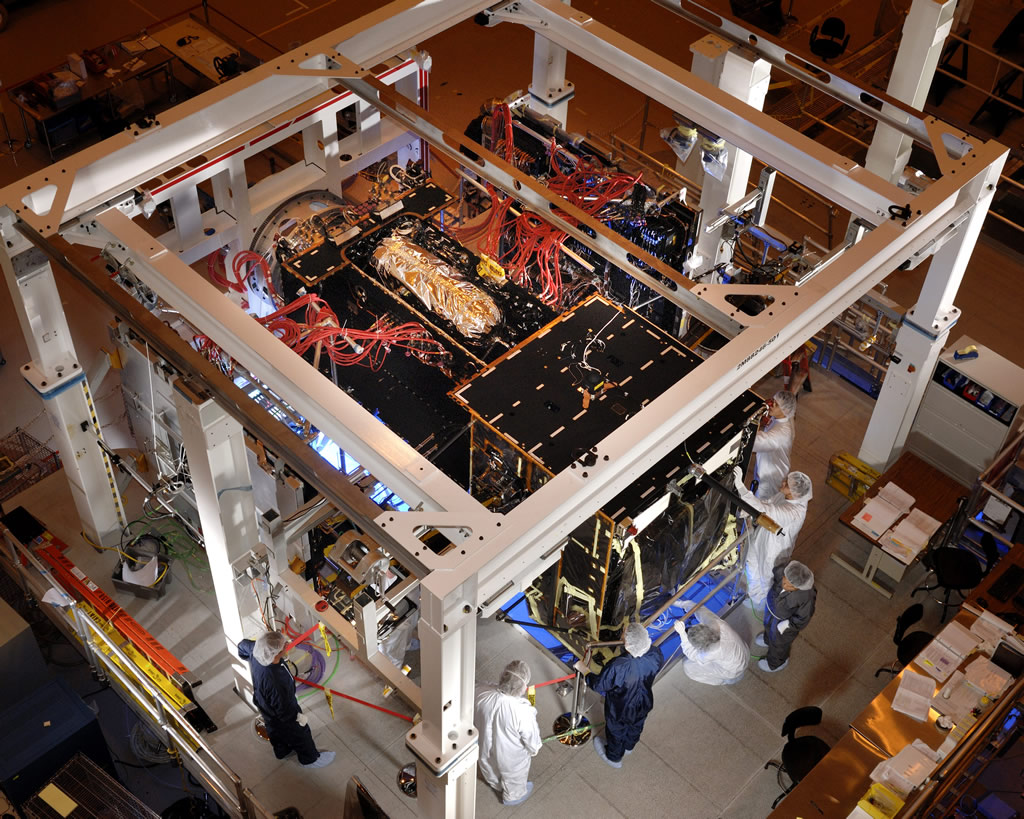
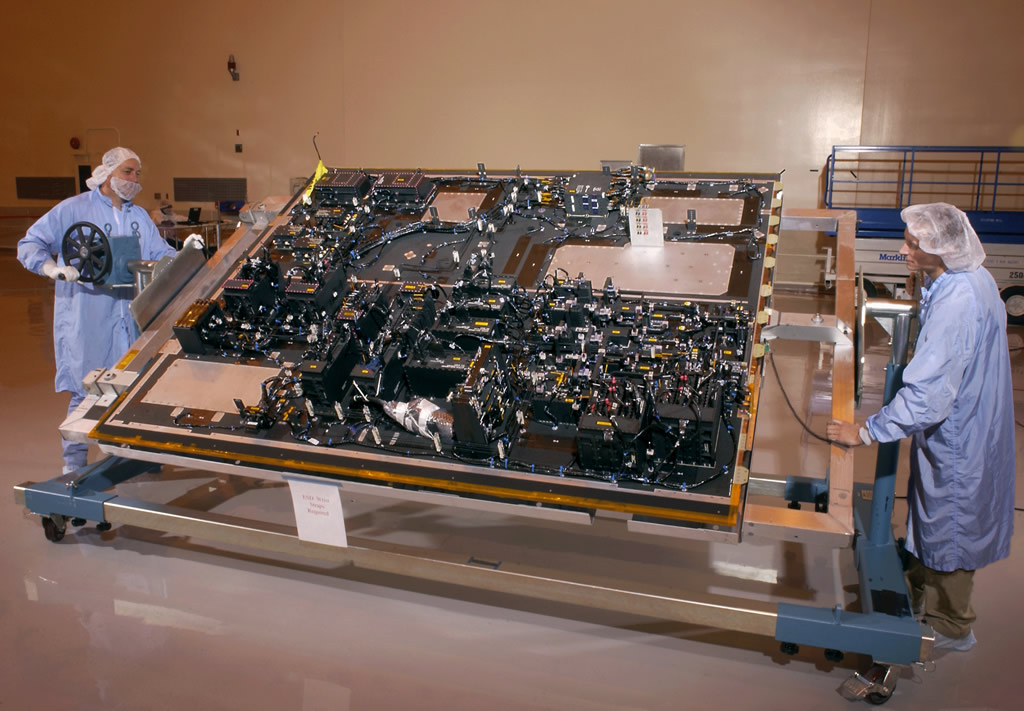
Oct 6/10: GEO-2. The SBIRS GEO-2 satellite successfully completes integration of its 2 equipment panels onto the spacecraft core module, creating a fully assembled and integrated GEO-2 space vehicle. It took 34 days, included 134 precise connector mates between the equipment panels and spacecraft, and finished 9 days ahead of schedule. The equipment panels are responsible for holding the individual electronics components which provide the satellite’s communications, attitude control, power distribution, commanding and payload data processing.
The GEO-2 team will now proceed with Baseline Integrated System Test 2, creating the data baseline needed before environmental testing. GEO-2 is scheduled for launch in 2012. Los Angeles AFB.
FY 2010
SAR. CDR for GEO-3 & 4.
Sept 28/10: EMD. Lockheed Martin Space Systems Center in Sunnyvale, CA won an $8.3 million contract modification which will incorporate both hardware and software modifications to SBIRS-High’s existing engineering, manufacturing, and development contract. At this time, the entire amount has been committed by the ISSW/PKS in El Segundo, CA (FO4701-95-C-0017; PO0650).
Sept 13/10: Ground systems. The SBIRS ground team completes the GEO Interim Operations Ground Segment System’s integration testing for Missile Warning Message Certification, at the Interim Test Center in Boulder, CO. Given the missile-tracking mission of SBIRS GEO satellites, validating those 853 mission readiness objectives and exercising 594,000 lines of code is a good idea. Los Angeles AFB.
Aug 16-18/10: CDR for GEO-3 & 4. The USAF Space and Missile System Center’s SBIRS Wing and Lockheed Martin hold a successful critical design review in Sunnyvale, CA for SBIRS GEO-3 and SBIRS GEO-4. The review confirmed that the detailed design has addressed all electronics obsolescence issues from the previous SBIRS satellites, and lets Lockheed Martin move forward into production towards a projected GEO-3 launch in late 2014.
The GEO-3 and GEO-4 satellites will be near clones of the first 2, accommodating small changes such as a different star tracker, inertial measurement unit, and replacing obsolete parts.
CDR
July 16/10: HEO-3 Long-lead. Lockheed Martin Space Systems Co. in Sunnyvale, CA receives a $34.8 million contract modification, exercising the 4th option for SBIRS HEO Payload 3 Launch and Early On-Orbit Support. At this time, $548,174 has been committed by the ISSW/PKF at Los Angeles Air Force Base, CA (FA8810-08-C-0002; P00012).
The same announcement was issued again on July 20/10, but that is a duplication.
June 30/10: Ground Systems. Researchers in the SBIRS program office at Air Force Space Command’s Space and Missile Systems Center in Los Angeles, CA successfully complete the major “5001.2 system-level test” of the interfaces between all SBIRS ground facilities and the GEO-1 satellite.
The test successfully demonstrated command and control using GEO-1’s Tri-band Antenna/Modem Suite, as well as data transmissions using frequency hopping. A team made up of people from Lockheed Martin, Northrop Grumman, The Aerospace Corporation, and the USAF tested 12 critical areas over 2 days. USAF.
June 7/10: EMD. Lockheed Martin Corp. in Sunnyvale, CA receives a $183 million contract, finalizing a set of previous production and ground systems modification contracts for the SBIRS GEO satellite, and SBIRS HEO payload. At this time, the entire amount has been committed by SMC/ISSW at Los Angeles AFB in El Segundo, CA (FA8810-08-C-0002).
June 3/10: EMD. Lockheed Martin Space Systems Corp. in Sunnyvale, CA receives a $10.9 million contract which will provide support for SBIRS-High GEO’s message certification. At this time, $2.4 million has been obligated by the SBISW/PK in El Segundo, CA (F04701-95-C-0017).
May 7/10: Testing. The National System for Geospatial Intelligence (NSG) announces that the SBIRS HEO-2 payload and associated ground system have been operationally accepted for the Technical Intelligence mission.
The planning, testing and coordination effort leading to this day involved the NSG, Air Force Space Command, and SMC’s SBIRS Wing. The previous SBIRS HEO-1 was certified on Aug 27/09. USAF Los Angeles AFB.
April 1/10: Program SAR – to 6. The Pentagon releases its April 2010 Selected Acquisitions Report, covering major program changes up to December 2009. SBIRS-High makes the list, as the planned constellation rises from 4 to 6 satellites, and other program costs continue to rise:
“SBIRS (Space-Based Infrared System) High – Program costs increased $3,561.1 million (+30.8%) from $11,554.5 million to $15,115.6 million, due primarily to a quantity increase of two Geosynchronous Earth Orbit (GEO) satellites from four to six satellites (+$2,164.1 million). There were also increases resulting from the realignment of missile procurement costs to the support category (+$162.8 million), a delay in the GEO 1 launch from 2009 to 2010 (+$372.8 million), revised estimates for implementation of a new ground acquisition strategy (+$393.8 million), and incorporation of the technology maturation and parts obsolescence effort (+$384.0 million).”
SAR
March 30/10: GAO Report. The US GAO audit office delivers its 8th annual “Defense Acquisitions: Assessments of Selected Weapon Programs report. Summary?
“The SBIRS High program continues to experience setbacks that could add to cost overruns and schedule delays. All three of the program’s critical technologies are mature and 99 percent of the expected drawings are releasable. However, program costs continue to increase due to software development problems, hardware quality issues, and testing delays on the first GEO satellite. Unplanned work continues to be a challenge for the software development effort. The program also recently discovered hardware defects on the first GEO satellite. The Air Force’s best-case estimate is that the first GEO satellite launch will be delayed an additional year from December 2009 to December 2010. The HEO payloads continue to perform well on-orbit, and according to program officials, they were accepted for specific mission operations in 2009… The SBIRS High program remains at high risk for cost and schedule growth. DCMA is currently projecting over $245 million in cost overrun from the current baseline at contract completion. This amount has more than doubled in the past year and continues to steadily grow… The program’s management reserve… will likely be depleted before the first GEO satellite launches…”
See also the 2009 annual report, and its SBIRS-related 2007 GAO testimony, referenced in “Additional Readings.”
Feb 16/10: Testing. Lockheed Martin announces that the SBIRS GEO-2 satellite has completed its first phase of Baseline Integrated System Test (BIST-1) in Sunnyvale, CA.
With the completion of BIST-1, the team will proceed with final factory work on the satellite and prepare for the final, comprehensive BIST milestone, followed by environmental testing. The spacecraft is planned for launch aboard an Atlas V launch vehicle in 2012. SBIRS GEO-1 is preparing for final integration and test activities that will culminate with final checkout and delivery to the Air Force later in 2010.
Feb 2/10: AIRSS Axed. A Pentagon document [PDF] confirms that 3GIRS/AIRSS is being recommended for cancellation as an “unneeded program.”
Jan 15/10: AIRSS. Reuters reports that AIRSS/ 3GIRS is one of several programs on the chopping block for the FY 2011 budget, based on internal Pentagon documents that were leaked to the news service. With SBIRS GEO late and over-budget, but moving forward, the better-performing 3GIRS program is deemed superfluous.
No AIRSS
Dec 1/09: Testing. A joint U.S. Air Force/Lockheed Martin-led team announces successful thermal vacuum testing of the first SBIRS GEO-1 satellite inside Lockheed Martin’s Dual Entry Large Thermal Altitude (DELTA) chamber. This completes the last of several critical environmental test phases that validate the overall satellite design, quality of workmanship and ability to survive in space. Lockheed Martin.
November 2009: CDR for GEO-3 & 4 payloads. The Critical Design Review for GEO 3 & 4’s infrared payloads is held at Northrop Grumman Electronic Systems in Azusa, CA.
FY 2009
GEO-3 & HEO-3 ordered.
(click to view full)
Sept 1/09: EMD. A $99.5 million modified contract to Lockheed Martin for the existing engineering, manufacturing, and development contract for the SBIRS-High Component. The Space Based Infrared Systems Wing at the Los Angeles Air Force Base in CA manages the contract (F04701-95-C-0017, P00583).
July 10/09: GEO-4 & HEO-4 long-lead. A $262.5 million contract to Lockheed Martin for long-lead time parts and materials used to build the 4th SBIRS-High satellite (GEO-4) and the 4th HEO payload (HEO-4). At this time $137.1 million has been committed by the Space Based Infrared Systems Wing at Los Angeles Air Force Base, CA (FA8810-08-C-0002).
These long-lead effort contracts tend to precede a production contract by a year or more, in order to ensure that required components are already on hand and do not delay assembly.
May 29/09: GEO-3 & HEO-3 ordered. A cost-plus-fixed-fee contract of up to $1.49 billion to prime contractor Lockheed Martin Space Systems in Sunnyvale, CA for production of the 3rd SBIRS-High satellite (GEO-3, a geosynchronous orbit design), the 3rd payload (HEO-3, a Highly Elliptical Orbit design), and modification of the SBIRS ground systems to accommodate the operation of 3 payloads at the same time.
So far, $1.1 billion has been obligated under the May 29/09 contract. The Space and Missile Center’s Space Based Infrared Systems Wing in El Segundo, CA manages the SBIRS-High contract (FA8810-08-C-0002). See also Lockheed Martin release on the May 29/09 contract.
GEO-3 & HEO-3
March 31/09: GAO. The US Government Accountability Office auditors release their 2009 Assessments of Selected Weapons Programs. SBIRS – High is one of the programs reviewed, and the report expresses concern about its progress:
“Two of the SBIRS High program’s three critical technologies are mature – a lower level of maturity than last year… the program has experienced design-related problems, especially with the flight software, and more could still emerge… Defense Contract Management Agency (DCMA) assessments indicate that the contractor’s cost and schedule performance are high risks. DCMA is currently projecting a $103 million cost overrun at contract completion, and that amount is growing. Further contractor cost increases and schedule delays are expected…”
Additional Readings
Background: Space Vehicles
* USAF, Los Angeles AFB – Factsheet: Infrared Space Systems Directorate
* Lockheed Martin – Space Based Infrared System – High (SBIRS). Was once called SBIRS-High.
* MissileThreat.com – Space-Based Infrared System-High (SBIRS-High)
Official Reports
* GAO (March 12/14, #GAO-14-382T) – Space Acquisitions: Acquisition Management Continues to Improve but Challenges Persist for Current and Future Programs.
* GAO (March 21/12, #GAO-12-563T) – DOD Faces Challenges in Fully Realizing Benefits of Satellite Acquisition Improvements
* GAO (Sept 12/07, #GAO-07-1088R) – Space Based Infrared System High Program and its Alternative. Testimony before the Senate Armed Services Strategic Forces Subcommittee.
News & Views
* DID – 3GIRS: SBIRS Evaluates, Cancels New Technologies. Last updated 2010.
* DID (Jan 17/06) – Lockheed’s SBIRS High Satellite Program Bracing for a Fall.
* Space News, via WayBack (Dec 19/05) – Pentagon Scales Back SBIRS Program.
* DID (Aug 4/05) – GAO Report: Satellite Programs Show Overruns Across the Board.
* DID (April 15/05) – SBIRS Dilemma: Go High or Go Home.
* DID – DSP Satellites: Supporting America’s Early-Warning System.