


(click for full shot)
Raytheon Missile Systems in Tucson, AZ received a $30.1 million modification to a previously awarded firm-fixed price contract (N00019-03-C-0003) for the upgrade of 268 AIM-9M missiles for the Governments of Pakistan (200; $21.4M, 70.8%), Malaysia (57; $6.1M, 20.2%), and Korea (11; $1.2M, 3.9%); and for 229 Circuit Card Assembly kits for the Government of Canada ($1.5M, 5.1%).
The AIM-9M missile began production in 1982, and has been bought in quantity. Even though the new AIM-9X is now in production, the AIM-9M remains the main short range air-air missile (SRAAM) of the US Air Force and several allied Air Forces. DID describes the AIM-9M version, and its updates. One of these orders is also related to a larger fighter fleet expansion and refurbishment, and ties into previous DID articles. We cover that, too…
The AIM-9M: Last of the 3rd Generation
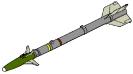
The AIM-9M Sidewinder is a development of the AIM-9L, whose ability to track the heat from air friction over an enemy plane made it the first US SRAAM able to home in on its targets from the front as well as the rear. The AIM-9L was used very successfully by the British Royal Navy’s Harrier jets during the 1982 Falklands War.
AIM-9M added a incrementally improved reduced-smoke Mk 36 rocket motor, better countermeasures resistance, and improved overall reliability; but the biggest improvements were the improved Guidance Control Section designated WGU-4E/B, along with an upgraded Active Optical Target Detector (AOTD DSU 15B/B).
Subtypes have incorporated further incremental advances and are numbered AIM-9M-1 through AIM-9M-10, with odd numbers being USAF and even numbers being Navy versions. The principal current production versions are the AIM-9M-8 (US Navy), AIM-9M-9 (USAF), and AIM-9M-10 (USN F/A-18 E/F Super Hornets).
A key component of the AIM-9M-8/9 upgrade is reportedly the replacement of 5 circuit cards and the related parent board, in order to update infrared counter counter-measures (IRCCM). Substitution of circuit cards at the depot level is labor intensive, expensive, and removes missiles from inventory; which is one reason the AIM-9X was designed to use reprogrammable software instead.
Foreign Military Purchase Contracts

(click to view full)
In October 2005, DID covered an order for 300 AIM-9M Sidewinders by Pakistan. According to Raytheon, the October 2005 purchase represented the first sale of the AIM-9Ms to Pakistan, and a January 2007 contract to modify the stockpile to AIM-9M-9 status completed that process.
DID has also covered a $650 million weapons package request placed in June 2006, that included another 200 AIM-9M-8/9 missiles. It is in turn part of a $5.1 billion upgrade & expansion of Pakistan’s F-16 fleet. That request would appear to be covered by this contract, and at $107,000 per missile (compare to $172,475 for a new AIM-9X) the upgrade seems more like a purchase with possible trade-in.
Canada flies F/A-18 Hornets, but the deal’s focus on circuit cards indicates that they are likely to perform the upgrade from AIM-9M to AIM-9M-8 status themselves.
Malaysia flies F/A-18 Hornets, which means it is likely receiving AIM-9M-8s from Raytheon. They are also paying about $107,000 per missile.
South Korea flies F-16s, which means it is likely receiving AIM-9M-9s back from Raytheon. They are paying about $109,000 per missile.
Work for all of the countries involved will be performed in Tucson, AZ (84%); Rocket Center, WVA (13%); and Andover, MA (3%), and is expected to be complete in April 2009. The Naval Air Systems Command in Patuxent River, MD issued the contracts.