


(click to view full)
South Korea currently owns some of the world’s best and most advanced shipyards. That civilian strength is beginning to create military leverage, and recent years have seen the ROK take several steps toward fielding a true open-ocean, blue water navy. Their new KDX-II destroyers, KDX-III AEGIS destroyers, LPX amphibious assault ships, and KSS-I/KSS-II (U209/U214) submarines will give the nation more clout on the international stage, but what about the home front? North Korea’s gunboats have launched surprise attacks on the ROK Navy twice in the last decade, while its submarines continue to insert commandos in South Korean territory, and committed acts of war by sinking ROKN ships. To the west, Chinese fishing rights are a contentious issue that has led to the murder of a Korean Coast Guard official on the high seas.
Hence the Future Frigate Experimental (FFX) program. It aims to build upon lessons learned from ROK naval shipbuilding programs in the 1980s and 1990s, and replace 37 existing ships with a modern class of upgunned inshore patrol frigates. A contract to build the lead FFX frigate Incheon was issued in December 2008, and South Korea continues to work to define the program, including the forthcoming Batch II design.
The FFX Class, and its Predecessors
The ROKN’s Existing Fleet

(click to view full)
It’s easier to understand and critique the thinking behind FFX, if you look at what it will replace.
The ROKN’s 9 small 2,200 – 2,300 ton Ulsan Class frigates were built in South Korea, and commissioned from 1981-1993. They’re not designed to operate alone in high-threat areas, or to provide general fleet defense on the open seas. Instead, they’re designed to serve as high-end coastal patrol vessels with a mix of anti-air (RIM-7 Sea Sparrow), anti-ship (guns, RGM-84 Harpoon), and anti-submarine capabilities. They carry a crew of 150.
The ROKN’s 24 Pohang Class 1,220 ton patrol corvettes were commissioned from 1984-1993, and have no anti-air missile capabilities. They mount 76mm, 40mm, and 30mm guns like the Ulsan Class, and are divided into 4 anti-surface warfare versions with MBDA’s Exocet ant-ship missiles, but no sonar or torpedoes; and 20 anti-submarine versions with sonar and torpedoes, but no missiles. They carry a crew of 95.
ROKS Cheonan, sunk by a North Korean torpedo in March 2010, was a Pohang Class ship.

(click to view full)
The ROKN’s 4 low-end Dong Hae Class 1,000 ton patrol corvettes were commissioned from 1982-1983. they are armed with guns, sonar, and torpedoes, and also carry a crew of 95.
Bottom line? The Dong Hae Class are aging out of the water. The Pohang Class have shown that they can’t deal with North Korea’s subs, and have no air protection in waters that are more and more contested. The Ulsan Class can serve a while longer, but their equipment is outdated. Modern replacements are in order, and the threat’s challenges are pushing the ROKN toward an inshore corvette/frigate replacement that can carry higher-end equipment.
FFX: Batches and Key Improvements

(click to view larger)
In contrast to the older classes described above, the new FFX frigates will follow the modern pattern of stealthier ship designs with far better radars, sonars, and communications equipment. The new class is said to have accepted less radar stealth in the design, however, in order to keep ship costs down. That’s an acceptable tradeoff for an non-expeditionary inshore frigate.
The new frigates were expected to begin service in 2011, with the first 6 all built and delivered by 2015, but those dates have slipped. The first-of-class Incheon was launched in April 2011, but formal delivery to the ROKN didn’t happen until late 2012, and the ship wasn’t commissioned until 2013. The ROK Navy still intends to replace all ships in the Ulsan, Pohang, and Dong Hae classes by 2020. Overall construction will take place in at least 2 batches, and possibly 3.
FFX Batch I: The Incheon Class
(click to view full)
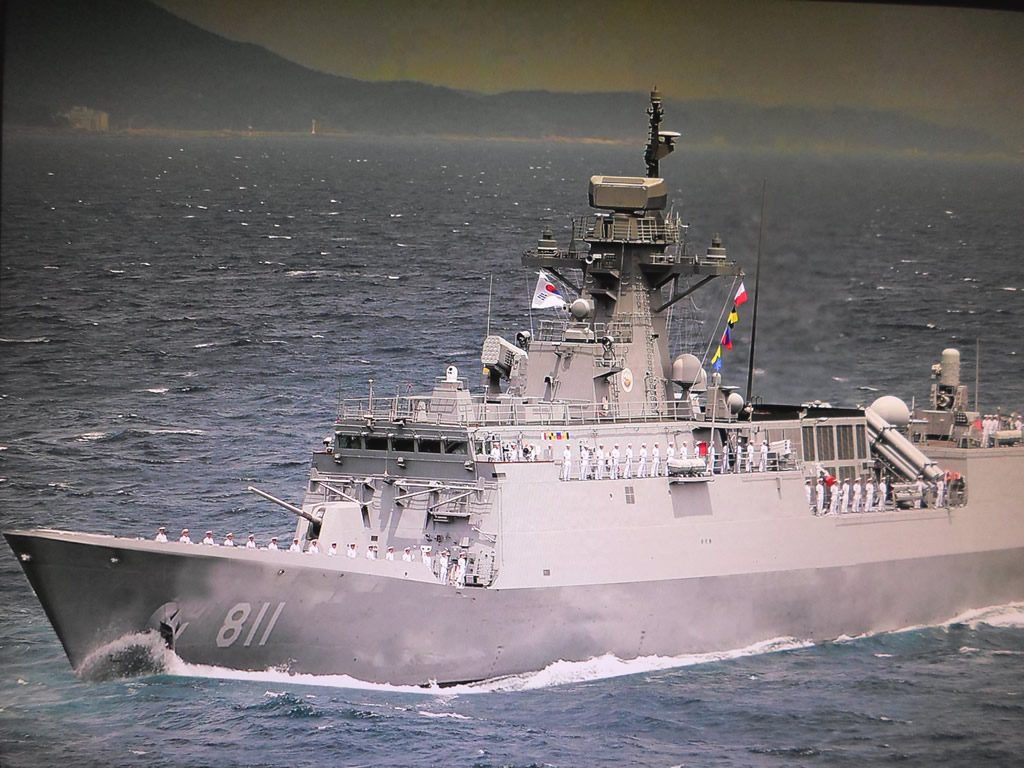
The 1st batch of 6 FFX Incheon Class frigates measure about 114m long by 14m wide, with an empty weight of 2,300 tons and a crew of 145-170 sailors. Hyundai Heavy Industries claims a cruising range of about 8,000 km, though that would require a cruising speed well below the ship’s claimed 30-knot maximum.
Each FFX Batch I frigate is said to cost around WON 250 billion ($232 million), and the ROKN plans to have Hyundai Heavy Industries build 6 of them. Ships include:
* FFG-811, ROKS Incheon
* FFG-812, Gyeonggi (scheduled Oct. 2014)
* FFG-813, Jeonbuk (scheduled Dec. 2014)
* FFG-814, Gangwon (scheduled late 2015)
Even the FFX Batch I ships boast a number of significant improvements over the current Ulsan Class; their firepower and versatility will provide a very considerable upgrade over the ROKN’s existing corvettes.
Sensors. FFX ships’ use of improved modern sonars via a Thales/STX partnership has become a particular focus of attention, as post-Cheonan assessments questioned the adequacy of anti-submarine detection systems on earlier-model ships. The built-in sonar will eventually be complemented by a towed sonar, and the current plan is to produce that towed array in South Korea.
Other sensors include a Thales Smart-S Mk2 radar, and passive long range “electro-optical” day/night cameras. A SamsungThales combat system will integrate the ship’s sensors and weapons.
(click to view full)
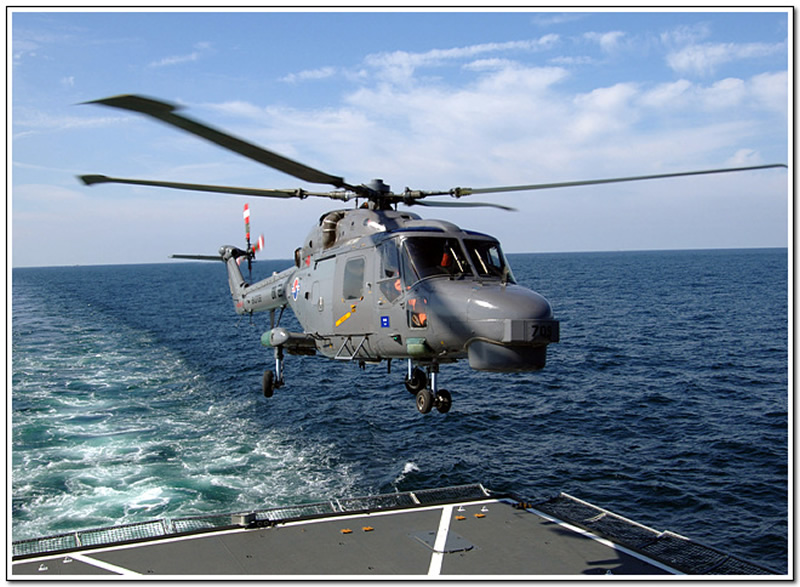
Weapons. FFX firepower improves sharply over past classes. The ships will carry BAE’s Mk45 MOD 4 5″/ 127mm gun for longer-range gunnery and amphibious support, RIM-116 RAM short-range missiles for killing missiles, aircraft and fast boats, and an embarked helicopter. Early reports also had the ships carrying a 30mm Thales Nederland “Goalkeeper” system like other South Korean combat vessels, to be used for last-ditch missile defense and small boat overkill. In the end, however, the FFX became the 1st Korean ship to carry Raytheon’s smaller and less structurally intrusive 20mm Phalanx Block 1B. Rheinmetall’s MASS decoy system and LiG Nex1’s SONATA electronic warfare system offer “soft kill” options.
Anti-ship missiles and light torpedoes will also be on board, as is the case with the current Ulsan Class. What’s new is that FFX’s Blue Shark (K745 Chungsangeo) torpedoes and 8 C-Star (Haeseong I) anti-ship missiles will both be Korean designs.
The ship’s hangar is large enough for smaller naval helicopters like South Korea’s Super Lynx 300s. A January 2013 contract indicates that the FFX frigates may eventually embark the next generation of Lynx helicopters: the AW159 Wildcat SCMR naval variant, with full anti-submarine capability that includes an advanced dipping sonar.
FFX Batch II
(click to view full)
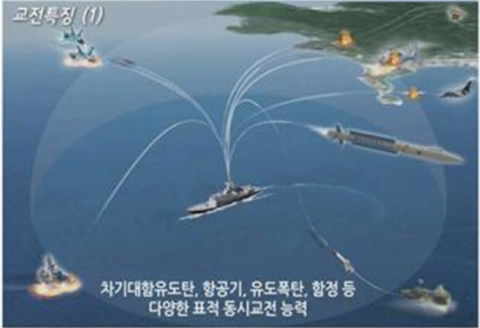
Between 6-9 FFX Batch II ships are planned, to be built by Daewoo Shipbuilding & Marine Engineering. These ships may be slightly larger, and will include almost all of the same core systems onboard Batch I ships.
One exception is the engine. Instead of using a CODOG system, Batch II ships will be powered by a single 36-40MW MT30 turbine, and propulsion will be all-electric. Finmeccanica’s newly-developed Permanent Magnetic Motor hybrid-electric drive will offer the ships weight, space and power advantages over standard AIM drive technologies, and all of those advantages are especially valued in a small ship.
The other changes are tied to a 16-cell K-VLS Korean Vertical Launch System that will broaden the ships’ weapon array, lengthen their reach, and add a lot of flexibility. K-VLS will let the frigate add locally-designed SAAM medium-range air defense missiles in place of the Batch I’s short-range RAM, along with vertically launched anti-submarine missiles like Korea’s own Red Shark, and longer-range Haeseong-II cruise missiles. There’s enough room to add another 16-32 cells in Batch III.
Finally, a larger hangar will allow Batch II frigate to handle larger 10-ton helicopters, like KAI’s own naval Surion helicopter.
Contracts and Key Events
2015 – 2020
#6 launched with 20 scheduled to enter service by 2020.
May 1/20: Fourth Daegu South Korean shipbuilder Hyundai Heavy Industries (HHI) has launched the fourth of eight Daegu (FFX-II) Class guided-missile frigates on order for the Republic of Korea Navy. Named Donghae, the 122.1 m-long warship entered the water during a ceremony held on April 29 at HHI’s facilities in the southeastern coastal city of Ulsan, and is expected to be handed over to the service in late 2021. The Daegu class is a larger variant of South Korea’s six Incheon (FFX-I) Class ships, the first of which entered service in 2013. The class has an overall beam of 14 m, a standard displacement of 2,800 tonnes, and a full-loaded displacement of 3,650 tonnes. Each FFX-II ship is powered by one Rolls-Royce MT30 gas turbine engine and two Leonardo DRS permanent magnet motors driven by MTU 12 V 4000 diesel-generator sets in a combined diesel-electric or gas (CODLOG) configuration. Each of the ships can attain a maximum speed of 30 kt.
April 27/20: MFR South Korea will incorporate a Hanwha Systems-developed, medium-range multifunction radar (MFR) system on the new type of frigates referred to locally as the FFX-III class, Jane’s reports. The class, which is also known as the Ulsan Batch III in official Defense Acquisition Program Administration (DAPA) documents, will be the first warships to feature the Gallium Nitride-based sensor. The active electronically scanned array (AESA) radar will form the apex of the frigate’s integrated mast system. The Incheon Class frigates also known as the Future Frigate eXperimental or FFX during development, are coastal defense frigates of the Republic of Korea Navy.
March 18/20: Ulsan Class Hyundai Heavy Industries (HHI) has received a $325 million contract to design and build the first Ulsan Class Batch III frigate for the Republic of Korea Navy (RoKN). The contract, which has been signed with South Korea’s Defense Acquisition Program Administration, was announced on March 16. The vessel is the first of six 3,500-tonne frigates planned for the batch. The contract covers detailed designed work and construction of the first-of-class. HHI received the contract to carry out basic design work for the batch in 2016. The frigate can utilize its electric propulsion systems during anti-submarine operations to minimize its acoustic signatures. Accordingly, the vessel will rely on gas turbine propulsion when it needs to operate at high speeds, said HHI.
December 18/18: Two more FFX-IIs ordered Hyundai Heavy Industries is being contracted to build two new frigates for South Korea’s navy. The $563 million order sees for the delivery of two FFX Batch II ships by 2023. The ships will be the seventh and eight units within the Republic of Korean Navy’s coastal frigate program. The 2.800-ton vessels are have a maximum speed of 30 knots and are equipped with naval guns and guided missiles. These Batch II ships will be powered by a single 36-40MW MT30 turbine and all-electric propulsion. This hybrid electric drive propulsion system reduced the ships’ acoustic footprint, making it more effective in anti-submarine operations. The RoKN expects to commission up to eight FFX-II vessels.
November 16/18: 2 additonal FFX-II ships ordered The Republic of Korea Navy (RoKN) is ordering two more FFX-II-class frigates from South Korean shipbuilder Daewoo Shipbuilding & Marine Engineering (DSME). DSME will construct two more Daegu-class guided-missile frigates at a cost of $558 million. The Daegu-class is a slightly larger than the FFX-I, or Incheon-class, but includes almost all of the same core systems. FFX-II vessels are powered by a single 36-40MW MT30 turbine, and propulsion is all-electric. Equipped with a 16-cell K-VLS Korean Vertical Launch System, the ships can employ a broad weapon array that gives the more flexibly and greater reach. The FFX-II class is armed with one 127 mm MK 45 MOD 4 naval gun and one Raytheon six-barrelled 20 mm Phalanx close-in weapon system mounted on the top of the aft superstructure. The RoKN expects to commission up to eight FFX-II vessels.
April 19/17: Development of South Korea’s Haeseong II ship-to-ground missile has been completed with serial production of canister and vertical launch versions expected to begin in 2018. Based on the earlier SSM-700K Haeseong anti-ship missile and the culmination of a seven-year development program led by the Agency for Defense Development, the new missile will give an added ground attack capability to South Korean warships that have usually relied on anti-ship or anti-aircraft guided missiles, and will form a part of Seoul’s Kill Chain pre-emptive strike system designed to tackle a North Korean military provocation. The vertical launch variant will be operational on a number of vessel types, including the upcoming Incheon-class frigates, by 2019.
August 23/16: Incheon-class frigates operated by the South Korean Navy are to be armed with Haeseong II ship-to-surface cruise missiles. Six of the vessels have already been produced as part of the first batch with 18-24 planned in total. While Seoul had initially scheduled the missiles to be incorporated on all vessels from batch two onward, it was decided to retrofit the first six as well, with work scheduled to commence next month. To accommodate the new missiles, the ships will have angled canister launchers installed on their decks.
August 13/15: #6 launched.The South Korean Navy has launched its sixth Incheon-class guided missile frigate. The Gwangju is the sixth vessel in a program of twenty new vessels scheduled to enter service by 2020. The new ship will undergo testing before deployment in 2016.
2013 – 2014
FFX #1 commissioned, #2-3 launched; FFX Batch II design unveiled; Long-term contract for Phalanx systems; AW159 helo picked for MH-X.

(click to view larger)
Aug 12/14: #4 launched. The Gangwon Ham is launched at STX Offshore & Shipbuilding’s yard in Changwon, Gyeongsangnam-do. There’s a bit of numbering confusion somewhere, because photos show the number 815 painted on the side. That’s out of sequence, and the official MND release says:
“Rear Admiral Choi Yang-sun, the first deputy chief of staff for planning and management in the Navy Headquarters, named the next fourth frigate ‘Gangwon’ and assigned ‘814’ as the ship number through the denomination No.460.”
The ship is scheduled to be handed over to the ROKN in late 2015, and enter service in 2016. Sources: ROK MND: “The next FFG, ‘Gangwon Ham,’ a powerful ship for safer Korean territorial waters”.
June 9/14: Urgency rises. North Korea is showing movies of new anti-ship missiles mounted on and fired from its military ships, and has also placed the new missile “among the country’s closely guarded submarines, which were also featured for the first time.” The missile sure looks like the Russian SS-N-25/ Kh-35, or a copy, and South Korea is taking the reports seriously enough that:
“Military authorities here are reportedly trying to find out where the North bought the Kh-35 missiles, on the assumption that it was clandestinely imported from a third country like Burma.”
North Korea’s willingness to attack South Korea, including the deliberate sinking of the ROKS Cheonan, makes the use of more advanced and longer-range Kh-35 missiles a potential issue for ROKN ships operating near the border. The Pohang Class was already defenseless against the KPANF’s 1950s-era SS-N-2 Styx missiles, but Kh-35s would outclass the Ulsan Class’ RIM-7 Sea Sparrow missiles as well, while allowing North Korean ships greater standoff firing distance. That could create pressure for more FFX ships, and/or acceleration of the FFX Batch II program. The Incheon Class’ RAM missile systems are an adequate point defense countermeasure, but only FFX Batch II ships and larger ROKN destroyers will offer an air defense umbrella that lets other patrol vessels nearby operate with confidence.
The good news is that North Korea has few naval platforms that are suitable for these missiles, and with respect to submarines, there’s a reason the videos were limited to placing a missile nearby. The KPANF’s 370t Sang-O and 130t Yono boats are unlikely candidates as missile subs. Ditto the ancient Romeo Class boats in service, unless they’ve been given significant Chinese or Russian upgrades – but Kim Jong-Un recently executed the most senior individual pushing for closer ties with China. Sources: Chosun Ilbo, “New N.Korean Anti-Ship Missiles Threaten Older Patrol Boats”.
May 26/14: Weapons. South Korea has been working to resolve problems with its vertically-launched “Red Shark” (Hongsangeo) rocket-boosted torpedoes since a formal complaint was filed in July 2012. They’ve just finished their 3rd consecutive successful test, which has led DAPA to resume production.
The ASROC-type weapons have been deployed on ROKN destroyers thus far, but FFX Batch II ships are also expected to include them. Sources: Yonhap, “S. Korea to resume production of homegrown torpedo after quality improvement”.
March 19/14: Sub-contractors. DRS Technologies Inc. announces a $9 million sub-contract from Korea’s Hyosung Corporation to design and produce FFX Batch II’s Hybrid Electric Drive propulsion system based on permanent magnet synchronous motor (PMM) technology The first ship-set is supposed to be delivered in 2015.
The equipment in question has a naval lineage that traces back to the USA’s DD-X/ DDG-1000 Zumwalt Class destroyer, whose Integrated Power Systems were initially set to be powered by DRS’ PMM technology. When PMM development took longer than expected, the ships switched to Alstom’s maritime standard Advanced Induction Motors (AIM) to help stay on schedule. DRS continued to develop their PMM technology, which is lighter, smaller, and produces much more power than AIM. They wound up being too late for use in the Zumwalt Class, but FFX Batch II will also use the MT30 turbine, so DRS’ past work is still valuable. This export foothold is a promising step for DRS, if the technology performs reliably. Sources: Finmeccanica’s DRS, “DRS Technologies Awarded Contract to Supply Its Hybrid Electric Drive System to Korean Navy’s New Class of Frigates”.
Feb 24/14: Weapons. Raytheon announces a $123 million Direct Commercial Sale (DCS) contract to deliver 9 Phalanx Block 1B 20mm Close-In Weapon Systems for installation aboard the ROK Navy’s 6 FFX Batch IIs, and aboard the AOE II successors to their 3 Cheonji Class supply ships. Phalanx deliveries will begin in 2016, and are scheduled to be complete in 2022.
DCS contracts are subject to different announcement rules than Foreign Military Sale contracts, and are managed directly by the buyer instead of by a US military surrogate. This is Raytheon’s largest DCS contract for Phalanx systems, and it was actually signed in Summer 2013. Sources: Raytheon, “Raytheon awarded $123 million Phalanx contract from Republic of Korea”.
Nov 13/13: #3 launched. Hyundai Heavy Industries holds a launch ceremony for Jeonbuk, the 3rd Incheon Class frigate. Sources: Portnews, “Hyundai Heavy launches new frigate.”
Oct 19/13: Batch II. Daewoo Shipbuilding & Marine Engineering unveils their FFX Batch II design, during a festival celebrating the 63rd anniversary festival of the Incheon amphibious landing that changed allied fortunes in the Korean War. Key changes include:
* 16 K-VLS vertical launch cells for Haeseong I/II cruise missiles and Red Shark ASROC torpedoes.
* The Batch I’s RAM short-range air defense missile launcher will be removed, in favor of a local medium-range SAAM system under development by LIG Nex1.
* A hangar big enough for a 10-ton helicopter like the Surion naval variant or MH-60 Seahawk.
* All-electric propulsion system to go with the ship’s extremely powerful (36-40MW) MT30 turbine, which replaces the previous CODOG arrangement.
FFX Batch II unveiled
March 3/13: Philippines. The Philippines has decided not to buy second-hand Italian Maestrale frigates from the 1980s, and will pursue 2 new frigates instead. That will be a major acquisition given their budgets, and they’re reportedly talking to South Korea about the Incheon Class as an option.
South Korea is building a broader defense relationship with the Philippines, and is in advanced stage negotiations to renew the PAF with KAI’s TA-50 light fighter. PNA via Defense Studies.
Jan 17/13: ROKS Incheon. The ROKN commissions ROKS Incheon [FFG-811], the first-of-class FFX Batch I frigate. Hyundai Heavy Industries will build 5 more FFX Batch I vessels under current plans, and the next 2 are scheduled to launch in mid-2013. Navy Recognition.
FFX #1 commissioned
Jan 16/13: AW159. South Korea picks AgustaWestland’s naval AW159 for its MH-X competition, with a planned initial buy of 8 helicopters. They will complement an existing fleet of 24 Super Lynx naval helicopters, and the ROKN’s new AW159s will have the full complement of dipping sonar, AESA radar, surveillance & targeting turret, rescue hoist, provision for anti-ship missiles and torpedoes, door gun, etc.
These helicopters will arrive from 2015-2016, and could serve aboard the new Incheon Class. As the FFX ships are built and fielded, follow-on buys become likely. Read “AW159 Wildcat: The Future Lynx Helicopter Program” for full coverage.
AW159 Helo picked
2010 – 2012
Contracts for Batch I ships 2-3; Initial ship launched; RAM/Phalanx picked; MT30 engine for FFX Batch II; Pohang Class ROKS Cheonan sunk.

(click to view larger)
June 26/12: MT30 for Batch II. Rolls-Royce announces that its MT30 gas turbine has been picked to power the FFX Batch II frigates, which Rolls Royce touts as the first frigate to feature the MT30.
The decision also includes a contract to supply an engine for the 1st Batch II ship. Rolls Royce will build and test the engine, then ship it to Korea, where Hyundai Heavy Industries (HHI) will integrate it into the steel enclosure which also houses the air inlets, exhausts and ancillary equipment. Shipbuilder Daewoo Shipbuilding and Marine Engineering (DSME) will install the enclosure in the ship.
The MT30 is the world’s most powerful marine gas turbine, delivering 36-40 MW, and The FFX Batch II frigates will use just 1 MT30, instead of carrying 2 turbines like most other frigates. This arrangement is similar to Lockheed Martin’s frigate-sized Littoral Combat Ship, but the MT30’s other platforms are revealing: the battlecruiser-sized DDG-1000 “destroyers,” and Britain’s CVF Queen Elizabeth Class aircraft carriers.
Sept 12/11: Weapons. Raytheon signs a $65.5 million Direct Commercial Sale contract to deliver 5 Phalanx Block 1B Close-In Weapon Systems to the Republic of Korea Navy for the new FFX Batch I ships. The contract calls for the systems to be installed starting in April 2013, and represents Phalanx’s largest sale to the ROK fleet. Raytheon.
April 29/11: FFX-1 launch. Shipbuilder builder Hyundai Heavy Industries Co. in Ulsan launches the 1st FFX Batch I frigate: the 2,300-ton (empty) FFG-811 Incheon. Hyundai HI | Korea Herald.
April 11/11: Weapons. Raytheon announces that it has delivered the 1st 20mm Phalanx Block 1B Close-In Weapon System to the Republic of Korea Navy, representing the Phalanx’s introduction into the ROK fleet. The direct commercial sale calls for the Phalanx Block 1B system to be installed on the lead FFX frigate in 2011.
Raytheon expects to sign another contract with South Korea for an additional 5 Phalanx systems in the near future. The Phalanx has some small-ship advantages over Thales 30mm Goalkeeper, as it can be installed as a simple bolt-on.
March 29/11: Unconfirmed report that the lead FFX ship will be named ROKS KyungGi, and is expected to be launched in late April 2011. The date turns out to be right, but not the name. World Armed Forces Forum.
Sept 29/10: Ships #2-3. A spokesman from the ROK’s Defence Acquisition Programme Administration (DAPA) tells Jane’s that Hyundai Heavy Industries (HHI) has been selected to construct the 2nd and 3rd Ulsan-I class FFX frigates. A contract to build the 2 ships, estimated to be valued at around $600 million, is scheduled to be signed by the end of 2010, with deliveries from 2014. Jane’s.
Contract: ships #2-3
June 6/10: RAM & Phalanx picked. The Korea Times reports that Raytheon has beaten Thales Nederland and MBDA to supply the FFX frigates’ air defense weapons. Its RAM Rolling Airframe Missile reportedly beat MBDA’s VL-MICA (a surprise mention, as the Crotale NG/Mk3 is a closer analog, whose land variant is already in service with the ROK Army), while Raytheon’s 20mm Phalanx system was picked over the 30mm Goalkeeper system that equips other Korean ships.
A DAPA spokesman told the paper that the Phalanx CIWS contract was signed in May, while negotiations remained in progress for the RAM system. DAPA hopes to finalize that by July, and other DAPA sources are quoted as giving the Phalanx system an $11 million price tag, and the RAM system about $17 million.
March 26/10: ROKS Cheonan The Pohang Class corvette ROKS Cheonan is attacked and sinks, killing 46 of the 104 crew members. Subsequent investigation shows that it was sunk by a North Korean torpedo, fired from a submarine with what was apparently complete surprise.
The attack causes South Korea to re-evaluate its defense plans. The FFX project may end up receiving a boost, at the expense of high-end ships like the KDX-III AEGIS destroyers. Wikipedia re: Cheonan | Chosun Ilbo | JoongAng Daily | NY Times || ROK ambassador to US CSIS presentation [PDF] | Korea JoongAng Daily re: force rethink.
ROKS Cheonan attacked & sunk
2007 – 2009
Initial ship ordered.

Oct/Nov 2009: Sub-contractors. Marine Propulsion reports that:
“Degaussing systems from SAM Electronics of Germany are specified for the Korean Navy’s new FFX-class multi-purpose frigates, starting with the lead-ship due next year. The order maintains a 30-year relationship forged when one of SAM’s predecessors, AEG-Schiffbau, secured a contract to deliver such systems to the first-generation Ulsan-class light frigates built in Korea…”
Degaussing systems are used to help remove magnetism from a ship’s hull. Without them, the ship becomes a lot more vulnerable to weapons like naval mines.
July 20/09: The Korea Times reports that their Navy plans to establish a strategic mobile fleet of 2 destroyer-led squadrons by February 2010, in a bid to develop blue-water operational capability beyond coastal defense against a North Korean invasion.
Each mobile squadron would initially consist of a KDX-III Aegis destroyer, 3 4,500-ton KDX-II destroyers, and maritime aircraft. That would be augmented by submarines and smaller ships like the FFX frigates, once a forward naval base is finished on the southern island of Jeju, around 2014.
March 18/09: Jane’s reports that South Korea’s DAPA procurement agency has re-issued a tender for the FFX’s tactical air navigation (TACAN) systems, after just one potential vendor submitted a bid. That triggered a DAPA rule forcing the re-issue.
Dec 26/08: Ship #1. Hyundai Heavy Industries signs a WON 140 billion (about $106.5 million) contract to build the lead ship of the South Korean Navy’s new FFX frigate class. It is not clear whether this is a complete contract, a contract for the ship minus “government furnished equipment” like weapons, or a partial award.
Hyundai had been in charge of the basic FFX design. There had been rumors that Korea was considering the RIM-162 Evolved Sea Sparrow missile for medium-range air defense, to be mounted in a vertical launching system that could also host anti-submarine rockets and add new weapons over time. While the ships’ planned 4,550 nautical mile operating range might make that idea attractive, the South Korean Navy appears to have decided to contain costs, and stick to its original mission of coastal defense. Korea Times sources indicate that the new ships will not have vertical launchers. The Korea Times | Your Shipbuilding News.
Contract: Ship #1
Feb 5/07: Sensors. Thales Underwater Systems announces a contract from Korea’s STX Engine CO Ltd, for industrial cooperation aiming at the full scale development of a new Hull Mounted Sonar (HMS) for the FFX frigate program. The sonar will be based on current Thales off-the-shelf products, and final contract completion is expected in 2009.
Additional Readings
FFX & Its Predecessors
* Global Security – FFK Ulsan class Frigate Korea (FFK)
* Naval Technology – Incheon Class Frigates / Future Frigate Experimental (FFX), South Korea
* Navy Recognition – Incheon Class Frigate – Republic of Korea Navy
* Naval Recognition (Oct 29/13) – DSME unveiled the FFX Incheon class Batch II, ROK Navy’s future multipurpose frigates
* Global Security – Pohang (PCC Patrol Combat Corvette)
* Global Security – Tonghae / Dong Hae (PCC Patrol Combat Corvette)
FFX: Ancillaries
* LiG Nex1 – Blue Shark. Lightweight torpedo used from ships, helicopters and aircraft.
* LiG Nex1 – Red Shark Anti-Submarine Guided Missile. Blue Shark + guided rocket + vertical launch.
* LiG Nex1 – C-Star Ship-to-Ship Missile. Haeseong I. Like the AGM-84 Harpoon missile it replaces, it uses its own fixed launchers.
* LiG Nex1 – Tactical Ship-to-Surface Missile Guided Missile. Also known as Haeseong II, “…converted from Haeseong to strike coastal and inland targets”. Reported to be a vertical launch weapon.
* The Korea Times (Sept 26/11) – Seoul develops supersonic cruise missile. “All I can say for now is that it will be able to fly faster than Mach 1,” [said a DAPA official]…. A ranking official of the Ministry of Foreign Affairs and Trade (MOFAT) confirmed that the latest cruise missile is named Haeseong II…”
* DRS – Electric and Hybrid Electric Ship Propulsion Systems. Their HED uses a Permanent Magnetic Motor, a superior base technology vs. standard AIM motors.
* L-3 MAPPS – Experience. Entries include the Integrated Platform Management System (IPMS) for the FFX, as well as South Korea’s other modern surface combatants. The IPMS provides integrated monitoring and control of all of the ship’s platform machinery and systems such as propulsion, steering, electrical generation & distribution, auxiliaries, fire/smoke/flood detection and damage control. It also features advanced capabilities such as on-board full mission team training, and equipment health monitoring.
* Rheinmetall Defence – Protection Systems Sea. Includes the MASS (Multi Ammunition Softkill System) rapid decoy launcher, used on FFX.
* BAE Systems – Mk45 MOD 4 Naval Gun System.
* Rolls Royce – MT30 Marine gas turbine engine.
* SamsungThales – NCMS for FFX. Combat system.
* DID – Phalanx CIWS: The Last Defense, On Ship and Ashore
* LiG Nex1 – SAAM: Surface-to-Air Anti-Missile. It appears to be aimed at the RIM-162 ESSM tier of medium range missiles.
* LiG Nex1 – SONATA Ship EW System.
* DID – AW159 Wildcat: The Future Lynx Helicopter Program.
News & Views
* ‘Manoeuvre’ in Maritime Asia (Feb 9/09) – PKX-A’s Contributions to the S. Korean Naval Community. Launch of the Yun Yeong-Ha Class of 500t patrol boats. Note the upgrade to include anti-ship missiles, even at this level.