

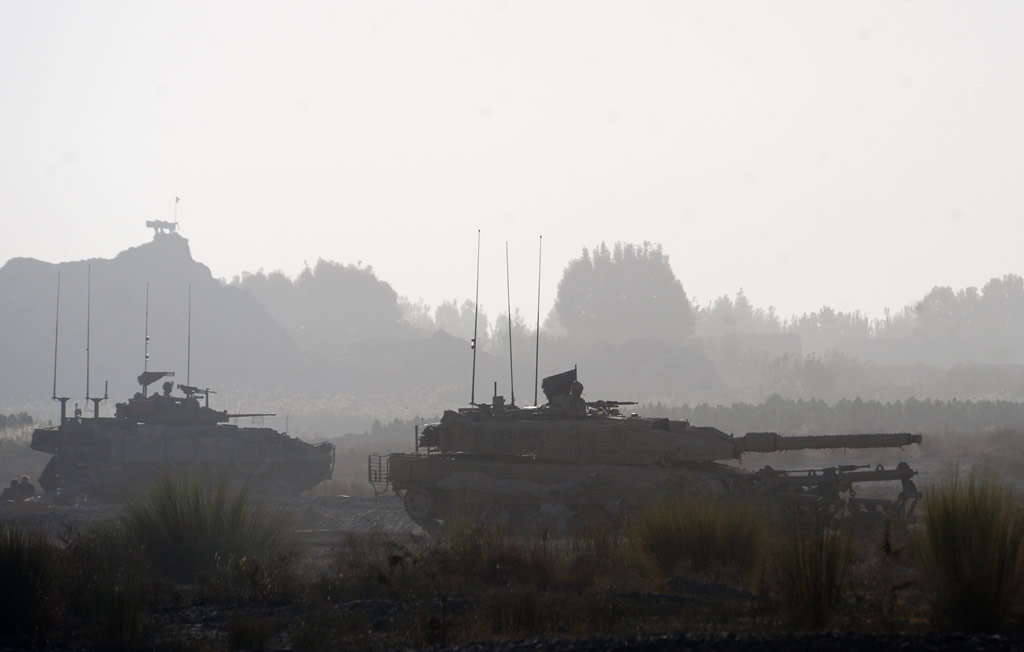
(click to view full)
Canadian Forces took some of the lessons re-learned during Operation Medusa in Afghanistan, directly to heart. Canada’s DND:
“The heavily protected direct fire capability of a main battle tank is an invaluable tool in the arsenal of any military. The intensity of recent conflicts in Central Asia and the Middle East has shown western militaries that tanks provide protection that cannot be matched by more lightly armored wheeled vehicles… [Canada’s existing Leopard C2/1A5] tanks have also provided the Canadian Forces (CF) with the capability to travel to locations that would otherwise be inaccessible to wheeled light armoured vehicles, including Taliban defensive positions.”
In October 2003, Canada was set to buy the Styker/LAV-III 105mm Mobile Gun System to replace its Leopard C2 tanks. By 2007, however, the lessons of war took Canada down a very different path – one that led them to renew the very tank fleet they were once intent on scrapping, while backing away from the wheeled vehicles that were once the cornerstone of the Canadian Army’s transformation plan. This updated article includes a full chronology for Canada’s new Leopard 2 tanks, adds information concerning DND’s exact plans and breakdowns for their new fleet, and discusses front-line experiences in Afghanistan.
Why New Tanks Now?

(click to view larger)
As noted above, existing Leopard 1A5-CAN tanks (designated C2) have been a welcome addition to the fighting in Afghanistan, and their MEXAS ceramic-composite armor kits and combat engineering attachments increase their versatility. The Canadian Forces are also deploying tracked M113 armored personnel carriers, which offer much less complete protection but similar mobility benefits.
Canada’s LAV-III wheeled armored personnel carriers have played useful roles, using their sensor suites and 25mm autocannon in road overwatch and patrols. The Panjwai district’s mud-brick compounds and its irrigation ditches, however, presented the LAV-IIIs with limits they could not easily overcome – and would have done the same for the LAV-III/Stryker MGS systems, had Canada gone ahead with that purchase.
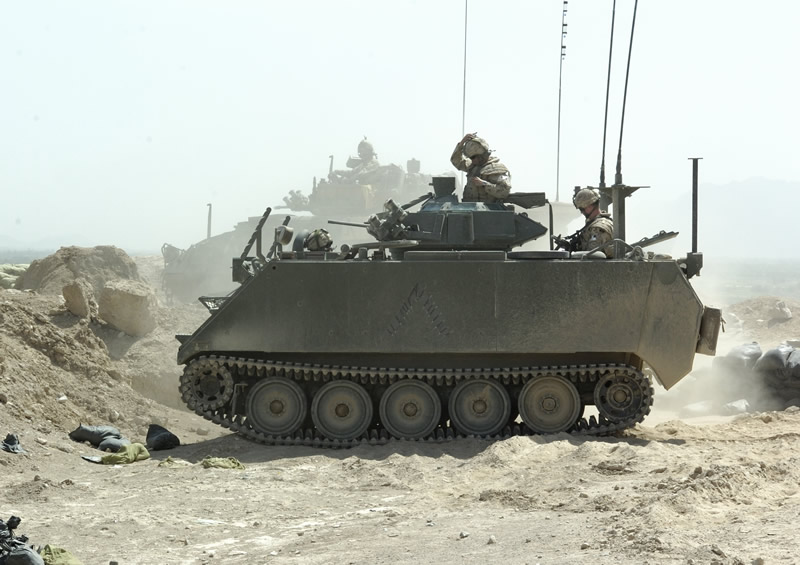
FOB Gundi Ghar
(click to view full)
Canadian sources tell DID that in addition to direct fire support from the Leopard C2s’ 105mm gun, the tanks’ heft and traction are equally significant because they can crumble low-lying brick walls by using front-mounted engineering attachments like dozer blades – or just their own weight. This clears a path for other forces, and allows the tanks to continue moving forward and providing fire support.
The Leopard C2s have their own deficiencies, however. The first – and biggest – issue, is heat. Temperatures in southern Afghanistan can reach 50C/122F in the summer time, which can easily become a life-threatening 65C/150F inside the vehicle due to its enclosed nature plus heat generated by the tank’s hydraulic systems. Australia managed to add air conditioning to its Leopard 1s, but the Canadian version has a number of unique characteristics; any retrofit project risked delays and complications. With vehicles committed to the fight and needed in the field, however, failure was not an option.
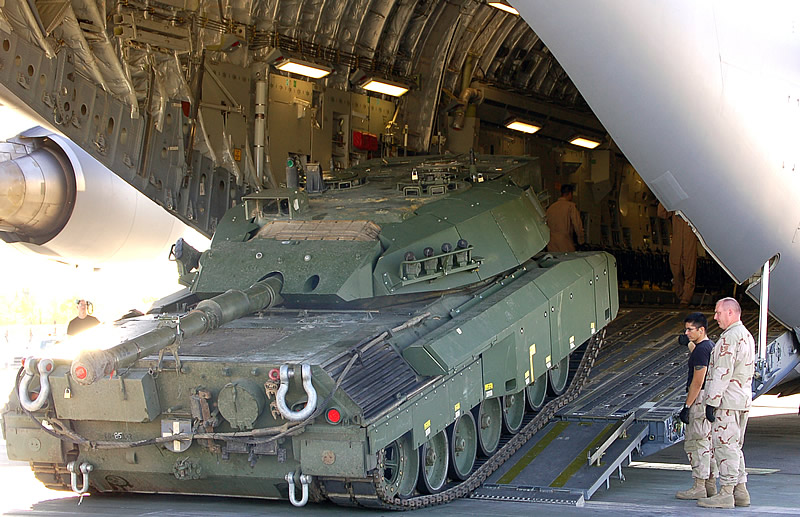
(click to view full)
The second issue was protection. Even with its add-on MEXAS armor, the 1970s vintage Leopard 1s lack the all-around protection possible in the latest main battle tanks like the American M1 Abrams, German Leopard 2, et. al. The M1 TUSK and Leopard 2A6M versions can ignore single-warhead anti-tank rockets like the RPG-7, and can also add belly armor kits to improve protection against IED land mines.
The third issue was electronics and maintenance. Retrofitting modern digital communications and force tracking systems into tanks like the 6th generation Leopard 1 is a strain at the best of times, while 7th generation vehicles are designed and equipped to include them. In addition, by 2012 there would no longer be logistics support and spare parts for the turrets of Leopard 1s. By 2015, the Canadians believed that it may become impossible to maintain them.
Standing pat was not an option, and a simple switch had sharp limitations. With their LAV-III MGS and the combined anti-air/anti-armor LAV-III MMEV procurements in limbo, and the tactical rationale for these programs brought into question, the Canadians accepted the verdict of circumstances, and chose a different path. Instead of new 8×8 APCs, they would field new heavy armor.
Choices, Choices: Leopard 2s For Canada

C2 top, 2A6 bottom
A number of options for renewing Canada’s tank capability were considered, ranging from refurbishment, to surplus, to new. Delivery time was of the essence, and DND’s examination determined that the cost of any new vehicles involved paying up to 3 times as much as buying the same basic tank models on the surplus heavy tank market. New medium tank options like the 32-tonne CV90-120 light tank also offered full tracked mobility and similar firepower at less cost, but Canada had learned that heavier weight was often a tactical plus in theater, and decided that they needed vehicles sooner rather than later.
Accordingly, the Canadian government approached 6 allied nations regarding surplus main battle tank sales, and received proposals from 3 of them. It then went ahead and made 2 purchases, plus another 2 follow-on buys.
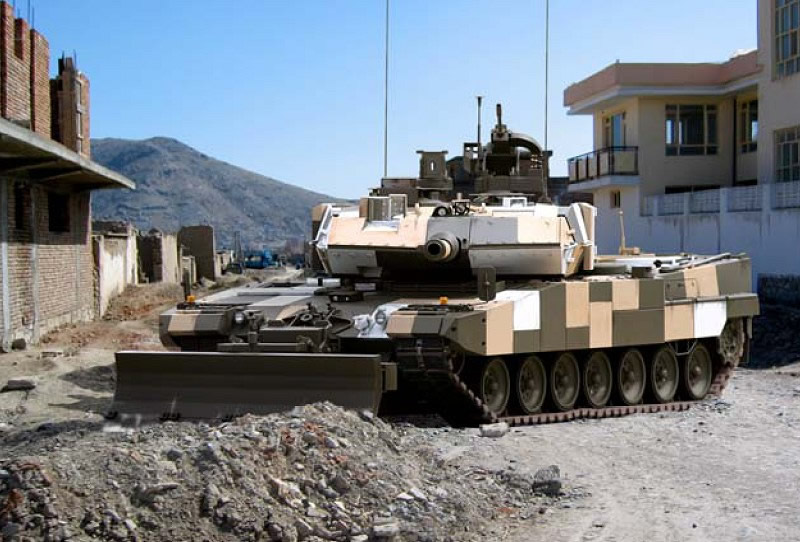
(click to view full)
Their tank choice is a modern mainstay for many countries. Thanks in part to the great DeutschePanzerSchlussverkauf (German Panzer fire sale), the Leopard 2 and its variants have now been bought by Germany, Austria, Canada, Chile, Denmark, Finland, Greece, the Netherlands, Norway, Poland, Spain, Singapore, Switzerland, Sweden, and Turkey.
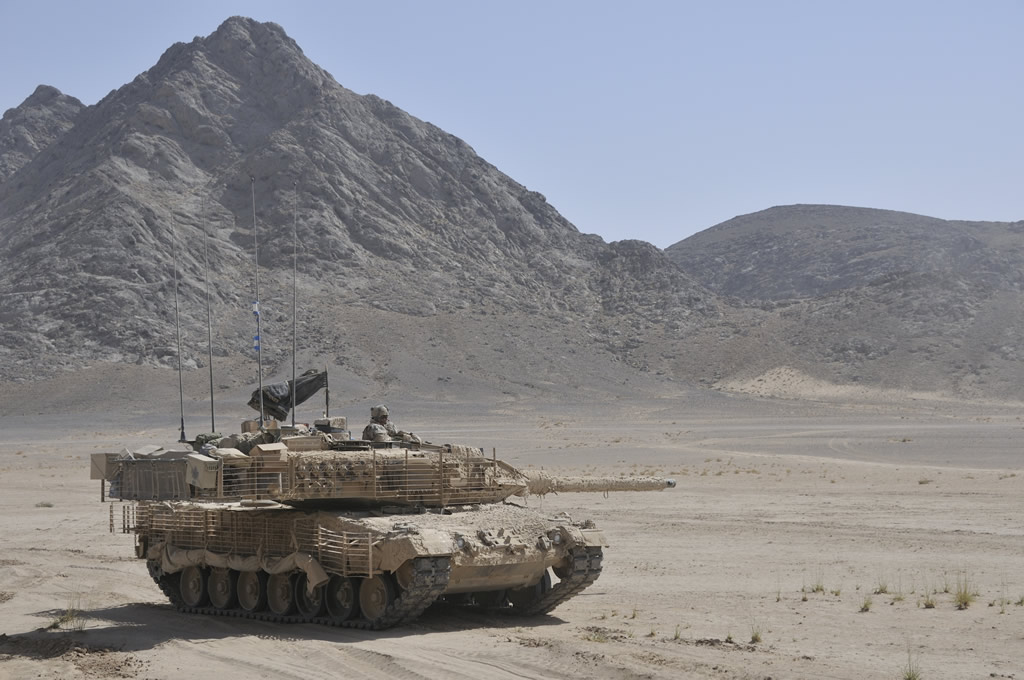
Canada’s 1st step was a lease, in order to get modern, air-conditioned tanks to the front lines immediately. Germany won that order, and 20 German Leopard 2A6M mine-protected tanks were delivered by the summer of 2007 to replace existing Leopard 1A5/C2 tanks in Afghanistan. The new tanks’ electric turret systems produce less heat than the C2s did, and air conditioning was added to the new German tanks in theater. This was a relief to Canadian tank crews, who had needed protective suites in the 140F/ 60C interiors of their Leopard 1A5 tanks.
The 2A6M is the most modern serving Leopard variant, though KMW had proposed a “Leopard 2 Peace Support Operations” variant with improved protection, and integrated combat engineering capabilities. By the time modifications were finished, the Leopard 2A6 CAN turned out to fall somewhere between the conventional 2A6M and the PSO. Canada actually ended up keeping the leased and modified German tanks, and sending 20 Leopard 2A6Ms from its follow-on purchases back to Germany.

(click to view full)
The follow-on purchases of 127 tanks were won by 3 countries. The biggest order for 100 tanks went to the Dutch, who are serving under NATO ISAF beside Canadian forces in southern Afghanistan. Training for 5 years and initial spares will also be provided. Cooperation between these nations is not new. Dutch PzH-2000 mobile howitzers have already proven very helpful during Operation Medusa, and so had their CH-47 Chinook medium-heavy helicopters – some of which were bought as surplus from the Canadians in the 1980s. The cycle continues. And so it goes.
In the aftermath of their sales to Norway, Denmark, and now Canada, The Dutch were left with 110 Leopard 2A6-NL tanks in their arsenal. Other sales dropped that total further, and on On April 8/11, the Dutch Ministry of Defense announced that the last tank unit was to be dissolved and all remaining Leopard tanks sold.
The additional Leopard 2 buys totaled 27 tanks/ hulls. First, another 15 Leopard 2A4s were bought from Germany, to be used for spare parts. This hadn’t been contemplated in the initial plan, but it was necessary. The initial set of 20 leased German Leopard 2A6Ms were experiencing readiness problems, as tanks were cannibalized in order to keep others running. A 2010 buy from Switzerland added 12 stripped Pz 87s (Leopard 2A4 variants) for conversion to specialty vehicles, under Canada’s Force Mobility Enhancement (FME) program.
Structure
(click for full photo)
Canada’s initial 100-tank buy from the Netherlands included 20 Leopard 2A6-NL tanks, and 80 older Leopard 2A4s. Why 100? Because Canada’s Department of National Defence believed this was the minimum fleet size to support a deployed tank squadron:
40 for deployed operations. The Canadian Forces need 2 combat-ready squadrons of approximately 20 tanks each: 1 for deployment and a 2nd for rotation into theater to allow for depot repair and overhaul of the 1st.
40 for training. Another 2 squadrons of 20 tanks each are required for collective and individual training in Canada: individual training at the Combat Training Centre at CFB Gagetown, New Brunswick; and squadron training at CFB Wainwright at the Canadian Manoeuvre Training Centre in Alberta. These tanks do not need the same up-armoring conversion as the 2A6Ms, but they do need the same guns ad electronics to ensure that the training is consistent and useful.
(click to view full)
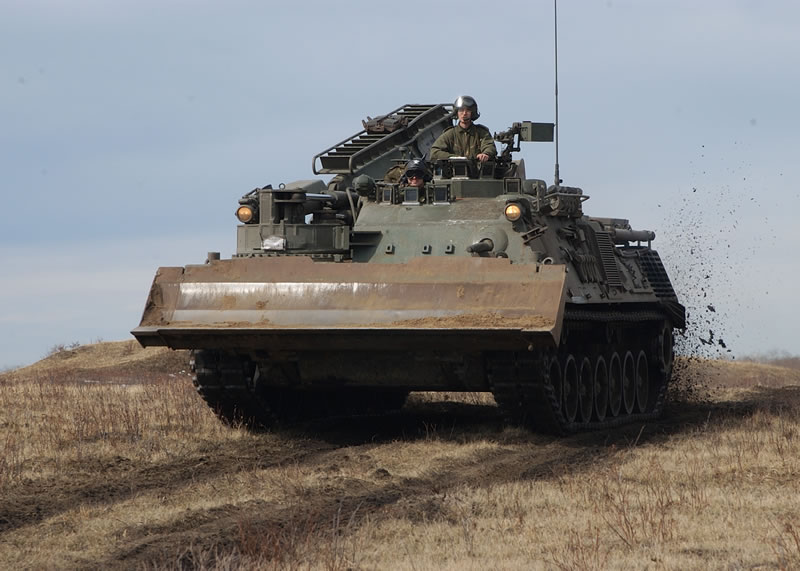
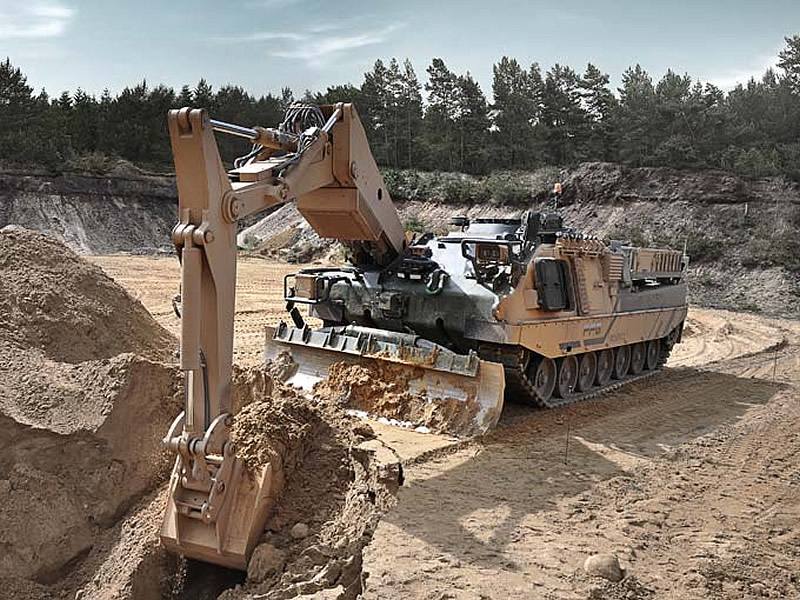
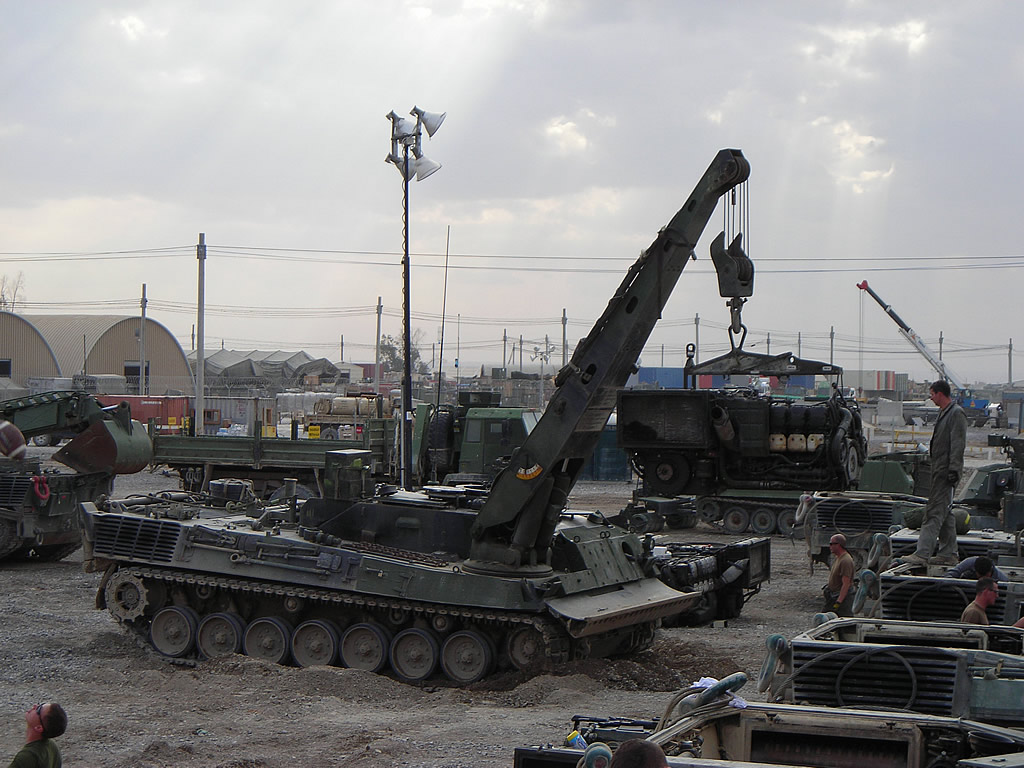
20 specialists. The final 20 vehicles would be key support vehicles such as armored recovery vehicles, which can winch out stuck tanks, or lift a turret or engine out for repairs. Canada had already been forced to deploy its Leopard 1 derived Taurus ARV to Afghanistan, and DND knew they would also need specialty options like armored bridge-laying vehicles (Canada’s Leopard 1 version: Beaver bridge-launcher), and armored engineering vehicles (Canada’s Leopard 1 version: Badger AEV). LAV-III engineering vehicles had already shown that they needed a tracked supplement in Afghanistan, so Badgers had been deployed. On the other hand, without turrets that drive a 2015 expiration date, it may be practical for Canada to simply keep many of their existing Badger and Taurus vehicles.
At one point, the 20 planned specialist vehicles were reduced to 8 ARV-3 Armored Recovery Vehicles, and 12 vehicles used for spare parts. That thinking changed, however, and Canada ended up adding more Leopard 2s from other sources. Its enlarged “Force Mobility Enhancement” program picked Rheinmetall’s BPz-3 Buffel as its Leopard 2 derivative “ARV-3” (4-6 vehicles), and FFG’s WISENT as its AEV (13-18 vehicles) to replace the existing Badgers.
Contracts & Key Events
2011 – 2014
(click to view full)
June 17/14: Sensors. Airbus and Carl Zeiss’ Cassidian Optronics partnership has been awarded over EUR 15 million in contracts to modernize more than 100 Leopard 2 main battle tanks in Germany, Canada and Denmark with ATTICA thermal imaging in their commander’s and gunner’s sights.
German Leopards already use Cassidian’s 3rd-generation thermal imaging device in the PERI R17 commander’s sight, and will upgrade the gunner’s sight. Canada’s Leopard 2A6AM-CANs and Denmark’s Leopard 2A5-DKs will install ATTICA in both commander and gunner’s sights, creating the ability to seamlessly pass views from commander to gunner with no change in quality. Sources: Airbus DS, “Cassidian Optronics delivers sighting systems for the modernisation of several NATO states’ Leopard 2 main battle tanks”.
July 18/12: AEVs. Rumors of a contract were correct:
“FFG Canada is a new international joint-venture company between Industrial Rubber Company Ltd., and German defence firm FFG Flensburger Fahrzeugbau Gesellschaft mbH (FFG), with the company headquarters in Bathurst. The company will begin its operations with the $135-million contract awarded to the German defence firm to supply 13 WISENT 2 Armoured Engineer Vehicles (AEV) to the Department of Defence through the conversion of Leopard 2 main battle tanks into armoured engineer vehicles.”
In exchange for 26 jobs created, the New Brunswick provincial government provided $500,000 under the Northern New Brunswick Economic Development and Innovation Fund, a $700,000 payroll tax rebate, and $300,000 in forgivable loans through Invest NB. That’s about $57,692 per job. Sources: New Brunswick Provincial Government, “FFG Canada creating 26 new jobs in Bathurst”.
May 5/12: FME – AEV Award. A cryptic MERX announcement indicates that Germany’s FFG (Flensburger Fahrzeugbau Gesellschaft mbH) has been picked for a EUR 81.6 million “Leopard 2 Conversion To AEV” contract. Initial Operational Capability was expected by 2011, so this is late. It’s cryptic because instead of listing the planned 13 WISENT vehicles, it says only “Vehicular Power Transmission Components. Quantity: 1.” That’s clearly ridiculous. The motives are equally cryptic, thought the National Post thinks it may have an answer:
“Defence department officials also privately question why no press release was issued on the multimillion-dollar armoured vehicle contract, since just weeks earlier MacKay’s office sent a news release about the awarding of a contract for $5,943 for barriers at armouries in Montreal.
A Conservative government representative, who asked not to be named, noted the official announcement on the armoured vehicle purchase would be coming shortly and that nothing untoward was behind the decision to keep the awarding of the contract quiet.”
Canada’s opposition parties disagree, and cite increasing secrecy involving documents and contracts that should be public. In a democracy, the military’s long-term strategic investment plan should not be a classified document. In Canada, it is. MERX notice | FFG, “WISENT 2” | CASR, “Leopard Specialty Vehicle: the MERX Contract Award Notice for Armoured Engineer Vehicle Conversion and the Political Fallout” | FFG re: WISENT | Postmedia, “”. Postmedia.
13 WISENT AEVs
Dec 20/11: It appears that some or all of the former Swiss tanks will be converted into Rheinmetall’s BPz 3 Buffel (Buffalo) Armored Recovery Vehicles, under a C$ 54.7 million / EUR 40 million contract that also includes basic training support. Delivery is slated to take place in 2013-2014, following conversion in Germany at Rheinmetall’s Kiel (combat support vehicle R&D center) and Kassel (main armored vehicle production) plants. There will also be some work by Rheinmetall Canada in cooperation with other Canadian companies. The platform will supplement, and eventually replace, the Army’s Leopard-1 derived Taurus ARVs.
Thanks to a built-in hydraulic crane, the BPz-3 Buffalo is able to swap a complete Leopard 2 turret in the field. It’s also equipped with a robust winch system, and a combined dozer and stabilizing blade that doubles as an option for light engineering work. The Canadian Army has employed Buffalo ARVs in Afghanistan since 2007, using leased vehicles that were drawn from the German Bundeswehr’s inventory and given protective upgrades by Rheinmetall. This has allowed Canada to offer Initial Operational Capability by 2011 (vid. July 8/09 entry), without a main contract.
The Bergpanzer 3 effort will take place alongside Canada’s very delayed effort to modify 42 Leopard main battle tanks sold to Canada by the Dutch (vid. Dec 17/10 entry). Rheinmetall.
BPz-3 Buffel ARVs
Feb 10/11: Switzerland’s armasuisse announces that the country is selling 12 surplus Pz 87 (Leopard 2) tank chassis to Canada, for conversion into specialty vehicles:
“The vehicles supplied to the Canadian Forces will be converted to support vehicles. The Pz 87 Leo are not sold in fully equipped condition. Among others, the following assemblies are removed: armament, radio-and inter-phone systems. The components which are not supplied are used as spare parts by the Swiss Armed Forces.”
See also the July 8/09 entry, covering the FME program. armasuisse | Defense Update.
12 Swiss Pz-87/Leo-2 hulls
2010
(click to view full)
Dec 17/10: Rheinmetall Canada in Saint-Jean-Sur-Richelieu, Quebec announces a EUR 17 million (C$ 22.7 million) contract to modernize and overhaul 42 Canadian Leopard 2A4 main battle tanks. By the start of 2012, the ex-Dutch tanks will be refitted to meet Canadian Army technologies and standards.
Leopard 2A4 upgrades, at last
Oct 7/10: Krauss-Maffei Wegmann hands over the first of 20 Leopard 2A4M CAN battle tanks to the Canadian armed forces, during a ceremony at Bergen near Hannover, Germany. The next deployment location for the Canadian Leopards will be Afghanistan, where they will replace the Leopard 2A6Ms in theater.
This has been a long time coming – vid. March 10/09 entry. KMW | defpro.
November 2009: Canada’s Auditor General’s report on the Tank Replacement Project reveals a new buy of 15 Leopard 2A4s from Germany, which were were purchased act as a source of spares. CASR:
“It is not clear whether the 15 new ‘donor’ vehicles are in addition to 12 “Logistic Stock Vehicles” for parts mentioned in the LOI. The OAG notes that the earlier-model Leopard C2 tanks had to be retained for use in Afghanistan because of flaws in the planning and execution of the Tank Replacement Project. From the outset of the loaned Leopard 2A6M deployment, the fleet was beset by serviceability problems. To keep the borrowed German Leopard 2A6Ms operating, CF personnel had to immediately begin cannibalizing this fleet (including the vehicles earmarked for training). The end result was reduced availability and training problems… [In the end, 20] ex-Dutch tanks will now be refurbished in Germany, brought up to full Leo 2A6M standards, and transferred to the Bundeswehr in lieu of returned tanks. DND’s Tank Replacement Project is now running 2 years behind schedule. No ex-Dutch Leopards upgraded to full 2A6M standard is likely to see Afghan service.”
See also Canada OAG report release | Audit Chapter 5.
15 German Leo-2s
July 8/09: Canada’s DND announces a program to create 13-18 Leopard 2 derived Armored Engineering Vehicles, and 2-4 Armored Recovery Vehicles, to replace its existing fleet of Leopard 1 derived Badger AEVs and Taurus ARVs. AEVs are very heavy combat engineering vehicles, while ARVs are more focused on towing heavy vehicles out of trouble or assisting with field repairs. The initial set of 15 vehicles (13 AEVs and 2 ARVs) will be acquired as options associated with Canada’s Tank Replacement Project.
The second phase of the “Force Mobility Enhancement” project will add tactical mobility implements for the rest of the Leopard 2 tank fleet, including dozer blades, mine ploughs and mine rollers. The program will buy 29 sets of implements, with an option of an additional 30.
The procurement process will be a competitive military off-the-shelf acquisition, and a letter of interest is likely during summer 2009. The definition phase of the project will include a solicitation of interest and qualification (SOIQ) or a request for proposals (RFP), and the contract award is expected by spring 2011. Fielding is expected to be very rapid – both the vehicles and the implements procured are expected to reach Initial Operational Capability by 2011, with Full Operational Capability expected by 2015. Canada’s 100% of contract value industrial offset rules will apply.
CASR reports from direct sources that Canada is already using 2 German Bergepanzer 3/Buffel ARVs in Afghanistan, having taken the vehicles direct from Bundeswehr stocks and upgraded them. Canada refers to them as ARV-3s, since the “Buffalo” designation is already in use by a LAV-based engineering vehicle. On the AEV front, the emerging “standard” choice is the Rheinmetall/RUAG AEV-3 Kodiak, currently in use by the Dutch, Swiss, and Swedish armed forces.
While 2011 lies within the term limit of the present Conservative Party government, it is a minority government in uncertain economic times, and Canada is currently set to wind down its Afghan mission in 2011. Until a contract is signed, therefore, this program must be considered to be at risk.
FME plans announced
March 10/09: Canada’s Globe and Mail newspaper reports that 80 of the 100 new Leopard 2 tanks [the Leopard 2A4s] remain in storage, over a year after the formal contract with the Netherlands, 18 months after the first Leopard 2A6s were shipped to Afghanistan, and over 2 years after the initial agreement in principle. Without even a contract to get them ready for service:
“Lieutenant-General Andrew Leslie, Chief of the Land Staff, said he can not explain why he is still waiting for the badly needed tanks. …[He] told the Senate committee on national security and defence. “They bought 100 Leopard 2s. Forty are still in Europe and 40 are currently in Montreal and they’ve been in Montreal since I believe November of last year. And I do not yet have my hands on those Leopard 2s with which to train our soldiers.”
Gen. Leslie told senators the government has yet to contract a private firm to do the upgrades required to get the vehicles into service. As a result, soldiers training in Canada must use nearly 40-year-old Leopard 1 tanks, which he said have a breakdown rate of 71 per cent.”
2008 – 2009

(click to view full)
Winter 2008: The Canadian Army Journal runs an article from a Canadian officer who has returned from commanding Leopard C2 (1A5 CAN) tanks in Afghanistan. Maj. Trevor Cadieu discusses events on the ground, and lessons learned. Some excerpts:
“Elements of the ISAF Reserve Battalion were certainly relieved to see the tanks during Operation ACHILLES, especially when the Leopard mine ploughs were used to extract several of their utility vehicles and crews that had found the hard way an old Soviet minefield… [‘A’ Squadron] has routinely been split into troop-sized elements or less and attached to each of the infantry companies. This decentralized employment of armour and extremely high temperatures has strained the sustainment concept and serviceability of the tanks… [but] The impact of this squadron has been felt as far west as the Helmand border, and north towards Ghorak and Shah Wali Kot… Specialized weapons or concentrated attack may be capable of destroying tanks, but the survival rate of their crews is high and the protection they offer to dismounted infantry from fragmentation and blast weapons is unquestionable.
“…The 105 mm HESH round is the bread-and-butter munition for the tank squadron in theatre: each round knocks five-by-five meter holes into grape-drying huts and we have found it highly effective against dismounts at ranges of 150 to 3800 meters… yet there has been no suggestion of civilian deaths attributed to tank fire during this entire period… A strong case can be made that Canadian tanks have actually reduced collateral damage in the Canadian AO. We know through experience that the more combat power we commit to a mission, the less kinetic that operation is likely to become.
“…Although tanks provide increased firepower, protection and mobility to the BG, they are extremely vulnerable when operating independently in a COIN environment… The enemy in direct confrontation on the objective has killed very few Canadian soldiers in Afghanistan. It is on the way to the fight that our troops have been more regularly maimed and killed by mines, IEDs and fanatical suicide bombers. Tanks, with their superior armoured protection and mobility, have led as a default during all moves in both open and close terrain… The notion of grouping the different arms to benefit from their collective strengths is not new, but it has again been validated in combat.”
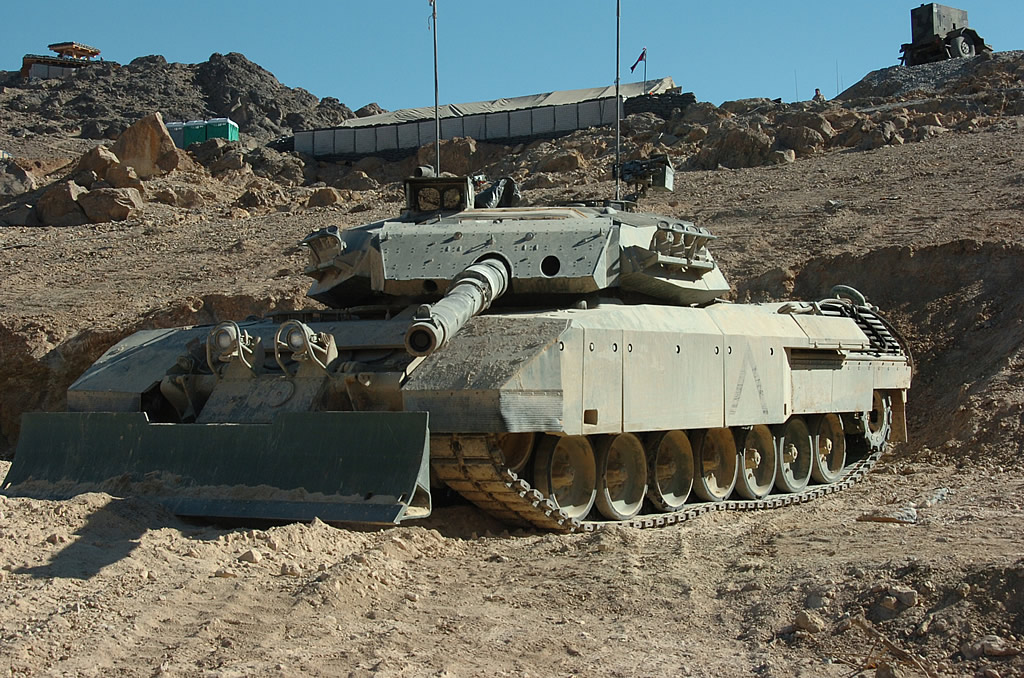
FOB Ma’Sum Ghar
(click to view full)
“…A common misconception is that the tank is primarily an anti-armour platform. This is false, especially in the environment in which we currently find ourselves fighting… Equipped with a dozer blade, mine roller and mine plough in each troop of four tanks, the Leopard fleet of vehicles has restored tactical mobility to the combined arms team in Afghanistan through its ability to penetrate grape and marijuana fields, clear mine and IED belts and breach mud walls and compounds that were previously impassable to the LAV III… [which made] it more difficult for the enemy to sight defensive positions, while decreasing the risks to less protected coalition soldiers… The enemy was kept off-balance… and the tanks were able to form a “ring of steel” around the infantry as they conducted deliberate clearance operations in urban areas. Both tank squadrons have used the dozer blades and ploughs extensively to conduct hasty and deliberate minefield breaches and break into complex terrain in order to destroy the enemy and extract personnel and vehicle casualties… [Having said that,] there is no system on the battlefield that has the capacity to neutralize without exception all mine/IED threats… IEDs have occasionally detonated on impact with the implement, rendering it ineffective. A Squadron 2 RCR BG has used effectively the tank rollers… [but that won’t help against] command detonated and remote-control detonated IEDs. Further, the rollers take considerable time to mount, they require a larger turning radius and they keep us on the tight, canalizing roads of Afghanistan – exactly where the Taliban prefer to plant mines and IEDs.”
“…The only guarantee when employing armour in the harsh environment of Afghanistan is that tanks will break. Their timely recovery from the battlefield is dependent on the immediate availability of other armoured assets mounted on the Leopard chassis… maintenance deficiencies skyrocketed when the sub-unit operated in more than two locations at once. Without qualified technicians available to provide timely and responsive support to all deployed elements, proactive maintenance was neglected and vehicle serviceability suffered as a result. Of greater concern was that tanks actually became a liability to infantry soldiers when this valuable resource was too thinly spread across the BG… Tanks, regardless of their vintage, are extremely maintenance-intensive and they possess an insatiable appetite for combat supplies and commodities. Recognizing the sustainment demands of the Leopard fleet of vehicles, the National Support Element (NSE) deployed to Afghanistan has allocated to the tank squadron a dedicated echelon… None of the other arms have been allocated a dedicated echelon in Afghanistan.”
The article goes to describe the sequential steps that led to the Canadian Leopard C2 deployment, and stresses, again, the key role of support echelons:
“While the image of a Leopard tank rolling off the back of a C-17 is perhaps more appealing to the media, the first chalks into theatre should be filled with the armoured recovery assets, mobile repair team vehicles, specialty tooling and POLs, and sufficient spare parts for 30 days of operations. Without these critical parts and combat supplies identified, received and organized at KAF, the tanks are useless.”
Oct 2/08: Leopard manufacturer Krauss-Maffei Wegman issues a release that discusses Canada’s field experiences in Afghanistan:
“[The 2A6 model’s extra mine-protection] proved its worth in November, 2007, when the Taliban attacked a Canadian Leopard 2A6M-CAN with a large booby trap. The tank did sustain damage, but the entire crew survived. The Canadians had purchased the tank from the German federal army’s inventory. The Canadian commander wrote a letter of thanks to the German ministry of defence, emphasising that survivors would have been highly unlikely in any other vehicle. Canadian Chief of Staff General Rick Hillier also pointed out that the Leopard 2A6M had not been destroyed, but was indeed back in operation after repairs.
Denmark is another country that has opted for the Leopard 2 to support its troops in the UN ISAF mission. Their Leopard 2A5-DK models proved their worth in January this year while supporting British troops in armed conflicts against the Taliban.”
March 19/08: Canada’s plans for its new Leopard tanks are now clearer. Germany will be offered the 20 Dutch Leopard 2A6-NLs, converted to match German equipment and standards, as replacements for their loaned tanks in Afghanistan. This allows Canada to keep the German tanks in Afghanistan, and saves a great deal of money on shipping. Another 20 Dutch tanks might be upgraded to the Leopard 2A6M CAN standard (creating a force of 40), but a final decision has yet to be made.
Of the 80 Leopard 2A4 tanks, the 40 training tanks will receive a longer L55 120mm smoothbore gun like the Leopard 2A6M, but not the additional armor. The number of these Leopard 2 A4+ tanks in Canada’s inventory may rise to 60 if Canada decides not to have 40 2A6M CAN models right now, and elects to leave the add-on armor and remaining 2A6M conversion as a pre-deployment option.
The remaining 20 Leopard 2 A4s will see 8 converted to Bergepanzer 3/ Buffel Armored Recovery Vehicles: 2 deployable, 2 in reserve, and 4 for training. These vehicles can be used to tow Canadian armored vehicles out of trouble, and can perform light combat engineering. The other 12 tanks will be used as sources of spares. CASR report & MERX solicitation W8476-080001/A.
Dec 14/07: Dutch Leopards. Canada signs a formal purchase agreement with the Netherlands for 100 Leopard 2 battle tanks. The ceremony is held at the De Salaberry Armoury in Gatineau, Quebec, near the capital city of Ottawa. The Canadian Forces release once again offers a breakdown of 40 deployable, 40 training, and 20 specialty vehicles (“i.e. tanks for laying bridges, armored repair vehicles and armored engineering vehicles.”).
See April 12/07 entry for details of the agreement in principle. The buy appears to cover 20 Leopard 2A6M-NL tanks, and 80 Leopard 2A4-NL tanks.
100 Dutch Leopard 2s
2007 and earlier
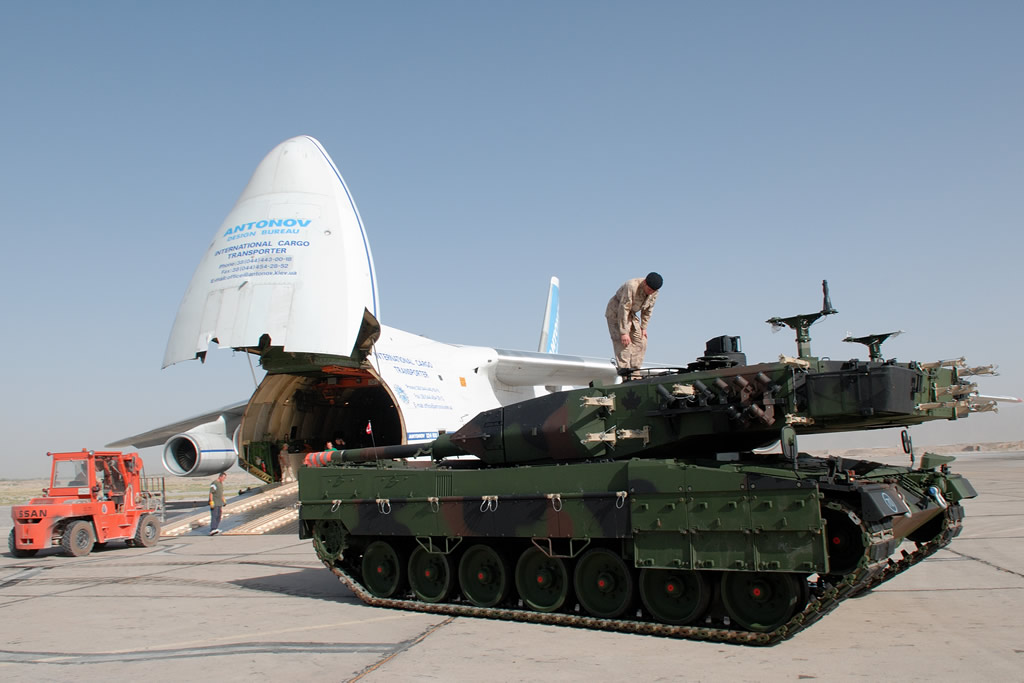
(click to view full)
Aug 16/07: German Leopards arrive. The first leased German Leopard 2A6M tanks arrive in Afghanistan, carried in on a leased AN-124 aircraft. These tanks were leased as an interim step that could get advanced tanks into theater very quickly, without waiting for Canada’s planned tank purchases and modifications. The 2A6M variant has added mine protection, but their most significant upgrade actually involves internal heat. Canada’s existing Leopard 1A5 tanks had been effective in theater, but temperatures inside were giving crews heat stroke, and forcing them to wear special cooling suits in order to fight effectively.
The electric turret systems on the leased Leopard 2A6Ms produce less heat than Canada’s Leopard 1s do, and they have the space and power that allows them to add air conditioning in theater. Source.
Leased 2A6Ms in Afghanistan
July 25/07: “Canadians train on the Leopard 2A6M” discusses ongoing training in Munster, Germany for Canada’s future Leopard 2A6M crews. Training actually began in May 2007 [source], and Germany will be the training site for Canada’s next 2 deployment rotations to Afghanistan. See also CF video.
April 12/07: Canada and the Netherlands announce an agreement in principle for 100 tanks. At this point, Canada’s Department of National Defence is still negotiating government-to-government agreements with Germany and the Netherlands, and expects to pay C$ 650 million (then about $570 million) for the lease, the purchase, required “Canadianization” upgrades, and initial spare parts. The money will come “from existing departmental allocations,” which in all likelihood means the monies once set aside for wheeled LAV-III variants.
Once negotiations are complete, the DND statement said that that Dutch Leopard 2 tanks will be transported to Canada, for necessary upgrades to final Canadian Forces standards. That standards set is unclear at this point, and could resemble Leopard 2A6 Peace Support Operation standards that add combat engineering, improved armor, and other enhancements well-suited for operations in Afghanistan. It is also unclear how many of the Leopard 2A4 taks could end up being converted into ARV-3 Bergenpanzer Armored Recovery Vehicles, AEV-3 Kodiak Armored Engineering Vehicles, et. al.
This process presents a pair of industry opportunities: upgrade work, and long-term support of the new Canadian Leopard 2 fleet. The Canadian DND expects to issue RFPs in these areas once government-government negotiations are complete. Industrial offsets will be expected from foreign bidders. Dutch MvD release [in Dutch] | Canadian DND Backgrounder | Canadian DND release.
Additional Readings
Canadian Army Vehicles & Programs
* Armor Site – Leopard 2. By far the best reference available for the Leopard 2 and all its variants.
* CASR – Background – CF Leased & Purchased Leopard 2 A6M / 2 A4 Tanks.
* KMW – Leopard 2A6.
* Defense Update – Leopard 2 PSO.
* KMW (June 23/06) – Leopard 2 PSO Peace Support Operation release. Developed by KMW as a privately-financed initiative, eventually became the Leopard 2A7.
* DID Spotlight – Canada Looks to Upgrade Its Armor in Afghanistan. Canada contemplated an Infantry Fighting Vehicle to accompany its new Leopard tanks, for many of the same reasons that spurred its purchase of the Leopard 2A6. That didn’t happen, but the FLCV program did end up buying some AEVs and ARVs, upgrading the wheeled LAV-III APCs, and buying Commando mine-resistant vehicles.
* Rheinmetall Defence – Armoured Tracked Vehicles. Canada bought the Buffel 3 (Buffalo 3) armored recovery vehicle, which is built on the Leopard 2 chassis. The vehicle will almost certainly have a different designation in Canada, due to a name conflict.
* FFG – ARV / AEV WISENT 2. New AEV, can also convert from AEV to ARV in less than 5 hours.
* Army.ca – Leopard C2. Old Leopard 1A5 tank.
* Army.ca – Badger AEV. Old AEV.
News and Views
* Canadian Army Journal (Vol. 10.4, Winter 2008) – Canadian Armour in Afghanistan. By Maj. Trevor Cadieu, serving as Second-In-Command in Lord Strathcona’s Horse (Royal Canadians). Mostly discusses the use of Leopard C2 (1A5 CAN) tanks, not the Leopard 2s.
* CASR – Hard Numbers – CF Afghanistan Casualties by Vehicle Type. Note that many of the LAV-III casualties stem from the practice of riding with soldiers’ bodies outside of various hatches. This is the result of a tradeoff between protection vs. the need for all-around awareness, and the benefits of having locals see your faces.
* Aviation Week Ares (Nov 19/10) – Marines Sending in the Tanks. The US Marines pick up the idea from the Canadians and Danes, and send in a company of M1 Abrams tanks.
* Aviation Week Ares (Feb 11/10) – Pros and Cons of Strykers in Afghanistan. Regarding American experiences in the same location as a previous Canadian deployment.
* Canada Office of the Auditor General (Oct 6/09) – 2009 Fall Report of the Auditor General of Canada. See esp. Chapter 5 – Acquiring Military Vehicles for Use in Afghanistan.
* Canada DND (July 8/09) – Force Mobility Enhancement. Refers to the engineering add-ons for the new Leopard 2 fleet, and dedicated ARVs/AEVs.
* CASR (May 2007) – Leopard-kampvogne til Afghanistan?: a Little Help from our Friends. Looks like Canada won’t be the only NATO country with Leopard 2 tanks in Afghanistan. Denmark looks set to take 5 of its Leopard 2A5-DKs in country…
* Dutch MvD (April 12/07) – Nederland Verkoopt Leopard Tanks Aan Canada.
* Canadian DND (April 12/07) – Backgrounder: Renewing the Canadian Forces’ Tank Capability.
* Canadian DND (April 12/07) – Protection the top priority with tank acquisition.
* Toronto Star (April 5/07) – Defence minister defends use of aging tanks in Kandahar. “Earlier this week, Gen. Andrew Leslie, Canada’s top army officer, said he might have to pull the tanks out of service this summer because of the heat.”
* Halifax Chronicle Herald (April 4/07) – Green light on new tanks [dead link]. Reported rumors of the recently-announced buy, and added: “The army now has 17 of its old 45-tonne tanks patrolling the desert and dirt roadways of rural Kandahar. The biggest drawback to the vehicles is their lack of air conditioning in a climate where daytime summer temperatures soar above 50C. Defence Department researchers have looked at installing air conditioners in the vehicles but that would cost hundreds of thousands of dollars per vehicle. Another idea proposes to give tank crews cooling vests – the same kind used by race car drivers – but they would be cumbersome when layered along with existing body armour.”
* CASR (December 2006) – Punching at Panjwaii – Canadian Leopard Tanks in Combat
* US Air Force Link (Oct 10/06) – ‘Spirit of McChord’ gives Canadians a lift. Ferrying Leopards to Afghanistan.
* Canadian DND (Sept 15/06) – Military Strengthens its Reconstruction and Stabilization Efforts in Afghanistan. Announces deployments of additional vehicles and units.
* Canadian Press (July 8/06) – Harsh climate, terrain take toll on Canadian military gear in Afghanistan [dead link]. Note that all temperatures are in metric, so “60 degrees” means 140F. Vehicle surfaces or interiors without air conditioning may indeed get that hot, but surface temperatures do not. Quote: “For the most part it is putting stuff back together again with bubble-gum and tape, whatever you can think of at the time,” said Cpl. Kirk Lewis of Salisbury, N.B. “As soon you get off the highway and into the wadis (dry river beds) – it’s the suspension, the tires, the heat, the strain of driving up and down the hills all day at slow speeds and high idle. It just seems to murder the vehicles.”
* Designated Import (July 29/06) – Canadians on the front lines of Afghanistan. Email account of a Canadian LAV commander’s experiences during the Battles of Panjawai: the good, the bad, and the ugly. Includes descriptions of the US and British efforts, as this was a multinational operation – again, the good, the bad, and the ugly are depicted. DID cannot verify the email’s authenticity, but we believe it to be so.
* CASR (January 2006) – For Cooler Heads To Prevail, the CF/DND is Moving Briskly: Climate Control Systems for Leopard Tanks in Afghanistan. Notes the Australian experience.
* Pentagon’s DefendAmerica.MIL (April 28/05) – Afghan Army Gets Armored Personnel Carriers. The 2nd Kandak (Battalion) Mechanized Infantry, in the 201st Corps’ 3rd Brigade, located in Kabul receives 63 M113A2s and 16 M577 command vehicles. The vehicles do not appear to have advanced armor, and they also lack the upgraded engines and transmissions of the M113A3 variant. The U.S. M113A2s are classified as “excess defense articles,” which allows them to be donated.
* Canadian DND (Oct 29/03) – Minister of National Defence Announces Acquisition of a Mobile Gun System. This project was eventually canceled.
Additional Readings: Doctrinal

(click to view full)
TAW (Sept 19/04) – MacGregor on the Army’s Transformation Plan. Excerpts from Col. MacGregor’s testimony to the House Armed Services Committee on July 15/04. See this PDF file for the full transcript.
Armor (March-April 2004) – Transformation Under Fire: Revolutionizing How America Fights [dead link]. Reviewed Col. Douglas MacGregor’s book of that name; the former Colonel now has his own YouTube channel.
Canadian DND (Oct 22/03) – Embracing Reallocation, Embracing Change. Speech by The Honourable John McCallum, P.C., M.P. Minister of National Defence to the Canadian Defence Industries Association. Note that this represents the former plan, and the previous Canadian Liberal Party government.
Parameters Magazine (Autumn 2001) – Army Transformation: A Tale of Two Doctrines
American Reformation Project (Dec 7/2000) – Memorandum to Secretary of Defense Designate Donald Rumsfeld: A Feasibility Study on the Chief of Staff of the Army’s Transformation Plan. Argues for Gen. Shelton’s dissent over Gen. Shinseki’s ideas, and is highly skeptical of the Future Combat Systems concept as a combat solution.