

(click to view full)
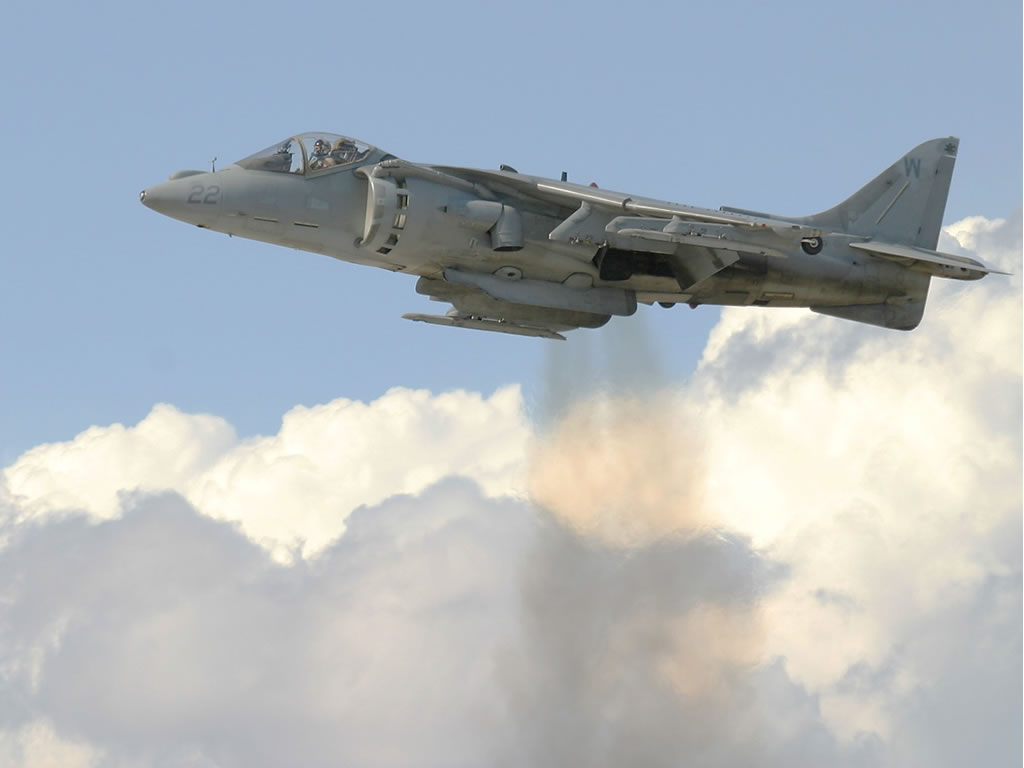
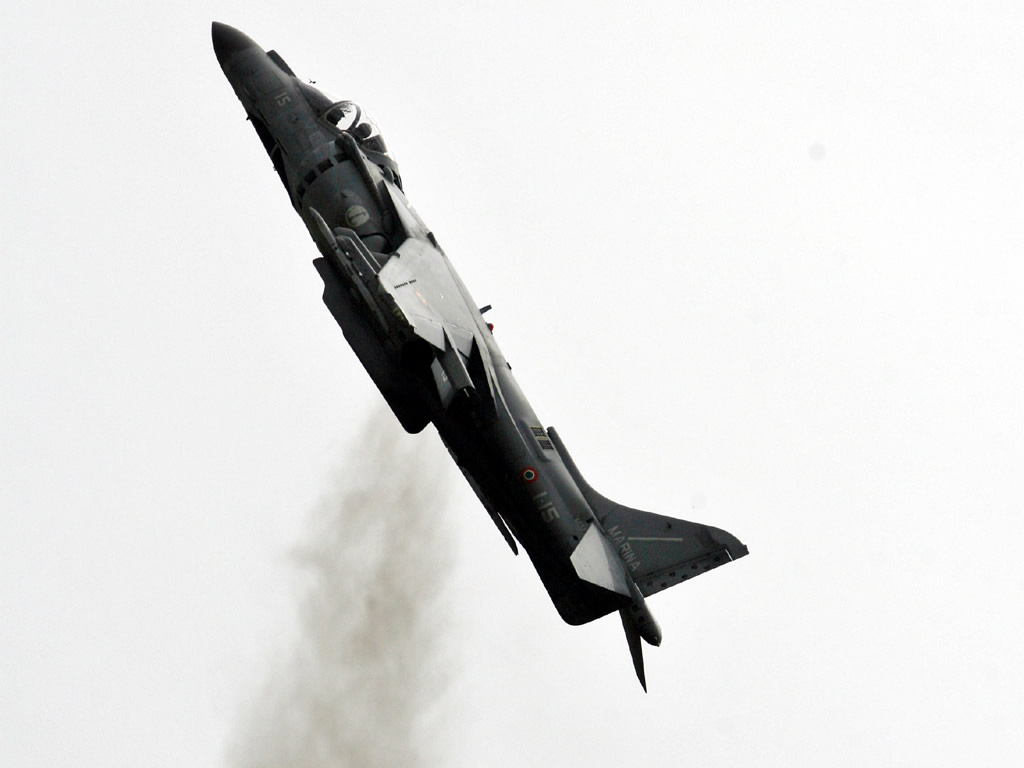
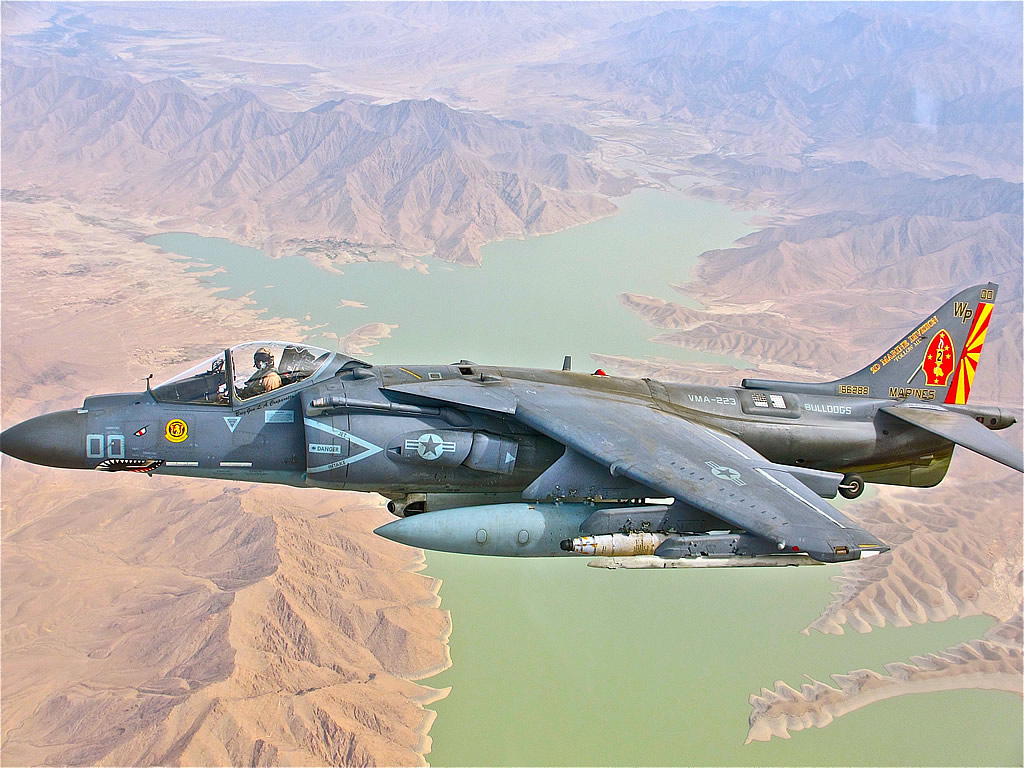
The USA’s AV-8B Harrier IIs have gone from the most accident-prone fighter aircraft in the fleet to a much safer jet whose hover capability and LITENING surveillance and targeting pods proved extremely effective in the urban warfare scenarios of Iraq. In 2007, the USA, Italy and Spain signed a Harrier Integrated Supply Support (HISS) performance-based support deal, worth up to $400 million.
Is this a step forward in terms of contracting for support? Is the British contracting model of comprehensive through-life support on its way across the Atlantic? The answers are yes, and not exactly.
The HISS Agreement: How It Works

(click to view full)
HISS is a 5-year performance-based logistics contract to support AV-8B Harriers operated by the U.S. Marine Corps, Italy and Spain, with an option for an additional 5 years. It supports numerous AV-8B systems, including a combination of electromechanical, avionics, electrical and structural components made up of approximately 1,050 stock items.
The nations involved have been flying Harriers for quite some time, and know the support costs involved. They sat down with Boeing to estimate those costs over the HISS contract period, then agreed to a fixed budget based on those estimates. Boeing is now responsible for carrying out the repairs on those systems, and allocating those monies within the budget. As a firm-fixed price contract, Boeing can pocket savings that it finds as long as it meets the agreed levels of service. Desired engineering changes, if any, can be developed at Boeing’s expense and then brought to the customers for possible approval and reimbursement.
Boeing is establishing partnerships with fleet readiness centers in North Island, CA and Cherry Point, NC through the agreement. Work under HISS will include asset repair management (spares and consumables), meeting delivery response times, obsolescence management, reliability and maintainability improvements, warehousing, configuration management, technology insertion, transportation and other innovative supply support solutions.
Britain vs. HISS: Compare & Contrast
(click to view full)
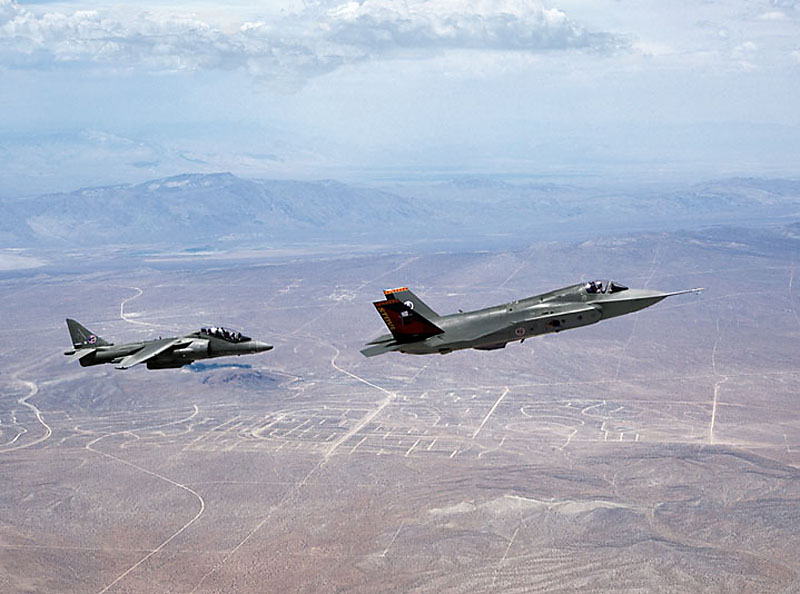
HISS diverges from the emerging British approach to supporting major platforms. While it incorporates some performance-based aspects, it’s much closer to classic spares & service approaches than it is to Britain’s ATTAC Tornado support arrangement, or even lesser approaches like the USA’s recent B-2 bomber support agreement. Key differences include:
It is not through-life, either for individual sub-systems or for the platform as a whole.
By 2017, the process of replacing Harriers with F-35B STOVL aircraft will have begun in the British and USMC fleets, but the AV-8B aircraft were still expected to be in service. Subsequent events would make that untrue for Britain, but they will remain true for the USMC and for Spain.
At 10 years maximum, HISS is long enough that the contractor has incentives to perform long-term maintenance activities. As the contract period approaches its end, however, those incentives become slightly weaker than a through-life contract’s. The 5-year break-point may provide an opportunity to shift HISS into a more advanced type of support arrangement, but the set nature of HISS will create obstacles. That’s because…
(click to view full)
The key metrics in the performance-based contract are aligned with delivery time for spares, rather than aircraft availability.
There is an obvious correlation, but availability also includes measures that remove the need for spares. At the TFD Group’s 2006 conference Nigel Bairsto, the Director General of Logistics Transformation for the UK MOD, offered the example of his efforts to introduce monitoring systems for the Tornados’ engines. The cost of spares and maintenance was known – it was very high, and the engines were responsible for a decent chunk of that. Years of effort, no luck. Once the contractor was paid for subsystem/aircraft availability, however, what was the first thing to go in? Advanced monitoring and diagnostic systems (often called HUMS, Health Usage and Monitoring Systems) – because suddenly it became financially worthwhile, and indeed was necessary in order to meet the new availability targets.
HISS takes more of a conventional approach to spares and maintenance, and accepts past baseline data as the norm. The USMC has placed basic monitoring equipment on the Harrier’s engine, for instance, but installation of more advanced monitoring is an ongoing military project dependent on military budget priorities. Likewise, new systems within the Harriers are incorporating more diagnostic equipment as they’re added, but it’s incumbent on the governments to do it – and with a fixed-price maintenance contract in hand, the incentive to do so just went down.
For governments who wish cost certainty, HISS is a step forward from past approaches of “provide spare parts when we ask for them, and we’ll pay for them.” With that said, it isn’t at the leading edge of current practices in the field… and in contrast to the step-by-step British approach toward through-life Harrier support, it is unlikely to reach that destination.
Contracts & Key Events
FY 2012 – Today
Spain will extend its AV-8B fleet and support agreements.
(click to view full)
Note that Boeing has also received a number of orders since 2005 under contract #N00019-06-D-0007 and others for AV-8B maintenance. Precisely because the HISS program is a very limited performance-based maintenance contract, that $20-30 million per year is budgeted and performed outside of HISS.
June 18/20: Spare Parts Viasat won a maximum $8.9 million deal for AV-8B spare parts. This was a sole-source acquisition using justification 10 US Code 2304 (c)(1), as stated in Federal Acquisition Regulation 6.302-1. This is a three-month contract with no option periods. Using military service is Navy. The Harrier II Plus (AV-8B), manufactured by BAE Systems and Boeing, is a VSTOL fighter and attack aircraft operational with the US Marine Corps, the Spanish Navy and the Italian Navy. The Harrier II Plus extends the capabilities of the Harrier with the introduction of a multi-mode radar and beyond-visual-range missile capability. Location of performance is California, with a September 30, 2020, performance completion date.
May 13/20: Emergencies in Bahrain Two US Marine Corps AV-8Bs both encountered emergencies during a mission in Bahrain last year. One of the aircraft caught fire on a taxiway and the jet was armed. The other Harrier had taken off and encountered technical issues as well. Because of the other mishap aircraft on the ground, it had to circle while waiting for the clearance to land. It ended up landing with just five minutes of fuel remaining. Both pilots had to thank Air Traffic Controller 2nd Class Drey Aynes who was on duty in the tower and help direct the emergency crew to handle the situation. Although the article did not state which Harrier unit was involved, VMA-311 was assigned to Special Purpose Marine Air Ground Task Force-Crisis Response-Central Command 19.2 in Bahrain last year.
April 2/19: Upgrades Boeing won two contracts with a combined value of $87.5 million to develop, upgrade and support the T/AV-8B Harrier II trainer aircraft. In one contract, the Naval Air Systems Command awarded Boeing $71.3 million for engineering and integrated logistics support in order of maintaining the Harrier during the aircraft’s post-production support phase. Work for this deal is expected to be finished in December 2023. The other contract is worth $16.2 million and is for system configuration set updates, avionics and weapons integration, as well as avionics obsolescence mitigation. Work under this contract, awarded by the Naval Air Warfare Weapons Division will take place in St. Louis and is scheduled to be completed in March 2024. T/AV-8B Harrier II is a ground-attack aircraft that is capable of vertical or short takeoff and landing (V/STOL). It is a subsonic attack aircraft powered by a single Rolls-Royce Pegasus turbofan engine, which has two intakes and four synchronized vectorable nozzles close to its turbine. In 2007, Boeing signed a $258.5 million performance-based logistics contract to support AV-8B Harriers operated by the US Marine Corps, Italy and Spain.
July 30/14: Boeing in St. Louis, MO receives a maximum $38.2 million delivery order for the repair of various AV-8 parts. $28.6 million in FY 2014 US Navy funds is committed immediately.
Work will be performed in St. Louis, MO and the expected completion date is June 5/15. One company was solicited for this non-competitive requirement, in accordance with 10 U.S.C. 2304(c)(1), and 1 offer was received in response to this solicitation by US Naval Supply Systems Command Weapon Systems Support in Philadelphia, PA (N00383-07-D-001J, DO 0017).
May 28/14: Spain. Spain had to extend its own arrangements for AV-8B support, after it became clear that the F-35B was an unaffordable option for a country still struggling with a fiscal crisis and depression-level unemployment. They reportedly bid for Britain’s retired Harrier fleet, which would have provided unlimited spares and reserve aircraft at a very low price, but Spain reportedly asked for certain conditions. In the end, Britain’s entire fleet ended up being sold for parts to the USMC (q.v. June 15/11). The good news is that the USMC’s own extension of their Harrier fleet, which was enabled by Britain’s decision, created the framework FLOAN needs for reasonably-priced EAV-8B support.
A May 23/14 meeting of the Council of Ministers was critical, as the government decided to spend EUR 70 million over 10 years to extend the “Matador” fleet’s life cycle support MoU past December 2014. The MoU will reportedly continue until at least 2025 now, which tracks with previous reports concerning Spain’s long-term plans. The FLOAN’s 9e Escuadrilla is expected to operate just 12 EAV-8B+, and 1 two-seat TAV-8B for training. R11 Principe de Asturias (1988 – 2013) has been retired for budget reasons, leaving LHD/CVE Juan Carlos I [L-61] as the only aviation ship in the fleet.
The Spanish Armada reportedly planned to buy 15-20 F-35Bs as of 2010, but expected costs of well over EUR 100 million have shelved those plans indefinitely. The last multi-year budget plan reportedly involved a financial plan that would have bought a few F-35Bs for initial training etc., but it was removed from the budget due to the cost involved. Spain has a few years left to recover economically, but it’s looking more and more likely that Juan Carlos I will revert to a helicopter carrier after 2025. Sources: defense-aerospace, “Adios F-35 Purchase: Spain Extends the Life of Its Harriers” | Air Forces Monthly – April 2014, “Spanish Naval Aviation: An Uncertain Future”.
Sept 27/12: Boeing in St Louis, MO receives $50.5 million for a firm-fixed-price delivery order to provide AV-8 repairs and spare parts.
Work will be performed in St Louis, MO, and is expected to be complete by May 31/14. This contract was not competitively procured by US Naval Weapon Systems Support in Philadelphia PA (N00383-07-D-001J0, DO 0012).
July 19/12: Boeing in St Louis, MO receives a $10.9 million firm-fixed-price delivery order for various quantities of new spare parts to support the AV-8 aircraft.
Work will be performed in St Louis, MO, and is expected to be completed by December 2014. The applicable Navy Working Capital Funds will not expire by the end of the current fiscal year. The parts were not competitively procured by NAVSUP Weapon Systems Support in Philadelphia, PA (N00383-07-D-001J, DO 0011).
June 5/12: Boeing in St. Louis, MO received a $20.3 million firm-fixed-price delivery order “under a previously awarded performance based logistics contract” for repairs and new spare parts to support the AV-8 aircraft.
Work will be performed in St. Louis, MO, and is expected to be complete by June 6/15. This order was not competitively procured by NAVSUP Weapon Systems Support in Philadelphia, PA (N00383-07-D-001J, DO 0010).
March 9/12: Boeing in St. Louis, MO received a $30.9 million firm-fixed-price delivery order “under a previously awarded performance based logistics contract” for repairs and new spare parts to support the AV-8 aircraft.
Work will be performed in St. Louis, MO, and is expected to be complete by June 6/14. This order was not competitively procured by NAVSUP Weapon Systems Support in Philadelphia, PA (N00383-07-D-001J, DO 0008).
FY 2007 – 2011
HISS contract; Spain finishes fleet upgrades; Britain retires its fleet.
[youtube:v=61ZD8AQ_LZ4]
(click for video)
June 15/11: British Harriers, sold! With the F-35B behind schedule, and under minimum production orders until testing solves some problems, the US Marines will need to continue operating their AV-8B Harrier IIs longer than previously planned. They’ll have a long-term source of spare parts for the fleet now, thanks to a GBP 110 million ($180 million) deal to buy Britain’s fleet of 72 recently-upgraded Harrier II GR7 and GR9 V/STOL(Vertical or Short Take-Off and Landing) fighters. The sale was confirmed to Parliament in November 2011.
Britain’s sales fee for the 72 jets would buy just 1 F-35B STOVL(Short Take-Off, Vertical Landing) stealth fighter from the current production line, but the Telegraph says that only 40 Harriers were full-serviceable due to wear and tear. Rather than spend the money repairing and operating them, Britain’s naval jet capabilities were eliminated in the October 2010 strategic defence and security review.
The Harriers were shipped across the Atlantic by ship, and subsequently transferred to the AMARG “Boneyard” near Pima, AZ. BBC | Daily Mail re: destination and upgrades | Daily Telegraph | Defence Management | The Guardian | Sky News.
USMC buys British Harriers
Sept 22/11: Boeing in St. Louis, MO received a $14.5 million for firm-fixed-price delivery order for spare parts in support of the AV-8 aircraft.
Work will be performed in St. Louis, MO, and is expected to be complete by September 2014. This order was not competitively procured by NAVSUP Weapon Systems Support in Philadelphia, PA (N00383-07-D-001J, DO 0006).
May 2008: Spain. EADS-CASA receives a final, EUR 11.5 million upgrade contract, covering the Spanish FLOAN’s (Flotilla des Aeronaves) last 4 AV-8s to receive AV-8B Harrier II+ upgrades under the SNUG (Spanish Navy UpGrade) program. Upgrades won’t include the APG-65 radar, but will include a new engine, an improved avionics and navigation suite, ROVER compatibility for use with ground troops, and the ability to use GPS-guided JDAM weapons.
This contract is separate from HISS, which is maintenance only. This is another contrast from Britain’s model, whose support contracts use service overhauls as a platform for pre-planned upgrades using government-furnished equipment.
Spain’s upgrades began in 2009 and finished in 2012, but there were some software compatibility problems that couldn’t be resolved. The fighters were then retired under budget cuts, and will probably be used as spares. Sources: Air Forces Monthly – April 2014, “Spanish Naval Aviation: An Uncertain Future.”
June 1/07: Boeing Co. in St. Louis, MO received a 5-year, $258.5 million firm-fixed-priced requirements, Performance Based Logistics, long-term contract for support of 44 weapons systems of the T/AV-8B Harrier aircraft. This contract contains an option, which if exercised, will bring the total estimated value of the contract to $400 million.
Work will be performed in various US (80%) and OCONUS(Outside the CONtinental United States) locations (20%), and is expected to be complete by May 2012. This contract was not awarded competitively by the Naval Inventory Control Point (N00383-07-D-001G). See also Boeing release.
HISS contract
Additional Readings
* Boeing – AV-8B Harrier II V/STOL Aircraft.
* US NAVAIR – AV-8B Harrier.
* Spanish Navy – AV-8B Harrier II Plus – 9ª Escuadrilla Aeronaves.
* The Aviationist (Aug 11/13) – Italian Navy AV-8B+ Harrier jump jets air-to-air training.