
(click to view full)
On Oct 4/07, the US DSCA announced [PDF] Kuwait’s formal request to upgrade 3 L-100-30 aircraft (civilian stretched versions of the C-130E/H Hercules) to include modifications, spare and repair parts, support equipment, publications and technical data, flight engineer training, communications equipment, maintenance, personnel training and training equipment, U.S. Government and contractor engineering and logistics support services, preparation of aircraft for shipment, and other related elements of logistics support. The total value, if all options are exercised, could be as high as $250 million.
That’s an odd amount, considering that the Kuwaitis could buy 3 completely new, higher capacity C-130J-30s with that amount of money, and still have funds left over.

(click to view full)
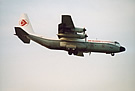
The KAF received 4 stretched civilian L-100-30 Hercules transport aircraft in 1983, replacing the shorter L-100-20s that had been in service since 1971. One was captured during the Iraqi invasion in 1990, while the other 3 escaped to Saudi Arabia. The captured aircraft was subsequently destroyed by British Buccaneer strike fighters using laser-guided bombs, leaving only 3 Hercules to serve in the KAF’s 41 Transport squadron at Ahmed al Jaber.
The question is, why spend $250 million on them, instead of just buying better aircraft new? Deep refurbishing of C-130 E/H aircraft has become something of a cottage industry around the globe, given the fleet’s average age and wear. Lockheed offers its own set of minor modifications as add-ons as well; but even so, none of that should cost $250 million for 3 aircraft.
The DSCA won’t comment, but some possibilities can be discussed. The likely answer lurks within a single word: “maintenance.”
Kuwait’s neighbors the Saudis are somewhat famous for taking a “we fly ’em, you fix ’em” approach to maintenance, with almost all of the responsibility outsourced to contractors. This is expensive, but manual labor is not valued in Saudi culture, and countries willing to pay the expense can get what they pay for. Tom Cooper and Brig-Gen. Ahmad Sadik’s (IqAF) analysis of the 1990 Iraq-Kuwait “war” would appear to place Kuwait close to the Saudi end of the scale, and so would DID’s coverage of contracts to Dyncorp for maintenance of the KAF’s 40 F/A-18 C/D Hornet fighters. If the Kuwaitis are contracting for full maintenance of their L-100-30 fleet, that could eat up a large portion of the $250 million announced here.
Special forces type modifications, or flying command post modifications, tend to be very expensive, and could also account for the cost discrepancy. This is unlikely, however, as the kinds of communications systems required for these roles are considered military items in their own right, and must be specified in DSCA requests if they are American-sourced.
The DSCA release adds that:
“Various contractors will be used, depending on the exact nature of the contracting arrangements established. Implementation of this proposed sale will require the assignment of up to 10 U.S. Government and contractor representatives for 1-week intervals twice annually to participate in training, and technical review.”