


(click to view larger)
As the Army’s tactical portion of the USA’s Global Information Grid (GIG) network, Warfighter Information Network-Tactical (WIN-T) is designed to help deployed forces tap into that global network and its databases, collectors, and connections to national agencies. At present, this requires multiple private networks, or outright forward deployment of representatives from the agencies in question. If it can be done at all.
WIN-T has absorbed the program formerly known as the Joint Network Node, and another 3 fielding increments will gradually add key capabilities to the system. Increment 1/ JNN is widely fielded, Increment 2 is being fielded, and R&D contracts are beginning fleshing out Increment 3.
The WIN-T Program
WIN-T has changed a lot since it began in 2002. The timeline below captures key shifts and events, as well as future plans:

The biggest program change involved its split into different increments. So, what’s involved?
The New Structure: Incremental Change

WIN-T Increment 1 provides soldiers access to the GIG while stationary, and used to be known as the Joint Node Network. It lets small platoons on the ground communicate with the rest of the world, something they couldn’t do in the past.
The JNN-N node was originally intended as an interim bridge before WIN-T arrived. It consists of vehicles and shipping containers (the Joint Network Node, the Battalion Command Post Node, the Ku SATCOM trailer and the Hub Node) equipped with systems that provide voice over IP, dynamic IP, videoconferencing and access to the military’s classified and unclassified networks. The US Army likes the idea of using commercially available Ku-band satellites via an integrated suite of state-of-the-art baseband, switching and termination equipment. Commercial Ku-band SATCOM offers performance and availability advantages that include higher throughput rates, as well as the ability to upgrade many of the fielded Ku-band terminals to Ka-band used by the military’s own Wideband Global SATCOM (WGS).
JNN was so successful that it became WIN-T Increment 1 in 2004. By 2006, the Army had fielded JNN to every infantry battalion operating in Iraq, and was started to push the gear down to the company level. The June 2007 WIN-T program restructuring added WGS broadband military Ka-band satellite connectivity as Increment 1a, to lower bandwidth costs and offer more networking options. WIN-T Increment 1b added Net-Centric Waveform software to optimize bandwidth, and a “colorless” core security architecture.
General Dynamics is developing Increment 2 and Increment 3 under a 2007 contract. General Dynamics C4 Systems leads a WIN-T team that includes Lockheed Martin, BAE Systems, Harris Corporation, L-3 communications, and networking rivals Juniper Networks and Cisco Systems.
WIN-T Increment 2 is designed to provide connectivity on the move. Integrating SATCOM, line-of-sight and terrestrial signal types, the “self healing” WIN-T increment 2 is designed to provide high-bandwidth connectivity that can automatically switch as between ground-based and satellite connections. For example, if a commander is moving into a city, which begins blocking line-of-sight signals, the system automatically connects to SATCOM.
This increment begins embedding WIN-T communications gear in select vehicles, bringing them Secure Internet Protocol Router (SIPR) connectivity. It also has to be backward-compatible with WIN-T Increment 1/1a/1b, because the reality of purchases and rollouts mean that different Army units will be equipped with different WIN-T Increments at any given time.
WIN-T Increment 3 will introduce an airborne network node to act as a relay, creating a 3-tier failover of land line-of-sight, then airborne relays, and then satellite as a last resort. The intended result is fully mobile networking, with better reliability and capacity. Inc 3 also aims to field smaller, more tightly integrated communications and networking gear.
Increment 3 was supposed to be part of the Army’s Future Combat Systems vehicles, but they were canceled in June 2009.
WIN-T Increment 4, the last of the WIN-T developmental program elements, is pending definition and contract award. It’s still supposed to cover on-the-move protected satellite communications, though that’s going to mean using the AEHF constellation rather than the envisioned T-SAT program.
WIN-T: Program Dashboards


Contracts and Key Events
FY 2019

March 27/19: Increment 1 The Defense Logistics Agency contracted General Dynamics $93 million for the Warfighter Information Network-Tactical (WIN-T) Increment 1 system. The WIN-T Increment 1 was originally known as the JOINT Network Node Network program and is the Army’s high-speed, high-capacity tactical communications network to distribute classified and unclassified information by means of voice, data, and real-time video. Increment 1 is a stationary network for command posts and units. It provides a full range of at-the-halt data, voice, and video communications. Work under the five-year-contract will take place in Massachusetts and is scheduled to be completed by March 24, 2024.
FY 2018
September 5/18: New items The US Army needs new items for its WIN-T network. General Dynamics will procure a number of configuration items for the warfighter information network-tactical program. The contract has a value of $81.8 million and provides for network and pre-priced hardware items. The WIN-T program is the Army’s high-speed, high-capacity tactical communications network to distribute classified and unclassified information through all echelons of Army command by means of voice, data, and real-time video. The program has seen its up and downs over the years, the current WIN-T Increment 2 started fielding in 2012 but hasn’t reached the whole force yet. Army experts are currently looking for alternative systems over fears that WIN-T are not resilient and secure enough to be used in combat against technological advanced adversaries. Work will be performed at GD’s facility in Taunton, Massachusetts, and is expected to be completed by August 2020.
FY 2015
November 5/15: In an attempt to downsize the Warfighter Information Network – Tactical (WIN-T) system, the Army is working to reconfigure the system – currently reserved for larger vehicles – to fit onto Humvees. The smaller nodes will allow rapidly-deploying forces to better communicate and tap into the digital battlefield on the move, with testing scheduled to take place in May 2017 and low-rate initial production of the smaller systems slated to see deliveries early next year.
June 10/15: The go-ahead has been given to General Dynamics for full rate production of the Warfighter Information Network – Tactical (WIN-T) Increment II, following Defense Acquisition Board approval to the Army in May. This means that the system – which is designed to act as a mobile command post, providing mobile command, control and communications – may be bought for remaining units due to receive the WIN-T system up to 2028. This increment also begins embedding WIN-T communications gear in select vehicles, such as MRAPs, bringing them Secure Internet Protocol Router (SIPR) connectivity as well as SATCOM capability.
April 21/15: General Dynamics was awarded a $36.4 million contract to produce and repair components for the WIN-T, with the firm beating two other bids to take the contract.
FY 2014
These funds are on top of the $921 million R&D contract to develop both Increment 2 & Increment 3 (q.v. Sept 18/07), and see also the May 23/13 SAR report for cost escalation background. GDC4S was already responsible for Increment 3, and just 1 offer was solicited and 1 bid received by US Army Contracting Command at Aberdeen Proving Ground, MD (W15P7T-14-D-0002).
WIN-T-3 development add-on
Oct 31/13: WIN-T-3. General Dynamics C4 Systems Inc. in Taunton, MA receives another $475 million cost-plus-incentive-fee contract to complete WIN-T Increment 3’s research and development. Work location and funding will be determined by each order.
Oct 3/13: WIN-T-2. The US Army announces that they’ve been approved to proceed with a $111 million WIN-T Increment 2 delivery order, as part of continued but contingent limited production. GDC4S will produce the next lot of WIN-T Inc 2 network nodes for additional brigade combat teams and division headquarters units.
WIN-T Inc 2 will be extended within 10th Mountain Division as part of wider CS 13 communications deployments, adding their 3rd Brigade Combat Team alongside 4 BCT. In addition, 2 more 101st Airborne Division BCTs will be conducting fielding and training with CS 13 and WIN-T Inc 2. The Army adds an important caveat when they note that:
“At the same time that it fields [WIN-T Inc 2] to CS 14 units, the Army will continue to coordinate with the Office of the Secretary of Defense and the test community to address remaining issues and simplify the system.”
See our March 28/13 and Jan 17/13 entries for more on that subject. Sources: US Army | GD, Oct 3/13 release.
FY 2012 – 2013

(click to view larger)
June 27/13: Testing. DefenseTech quotes Army officials who explain how new equipment, including WIN-T, are driving tactics in exercises – and how the results change equipment design in return. With respect to WIN-T:
“There is a lot of complexity and challenge to mission command on the move,” he said. “A commander’s got a lot going on. He’s got to know where his elements are and at the same time know what the enemy is doing. You have to manage the data elements in real time. One solution was to have another soldier take on the monitoring of the data and manage the data so that the commander is not stuck to the screen.”
After installing the second version of the system on wheeled vehicles, the Army plans to configure numerous tracked vehicles with the technology, Smith said.”
June 8/13: WIN-T. General Dynamics touts the Army National Guard’s use of WIN-T Increment 1 after Hurricane Sandy hit New Jersey in October 2012. The system reportedly became a hub for law enforcement, other first responders, and the military after power was lost and cellular and mobile communications were down. Sources: GDC4S, June 18/13 release.
May 23/13: SAR. The Pentagon’s Selected Acquisitions Report ending Dec 31/12 includes shifts in WIN-T: 690 nodes subtracted from Increment 2, and 429 added to Increment 3. The result is a net subtraction of 261 nodes, coupled with a $2.1 billion overall cost increase…
WIN-T Increment 2 – Program costs decreased $1,323.9 million (-20.5%) from $6,461.3 million to $5,137.4 million, due primarily to a quantity decrease of 690 nodes from 2,790 to 2,100 nodes to align with the capability sets (-$1,115.8 million) and associated schedule and estimating allocations (+$38.8 million). Other decreases were due to the removal of the Armored Brigade Combat Team recurring A-Kit costs (-$150.8 million), a decrease in initial spares resulting from the decrease of 690 nodes (-$107.6 million), and decreases in fielding, new equipment training, and software maintenance resulting from 690 fewer nodes (-$83.5 million). These decreases were partially offset by an increase due to revised escalation indices (+$82.7 million) and increases resulting from additional costs for follow-on operational test and evaluation; platform certification testing; initial operational testing; and joint command, control, communications, computers, intelligence, surveillance, and reconnaissance radio production qualification testing (+$70.4 million).
WIN-T Increment 3 – Program costs increased $3,434.6 million (+23.8%) from $14,455.5 million to $17,890.1 million, due primarily to a procurement quantity increase of 404 nodes from 3,045 to 3,449 nodes (+$1,232.4 million) and associated schedule, engineering, and estimating allocations (-$497.7 million), and a development quantity increase of 25 nodes from 39 to 64 nodes (+$158.2 million) for limited user testing. Additional increases related to the increase of 404 procurement nodes include: fielding, new equipment training and hardware end of life (technology refresh) (+$1,556.1 million), software licenses (+$230.9 million), initial spares requirements (+$99.5 million), and engineering change orders for hardware procurement (+$79.1 million). There were other increases attributable to updates to the systems engineering and program management cost estimate (+$322.7 million) and the application of revised escalation indices (+$302.4 million). These increases were partially offset by decreases resulting from descoping of the Point of Presence-Command and Modular Communication Node-Global Information Grid Interface (-$42.8 million) and a reduction in development engineering due to leveraging of the WIN-T Increment 2 design (-$42.5 million).
SAR – WIN-T-2 shrinks, WIN-T-3 grows
May 6-23/13: Testing. WIN-T Increment 2 completes a Follow-on Operational Test and Evaluation (FOT&E) during the US Army’s Network Integration Exercise (NIE) 13.2, using the JTRS-compliant AN/PRC-154 Rifleman and AN/PRC-155 2-channel Manpack networking radios as key interfaces.
During the evaluation, more than 3,800 soldiers from the 2nd Brigade Combat Team, 1st Armored Division conducted a wide range of on-the-move military and peacekeeping operations, both day and night, at White Sands Missile Range, NM. Sources: GDC4S, June 19/13 release.
April 18/13: Training. General Dynamics announces that WIN-T Increment 2 is now in the hands of the U.S. Army’s 10th Mountain Division, whose 4 BCT is training for their upcoming deployment to Afghanistan with the system. Their point of interface is their JTRS-compatible Thales AN/PRC-154 radios.
Late last year, GD says that the Army ordered 136 additional WIN-T Increment 2 network nodes, bringing total orders to 532 and extending its reach to the company level. Sources: GDC4S, April 18/13 release.
March 28/13: GAO Report. The US GAO tables its “Assessments of Selected Weapon Programs“. Which is actually a review for 2012, plus time to compile and publish. With respect to WIN-T-2, the technologies and manufacturing are deemed to be mature, but:
“Based on the results of the May 2012 operational test, the Director, Operational Test and Evaluation, concluded that only some of the program’s configuration items and technologies were operationally effective and that the program is not operationally suitable as six of the eight configuration items did not meet their reliability targets. The Director recommended that the Army dedicate resources to fix the program’s reliability and ability to support a 72-hour mission, and demonstrate improvements through a future operational test event. The Director also recommended that the Army consider appointing an independent review panel to determine if the program is capable of meeting its original reliability targets or recommend redesign changes. The Army is to perform a life-cycle cost analysis to determine the additional costs for maintenance support due to the program’s inability to meet its original reliability targets.”
With respect to WIN-T-3:
“WIN-T Increment 3 will not demonstrate the maturity of all 18 of its critical technologies in a realistic environment until its planned April 2015 production decision…. The program office stated that it has dropped two critical technologies from the original set of 20; the Joint Command, Control, Communications, Computers, Intelligence, Surveillance, and Reconnaissance Transmission Management Subsystem, and the Distributed Network Agent were removed due to their similarities with several of the program’s other critical technologies…. The program plans to begin employing alternative methods to assess design stability once it has completed its design review, now scheduled for June 2013, and has a stable baseline design, but has not made any final decisions about those methods. The program intends to conduct system-level developmental testing on a fully configured, production representative prototype in July 2014.”
Jan 17/13: DOT&E Testing Report. The Pentagon releases the FY 2012 Annual Report from its Office of the Director, Operational Test & Evaluation (DOT&E). WIN-T is included:
“WIN-T Increment 2 is not suitable due to poor reliability and maintainability and not survivable due to deficiencies noted in the classified annex to the DOT&E BLRIP report…. In February 2012, the Army approved a revised requirement that lowered WIN-T Increment 2’s reliability requirement by 30 – 60 percent based upon an updated operational mission summary/mission profile…. As a result of IOT&E, DOT&E assessed WIN-T Increment 2 as not survivable due to significant Information Assurance vulnerabilities that would degrade a unit’s ability to succeed in combat. These vulnerabilities are discussed in a classified annex to the DOT&E BLRIP report.
On September 26, 2012, the DAE signed an ADM… Authorized the Army to procure an additional 538 WIN-T Increment 2 communication nodes as a second Low-Rate Initial Production [while requiring further testing and corrective plans].”
Oct 4/12: WIN-T-2. The U.S. Department of Defense has authorized the Army to continue WIN-T Increment 2 as part of the Army’s Capability Set 13 deployment, after its Initial Operational Test and Evaluation (IOT&E) was deemed to be successful during the Army’s Network Integration Evaluation 12.2 exercise.
Accordingly, General Dynamics C4 Systems receives a $346 million delivery order to buy more sets for Brigade Combat Teams and Division Headquarters units. Most production for the WIN-T Increment 2 system takes place at General Dynamics C4 Systems’ facility in Taunton, MA, with components from a variety of suppliers that include veteran-owned and small businesses in 28 states. GDC4S.
Oct 1/12: WIN-T-2. Initial fielding of the WIN-T Increment 2 network as a key component of Capability Set 13 begins at Ft. Drum, NY, and Ft. Polk, LA. Two brigades of the 10th Mountain Division begin their training using previously procured equipment. Source.
March 30/12: SAR The Pentagon’s Selected Acquisitions Report ending Dec 31/11 includes…
“WIN-T Increment 3 – Program costs decreased $1,600.4 million (-10.0%) from $16,055.9 million to $14,455.5 million, due primarily to a decrease in hardware costs reflecting fewer quantities of high cost Configuration Items being procured and a change in the mix of Configuration Items being procured (-$1,809.1 million) and a decrease of 123 nodes from 3,168 to 3,045 due to the removal of the requirement to replace Increment 2 hardware with Increment 3 hardware (-$291.4 million). There were additional decreases resulting from the descoping of the 4-channel Joint Command, Control, Communications, Computers, Intelligence, Surveillance, and Reconnaissance (JC4ISR) radio and antenna (-$287.2 million) and a decrease in systems engineering, program management, and spares costs due to compression of the procurement schedule by two years from FY 2026 to FY 2024 (-$262.4 million). These decreases were partially offset by a net increase in other support costs due to increased annual software license costs and the retrofit of the JC4ISR radios and antennas (+$383.8 million), an increase in hardware estimates for the Satellite Tactical Terminal-High Powered and Highband Radio Frequency Unit-Multiband Terrestrial antenna (+$352.6 million), and the application of revised escalation indices (+$325.6 million).”
SAR – WIN-T-3 reductions
Jan 17/12: DOT&E testing. The Pentagon releases the FY 2011 Annual Report from its Office of the Director, Operational Test & Evaluation (DOT&E). WIN-T is included, but only tangentially:
“The Army conducted a combined WIN-T Increment 2 and Increment 1b Limited User Test at Fort Stewart, Georgia; Fort Lewis, Washington; and Fort Gordon, Georgia, in March 2009. DOT&E assessed the WIN-T Increment 2 as supportive of voice, video, and data communications. However, the network needs improvement in the following areas:
* Reliability
* Ability to support on the move communications
* Training provided to Soldiers due to complexity of the system
* Speed of communication due to network routing
* Network Operations Management
* Information Assurance
Nov 18/11: The US Army is evaluating its latest build of field networking equipment, after the 3-week NIE 12.1 event. The spring 2012 event will test NIE 13, which will include the new WIN-T Increment 2 gear.
FY 2010 – 2011

(click to view full)
May 10/11: WIN-T-2. Lockheed Martin announces a $105 million contract from General Dynamics C4 Systems, for more WIN-T Increment 2 components. Lockheed Martin will deliver transmission subsystem radios, modems, antennas, and mast systems, which will be integrated into a variety of combat vehicle platforms.
Integrating SATCOM, line-of-sight and terrestrial signal types, the “self healing” WIN-T increment 2 is designed to provide high-bandwidth, on-the-move connectivity which can dynamically switch between terrestrial and satellite sources, depending on the terrain.
April 15/11: SAR. The Pentagon’s Selected Acquisitions Report ending Dec 30/10 includes “significant” program cost change for WIN-T Increments 1 & 2:
“WIN-T Increment 1 – Program costs increased $468.1 million (+12.2%) from $3,835.0 million to $4,303.1 million, due primarily to a quantity increase of 83 communications nodes from 1,777 to 1,860 communications nodes (+$119.5 million) and an increase in other support costs for modification work (+$477.4 million), partially offset by a decrease in the estimating costs for a volume discount due to the quantity increase (-$129.8 million).
WIN-T Increment 2 – Program costs increased $1,354.8 million (+27.1%) from $4,997.8 million to $6,352.6 million, due primarily to a quantity increase of 630 communications nodes from 2,216 to 2,846 communications nodes (+$983.4 million) and a resulting increase in other support costs due to an additional year of procurement and the refinement of the fielding schedule (+$476.6 million). There are additional increases in the cost of government furnished software due to the transfer in procurement responsibility from the contractor to the government (+$89.5 million) and in non-recurring production costs due to additional platforms requiring integration (e.g., the Mine Resistant Ambush Protected Vehicle) (+$62.3 million). These increases are partially offset by reductions in contract costs due to definitized prices, quantity lot discounts, and a decrease in actual contract hardware costs (-$272.8 million).”
SAR – WIN-T-2 grows
March 16/11: WIN-T-2 General Dynamics C4 systems announces $295.8 million in WIN-T Increment 2 delivery orders, to equip 5 additional brigade combat teams (BCTs).
The US Army has now ordered Increment 2 systems for a total of 8 BCTs under a 3-year contract that was awarded in March 2010 (vid. April 5/10 entry).
Aug 2/10: Sub-contractors. General Dynamics awards Lockheed Martin a contract worth up to $400 million to provide communications hardware and equipment for the WIN-T Increment 2 transmission subsystem, which will enable the network to transfer data over dispersed areas. Equipment produced will include transmission subsystem radios, modems, antennas and mast systems. The initial award is valued at $71 million.
July 21/10: Testing. General Dynamics C4 Systems touts a recent 4-day U.S. Army Brigade Combat Team Integration exercise at White Sands Missile Range, NM. Its 7 realistic mission scenarios included WIN-T and JTRS radio systems, allowing widely dispersed Army units to exchange command-and-control messages, location information, voice, electronic chat and imagery while on the move.
May 13/10: WIN-T-3. General Dynamics C4 Systems announces a $12.4 million contract modification to develop a line-of-sight communications payload for the MQ-1C Extended Range/Multi-purpose (ER/MP) UAV to serve as a communication relay on the WIN-T Increment 3 network.
The payload will use the Highband Networking Waveform (HNW) to serve as a line-of-sight radio repeater while the UAS is in flight, which is especially useful to troops in urban environments, or other rugged terrain that block level line of sight.
April 5/10: General Dynamics C4 Systems in Taunton, MA receives a $164 million firm-fixed-price contract for WIN-T Increment 2 low-rate production, urgent 1st order, for the procurement of equipment for 3 brigade combat teams, 1 division headquarters, 4 regional hub nodes, and one base equipment complement to support the initial operational test and evaluation for WIN-T Increment 2.
Work is to be performed in Taunton, MA with an estimated completion date of June 30/10. The equipment then will undergo formal testing during 2011, culminating in an Initial Operational Test and Evaluation (IOT&E) in November 2011. One sole-source bid was solicited by the CECOM Acquisition Center in Fort Monmouth, NJ (W15PT-10-D-C007).
This 3-year contract has a total potential value of $2.8 billion, if all options are exercised. See also GDC4S release.
Increment 2 begins
FY 2002 – 2009
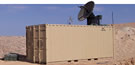
June 5/09: WIN-T. General Dynamics SATCOM Technologies receives a $119 million modification to an existing delivery order (W15P7T-06-D-L219) to provide satellite communications earth terminals and support services for Increment One of the US Army’s WIN-T program.
Under the contract, General Dynamics SATCOM Technologies will provide 293 satellite transportable terminals (STT), 6 unit hub SATCOM trucks (UHST) and 534 Ka-band upgrade kits and spares.
General Dynamics SATCOM Technologies’ work is being performed under an existing World Wide Satellite Systems delivery order, managed by the WIN-T program manager’s Commercial Satellite Terminal Program in Ft. Monmouth, NJ. This modification to the existing delivery order brings the contract’s total value to $378 million for 956 STTs and 17 UHSTs, which represent approximately half of the hardware quantities available on the 4-year program.
May 1/09: Boeing in Saint Louis, MO receives a $10 million cost-plus fixed-fee contract for WIN-T Point of Presence and the FCS Integrated Computer System (FCS ICS). They’re the Future Combat Systems lead integrator, and their task will be to integrate WIN-T functions (HAIPE & RFNM) and the Network Management System (NMS) with the FCS ICS on the program’s vehicles etc.
Work is to be performed in Bloomington, MN (93.02%), and St. Louis, MO (06.98%) with an estimated completion date of Dec 31/14. One bid was solicited with one bid received by TACOM Warren’s AMSXCC-TAC-AB in Warren, MI (W56HZV-05-C-0724).
April 6/09: WIN-T-2. General Dynamics announces that the US Army’s 4th Brigade – 2nd Infantry Division in Fort Lewis, WA, and 3rd Infantry Division in Fort Stewart, GA completed a limited user test of WIN-T Increment 2. A General Dynamics-led team supported the testing, during which soldiers from the 2 units planned and executed multiple missions, sharing command and control information from the command post down to the company level using WIN-T.
March 4/09: WIN-T-2. A General Dynamics-led team completes a developmental testing of the WIN-T Increment 2 on-the-move broadband networking capability. The test included building and operating a network comprising more than 35 network nodes. In a tactical environment, a network this size would support an Army division and associated brigade, battalion and company elements.
Feb 2/09: WIN-T. General Dynamics C4 Systems Inc. in Taunton, MA receives a $9 million cost-plus-award-fee contract, as part of WIN-T System Development & Demonstration. They’ll define, model, simulate, and demonstrate WIN-T System’s architecture in a field environment.
Work is being performed at Taunton, MA, and Gaithersburg, MD, with an estimated completion date of Sept 30/10. One bid was solicited by sole source and 1 bid received by the CECOM Acquisition Center in Fort Monmouth, NJ (DAAB07-02-C-F404).
Nov 3/08: General Dynamics C4 Systems announces delivery of the first WIN-T Increment 1 equipment to the US Army. Increment 1 builds on the former Joint Network Node-Network (JNN) and provides soldiers with a high-capacity communications network when they are stopped.
On schedule deliveries of WIN-T Increment 1 to the 5th Brigade, 2nd Infantry Division Stryker Brigade Combat Team (SBCT) at Ft. Lewis, WA, includes networking hubs, network management suites and network nodes. The equipment serves battalion, brigade and division/corps command posts and Expeditionary Signal Battalions.
1st WIN-T delivery
Sept 24/07: WIN-T. General Dynamics announces a $24 million contract from the U.S. Army Communications-Electronics Command in Fort Monmouth, NJ, to provide specialized JNN-N/ WIN-T Inc 1 satellite communications earth terminals and support services. Sources: GDC4S release.
Sept 18/07: WIN-T 2/3 development. A $921 million contract to the General Dynamics-Lockheed Martin WIN-T will develop WIN-T Increments 2 & 3. Sources: GD C4 Systems, Sept 27/07 release.
Win-T Increment 2 & 3 development
Aug 22/07: General Dynamics, Taunton, MA receives an $8.2 million increment as part of a $1,179,461,286 cost-plus-award-fee contract for the development of WIN-T.
Work will be performed in Taunton, MA (77%), and Gaithersburg, MD (23%), and is expected to be completed by June 30/10. Contract funds will not expire at the end of the current fiscal year. This was a sole source contract initiated on July 12, 2007. The U.S. Army Communications-Electronics Command, Fort Monmouth, NJ, is the contracting activity (DAAB07-02-C-F404).
July 10/07: General Dynamics, Taunton, MA receives a $22.5 million increment as part of a $1,069,909,287 cost-plus-award-fee contract for system development and demonstration for the architecture of the WIN-T system.
Work will be performed in Taunton, MA (40%), and Gaithersburg, MD (60%), and is expected to be completed by Sept. 30, 2011. Contract funds will not expire at the end of the current fiscal year. This was a sole source contract initiated on March 19, 2007. The U.S. Army Communications-Electronics Command, Fort Monmouth, NJ, is the contracting activity (DAAB07-02-C-F404).
June 2007: Restructured. The US Army restructures the WIN-T program into 4 major increments, after a formal cost breach under the terms of the USA’s Nunn-McCurdy legislation.
The former Joint Network Node (JNN) remains WIN-T Increment 1 from 2004, but it will add WGS satellite compatibility (1a) and some bandwidth management and security improvements (1b).
WIN-T Increment 2 development is valued at $126 million, to deliver initial on-the-move broadband networking using radio links that fail-over to SATCOM. Fielding is scheduled to begin in 2009.
WIN-T Increment 3 development is valued at $795 million. It will complete Increment 2’s goals and add better network capacity management, security and full on-the-move capabilities. Limited user testing is scheduled to begin in 2011. Increment Three also addresses the size, weight, power and cooling requirements for systems to be hosted in Future Combat Systems vehicles.
WIN-T Increment 4 is envisioned as an upgrades stage, based on new technology that includes enhanced satellite communications protection and compatibility with the ultra high-bandwidth T-SAT network. Sources: GD C4 Systems, Sept 27/07 release.
WIN-T Restructured
Feb 13/07: General Dynamics C4 Systems, Taunton, MA, was awarded on Feb. 8, 2007, a $44,102,000 increment as part of a $269,143,489 cost-plus-award-fee contract for a within scope change to the Warfighter Information Network – Tactical System Development and Demonstration.
Work will be performed in Taunton, MA (50%), and Gaithersburg, MD (50%), and is expected to be completed by June 30, 2007. Contract funds will not expire at the end of the current fiscal year. This was a sole source contract initiated on Jan. 5, 2007. The U.S. Army Communications-Electronics Command, Fort Monmouth, NJ, is the contracting activity (DAAB07-02-C-F404).
Sept 1/06: General Dynamics C4 Systems, Taunton, MA, was awarded on Aug. 28, 2006, a $7,259,000 increment as part of a $202,503,038 cost-plus-award-fee contract for an engineering change to the Warfighter Information Network – Tactical System Development and Demonstration.
Work will be performed in Taunton, MA (50%), and Gaithersburg, MD (50%), and is expected to be completed by Jan. 31, 2007. Contract funds will not expire at the end of the current fiscal year. This was a sole source contract initiated on Aug. 1, 2006. The U.S. Army Communications-Electronics Command, Fort Monmouth, NJ, is the contracting activity (DAAB07-02-C-F404).
June 3/05: General Dynamics C4 Systems, Taunton, MA, was awarded on June 2, 2005, a $7,632,000 increment as part of a $126,672,195 cost-plus-fixed-fee, cost-plus-award-fee, and time and materials contract for a further development of an initial architecture for the Warfighter Information Network Tactical Communication System.
Work will be performed in Taunton, MA (75%) and Gaithersburg, MD (25%), and is expected to be completed by Jan. 9, 2006. Contract funds will not expire at the end of the current fiscal year. There were an unknown number of bids solicited via the World Wide Web on April 8, 2002, and three bids were received. The U.S. Army Communications-Electronics Command, Fort Monmouth, NJ, is the contracting activity (DAAB07-02-C-F404).
Nov 12/04: General Dynamics C4 Systems, Taunton, MA, was awarded on Nov. 10, 2004, a $14,987,144 increment as part of a $112,579,352 cost plus fixed fee, cost plus award fee, and time and materials contract for development of an initial architecture for the Warfighter Information Network Tactical Communication System.
Work will be performed in Taunton, MA (75%) and Gaithersburg, MD (25%), and is expected to be completed by Jan. 9, 2006. Contract funds will not expire at the end of the current fiscal year. There were an unknown number of bids solicited via the World Wide Web on April 8, 2002, and three bids were received. The U.S. Army Communication-Electronics Command, Fort Monmouth, NJ, is the contracting activity (DAAB07-02-C-F404).
Aug 9/02: General Dynamics Government Systems Corp., Taunton, MA, is being awarded a $3,000,000 increment as part of a $72,294,296 cost-plus-fixed-fee and time and materials contract for development of an initial architecture for the Warfighter Information Network – Tactical communication system.
Work will be performed in Taunton and is to be completed by Jan. 9, 2006. Contract funds will not expire at the end of the current fiscal year. There were an unknown number of bids solicited via the World Wide Web on April 8, 2002, and three bids were received. The U. S. Army Communications-Electronics Command, Fort Monmouth, NJ, is the contracting activity (DAAB07-02-C-F404).
Additional Readings
* US Army PEO C3T – Project Manager WIN-T
* General Dynamics – WIN-T mini-site.
* US Army STAND TO! via WayBack – Capability Set 13 Fielding. 1st set with WIN-T Increment 2.
* Lockheed Martin – Warfighter Information Network – Tactical (WIN-T)
* Harris – Warfighter Information Network—Tactical (WIN-T)
* Global Security – Warfighter Information Network-Tactical (WIN-T)
News & Views
* DID – Taming the UAV Data Explosion
* Taunton Daily Gazette (Aug 30/13) – Guest Opinion: General Dynamic’s WIN-T program a good example of a good investment. By Sen. Elizabeth Warren [D-MA]. Given that it’s centered in her state, she’s hardly going to rubbish it…
* AFCEA’s SIGNAL Magazine (July 2012) – WIN-T Marches Forward. Very good overview.
* General Dynamics, via WayBack (June 5/09) – General Dynamics to Boost Military Satellite Communications Capacity with $119 Million Army WIN-T Satellite Terminal Award
* US Army 2008 Posture Statement Information Papers, via WayBack – Warfighter Information Network-Tactical
* C4ISR Journal (Sept 1/08) – Incremental improvement: Keeping tabs on U.S. Army’s reborn tactical network
* DID (May 23/06) – Platoon-Level IP: $73M to Datapath for Joint Network Node Support. Describes the JNN, which became WIN-T Increment 1.
* Federal Computer Weekly, via WayBack (April 2/07) – WIN-T to LOST-T? Compares and contrasts WIN-T with the success of JNN (which became WIN-T Inc 1). “WIN-T is intended to provide tactical units on the battlefield with broadband, IP-based voice, video and data communications, a job performed quite well during the past few years by the Joint Network Node at about a tenth of the cost of using commercial gear, including satellite terminals from DataPath and routers and voice-over-IP systems from Cisco.”
* Fort Monmouth Team C4ISR Knowledge Center, via WayBack (March 17/06) – Communications system developed here named winner
* Army Communicator, via Highbeam (Winter 2005) – Providing the bridge to the future network with commercial wideband SATCOM
* C4ISR Journal, via WayBack (Oct 29/04) – Joint Network Node Gives Soldiers More Mobile Communications, Increased Bandwidth
* Federal Computer Weekly, via WayBack (Nov 22/04) – Iraq-bound 3rd Infantry ready to share
* Military Information Technology, via WayBack (Oct 19/04) – Interim Mobile Communications System Readied for Iraq