

(click to view full)
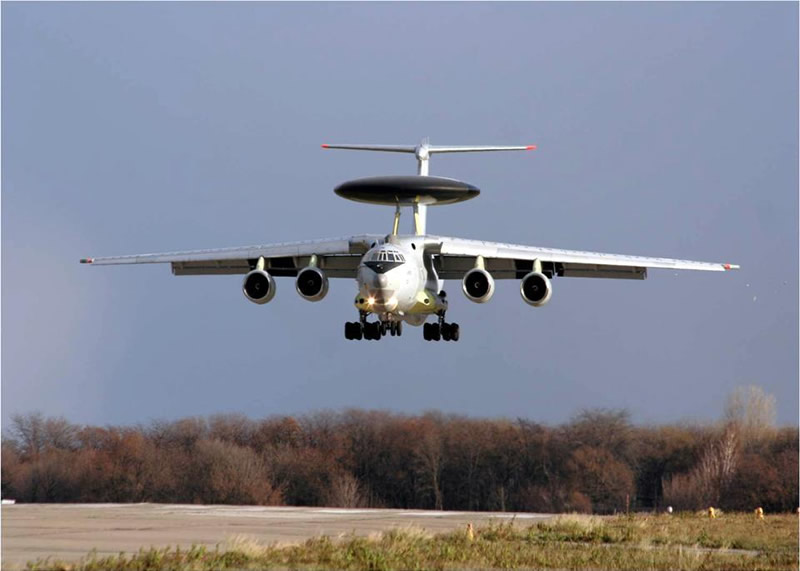
In recent years India has been shifting toward aircraft that would give it the ability to patrol and act at extended ranges. In January 2004, India and Israel signed a $1.1 billion contract for 3 Phalcon airborne warning and control system (AWACS) aircraft, as part of a $1.5 billion tripartite agreement with Russia. With the arrival of its first IL-76 Phalcon, India joined the global ranks of AWACS operators. The aircraft has to monitor huge swathes of Indian airspace, intercept communications and log radar frequencies, add some ground surveillance, and help command IAF responses. By 2012 India announced that it wanted to follow up on that procurement with native capabilities.
In parallel, India has moved to implement AWACS capabilities on a smaller platform, in order to provide broader aircraft coverage of its territory. The goal there is to field a Tier 2 platform based on Embraer’s ERJ-145 jet, and Indian radar and electronics, allowing India to join the global ranks of AWACS designers. Just to make things interesting, their arch-rival Pakistan offers a contrasting case study, with quicker fielding of off-the shelf buys from China (Y-8 based ZDK-03) and Sweden (Saab 2000 Erieye).
India’s AWACS: Platforms & Programs
India’s ultimate goal is reportedly around 15 aerial surveillance and command aircraft, with varying levels of endurance and capability. Over the 2004 – 2014 period, they’ve fielded just 3.
Catch-Up: India’s A-50EI Phalcon AWACS
(click to view full)
AWACS capability was seen as an urgent need in India, so their initial effort focused on integrating proven systems from abroad.
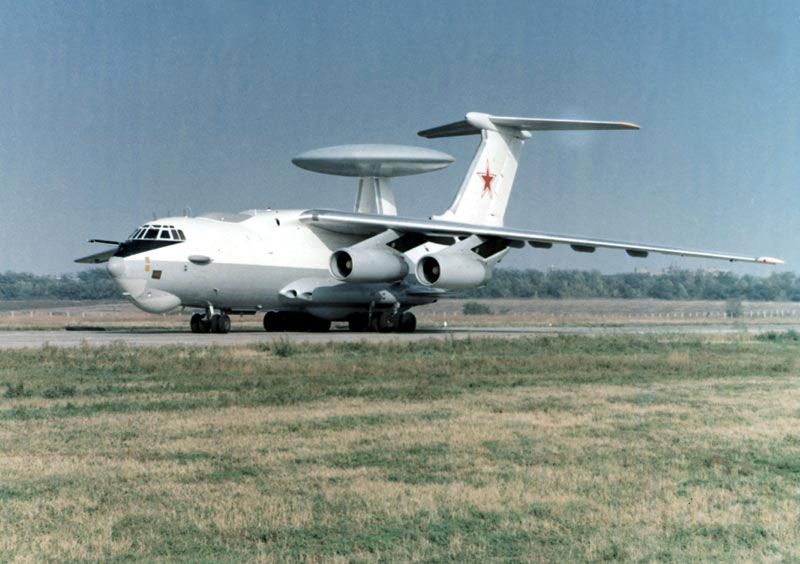
India chose its IL-76TD medium jet transport as its base. IL-76/78 jets were well-proven within the IAF as strategic transports and aerial refueling tankers, and modified IL-76s already served in Russia as the A-50 AWACS.
The IL-76TD’s upgraded Prem PS-90 engines will make operation in India’s hot climates easier, and the system will reportedly make heavy use of Russian avionics, including a partial glass cockpit.
Rather than relying entirely on Russia, however, India chose a proven AWACS system from Israel instead. Israel Aerospace Industries’ Phalcon is built around an ELTA EL/M-2075 AESA L-band radar, then adds electronic and communications intelligence gathering (ELINT and COMINT) capabilities. The system can receive transmissions from other air and ground stations to round out its surveillance picture, and uses sensor fusion to provide a complete picture of the battlespace out to several hundred kilometers. On-board communications allow these AWACS planes to direct communications-compatible forces and allies based on the bigger picture, which is why AWACS planes are so valuable.

(click to view full)
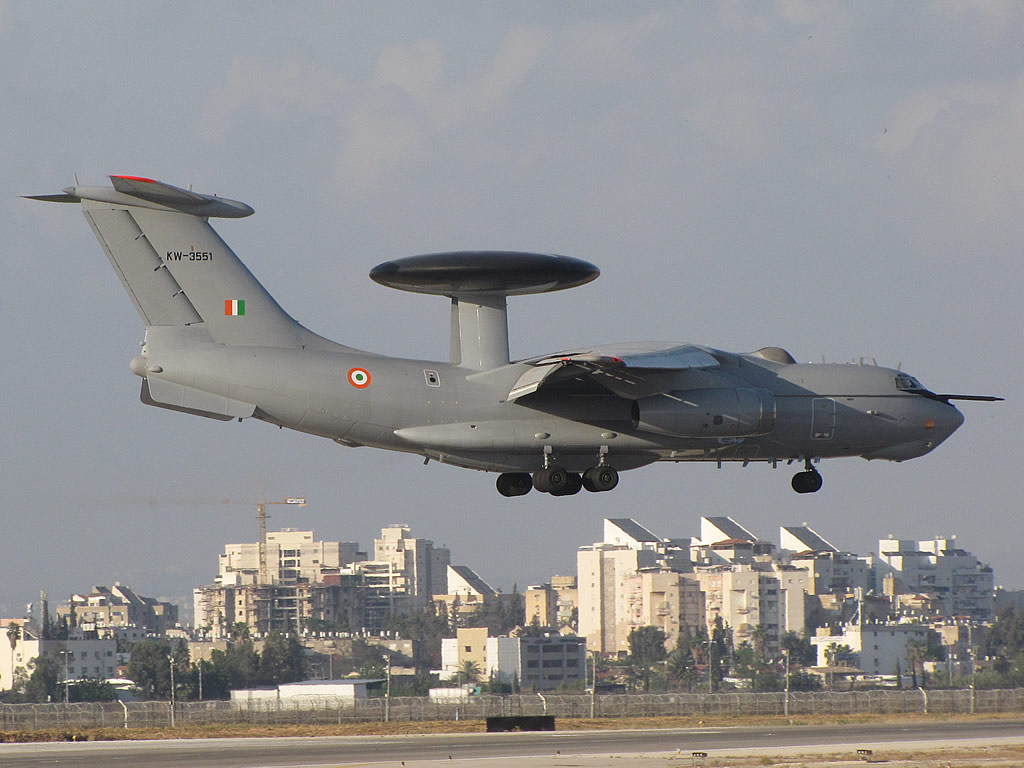
Several Phalcon platforms already existed, but the A-50EI was a departure. IAI had already delivered an earlier-model “Condor” Phalcon 707 aircraft to Chile, and created a CAEW Nachshon variant for Israel and Singapore that fits into a much-smaller Gulfstream 550 long-range business jet. Instead of the front and side structural modifications made to Chile’s 707 and the G550s, however, India’s A-50EI Phalcon uses a conventional AWACS top-mounted radome. Less conventionally, the radome is fixed rather than rotating, because IAI Elta designed a radar configuration that automatically scans in 360 degrees.
Reports indicate “unspecified additional capabilities” for its 3rd A-50EI Phalcon plane. The most likely additions would involve additional radar modes for specialized maritime and/or ground coverage, and/or improved signals intelligence intercept & location capability.
A-50EI: The Long and Winding Road
(click to view full)
Even though India picked an existing aircraft type in the IL-76, and an existing AWACS & radar system in the Phalcon, the process of marrying them together and adding India’s special request items makes the A-50EI a development project. As often happens, that project slipped its timelines.
India was supposed to receive the first A-50EI Phalcon from its 2004 order in December 2007, but Uzbekistan’s Tashkent Aircraft Production Organization (TAPO) was late in customizing the airframes. By November 2007, India’s 1st A-50EI was only at the maiden flight test stage, which continued into early 2008. Flight certification followed, and first delivery ended up taking place in Q2 2009, about 18 months late. At that point, all 3 aircraft were promised by the end of 2010, but final delivery of an enhanced 3rd A-50EI+ actually took place about 3.5 years late, in mid-2011.
Even final delivery isn’t the end, of course. The A-50EI Phalcons have taken some time to become operational, and they were even grounded for a while at Agra while issues were ironed out.
Despite the delays, India is reportedly happy with its new capabilities. The IL-76 Phalcons are part of an emerging architecture for India’s air force, which include the Operational Data Link (ODL), the Integrated Air Command and Control System (IACCS), and Air Force Net (AFNET). All of those systems received a major workout during the March-April 2013 ‘Livewire’ exercises, which took place across India and involved most of the IAF.
A major follow-on contract has been rumored since April 2008, when India reportedly picked up a $1-2 billion option for 3 more A-50EI Phalcon AWACS aircraft, with delivery expected in 2011-12. Despite multiple confirmations at the time, it now appears that 2008 was only the beginning of India’s long negotiating and approval processes. Reports continued in late 2011, but by 2012, it became clear that India was leaning toward designing its own large AWACS system as the follow-on, even if that meant a less-sophisticated rotating radome and no follow-on aircraft until 2020. As of 2014, they haven’t even finalized specifications.
EMB-145SA AEW&C: DRDO’s Mid-Size Complement

(click to view full)
India has a great deal of territory to cover, and the Indian Air Force appears to be taking the “brittle swords lesson” to heart. As additional A50EI option discussions staled, DRDO proposed another 3 mid-size surveillance aircraft to act as immediate counterparts to the larger Ilyushin Phalcons.
While a G550 Phalcon would provide systems commonality with the IL-76s, using an already-integrated and proven platform, India chose a path aimed at maximizing indigenous R&D above all other considerations. They could end up buying 8-10 of them, but first, they have to develop them.
The state-owned DRDO research and development agency’s original 2004 timeline had their medium AEW&C project finishing by 2011, and the 3 aircraft together were expected to cost around R 1,800 crore (about $385 million) total when fully equipped. Unfortunately, it took until mid-2008 to sign an aircraft contract while R&D continued in the background, and the modified base aircraft configuration wasn’t delivered to India for integration until August 2012. Delays have now pushed delivery of all 3 contracted aircraft back to mid-2014: 2 aircraft for the IAF to begin operational testing, and a 3rd to remain with DRDO as a test and development platform.
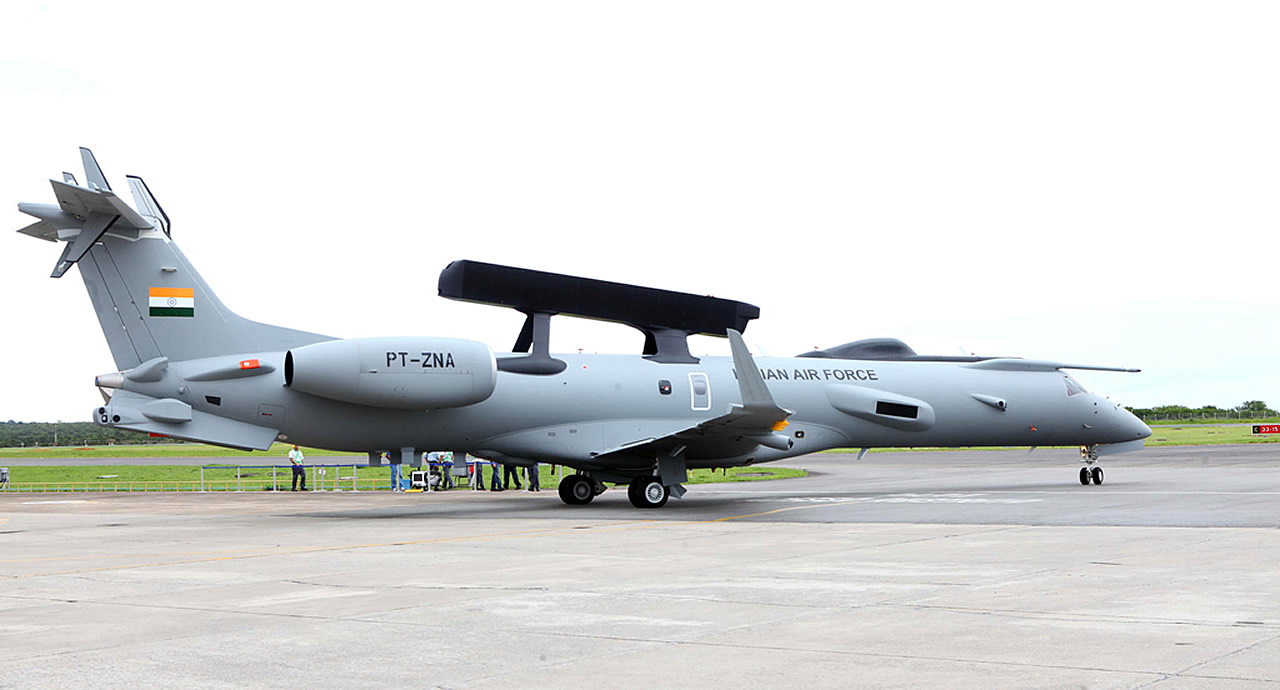
DRDO’s platform of choice was Embraer’s ERJ-145 business/ regional jet. The militarized EMB-145 comes in several variants, including maritime surveillance and electronic intelligence planes. The most common variant, currently operated by Brazil and Greece, is the R-99 Erieye Airborne Early Warning & Control (AEW&C) aircraft [1], using the same Saab Erieye AESA radar that will be mounted on Pakistan’s new Saab 2000 turboprop AEW&C fleet. There are some blind spots with its “dorsal blade” configuration, most notably to the front, but flight patterns can be planned around those gaps to ensure good coverage of the area in question. India’s DRDO aims to create a similar aircraft, using locally-designed technologies.
Under a $210 million agreement with DRDO in July 2008, Brazil’s Embraer will act as the overall system integrator, supplying the jets, mounting the radar and electronics on or into the AWACS fuselage, ensuring that the altered jets retain acceptable flight performance, and handling flight recertification.
The radar itself won’t be a proven model. Instead, it’s a development project from DRDO’s Electronics and Radar Development Establishment. A September 2005 ACIG report claimed that the radar would be similar to Saab’s Erieye, and the CABS illustration certainly looks very similar. CABS is reportedly working with the private sector firm Astra Microwave Products of Hyderabad to develop transmit-receive multimodules [JPG format] for the radar. Doing so at a reasonable cost is always a challenge for AESA radars, however, and India’s experience with the type is limited.

Likewise, the Bangalore-based DRDO Centre for Airborne Systems (CABS) is responsible for overall integration of the aircraft’s electronic systems, mission computer, display and data handling. DRDO’s Defence Electronics Application Laboratory will be involved with the primary sensors, communication systems and data link. DRDO’s Defence Avionics Research Establishment will be involved with the jet’s self-protection systems, electronic warfare suites and communication support systems. DRDO’s Defence Electronics Research Laboratory will be involved with “counter-support measures.”
This radar and systems work will be the real key to the Embraer AEW&C project’s success or failure.
AEW&C: Force Multipliers & Risk Multipliers

(click to view full)
Unfortunately, it’s quite common for similar products to have extended technical issues and operational shortfalls when newly-designed equipment is first fielded, and India’s development strategy involves multiplying these points of failure. DRDO’s radar record is also cause for some concern.
DRDO was responsible for “Project Guardian/Airawat,” which suffered a disastrous project failure in 1999 when its HS-748 turboprop AWACS testbed aircraft crashed, killing several engineers and scientists who were critical to the project. These Embraer aircraft are the proposed successors to that effort. More recently, the multimode radar being developed for India’s Tejas lightweight fighter couldn’t meet specifications. IAI Elta’s M-2032, which is already in India’s Sea Harriers and some of its Jaguars, is now being used instead, in order to keep the already-late fighter program on track.
Given India’s slow procurement processes for even off-the-shelf buys, a DRDO effort that falls short of operational needs could easily set the country’s medium AEW&C efforts back by more than 5 years.
Meanwhile, India’s rival Pakistan is fielding 2 advanced AWACS plane types of its own. One is Saab’s Erieye system, mounted on a Saab 2000 turboprop. Its 4 Erieye planes will be joined by 4 larger Chinese Y-8 turboprop derivatives, the ZDK-03 AWACS. Both varieties are military-off-the-shelf configurations, rather than development projects, which has allowed Pakistan to field operational AWACS planes of similar quality much more quickly. As of early 2014, India has struggled to field 3 A-50EIs to cover a much wider area, while Pakistan has bought and fielded a 50/50 mix of 8 operational AEW&C aircraft.
Contracts & Key Events
2013 – 2017
Indigenous AWACS looks at E-767 or A330; AEW&C by mid-2014; Livewire country-wide exercise.

(click to view full)
December 5/17: Milestone The Indian Air Force has successfully carried out its first air-to-air refeuling of its Embraer EMB-145-based airborne early warning and control (AEW&C) aircraft. The ‘probe and drogue’ refuelling was carried out by an Ilyushin Il-78 tanker, with only ten minutes of refueling necessary to keep the platform flying for an additional four hours. Ordered in 2008, New Delhi has received the first two of three new EMB-145 aircraft and have been fitted with the Defence Research and Development Organisation (DRDO)-designed Netra AEW&C systems, which the IAF claims provide 240-degree coverage as well as surveillance ranges between 250 and 375 km.
March 3/16: The Indian government has cleared the purchase of two more Phalcon Airborne Warning and Control Systems (AWACS) aircraft, bringing their total fleet size to five. The Cabinet Committee on Security (CCS) agreed on the acquisition on Tuesday at a cost of $1.1 billion. The purchase involves a tripartite contract with both Israel and Russia. Israeli Aerospace Industries (IAI) and Elta Electronic Industries provide an AESA radar system which is then mounted on the Russian made Ilyushin IL-76 heavy transport aircraft.
Sept 1/14: AEW&C. Following a long “technology absorption” process, Bharat Electronics Limited (BEL) has been selected as the Engineering and Life Support Agency (ELSA) for DRDO’s EMB-145i AEW&C mission systems, while Embraer will be responsible for supporting the aircraft.
So far, the 2 EMB-145is have logged more than 200 sorties and over 350 flying hours, with flight test campaigns that have included Jamnagar and Agra as well as DRDO’s Centre for Airborne Systems in Bangalore. Official handover of the 1st EMB-145i to the IAF has now slipped to the end of 2014 from mid-2014 (q.v. January 2014), however. Even after the 1st plane is handed over, parallel flight tests and fine-tuning of the mission systems are expected to continue on the 2nd aircraft. The 3rd aircraft is expected to arrive from Brazil by year-end. Sources: Indian Express, “Prying Plane Flight Trials Conducted”.
Aug 15/14: AWACS – more A-50EI? Russian media say that India may be reconsidering its AWACS needs, and buying another 3 A-50EIs after all:
“India is mulling possible delivery of another three AEW&C aircrafts, talks are on now,” the commission’s source said. He did not specify a timeline planned for a deal to strike.
The delivery of AEW&C aircrafts is planned “in the same configuration” as under the agreement in 2003, he said.
Meanwhile, the source added that after the A-50 delivery a contract for their maintenance was signed with India…”
If new A-50s are in the same configuration, of course, the IL-76s will need to head to Israel for modifications. India’s government recently changed hands in a BJP landslide, and the new government is trying to push a number of defense projects forward. For now, the IAF underscores the fact that it’s just looking at options. Sources: ITAR-TASS, “India plans to buy 3 radar reconnaissance aircrafts A-50 in Russia” | Defense World, “IAF Challenges Russian A-50 Purchase Claim”.
March 31/14: AWACS RFP. India puts out a tender inviting bids by July 15/14 for the “supply of suitable aircraft with necessary structural modifications, power and endurance adaptations…. “equipment installation/installation provisions for the AWACS India role”. The 10m rotodome and support on the airframe is obviously the most critical modification, and design and certification work will be part of that tender work. Sources: Flight Global, “India scans for new AWACS platform”.
January 2014: DRDO AWACS. India Strategic offers interesting updates regarding India’s full-size AWACS program (q.v. June 19/12, Jan 26/13, March 4/13). An interview with DRDO chief Dr. Avinash Chander reveals that India has chosen a rotating radar dome for its full-size AWACS, using a radar that will also be electronically steered (Electronically Scanned Array). That choice was reportedly driven by their goal of 360 degree coverage. The flip side is that space requirements for the radar and its systems are so large that they’re looking at the Boeing 767 and Airbus A330 as carrier platforms. They could also build on the IL-76 that carries the current Phalcon system, but DRDO is leaning toward civilian platforms that can leverage commercial maintenance ecosystems. Boeing (Japan’s E-767) has an AWACS conversion in service, but Airbus doesn’t.
2020 is DRDO’s target date, though their record in that regard isn’t inspiring. They still need to freeze specifications, obtain multiple layers of government approval, invite expressions of interest, and then successfully carry out an RFP, selection, and contract negotiations. Sources: India Strategic, “India developing AWACS”.
January 2014: AEW&C. India Strategic offers program updates from an interview with DRDO chief Dr. Avinash Chander. On the mid-tier front, delivery will take place around mid-2014, with 2 aircraft for the IAF, and a 3rd to remain with DRDO as a test and development platform. They’ve completed some flight evaluation trials, and the communication relays are operational.
His industrial comments were equally interesting, coming from DRDO. The question is whether the bureaucracy will willingly give up its current bottleneck position, in order to foster that vision:
“[He regrets delays,] But with the recent encouragement to the private sector, the country’s defence industrial infrastructure was set to grow rapidly and with that, the time-frame for development of various systems would also reduce. Then there are many off the shelf components available form international markets, and DRDO uses them both because they are not made in India and easily available…. Dr Chander favoured FDI (Foreign Direct Investment) as it brings not only money but also several soft skills like quality assurance, quality management, efficient production processes and manufacturing technologies. He cited the example of Maruti cars and the automobile revolution in India in this perspective.”
Sources: India Strategic, “India’s n-Submarine Arihant Ready for Sea by March” (not a misprint).
March 16 – April 9/13: Exercises. India runs huge cross-country IAF exercise called “Live Wire,” which includes its new A-50EI Phalcon AWACS fleet, and involves redeployment of aircraft between different battle fronts.
These kinds of exercises are essential, in order to get multiple IAF squadrons used to working under AWACS coordination on large-scale operations. That’s precisely when AWACS coordination is most critical – yet because of its expense, it’s the environment that gets the least AWACS-related training. Livewire will stand some IAF pilots in very good stead when they head on to the USA’s multinational “Red Flag” exercise afterward, and encounter full use of USAF E-3 AWACS as a matter of course. Sources: Zee News, “IAF gears up for ‘Livewire'”
| Calcutta Telegraph, “Air force holds drill on two-front war” | Times of India, “Indian Air Force’s biggest aerial exercise today”.
March 18/13: DRDO AEW&C. An India MoD release offers a list of late DRDO projects, along with a voluminous list of excuses. Credit is due for not using “the dog ate our blueprints,” but every other issue one normally expects in projects of this nature can be found.
India’s Tier 2 AEW&C is one of the listed projects, and its Probable Date of Completion has slipped from October 2011 to March 2014.
March 4/13: DRDO AWACS. India’s Defence Minister AK Antony’s Parliamentary answer confirms that India is moving ahead with its own full-size AWACS program, rather than buying abroad. That’s going to take at least 7 years, so he also lowers expectations for the IAF:
“AWACS are meant as force multipliers for specific area cover and not for surveillance of the entire space of our country. All three AWACS are part of Network Centric Operations and are able to provide adequate coverage of specified areas…. To leverage the experience and expertise gained in the design and development of Airborne Early Warning & Control Systems, a project proposal for indigenous development of AWACS (India) by DRDO has been approved by the Cabinet Committee on Security (CCS) on 12th February, 2013. The development of AWACS (India) is envisaged to be completed in 84 months from the date of formal sanction of the Programme.”
Costs weren’t mentioned, but see Jan 26/13 entry. The AWACS effort seems to predate India’s renewed effort to shun foreign vendors, supposedly as a way of eliminating corruption. Of course, it does nothing of the sort. Allocating work to state-run companies just avoids whistle-blowing from losing vendors, and makes blacklisting corrupt organizations unthinkable. In other words, it hides the problem. Past experience suggests that it also leads to delivery failure, but that’s a secondary concern to a politician. India’s PIB.
Jan 26/13: New AWACS Program? DRDO director-general Dr V.K. Saraswat says that India has started to develop a Rs 6,000 crore (currently ($1.118 billion) Airborne Warning and Control System (AWACS) programme, as a high-end complement to its AEW&C efforts. “The Government of India has given its clearance for the programme and the DRDO has begun to work on it,” said Dr Saraswat (vid. June 19/12 entry).
There are still reports that India is negotiating for more A-50EIs, but earlier reports appear to characterize this as a new development effort. Deccan Chronicle | The Hindu | Qatar’s The Peninsula.
2011 – 2012
AEW&C unveiled, 1st flight; Order for more Phalcons stalled; Going its own way on future AWACS?; Plans for a mix of 15.
(click to view full)
Sept 21/12: India’s plans. India’s Chief of Air Staff Air Chief Marshal Normal Anil Kumar Browne discusses the country’s AWACS programs. He says that India’s current plans involve 5 higher-end AWACS aircraft, and 10 medium AEW&CS planes.
India already has 3 A-50EI Phalcon AWACS planes, and is looking at how they want to move ahead on the high-end front.
DRDO’s mid-tier AEW&CS project still has a number of milestones before it proves itself, with the 2nd plane scheduled to arrive in December 2012, and the 3rd in 2013. Integration of the radar, communications, and control equipment is the next step, followed by trials, and 2014 is the target date for operational AEW&CS planes. If that operational date can’t be met, or the project runs into serious technical issues, then the high-end buy will become much more important to India. Meanwhile, Pakistan’s off-the-shelf Saab Erieye turboprops are already serving. The Hindu.
Aug 16/12: AEW&C. The first EMB 145SA jet is delivered to India a few months later than anticipated.
Note that this isn’t a war-ready system, by any means. The Centre for Airborne Systems (CABS) within India’s DRDO is now going to integrate its missions systems into the plane.
June 19/12: New AWACS Program? The Times of India reports that “clearances are underway” for an AWACS-India project as a follow-on the the IAF’s Phalcons, run by India’s state bureau DRDO and its Bangalore-based Centre for Air Borne Systems (CABS). The program would reportedly develop 2 AWACS planes with “360-degree AESA (active electronically scanned array) radars… mounted on large aircraft like IL-76, Boeing or Airbus.” Another 4 would follow. The Times of India adds that:
“The case for two additional “follow-on” Phalcon AWACS, with a range of over 400-km and 360-degree coverage like the first three, has run into some rough weather due to sharp cost escalation.”
The key question to ask is why the costs are rising, and what choices are being pushed. The current Phalcon fleet has been late – what lessons have been learned from that, and how are costs affected? Are policies getting in the way of better value? For instance, India has rejected proven, lower-cost options with the same performance, like IAI’s CAEW 550 Nachshon in service with Israel and Singapore. Finally, how credible is the alternative, and what’s the risk? DRDO’s mid-range AWACS project remains late, and its own history is one of lowballing early, followed by cost increases later. Good policy, and effective capability, requires thought-through answers. Which isn’t always what goes on behind closed doors.
[youtube:v=EL6y55-a2kg]
click for video
Dec 6/11: AEW&C. Embraer announces a successful first flight at its headquarters in Sao Jose do Campos. They anticipate delivery during the first half of next year.
EMB-145SA 1st flight
Nov 8/11: Updates. One step ahead, one step back. India is getting close to a follow-on order for 2-more IL-76 Phalcons, but its indigenous medium AWACS program is hitting delays.
India’s media are reporting that an $800 million draft contract for the 2 Phalcons “is now finally in the final stages of being examined,” as a follow on to the original $1.1 billion contract for 3.
On the other hand, the existing Phalcons have taken some time to become operational, and have even being grounded for a while at Agra. At the same time, DRDO’s planned ERJ-145 derivative AWACS prototype project has been pushed back to April 2014. Times of India.
July 25/11: Phalcons. Flight International reports that India is negotiating to buy 3 more AWACS planes from IAI, based on the IL-76. That’s higher than reports in India’s media, which have involved 2 planes.
IAI has been suggesting that India could get the same performance and range for less money, and have lower operating costs, by buying the same Gulfstream 550 CAEW jets used by Israel and Singapore.
June 1/11: Industrial. Israel’s High-Tech Industry Association signs a memorandum of understanding with the Confederation of Indian Industry to boost cooperation in advanced technology, a move that is wider than the countries’ deep military ties but may give them a boost. Trade between the 2 countries hit $47 billion in 2010, moving India moving into 2nd place among Israel’s export markets. A UPI report adds that:
“As part of the Phalcon deal, the Israelis disclosed they would establish five factories in India to produce artillery shells, a project reportedly worth $250 million.”
That move would be good for India, whose problems in this area are well-known, and also for Israel, by diversifying its potential supply base for a critical item.
Feb 10/11: AEW&C. Aero India 2011 sees India’s mid-tier AEW&C design unveiled, which turns out to have some important differences from similar aircraft like Brazil and Greece’s R-99s. Among other changes, the plane has a different tail configuration, as some of the antennae were moved to the side fairings.
The design on display includes 5 operating consoles and 7 crew seats for resting, as well as provisions for an aerial refueling probe if the IAF wishes to add it later. Embraer | Defense Update | Seattle Post-Intelligencer.
Feb 8/11: Phalcons. The Times of India reports that the IAF’s proposal to acquire 2 more Israeli IL-76 Phalcons remains stalled “There is in principle approval for two more Phalcon Awacs but negotiations are still in progress,” said a top defence ministry source.” At the same time, India’s indigenous AEW&C program is falling behind:
“The CCS had then set a time-frame of seven years [from 2004]… But these AEW&C planes are nowhere near even beginning their flight trials. The project completion date has now being extended to April 2014, which itself is set to be revised. “The aircraft and mission system availability is now scheduled for this year, with the integrated system availability pushed back to 2013,” said a MoD source.”
The subsequent comparison with Pakistan’s successful off-the-shelf programs is invidious.
Jan 28/11: AEW&C. Aviation Week reports that Embraer’s first EMB-145 jet for the Indian Center for Airborne Systems department’s AEW&C program is scheduled for a Feb 21/11 rollout, followed by an August 2011 landing in India for system integration.
India’s Cabinet Committee on Security (CCS) approved the Rs 1,800 crore ($396 million) AEW&C development program in October 2004, with the expectation that development would be done in 2011 – but the IAF’s 3-year delay in finalizing the system’s requirements has pushed the estimated end of system development to 2014.
Jan 12/11: Phalcons. India’s 3rd Phalcon aircraft is performing long-duration flights over Israel and the Mediterranean using “some very complex scenarios”, with Indian Air Force personnel aboard. The planes also reportedly have some additional features, as India requested “unspecified additional capabilities” for its 3rd Phalcon plane. The most likely additions would involve additional radar modes for maritime and/or ground coverage, and improved signals intelligence intercept & location capability.
Delivery of the 3rd plane is scheduled for mid-2011. Flight International.
2009 – 2010
A-50EI Phalcon AWACS arrives; Grinding through the projects.

(click to view full)
Nov 9/10: AEW&C. IANS reports that India’s indigenously-developed AEW&C radar system will be sent to Brazil “shortly,” to be integrated with an Embraer 145 jet. DRDO’s Chief Controller (SI) Prahlada, told India Strategic defence magazine that the first base jet for the program is due to roll out in January 2011, and the Indian AEW&C radar will be integrated on it by the end of 2011. That would allow testing and certification, which will take a couple of years.
Nov 1/10: AEW&C. India Defence quotes DRDO’s Chief Controller of Research and Development, Dr. Prahlada, as saying that the EMB-145 will be the base platform for India’s first 3 mid-tier AEW&C planes, but the platform for the remaining 6 aircraft is undecided. DRDO’s AEW&C is currently scheduled to enter service around 2015.
In practice, the costs of integrating all of the systems involved into another aircraft type are generally to high to justify a mid-program switch, unless the original platform faces critical limitations or cannot perform. The other possibility is simply to buy an aircraft off the shelf, bypassing the indigenous program. IAI is offering its CAEW 550 planes flown by Israel and Singapore, touting them as the same capability in the IL-76 Phalcons, with significant commonality, for a fraction of the operating costs. Boeing has also reportedly made overtures with its larger E-737, which has been purchased by Australia, South Korea, and Turkey.
June 23/10: AEW&C. EADS Defence & Security announces a “two-digit-million [Euros, presumably]” contract to help India’s DRDO develop the system architecture for its indigenous AEW&C program. Airbus’ experience with civil certification and mission equipment optimization will also play a role in this contract.
EADS Defence Electronics has worked with DRDO since 2006, developing a Missile Approach Warning System for Indian helicopter and wide-body aircraft. Beyond India, EADS DS developed a data fusion system that’s installed on NATO AWACS aircraft, as well as Australia’s and Turkey’s E-737 Airborne Early Warning fleets.
May 27/10: Phalcons. India’s 2nd of 3 contracted Phalcon AWACS aircraft arrives at Jamnagar in Gujarat, after which it will proceed to the AWACS homebase in Agra. Formal delivery and handover can take place outside of India, hence the March 25/10 date previously offered by the defense minister.
The IAF is keen to buy another 3 AWACS, even as DRDO works on its $210 million mini-AWACS demonstrator project. Times of India.
May 5/10: Phalcons. Defence Minister Shri AK Antony offers a written Parliamentary update:
“The contract for supply of three Airborne Warning and Control System (AWACS) aircraft was signed with M/s Elta, Israel on March 05, 2004. The first and second AWACS aircraft were delivered to the Indian Air Force on May 25, 2009 and March 25, 2010 respectively as per the revised delivery schedule. The delivery of the third aircraft is planned for December 2010. Additional AWACS aircraft are planned to be procured in the 12th, 13th and 14th Plans.”
The 1st Phalcon AWACS was originally scheduled for delivery in December 2007, with the 2nd following in September 2008 and the 3rd in March 2009.
April 11/10: Phalcons. Russia delivers the 3rd and final converted IL-76/ A-50EI airframe to Israel, for full systems installation and testing. A spokesman for the Beriyev aircraft center said that: “We have finished retrofitting a [third] transport plane for special tasks, and sent it to Israel in October…” RIA Novosti.
Feb 2/10: AEW&C. The inauguration of the Bangalore-based Centre for Airborne Systems (CABS) System Test and Integration Rig (STIR) complex for testing airborne systems offers an update on India’s AWACS project. CABS Director S Christopher says that:
“AEW&C’s flying platform is the modified EMB145, which will take to skies later this year. It is scheduled to be delivered to us in Aug 2011… our mission systems will be ready by this year. It will be tested in this rig in 2011, followed by flight testing in 2012.”
Jan 17/10: IANS reports that India’s 2nd IL-76 Phalcon is slated for delivery in March 2010, and is also slated to be based at Agra air base. This is later than the original delivery schedule.
May 25/09: Phalcons. The first Indian IL-76 Phalcon AWACS plane lands at Jamnagar air base in India’s far western Gujarat province. The plane took off from Ovda air base near Eilat, Israel, and was escorted by Indian MiG-29s and Jaguar fighters for the last leg of its flight. The formal induction ceremony will take place on May 28/09.
The planes will eventually be based at IAF Central Command’s Agra air base in Uttar Pradesh. Agra isn’t far from the border with Nepal, but it’s best known for its association with the nearby Taj Mahal. Indian AF release | Sify | Straits Times | Thaindian News | Times of India | Rediff background
1st A-50EI Phalcon delivery
Feb 12/09: G550s proposed. Defense Update reports that a July 2008 contract for 3 smaller AWACS based on the ERJ-145 hasn’t stopped Israel’s IAI from promoting its Gulstream G550 CAEW, which uses an Elta AESA EL/W-2085 radar that’s closely related to the one in India’s 2 planned IL-76 AWACS. The jet can perform aerial target tracking, along with some electronic intelligence (ELINT) and communications intercepts (COMINT); it will succeed the E-2C Hawkeye and 707 Phalcon in Israeli Air Force service, and Singapore’s RSAF recently inducted its first aircraft.
India’s history of project failures makes promotion of the G550 a wise move, in case the DRDO’s ERJ-145 AWACS radar fails. The move may be aimed at another target, however – India’s options for additional IL-76 Phalcons. The G550 is an extreme range business jet, and Israeli data gives their CAEW variant an endurance of 9 hours. This compares to 6 hours on station for the larger IL-76, which is also more expensive to operate. As a demonstration of its capabilities, a G550 CAEW flew non-stop from Israel to India for Aero India 2009.
Jan 11/09: Landed. The first IL-76 Phalcon reportedly lands in New Delhi, India, for inspection. India Today.
2008 and Earlier
AEW&C specification battle; AEW&C contract for 3 EMB-145s.

(click to view full)
Sept 18/08: Updates. The Times of India quotes Defence ministry sources as saying that the first IL-76 Phalcon will now land in India only around January-February 2009, though they are pushing IAI to deliver the aircraft before the end of 2008 despite “technical hitches in the integration work”.
The Times’ report adds that India signed a $210-million deal with Brazilian firm Embraer in July 2008 for 3 EMB-145 aircraft. The intent of the INR 18 billion (about $385 million) project is to modify them with DRDO-provided radar and command systems; if that works, the jets would begin arriving in 2011-2012.
India is also reportedly on course to acquire 4 more Israeli tethered aerostats and EL/M-2083 radars, at a cost of around $300 million. This follow-on to the aerostat radars inducted from 2004-2005 has reportedly been cleared by the Defence Acquisitions Council; if adopted, it would raise India’s total Airborne Early Warning aerostat purchases to about $445 million. Aerostat-mounted radars trade the advantage of mobility for incredible persistence, and are especially useful for watching key coastline and key border regions, or defending high value areas.
Sept 14/08: Phalcons. Zee News quotes Indian Army Maj. Gen. (Retd) Mrinal Suman, writing in the September issue of Indian Defence Review, as saying that India paid twice as much as it should have for its initial order of A-50 Phalcon AWACS aircraft.
“…inability to negotiate contracts astutely has been the biggest weakness of the entire defence procurement regime… as the vendors exploit ambiguities in the contract language, especially with respect to delivery schedules, warranties, after sales support and penalties for default.”
Suman retired as Technical Manager (Land Systems) in the Indian Defence Ministry’s acquisition wing.
July 2008: AEW&C. Brazil’s Embraer signs a $210 million contract to deliver 3 ERJ-145 jets, to be modified into AWACS aircraft by adding radar systems from India’s DRDO.
Embraer will act as the overall system integrator, supplying the jets, mounting the radar, ensuring that the altered jets retain acceptable flight performance, and handling flight re-certification. Final integration and testing of the complete systems will take place in India. Source.
3 EMB-145 jets
May 16/08: Phalcons. The Calcutta Telegraph reports that the first 3 IL-76 Phalcons will be delayed, and so will a pair of Israeli aerostat-mounted radars India has ordered:
“A source in the Indian Air Force has confirmed that the delivery of the first Phalcon will be delayed. It was expected in September but is now more likely to reach India only at the end of the first quarter of 2009… delivery of two Aerostat radars… will also be delayed.
This is the second time that the delivery schedule of the Phalcons has been disrupted. The original schedule envisaged the delivery of the first aircraft in November 2007, the second in August 2008 and the third in the second half of 2009… The delays, however, have not dissuaded the air force from working through a proposal to ask for three more Phalcons in a follow-on order estimated at $2 billion.”
April 13/08: Phalcons. India Defense reports that India is pleased enough to pick up the option for 3 more IL-76 Phalcon AWACS aircraft, in a deal worth up to $2 billion.
Jane’s Defence Weekly issued a concurring report later in the week, but placed the deal’s value at $1 billion. Assuming that the equipment sets are the same and inflation is 3% per year, note that repeating 2004’s $1.5 billion deal works out to about $1.7 billion by 2008. Delivery of these 3 additional planes would be expected to take place in 2011-12. By the end of 2012, however, there’s still no contract for additional A-50EI aircraft.
Feb 4/08: AEW&C. New Indian Express reports that India’s state-run DRDO research agency has made a breakthrough in radar transmit/receive modules, and seems to have its indigenous AEW&C program back on track. Via Livefist:
“The Centre for Airborne Systems (CABS), Bangalore, has developed an Indian transmitter/ receiver module that will form the nerve of the system. It’s an array of a number of T/R (transmit/receive) modules that make up the AWACS’ nervous system making it capable of rummaging through all electronic movements in a radius of hundreds of kilometers.
Top CABS sources told this website’s newspaper that India would soon patent its T/R module as “it’s unique in many respects.” It’s a cost effective system and through its development we’re now independent and needn’t rely on imports, sources said. The phased array that India will be using on the AWACS will have the potential to engage multiple targets…”
June 11/07: AEW&C rethought? Indian media report that the Indian Air Force (IAF) has rethought their specifications for the indigenous airborne early warning and control system (AWACS), including the radar and related equipment, and have asked India’s DRDO to look at using larger Boeing 737 or Airbus A319/320 aircraft, instead of Embraer’s EMB-145.
They believe the EMB 145 has altitude and endurance limitations, and see the right solution as a fleet of 6-8 Phalcon AWACS planes operating out of Agra. They wanted DRDO’s program, re-sanctioned in September 2004 with a Rs 1,800 crore budget, to deliver a more basic “airborne battlefield surveillance, target acquisition and reconnaissance system” instead. Meanwhile, the Phalcon program has been pushed from a 2012 end date to 2016. domain-B | Livefist.
Footnotes
fn1. The terms AWACS and AEW&C can be used interchangeably. Many militaries are gravitating toward the more cumbersome “AEW&C” as standard nomenclature these days.
Video Briefings from Aero India 2009
Additional Readings & Sources
Current & In-development
* Israeli Weapons – Phalcon
* Spyflight – Boeing 707 Phalcon
* DRDO – Indian AEW&C System . In development, using a modified EMB-145. See also CABS Areas of Work, which lists a number of key sub-systems under development: Primary Radar, Secondary Radar/IFF, CSM, Integrated IRESS defensive systems, mission control systems, etc.
News & Views
* India TV (Jan 21/14) – Know more about Indian Air Force’s new ‘eye-in-the-sky’ Phalcon. Note that the last picture is a cutaway of Boeing’s existing E-737.
* Australia by the Indian Ocean (July 8/12) – India’s Phalcon AEW&C/AWACS on the IL-76
* Flight International (March 23/10) – Israeli air force showcases G550 surveillance fleet
* The Hindu (April 20/08) – Brazilian jets to serve as eye in the sky for IAF
* Domain-b (April 16/08) – India to place follow-on order for three Phalcon AWACS with Israel: report
* Defense Technology International (April 2008) – Sky Watch: India’s air force is expanding surveillance operations. Shows an Indian IL-76/A-50, before it leaves for Israel.
* Aviation Week (Feb 13/08) – Low-Cost and Effective AEW Systems Find Buyers [dead link]. That solution set is growing, adding new platforms like the Airbus C295.
* Air Combat Information Group (Sept 12/05) – India’s flying Testbeds. Mentions the ill-fated HS-718 project, and adds an illustration of the planned ERJ-145 variant.
* Institute for Peace & Conflict Studies (March 22/04) – The Value of the Phalcon AWACS for India
* DID – Sweden Finalizes Saab 2000 AEW&C Contract With Pakistan. Includes details re: the Erieye radar.