

(click to view full)
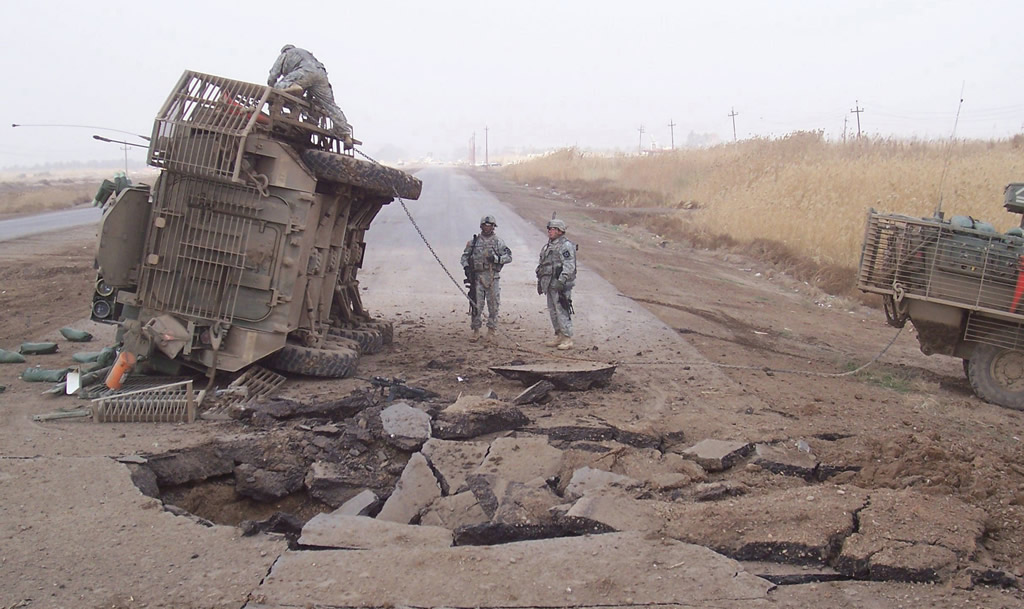
Under current plans, the 8×8 wheeled Stryker armored vehicle will be the future backbone of 8 US Army and 1 National Guard medium armored brigades. The 5th Stryker Brigade from Fort Lewis, WA was the first Stryker unit sent to Afghanistan, deployed in the summer of 2009 as part of a troop level increase. The brigade was equipped with 350 Stryker vehicles. In the first few months of deployment, they lost 21 soldiers, with 40 more wounded, to IED land mines. The losses prompted the Army to examine modifications to their Stryker vehicles, in order to make them more resistant to land mines.
One result is the Stryker hull redesign, creating the v-hulled Stryker DVH. The US Army is now on pace to order 2 brigades worth, as it moves toward the end of Stryker armored vehicle production.
Strykers, Struck: The Afghan Experience & Response
(click to view larger)
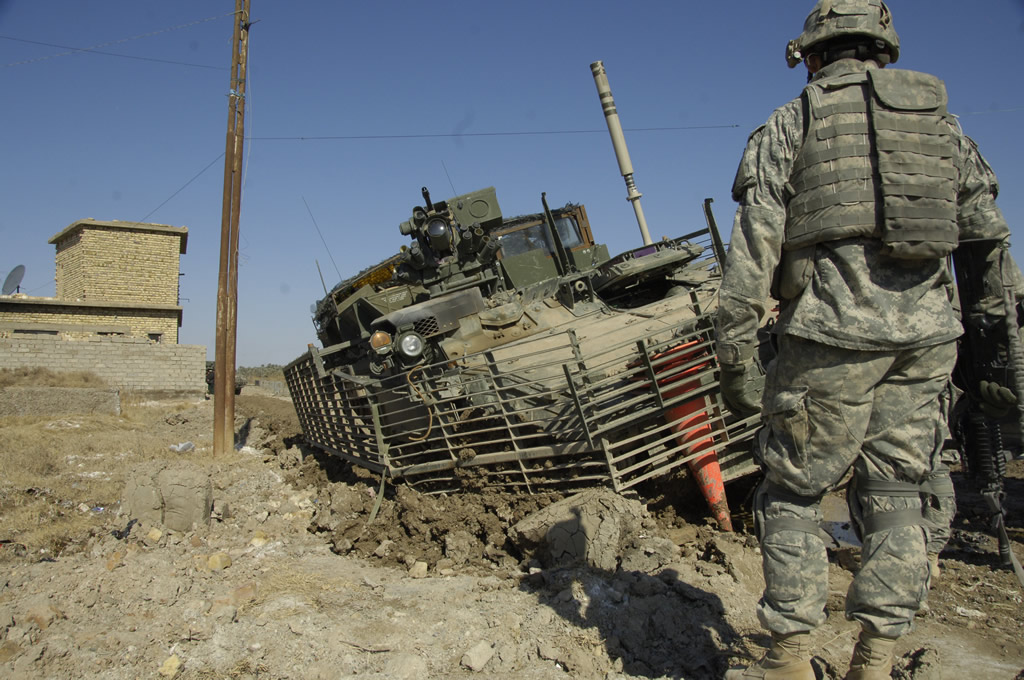
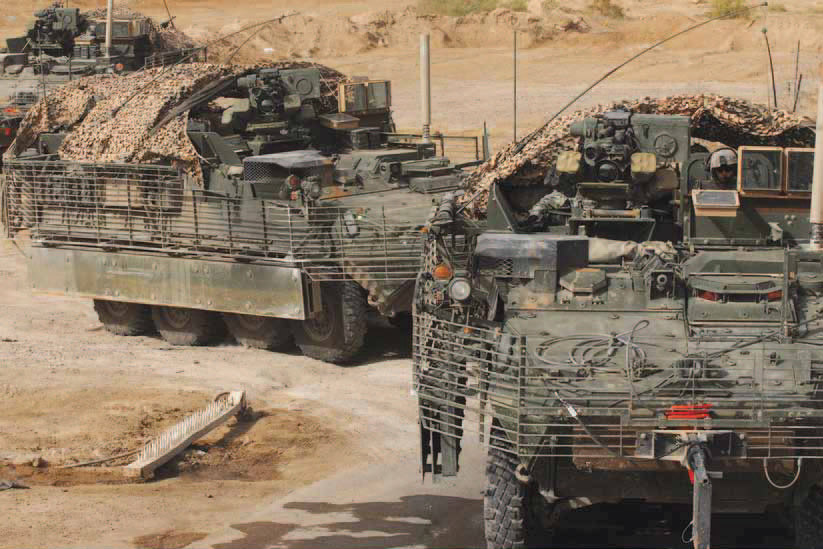
The Strykers have come under criticism for their performance in Afghanistan since the first Stryker brigade was deployed there in the summer of 2009. The Stryker vehicles have been faulted for their lack of maneuverability on rough terrain, a problem that Canada’s similar LAV-IIIs have also experienced.
That creates an associated vulnerability to IED land mines planted in the road. In June 2009, the 5th Stryker Brigade, 2nd Infantry Division deployed to Kandahar province. It had 37 troops killed in action and 238 wounded over its year-long deployment, and their flat-bottom Strykers were diverted part-way through into road guard missions, away from intense combat. Their replacement, the 2nd Stryker Cavalry Regiment, continued the “freedom of movement” missions, and had suffered 14 KIA, 5 noncombat KIA, and more than 100 wounded, as of May 2011. Stars and Stripes reports:
“In one incident in August [2010], a 1st Squadron flat-bottomed Stryker was struck by a massive bomb hidden in a highway culvert in Kandahar province. The blast peeled away the armor protecting its engine like the skin of an orange, snapped off a wheel at the axel and mangled the metal cage that was designed to protect troops from rocket-propelled grenades.
[Pfc. Dustyn Applegate]… doesn’t rate the Stryker as a good vehicle for the sort of counter-IED mission that his unit was engaged in… “That’s the bad thing about the Stryker,” he said. “It has a flat bottom, so when the blast happens, it just blows up instead of up and out like with an MRAP. There is no safe place on the Stryker.”
On the other hand, “M1126 Strykers in Combat: Experiences & Lessons” detailed surprisingly positive reviews of the wheeled APCs’ performance in Iraq. There, they made good use of roads, and their relative silence compared to tracked vehicles was an asset in urban warfare. If the Stryker is not the vehicle for all situations, it has at least proven to be very useful under defined circumstances.
Any campaign that includes the mission of securing key roads, which is to say any mission that depends on economic progress and trade growth, will find Strykers very useful – so long as they remain survivable.
Deflecting Danger: The Strykker DVH Effort

Cougar MRAP
(click to view full)
Hence the Stryker double-v hull design, which channels blast force away from the vehicle and its occupants. The US Army has announced contracts to produce 742 Stryker DVH vehicles, as retrofits and as new production vehicles. That’s the full extent of the current plan, which was a major step beyond the program’s initial plan of 450 Stryker DVHs.
The modified M1126 Stryker ICVV/DVH infantry carrier is the base variant for 7 additional configurations, which will be employed as part of coherent v-hulled Stryker Brigade Combat Teams: M1129 DVH Mortar Carrier, M1130 DVH Command Vehicle, M1131 DVH Fire Support Vehicle, M1132 DVH Engineer Squad Vehicle, M1133 DVH Medical Evacuation Vehicle, M1134 DVH Anti-Tank Guided Missile Vehicle, and the Infantry Carrier Vehicle DVH-Scout (ICVV-S). The ICVV-S is a new configuration that allows internal stowage of the Long Range Advance Scout (LRAS) surveillance system, which is mounted externally on the standard M1127 Reconnaissance Vehicle.
The Stryker DVH program retains a connection with overall Stryker modernization efforts. In a sense, it just prioritized one element of that plan for faster fielding, and made them the front-line vehicles for an SBCT in-theater. That will rise to 2 SBCTs by the end of 2012. After that, the Army says that:
“Once the Army decides on the appropriate future force structure, fleet mix and overall number of combat vehicles, the quantity of DVH Strykers and variants of Strykers will be finalized.”
America isn’t the only one upgrading its LAV-IIIs. Blast-protection efforts are underway for Australia’s ASLAVs, and in Canada via the near-term LAV LORIT program, and their longer-term LAV-III upgrade to the same base vehicle.
To date, however, the Stryker Double-V Hull remains unique to the USA.
Left Behind
(click to view full)
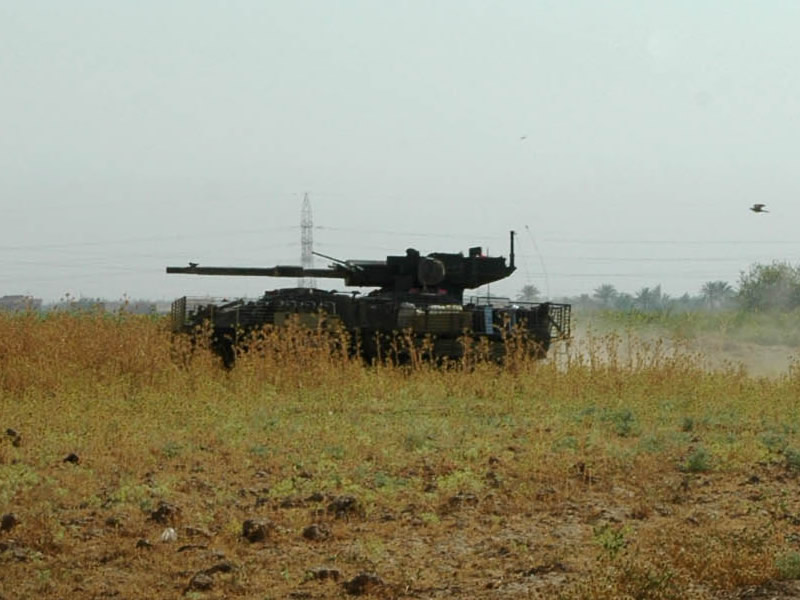
Some Stryker typers won’t be getting the DVH treatment. The US Army does not plan to purchase Stryker DVH versions of the M1127 Reconnaissance vehicle (which does have an ICVV-S DVH counterpart), M1128 MGS assault gun, or the M1135 Nuclear, Biological, Chemical Reconnaissance Vehicle. Once the DVH vehicles are done, and the last set of M1135s are ordered and produced, overall Stryker production will end.
During the December 2010 Stryker DVH Configuration Steering Board, the Army decided not to pursue full-rate production for the standard M1128 Stryker Mobile Gun System, either. While the M1128’s 105mm gun offers potent firepower, the type already has significant weight and protection issues that haven’t been resolved. The Army decided that neither continued production nor DVH made sense for this type, unless the Stryker Modernization program gave the vehicle more base heft and power.
That seems less and less likely. According to US Army spokesperson Lt. Col. Peggy Kageleiry:
“Stryker Modernization has been replaced with a reduced-scope Engineering Change Proposal (ECP). The scope of the ECP for Stryker upgrades is still to be determined, but the following will be considered: buy-back Space, Weight, Power, and Cooling (SWaP-C) deficiencies, improve mobility and protection, and provide ability to accept future network and protection upgrades.”
Contracts & Key Events

(click to view full)
Under the contracts, the GM General Dynamics Land Systems Defense Group partnership in Sterling Heights, MI will provide design and integration engineering services, test articles/prototypes, and procurement of materials, including long-lead materials, to support the modified hull design with related integrated system changes. The US Army says the contract objectives are an integrated solution that will provide improved protection levels to support operations in Afghanistan.
The Army’s Tank-automotive and Armaments Command (TACOM) in Warren, MI manages these contracts.
FY 2017-2021
(click to view full)
June 8/21: Weapons System According to Oshkosh Defense, the company won a $942.9 million contract to integrate 30mm medium caliber weapons systems onto US Army Stryker vehicles. The upgrade to the Stryker Double V Hull Infantry Carrier Vehicle will provide “precision lethality capability to the Army’s Stryker Brigade Combat Team,” the company said in a press release.
July 8/20: Argentina The US State Department has given Argentina the OK to procure 27 M1126 Stryker infantry carrier vehicles and related equipment for $100 million. The prime contractor will be General Dynamics Land Systems. he Government of Argentina had requested to buy twenty-seven (27) M1126 Stryker Infantry Carrier Vehicles and twenty-seven (27) M2 Flex .50 Cal Machine Guns. Also included are AN/VAS-5 Driver’s Vision Enhancers; AN/VIC-3 Vehicle Intercom Systems; AN/VRC-91E Single Channel Ground and Airborne Radio System (SINCGARS); Basic Issue Items (BIi); Components of End Items (COEI); Additional Authorized List (AAL); Special Tools and Test Equipment (STTE); M6 Smoke Grenade launchers and associated spares; Outside Continental United States (OCONUS) De-processing Service; OCONUS Contractor-provided training; Field Service Representatives (FSR); technical manuals; spare parts; U.S. Government and contractor engineering, technical, and logistics support services; and other related elements of logistical and program support. Argentina will use the Stryker vehicles to conduct stability operations in support of disaster relief and international peace keeping obligations. The M1126 Stryker is a family of eight-wheel-drive combat vehicles that can travel at speeds up to 62mph on highways, with a range of 312 miles.
November 12/19: SHORAD Redstone Arsenal is starting to test a new air defense vehicle for the Army. The Stryker A1 IM-SHORAD vehicle supports the Army’s short-range air defense (SHORAD) operational gap. Armed with Hellfire missiles, Stinger missiles and a 30mm cannon, its precision fire-power defeats unmanned aerial systems as well as fixed wing and rotary wing threats. “It all started about 18 months ago when the Army identified that we had this existing gap and they charted our office to find the right material solution to fill that gap,” said Colonel Chuck Worshim, cruise missile defense systems. Arsenal officials say government testing for the very first prototypes started in Huntsville. Test stations in other states will start in January.
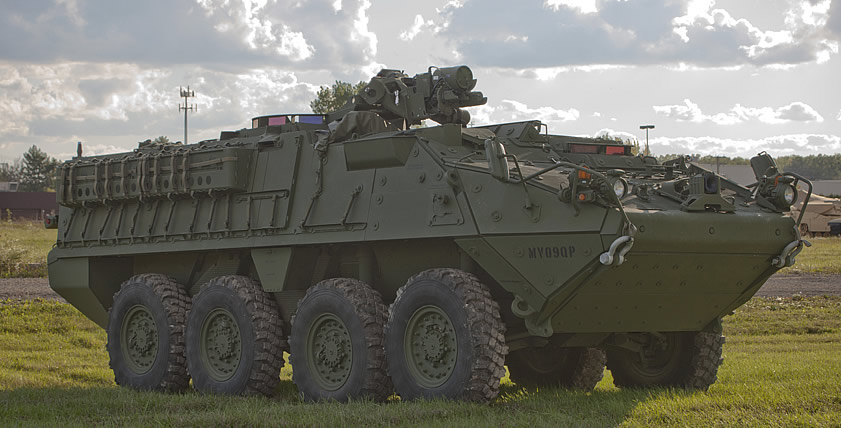
July 30/19: FMS To Thailand The US State Department approved a Foreign Military Sale to Thailand for 60 Stryker infantry carrier vehicles with equipment and support. The deal is valued at $175 million. Thailand had requested to buy 60 Stryker Infantry Carrier Vehicles and 60 M2 Flex .50 cal machine guns. The Infantry Carrier Vehicle provides protected transport and, during dismounted assault, supporting fire for the infantry squad. The Stryker is a full-time four-wheel drive, selectively eight-wheel drive, armored vehicle weighing approximately 19t which carries an infantry squad with their equipment.
October 8/18: More Stryker DVHs needed General Dynamics is being contracted to upgrade more Strykers for the US Army. The awarded contract modification is priced at $366.9 million and covers the conversion of several Stryker flat-bottom vehicles to the Double V-hull configuration. The V-hull configuration was the Army’s answer to vehicle’s poor performance during IED attacks. The new design channels blast force away from the vehicle and its occupants thus drastically enhancing soldier protection. The Army plans to acquire 742 Stryker DVH vehicles, as retrofits and as new production vehicles. That’s the full extent of the current plan, which was a major step beyond the program’s initial plan of 450 Stryker DVHs. Work will be performed at GD’s factory in Sterling Heights, Michigan, and is scheduled for completion by April 30, 2021.
September 4/18: Javelin integration The US Army is upgrading parts of its 2nd Cavalry Regiment in Germany. The Regiment will receive a new Common Remotely Operated Weapon Station configuration for its Stryker combat vehicles. From now on soldiers will be able to launch Javelin missiles from within the light-armored vehicle. Until now, if infantry troops wanted to engage mechanized targets, the Stryker would have to stop, the soldier would get out, fire the missile, and then jump back on. This upgrade is a US response to continuing Russian aggressions in Eastern-Europe. The integration of the Javelin into the RWS now puts the Stryker on par with Russia’s BMP-3 tracked infantry fighting vehicles.
August 6/18: Stryker support General Dynamics is being tapped to support the US Army’s fleet of Stryker vehicles. The awarded contract modification has a value of $11 million and provides for the supplying the entire Stryker program with spare parts. The US military plans to use the Stryker as future backbone of its 8 US Army and 1 National Guard medium armored brigades. The improved double V-hull design of the vehicle provides better protection against IED’s and mines by channeling the blast force away from the occupants. Work locations and funding will be determined with each order. Work is expected to be completed by February 2019.
June 25/18: V-hull config The US Army is awarding a contract modification to General Dynamics in support of its Stryker vehicles. The modification provides for the upgrade of Stryker flat bottom vehicles to the double V-hull configuration and is valued at $258 million. The 8×8 wheeled Stryker armored vehicle will be the future backbone of 8 US Army and 1 National Guard medium armored brigades. The V-hull configuration is the Army’s answer to a high number of killed or wounded soldiers caused by IED blasts. The Stryker double-v hull design channels blast force away from the vehicle and its occupants thus drastically enhancing soldier protection. Work will be performed in Sterling Heights, Michigan, with an estimated completion date of March 31, 2020.
March 30/18: SHORAD plan laid out The US Army plans to transform its Stryker combat vehicles into maneuverable Short Range Air Defense (SHORAD) systems. The 8×8 wheeled Stryker armoured vehicle is likely to be the backbone of several medium armoured brigades. The US Army aims to close a capability gap in SHORAD that needed to be filled for possible operations against near-peer threats such as Russia. One viable candidate for the provision of the system is Boeing with its Avenger launcher, which mounts 8 Stinger missiles on a Humvee jeep, along with an FN M3P .50 cal machine gun, and automated systems that include optical sights, infrared, a laser rangefinder, and an IFF (Identification Friend-Or-Foe) system. Modern units include “slew-to-cue,” which automatically slews the turret to place the sights on targets received from FAAD (Forward Area Air Defense) Command and Control systems. The Avenger launcher can be equipped with several types of missiles including the Longbow Hellfire, AIM-9X Sidewinder missiles. The Army expects to be fully under contract by August and expects the first prototypes to be ready by Spring 2019. A request for ordnance technology initiatives to the industry is scheduled to be published by March 30th.
February 20/18: Supply Support Contract-FY19 Spending The US Army has awarded General Dynamics Land Systems a $148.9 million contract modification to provide parts supply support for the entire Stryker wheeled combat vehicle program. Awarded on Friday, February 16, work locations and funding will be determined with each order, with the contract expected to run until February 28, 2019. Meanwhile, the Army has also requested $368.3 million for its Stryker program in fiscal year (FY) 2019, looking to use the funds for engineering change proposal (ECP) 1 testing, an ECP 2 lethality upgrade, and supports some fleet-wide modifications such as new C4I equipment, reliability, and performance improvements, and safety fixes. The funding also provides for the logistical support for new Stryker variants armed with a 30 mm remote weapon station.
October 12/17: Two upgunned Stryker infantry carrier vehicle variants will be deployed to Europe in December to undergo operational tests. One, the 30 mm-armed ‘Dragoon’, has been developed by General Dynamics Land Systems (GDLS) and features Orbital ATK’s 30 mm calibre XM813 Bushmaster dual feed automatic cannon fitted into Kongsberg’s Medium Calibre Remote Controlled Turret (MC-RCT) and integrated on GDLS’ Strykers. GDLS expect to have 83 Stryker Dragoons completed by May 2018. The second type comes with Raytheon’s Javelin anti-tank missiles on the Kongsberg Common Remotely Operated Weapon Station (CROWS II), and 87 javelin-equipped units are planned. The vehicles were approved in 2015 in order to fit an operational need statement from the 2nd Cavalry Regiment (known as the Dragoons) based at Vilseck in Germany.
October 11/17: Raytheon has unveiled its solution to give the Stryker armored fighting vehicle a mobile air defense capability, a Stinger missile mounted into a Common Remotely Operated Weapon Station (CROWS) and integrated on the vehicle. The solution was successfully tested by the US Army at the White Sands Missile Range in New Mexico last month, where it successfully intercepted several airborne targets. “With so many airborne threats in the battlespace, our ground forces need the protection of additional mobile air defense systems,” said Kim Ernzen, Raytheon Land Warfare Systems vice president. “Combining these two proven systems gives the Army an immediate, low risk, high-value solution.” The integration was in response to the US Army’s urgent need for mobile air defense for ground troops.
August 11/17: A team combining Boeing and General Dynamics Land Systems will enter a US Army short-range air defense (SHORAD) shoot-off next month. The team will build a short-range air defense system by placing a modernized Avenger air defense system on the back of a Stryker combat vehicle reconfigured to accommodate the system on a turret. The new Avenger is designed to shoot a multitude of different missiles, can be equipped with a 30mm gun and potentially even directed energy weapons down the road. A need for a new SHORAD capability surfaced last year, when the Army noticed a requirement for such platforms in the European theater and has been moving quickly to fill it by developing a system that will give maneuver forces the capability to defend against air threats from peer adversaries on the forward edge of the battlefield.
April 3/17: Latin American governments may soon be operating the Stryker combat vehicle as the US contemplates selling the vehicle to several modernization efforts. Brazil, Colombia, and Peru are all looking to upgrade their armored fleets and the Stryker is seen as an attractive capability that will help with countering threats from “illicit networks” within their borders. If an agreement is secured, it will be the first foreign military sale of the vehicle. Typically armed with either an M2 .50 caliber machine gun or an MK19 40mm grenade launcher mounted in a Protector remote weapon station, the Army has been investing in upgunning and improving the Stryker vehicle by giving it an optional 30mm cannon for anti-air missions and a v-shaped hull to increase protection from explosives.
January 27/17: A US Army Stryker armored vehicle fitted with a 30mm cannon has been tested for the first time. Testing of the cannon, part of a series of upgrades designed to increase the mission capabilities of US Stryker vehicles, was undertaken in order to verify its combat abilities and make future determinations on the vehicle’s armament. The Pentagon’s decision to upgun a number of its Stryker’s – nicknamed the Dragoon – was taken in response to Russia’s 2015 invasion of Ukraine to close a ground vehicle capability gap, according to service leaders. The Army plans to field first of 83 Dragoons by the end of Fiscal 2018.
December 8/16: The US State Department has cleared the sale of 178 reconditioned Stryker Infantry Carrier Vehicles to the government of Peru. Valued at $668 million, the deal also includes supporting weapons, Remote Weapon Stations, Global Positioning System navigation capabilities, special tool sets, and testing equipment. Once delivered, the vehicles will be used to support border security, disaster response, and counter-terrorism missions.
November 1/16: The first upgunned Stryker infantry carrier vehicle has been returned to the US Army. Designated as the Stryker Dragoon, the vehicle comes armed with a more lethal 30mm cannon and will be fielded with the Germany-based 2nd Cavalry Regiment in May 2018. Other new aspects of the upgrade include an integrated Kongsberg MCT-30mm Weapon System with a remotely-operated, unmanned turret; a new, fully-integrated commander’s station; and upgraded driveline component and hull modifications. Full rate production will commence following an abbreviated test phase in Spring 2017.
FY 2016
May 9/16: The US Army has awarded General Dynamic Land Systems a $329 million contract for the production, logistics product development, and test support for the Stryker Infantry Carrier Vehicle (ICV) 30mm lethality upgrade. Upgrading the lethality and durability of the Army’s Strykers has become a recent priority for the service as the Pentagon looks to increase the vehicle’s operational capabilities. General Dynamic’s work on the project is expected to run until January 15, 2021.
March 4/16: An industry wide search is to be carried out by the US Army to seek increased capabilities for its Stryker units. The Army will look at different sensors, better ways to integrate capabilities, and ways to make vehicles more survivable. This will go beyond the current efforts to upgun the armored vehicle by adding 30mm cannons or Javelin missiles, and to add Double-V Hulls for extra durability. The new and improved vehicles are expected to reach operational capability by early 2018.
February 15/16: The US Army plans to upgun their 8×8 Stryker armored vehicles. The vehicles will be fitted with a 30mm automatic cannon, that comes with air-burst shells, for use in air defense activities. The gun would allow the vehicles to act as a mobile anti-aircraft gun, as the Army looks to increase capabilities of existing systems, while funds for any major programs are non-existent. The upgunning with the 30mm cannon was initially intended to destroy light-armored vehicles such as the Russian BMP, with the inclusion of the air-burst shells allowing for greater capabilities.
November 6/15: Lithuania has requested 84 Stryker Infantry Combat Vehicles from the US, with the State Department approving the potential Foreign Military Sale. The request also includes 30mm cannons – recently approved as an upgrade for some US Strykers stationed in Europe – and Remote Weapons Stations, as well as machine guns, communications systems and auxiliary equipment. The potential deal is estimated to value $599 million, with 30 US government or contractor personnel required to travel to Lithuania to help implement the introduction and sustainment of the Strykers.
October 6/15: The Army’s Stryker vehicles will benefit from a $411 million upgrade program for the vehicles’ main armament, with the 2016 NDAA bill including $314 million for modification work to the fleet to up-gun their 12.7mm cannons to 30mm guns. The remaining $97 million is earmarked for R&D, with the House and Senate Armed Service Committees criticizing the Army for an increasingly unacceptable per-vehicle cost to upgrade the Stryker fleet. A response to fears that the Strykers would be out-gunned by would-be Russian adversaries in Europe, the Army was given a provisional thumbs-up for the upgrade work in April, with the Hill stipulating that the upgrades will be limited to the Army’s European-deployed Strykers rather than form a fleet-wide upgrade program.
FY 2013 – 2015
May 5/15: The Army’s European-deployed Stryker mobile guns have been given a provisional thumbs-up for more powerful weapon systems. The current 12.7mm machine guns will be upgraded to 30mm autocannons, with the “high priority need” a reflection of the 2nd Cavalry Regiment’s requirement for increased lethality, according to a memo obtained by Breaking Defense earlier this month.
Jan 12/14: Good news, bad news. The good news: the Army wants to convert all 9 of its standard Stryker Brigades to the DVH configuration, using the DVH Exchange option.
The bad news is what you’d expect: no funding beyond the first 2 brigades they’ve already done, and the 3rd they hope to finish by 2016 (q.v. Sept 10/13). Which means GDLS Canada’s LAV-III/ Stryker manufacturing equipment will have to be placed in layaway mode for a future production line restart, to be triggered by either future US Army orders or foreign sales. Either way, however, a line restart always costs extra. Sources: Defense News, “US Plans Radical Upgrade of Stryker Brigades”.
Sept 10/13: 3rd brigade. The Project Manager for the Stryker Brigade Combat Team received the approval from the Army Acquisition Executive to begin buying a 3rd brigade of Stryker DVH vehicles to switch with an existing brigade. The initial 66 vehicle conversions of an eventual 337 have been awarded via a $118 million contract to GDLS. Deliveries will begin in July 2014, and the initial 66 will be complete by February 2015.
As of this order, the DVH Exchange pilot program had wrapped up in April 2013 after delivering 52 vehicles on time and under budget. Remaining brigade orders will be based on the availability of funding, using an incremental approach over FY 2014-2016. Sources: US Army, “Army gives green light for procurement of 3rd Stryker Double-V Hull brigade” | GD, “General Dynamics Awarded $118 Million for Stryker Double-V Hull Vehicles” | Yellowhammer News, “80 Anniston Army Depot jobs preserved with DVH Stryker announcement”.
Orders for 3rd brigade begin
Oct 15/12: DVH Exchange. The US Army announces that they’ve completed the 1st vehicle in their Stryker DVH exchange program. The exchange involves taking a standard Stryker variant, reusing common parts, refurbishing them, and inserting the parts into a vehicle on the DVH production line.
The Army is documenting the teardown and reuse process, in hopes of having clearer figures if the Army decides that it wants more Stryker DVHs later on. Obviously, they’re hoping to find out that this saves money, by using a lot of the old parts. Once they’ve had a chance to try and make this process more efficient, then cost it, they’ll be in position to present a case. US Army.
FY 2012
(click to view full)
March 4/12: Plans. The US Army clarifies its plans for the Stryker DVH: 760 total, to be delivered by the end of 2012, equipping 2 Brigade Combat Teams. When queried, however, Lt. Col. Peggy Kageleiry said that:
“…the Army has a current procurement target of 742 Double-V Hull (DVH) Stryker vehicles… which will be completed by December 2012. Procurement of 158 NBCRVs which are on contract in FY12 & FY13, will complete the current planned Stryker vehicle purchase. Once the Army decides on the appropriate future force structure, fleet mix and overall number of combat vehicles, the quantity of DVH Strykers and variants of Strykers will be finalized.”
With respect to performance in-theater, Lt. Gen. Bill Phillips, principal military deputy to the assistant secretary of the Army for Acquisition, Logistics and Technology, says there have been about 40 land mine incidents for the DVH. In 38 of those incidents, all soldiers walked away with just minor injuries. In his words: “That vehicle has performed beyond our expectations.”
Jan 18/12: Industrial. GDLS’ newly-acquired Force Protection manufacturing facility in Ladson, SC, will be doing work on another v-hulled vehicle. About $10 million in new work is moving there, to install additional combat-related communication and protection equipment on 292 Stryker DVH (Double-V Hull) 8×8 wheeled APCs, which are getting ready to deploy to Afghanistan.
The new work begins in March 2012, and will occupy about 45 jobs until about February 2013. Force Protection.
Jan 17/12: DOT&E Report. The US Defense Department’s Director of Operational Test and Evaluation issues his FY 2011 Annual Report, which includes the Stryker DVH program. The program get good reviews, based on tests. The modified Strykers retained the same basic mobility, proved their performance against land mines, and actually had better reliability than their flat-hulled counterparts. They were rated both operationally effective for performance, and operationally suitable for reliability.
Quibbles were minor, involving data collection for the M1126 ICVV’s operational assessment, and problems with the Stryker DVH driver’s compartment being too small for larger Soldiers. The Army is planning a driver’s compartment redesign, and will continue to test the other 7 DVH variants through Q3 2012. In the nearer term, February 2012 is expected to see the end of Styker ICVV-Scout operational testing, and M1129 Mortar Carrier Vehicle DVH developmental and operational testing, at Yuma Proving Ground in Arizona.
Oct 25/11: +177. General Dynamics Land Systems announces a $367 million order for another 177 Stryker double-V hull (DVH) wheeled APCs, raising the US Army’s buy to 2 full Stryker DVH Brigade Combat Teams. Work on Stryker DVH vehicles is performed in Anniston, AL and Lima, OH, as well as the main production facility in London, ON, Canada (W56HZV-07-D-M112, #0266, Mod.1).
The firm says that over 320 double-V-hulled Stryker vehicles have been produced so far, under a contract awarded in July 2010 for 450 double-V-hull vehicles. Deliveries will be complete by July 2013. DID checked with GDLS, and confirmed that this order brings the total number of ordered Stryker DVH vehicles to 742.
Oct 5/11: +115. General Dynamics Land Systems announces a $243 million contract to produce and deliver another 115 Stryker DVHs. General Dynamics will also provide production sustainment support and obsolescence management services. Work will be performed in Anniston, AL, London, ON, Canada, and Lima, OH. Deliveries will be complete by September 2012 (W56HZV-07-D-M112, #0266).
The firm says that about 300 double-V-hulled Strykers have been delivered so far, under a contract awarded in July 2010, with initial deliveries rolling out in May 2011. This order begins to go beyond the program’s original goal of 450. GDLS.
FY 2011

(click to view full)
June 1/11: A $40 million cost-plus-fixed-fee contract modification “for Stryker double-V hull development and delivery of prototype vehicles.”
Work will be performed in Sterling Heights, MI, and London, Ontario, Canada, with an estimated completion date of July 30/12. One bid was solicited, with one bid received (W56HZV-07-D-M112).
May 20/11: Deployment. Stars & Stripes relays the US Army’s statement re: Afghan deployments of the Stryker DVH, and also details combat statistics and criticisms related to the Stryker’s deployments in Afghanistan.
May 9/11: Deployment. US Army:
“In the coming weeks, Soldiers in Afghanistan will begin to see 150 new Strykers with a double-V hull, or DVH… The Stryker DVH, with enhanced armor, wider tires and blast-attenuating seats, went from conception to production in less than one year… “The rapid turnaround of the DVH is responsiveness at its best,” Col. Robert Schumitz, Stryker Brigade Combat Team Project Management Office, project manager, said… Engineers at General Dynamics Land Systems conceived of the double-V-hull design and tested it at Yuma Proving Ground, Ariz., Aberdeen Proving Ground, Md., and the Army’s National Training Center at Fort Irwin, Calif… There are 140 Stryker DVH’s already in the Army supply chain, and plans are to field a total of 450 vehicles.”
April 12/11: +404. A pair of contracts worth $49.5 million revise earlier orders for 404 vehicles. The wording is confusing, but GDLS clarifies that: “The dod announcements are not new vehicles or contracts” – designating them as limit increases to existing contracts.
A $37.2 million firm-fixed-price contract revises the not-to-exceed amount and obligated amount for Double-V hull production cut-in to 178 Stryker vehicles. Work will be performed at London, Ontario, Canada, and Anniston, AL, with an estimated completion date of Feb 29/12. One bid was solicited and one received (W56HZV-07-D-M112).
A $12.3 million firm-fixed-price contract revises the not-to-exceed amount and obligated amount for Double-V hull production cut-in to 226 Stryker vehicles. Work will be performed at London, Ontario, Canada, and Anniston, AL, with an estimated completion date of Feb 29/12. One bid was solicited and one received (W56HZV-07-D-M112).
March 3/11: +15. GM GDLS Defense Group, LLC in Sterling Heights, MI receives an $18.7 million cost-plus-fixed-fee contract that will “provide for support for 19 Stryker flat-bottom vehicles and 15 Stryker double-V hull vehicles.” Work will be performed in Sterling Heights, MI, with an estimated completion date of Feb 29/12. One bid was solicited with one bid received (W56HZV-07-D-M112).
Dec 3/10: Support. A $91.9 million cost-plus-fixed-fee/firm-fixed-price contract, for service to support performance specification changes to the Stryker vehicle. These changes will design and buy “necessary components to support the Stryker mine protection kit” for vehicles in the Afghan theater.
Work will be performed in Sterling Heights, MI (5%), and London, Canada (95%), with an estimated completion date of Dec 31/10. One bid was solicited with one bid received (W56HZV-07-D-M112).
Oct 27/10: +46. A $8.3 million firm-fixed-price contract cuts the modified double-v hull design into another 46 Stryker vehicles on the production line. Note that cut-in contracts pay for making the changes and for the new materials, not for the entire Stryker.
Work will be performed in London, Canada (50%), and Anniston, AL (50%), with an estimated completion date of Feb 29/12. One bid was solicited with one bid received (W56HZV-07-D-M112, #0256). This order brings the total to the program’s goal of 450 vehicles.
Oct 13/10: +45. A $9.5 million firm-fixed-price contract to cut the modified double-V hull design into the production of another 45 Stryker vehicles. Work is to be performed in London, Ontario, Canada (50%), and Anniston, AL (50%), with an estimated completion date of February 2012. One bid was solicited with one bid received (W56HZV-07-D-M112).
FY 2010

(click to view full)
Aug 10/10: Renovations may be more difficult than they first appear. A $20 million firm-fixed-price contract adds the modified hull design (double-V hull), into an additional 78 new-build vehicles, raising the total to 359. It also revises the obligated amount for the previous 281 vehicles (vid. July 9/10). Work is to be performed in London, Ontario, Canada (50%), and Anniston, AL (50%), with an estimated completion date of Feb 22/12. One bid was solicited with one bid received (W56HZV-07-D-M112). See also GD release.
Aug 6/10: A $9.8 million firm-fixed-price contract revises the obligated amount for the production cut-in of the revised Stryker performance and hull design into 281 new-build vehicles (vid. July 9/10). Work is to be performed in Sterling Heights, MI (30%), and London, Canada (70%), with an estimated completion date of Feb 16/12. One bid was solicited with one bid received (W56HZV-07-D-M112).
July 9/10: A $30.1 million firm-fixed-price contract directs production cut-in of the revised Stryker performance specifications, which incorporates a modified double-V hull design, into 281 vehicles. The new vehicles will be sent to Afghanistan. Work will be performed in London, Canada (70%), and Sterling Heights, MI (30%). Deliveries will begin in January 2011 to allow vehicles to be available for use by the Stryker brigade that will rotate into Afghanistan in 2011, and will be completed by February 2012. (W56HZV-07-D-M112). See also GDLS release.
June 1/10: The GM GDLS Defense Group, LLC in Sterling Heights, MI recently received a $29.1 million cost-plus-fixed-fee contract buys 14 Stryker Double-V Hull prototype vehicles for government ballistic, performance/durability, and logistics testing and demonstration.
Work is to be performed in Sterling Heights, MI (41%); and London, ON, Canada (59%), with an estimated completion date of Nov 30/11. One bid was solicited, with one bid received by TACOM, CCTA-AI in Warren, MI (W56HZV-07-D-M112).
April 9/10: A $58.3 million cost-plus-fixed-fee contract for a modified hull design for the US Army’s Stryker vehicles to improve performance and survivability in Afghanistan. Work is to be performed in Sterling Heights, MI (41%), and London, Ontario, Canada (59%), with an estimated completion date of Nov 30/11 (W56HZV-07-D-M112).
March 11/2010: During US Senate testimony in early 2010, Gen. George Casey said that the US Army was planning to modify the Stryker vehicle with a double V-shaped hull designed to deflect land mine blasts from below.
The Stryker M1135 NBC (Nuclear, Biological, Chemical) reconnaissance and M1128 MGS assault gun variants would reportedly not be modified under the current plan. That could create field issues, since the M1128 is meant to act as firepower support in Stryker brigades.
Additional Readings
* General Dynamics Land Systems – Stryker ICV, DVH
* US Army – Army plans major Stryker upgrades. Outlines the next steps beyond the DVH program. A number of DVH vehicles will probably receive these retrofits as well.
* DID – Stryker DVH Armored Vehicles for Colombia. The country ordered 24 LAV-III DVHs in January 2012.