


(click for alternate)
In November 2005, Israel’s Ministry Of Defense (GOI/MOD) announced its interest in replacing the IAF “Zukit” (“Thrush,” an upgraded 1950s-era Fouga Magister) basic training aircraft with a new trainer. The Zukit’s high fuel and maintenance costs, and low mission capable rates were all creating issues. The intent was to execute this program using an RFI concept, including a comprehensive test and evaluation phase of candidate aircraft, which would then be taken into account during a potential RFP stage.
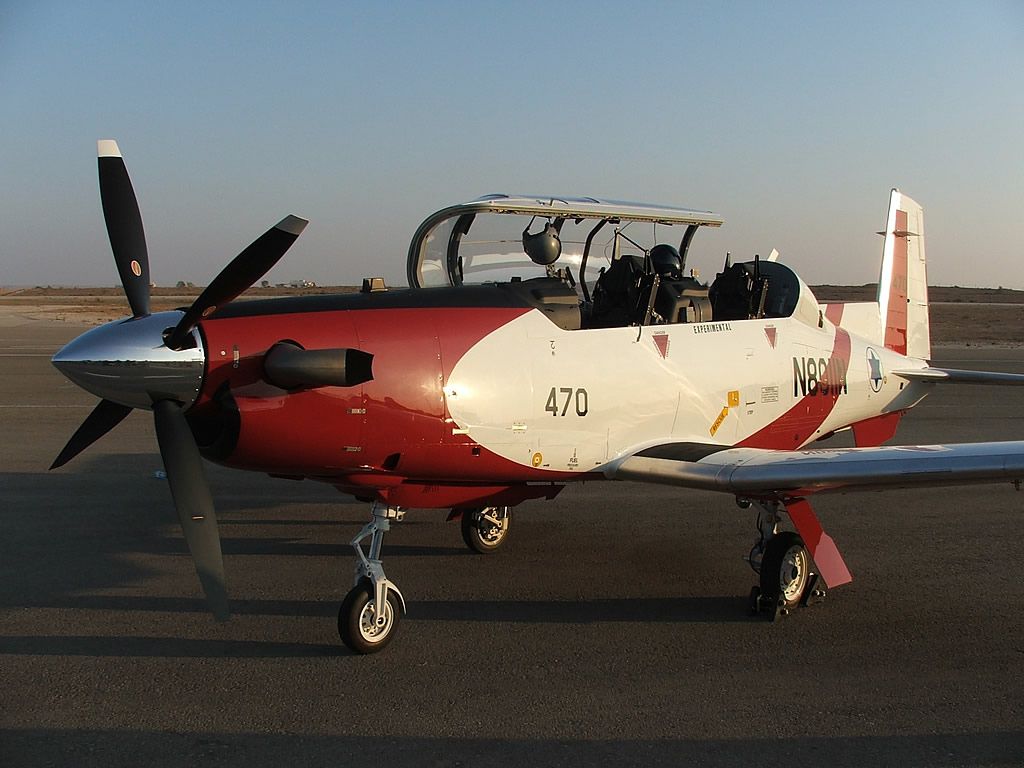
Israel is secretive about its defense undertakings, and nothing was heard for a long while. Possible candidates included the IAI/ATG Javelin, Romania’s IAR-99C Soim, and possibly even the Czech L159 Albatros, which remained on the market at an excellent price. The winner? “None of the above.” The lure of using American aid dollars instead of hard currency, combined with advertised operating economies, eventually decided the competition in favor of an American-built turboprop: Hawker Beechcraft’s T-6A Texan II, which is used in this same role by the US military.
Contracts and Key Events
(click to view full)
Dec 31/12: Support. As part of a $315 million set of announcements, Elbit Systems announces that about $75 million covers operation and maintenance services for the IAF’s Flight Academy, plus virtual training for the Israeli Air Force’s (“IAF”) fighter aircraft, and battle management systems (“BMS”) and avionics for helicopters. Services and deliveries cover a 6-year period.
Later clarifications explain that the IAF’s Flight Academy was actually addressed by 2 contracts. One is the follow-on the July 7/09 contract for T-6A Efroni maintenance services. Based on the previous award, it’s probably worth around $10 million.
The other is a follow-on to a 2004 contract, for full “power by the hour” logistics and maintenance services for the Academy’s Bell 206 (“Sayfan”) training helicopters, and operational level maintenance for Israel’s Cobra AH-1A (“Tzefa”) helicopters. Both contracts will enter into effect during 2014, following completion of the previously awarded contracts.
July 18/10: Grounded. Israel temporarily grounds its T-6 basic trainers, after a female cadet reports that she was unable to control the aircraft and ejected during her 1st solo flight.
The cadet suffered only minor injuries, and the plane can and will be repaired. Flight International.
August 24/09: Contract? The Israeli Government has reportedly awarded Hawker Beechcraft Corporation the T-6A contract, after 4 aircraft were delivered as a precursor. That’s possible, but it would be highly unusual. Key Aero.
July 13/09: 4 arrive. Israel receives its first 4 T-6 turboprops, which will be known as the ‘Efroni’ in IDF service. Flight International.
July 7/09: Support. Elbit Systems announces a $10 million contract to support the IDF’s new T-6 trainer fleet during its first 5 years of operation, with an option to extend the deal by a further 5-year period.
Elbit Systems has provided the IAF with maintenance services for its training aircraft and helicopters since 2002. Elbit Systems | Flight International
June 9/08: The US Defense Security Cooperation Agency announces [PDF] Israel’s formal request for 25 T-6A Texan aircraft, equipped with Global Positioning System (GPS) including CMA-4124 GNSSA card and Embedded GPS/Inertial Navigation System (INS). The deal will also involve spares, ferry maintenance, tanker support, aircraft ferry services, site survey, unit level trainer, spare and repair parts, support and test equipment, publications and technical documentation, personnel training and training equipment, contractor technical and logistics personnel services, and other related elements of logistics support. The estimated cost is $190 million.
Unlike their T-6B counterparts, or the Zukit which preceded it, T-6As lack a dual-role potential as counterinsurgency or light attack aircraft. The turboprops will replace existing Zukit (Fouga Magister) aircraft, and are expected to reduce training fuel requirements by 66%. The principal contractors will be:
* Hawker Beechcraft Corporation in Wichita, KS (aircraft)
* Pratt & Whitney Corporation in Quebec, Canada and Bridgeport, WVA (engine)
* Martin Baker in Middlesex, United Kingdom (ejection seats)
* Hartzel Propeller in Pique, OH
* Canadian Marconi in Broken Arrow, OK
* L-3 Vertex in Madison, MS
Offset agreements associated with this proposed sale are expected, but they remain be defined in negotiations between the purchaser and contractor(s). Implementation of this proposed sale will U.S. Government and contractor representatives on site for technical reviews/support, program management, and training over a period of up to 15 years.
DSCA request: 25 T-6As
November 2005: RFI. Israeli Ministry of Defence:
“The Government Of Israel, Ministry Of Defense (GOI/MOD) is considering the possibility of replacing the IAF “ZUKIT” (upgraded Fuga Magister) basic training aircraft with a new trainer aircraft. The intention is to execute this program using a PFI concept.
In general, we are seeking an aircraft with approximately similar characteristics and aerodynamic performance of the “ZUKIT”.
A part of this RFI process will include a comprehensive test and evaluation phase of candidate aircraft. The results of this process will be taken into account during a potential RFP stage. A document detailing this phase will be published at a later date (during the RFI stage)….”
Trainer RFI
Appendix A: November 2005 Sidebar
(click to view full)
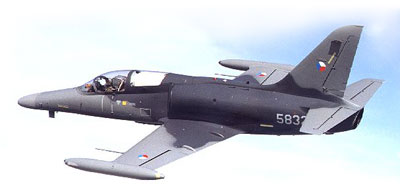
Israel has a number of choices for its next basic to intermediate trainer. A proposal at CASR (recommending a buy for Canada’s Snowbirds), the entry at GlobalSecurity.org, and the Czech government’s own L159 page all report that the Czech Republic has been trying to get out of a procurement bind since 2002 by selling off some of these modern, westernized subsonic aircraft. This could be the opportunity they’ve waited for.
On the other hand, while 2-seater versions of the L159 exist, many are single-seat light attack aircraft. They are derived from the 2-seat Aero L39 Albatros trainer, and the L159’s design appears to give them the potential to become 2-seaters without modifying the airframe; nevertheless, the question of their suitability for this RFI would likely depend on conversion costs.
In a related vein, it may be noteworthy that the Israeli firm Elbit Systems has collaborated with Romania’s Avioane Craiova SA on the IAR-99C Soim advanced jet trainer aircraft. Elbit Systems provides the avionics suite, which is logical as the Soim is a lead-in trainer to the Elbit-upgraded MiG-21 ‘Lancer’. Weapons integration for the IAR-99C is also Israeli.
Finally, the IAR-99C includes the Elbit Advanced Combat Training System. As Airforce Technology describes it:
“The system provides efficient training in combat scenarios and reduced training cost of combat aircraft.
The modular system includes a library of dynamic scenarios that can be preloaded or initiated by the ground station instructors. The choice of scenarios includes fighters, along with simulation of any infrared or radar guided missile, interceptors, air-to-air and surface-to-air missiles, anti-aircraft batteries, radars, chaff and flare countermeasures, collision warnings, in low or dense electronic warfare environments, and many other simulated or re-enactments of true to life combat situations.
The pilots and instructor crews use a full range of debrief options for post-mission analysis and review.”