

(click to view full)
The UK Armed Forces face a wide variety of aerial threats, with variables that include speed, stealth, and flight profiles. Attack helicopters can have a speed of zero, for instance, while some anti-ship missiles can exceed Mach 3. Air-to-air practice targets for RAF aircraft have a very different profile than wave-skimming anti-ship missiles. Consider, too, the difference in regulations and safety procedures: an aerial target’s rocket-assisted takeoff may require environmental waivers on land, but ship launches turn it into a safety issue.
The approach to date has been for individual services to buy individual target drones, but the results weren’t entirely satisfactory. Could the UK’s emerging approach of long-term public-private partnership for government service delivery be used to provide an overlapping set of targets that would meet the needs of all 3 services? It was a risk; both the solution’s definition and its mode of delivery were new, and hence relatively untested. At the same time, it was an attractive idea.
The process began in September 2001. In December 2006, QinetiQ signed a contract with the UK Ministry of Defence (MOD) to supply a Combined Aerial Target Service (CATS) over 20 years, under a contract worth up to GBP 308 Million (currently about $600 million) . They will provide a service that meets all of the UK MOD’s aerial target requirements worldwide, including ground-based air defence training, aerial target services for the Royal Navy, and an air-to-air service for the RAF. That contract is now beginning to move into its operational phase…
The CATS Program
(click to view full)
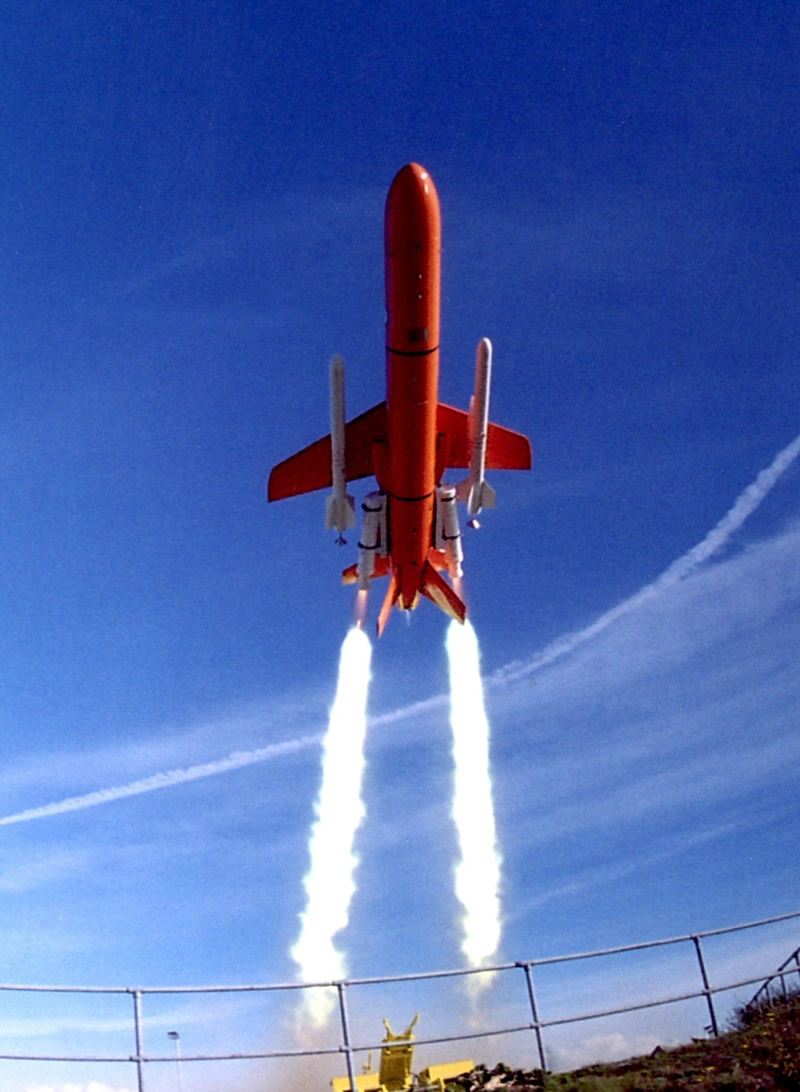
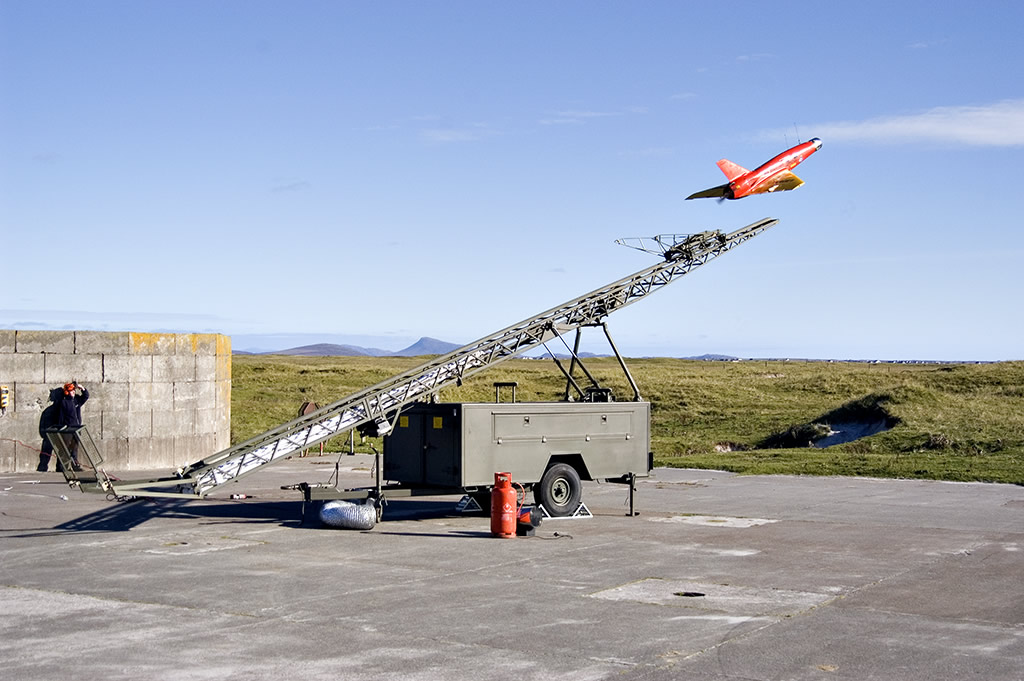
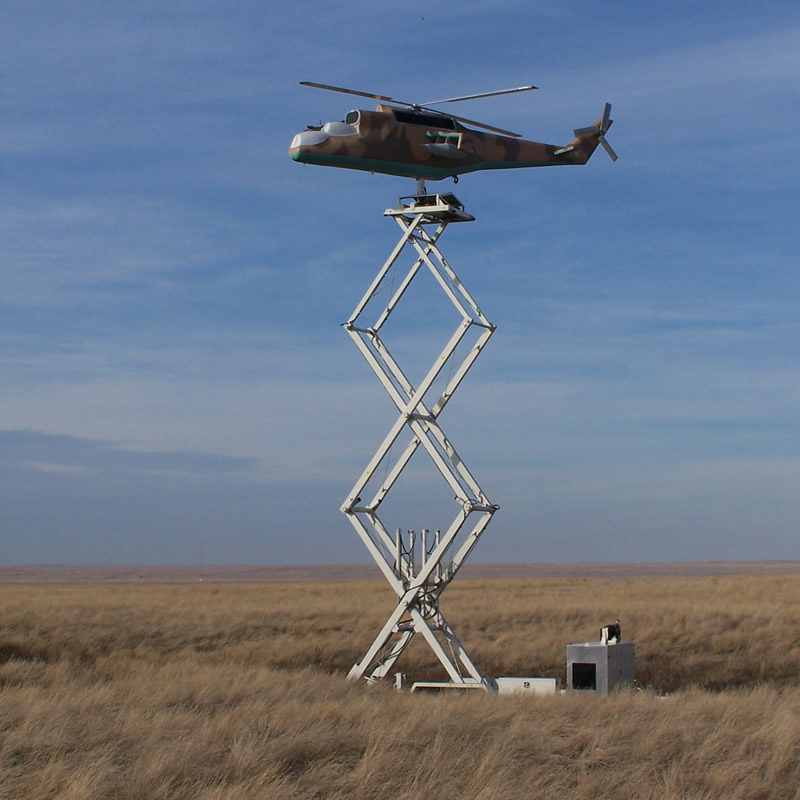
CATS combines all of the MOD’s existing target arrangements in a single contract. This includes the Galileo Avionica Mirach 100/5 target service, which has been part of the 25-year, GBP 951 million Long Term Partnering Agreement (LTPA) through which QinetiQ runs the MOD’s 22 test and evaluation ranges. CATS also includes the Meggitt Defence Systems’ BTT-3 Banshee targets at UK ranges in Manorbier, Aberporth and the Hebrides; plus their Voodoo intermediate target and ground-mounted helicopter pop-up target.
The Banshee basic aerial target and the ground-mounted helicopter pop-up target had a target date of April 1/08, which was met. A lot of work goes into that simple milestone, including developing the service, finishing a complex safety case to satisfy all the necessary MOD agencies, environmental impact assessments, proving airworthiness for the targets, ensuring compliance with flying regulations, developing the required operational infrastructure and processes to deliver a global service, and completing a full end to-end demonstration of the capability.
The QinetiQ team will deliver the first operational deployment under CATS to the Falkland Islands in April 2008, where they will be used to train Army ground based air defence units. This will then be followed by deployments to Manorbier in Wales later in April 2008, and at BATUS in Canada in May 2008.
Validation continues as planned so that the intermediate Voodoo aerial target will enter into service at the beginning of 2009.
The Mirach advanced aerial target service at Aberporth in South Wales is already operational. It will be moved into the global CATS contract from its existing LTPA contract in June 2009.
The British military does have a requirement for supersonic aerial target services, and QinetiQ may have to add a supersonic target to its team during the 20-year contract. Various options are available, including Orbital Science’s GQM-163 Coyote SSST used by the U.S. Navy, and under evaluation by France.
Contracts and Key Events
…briefly
(click to view full)
June 10/08: The UK MoD anounces that the first 2 elements of CATS (Banshee and helicopter pop-up) have been brought into service, and confirms that the system is working in Manorbier, Wales.
April 1/08: Both the Banshee basic aerial target and the Pop-up ground-based helicopter target, manufactured and supplied by Meggitt Defence Systems, are now available via CATS. Other elements remain onschedule, according to QinetiQ’s release.
2007: The CATS program wins the ‘Best Deal to Sign’ at the UK’s 2007 Public Private Finance Awards.
Dec 14/06: QinetiQ announces its GBP 308 million CATS win, which the firm announces as its largest competed sale to date. QinetiQ release | Finmeccanica subsidiary Galileo Avionica release [PDF].
Andrew Sleigh, QinetiQ’s Group Managing Director for Defence, says:
“Over the next two decades, CATS will provide a flexible service worldwide that is key to the air defence training of the UK’s armed forces. This contract is a significant success for QinetiQ and confirms our position as a major provider of high end managed services in UK defence… A key feature of CATS is that our independence from manufacturers allows us to make use of the best proven targets on the market.”
March 16/06: QinetiQ announces that it has been named as preferred bidder for CATS, ahead of the Serco/EADS Firecats consortium. The Firecats consortium could still win if contract negotiations with QinetiQ prove unsatisfactory. QinetiQ adds that:
“Later this year QinetiQ’s aerial target systems will also be used in air combat training for US aircrews based in Europe. Utilising the MOD’s Aberporth, West Freugh and Hebrides Ranges and with training focused on precision guided munitions and air-to-air and air-to-ground missiles, the US aircrews will receive a significant level of tactical training not available on any other European range.”
Nov 17/03: QinetiQ unveils its bid for CATS, and the UAVs it has chosen. The bid is touted as a ‘least risk’ solution, which uses proven targets, emphasises the public-private firm’s [DID: now private since the IPO] role on every major UK aerial target program to date, and the fact that 30% of QinetiQ’s revenue comes from managed services.
This entry notes that Schreiner Aviation Group, a large helicopter managed services provider with a prominent role serving the North Sea oil industry, will provide the helicopter pop-up targets. Schreiner was later bought by CHC in April 2004, and subsequent QinetiQ releases assign the helicopter target role to Meggitt.
Sept 13/01: The UK’s DPA announces the CATS short list:
* BAE Systems: BAE Systems, STN Atlas, Cranfield, Microsystems Inc. Targets would be the BAE Systems North America Evader (MQM-107 version), EADS’ Iris jet and 3Sigma propeller-driven targets, EADS Dornier’s DO-DT35, Kentron’s Skua, and pop-up helicopter targets.
* Team Firecat: Serco, EADS, JRA. Targets would be EADS’ Iris jet and 3Sigma propeller-driven targets, EADS Dornier’s DO-DT35 and pop-up targets, and Meggitt’s Banshee.
* QinetiQ Consortium: QinetiQ, Meteor SpA [Mirach manufacturer, now SELEX Galileo], Raytheon. Its revealed bid included Finmeccanica’s Mirach, in wide use by NATO and Britain, Meggitt’s Banshee and Voodoo, and pop-up helicopter targets from Schreiner Aviation Group.
Additional Readings
* Forecast International – The Market for Aerial Targets Through 2016 [PDF. Mirach excerpt]
* UVOnline – Homing in on Target. Offers an excellent look at the rationale for the CATS program, and its challenges.