


(click to view full)
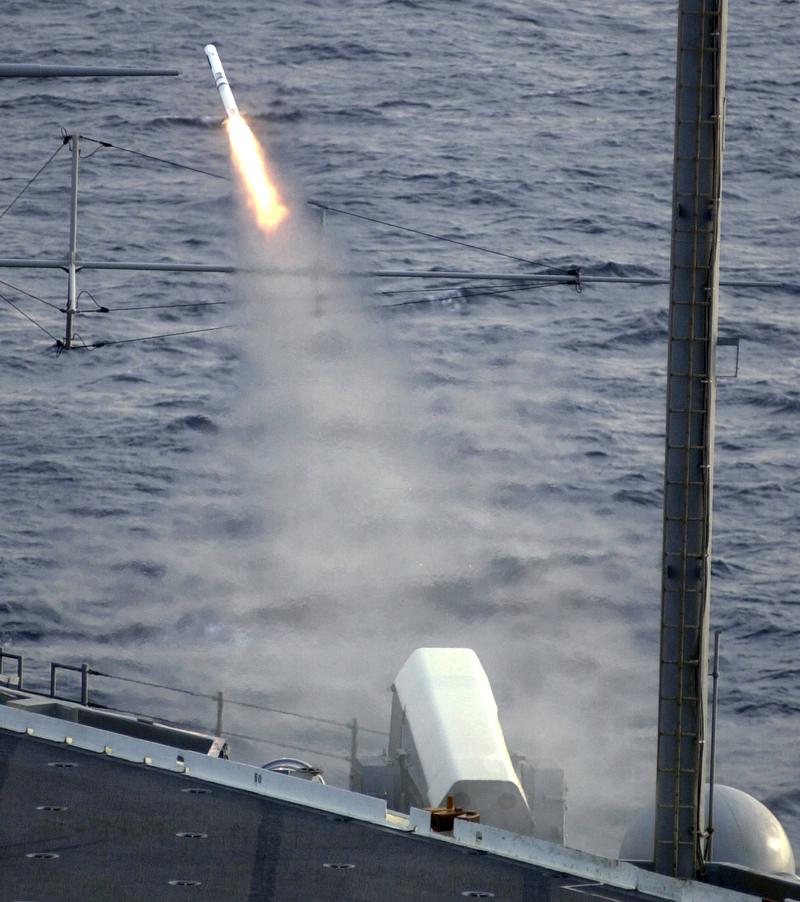
The Rolling Airframe Missile (RAM) MK-31 guided missile weapon system is co-developed and co-produced under a NATO cooperative program between the United States and German governments to provide a small, all-weather, low-cost self-defense system against aircraft and cruise missiles. The RIM-116 was later called RAM (Rolling Airframe Missile), because it spins during flight. To save costs, Designation Systems notes that the RAM was designed to use several existing components, including the rocket motor of the MIM-72 Chaparral, the warhead of the AIM-9 Sidewinder, and the Infrared seeker of the FIM-92 Stinger. Cueing is provided by the ship’s radar, or by its ESM signal tracing suite.
RAM is currently installed, or planned for installation, on 78 U.S. Navy and 30 German Navy ships, including American LSD, LHD, LPD and CVN ship types. This number will grow as vessels of the LPD-17 San Antonio Class and Littoral Combat Ships enter the US Navy, and the LCS will sport an upgraded SeaRAM system that will include its own integrated radar and IR sensors. Abroad, the South Korean Navy has adopted RAM for its KDX-II and KDX-III destroyers, and its LPX Dokdo Class amphibious assault ships; other navies using or buying RAM include Egypt, Greece, Japan, South Korea, Turkey, and the UAE/Dubai.
RAM Systems: Fast, Flat & Flexible
(click to view full)
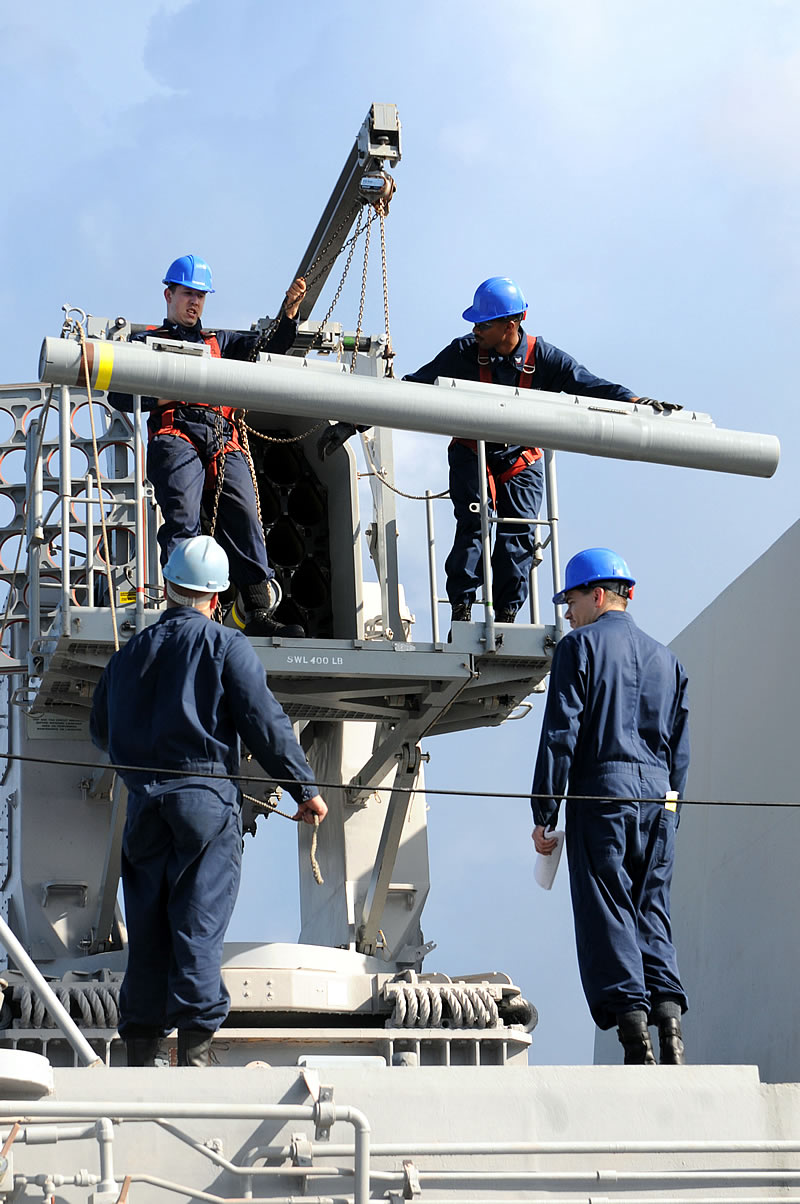
GlobalSecurity.orrg notes that The MK-31 RAM Guided Missile Weapon System (GMWS) is defined as the MK-49 Guided Missile Launching System (GMLS) and the MK-44 Guided Missile Round Pack (GMRP). The launching system and missiles comprise the weapon system. The RAM weapon system consists of a 21-round missile launcher, below-deck electronics, and a guided missile round pack. The round pack consists of a 5-inch supersonic missile and a launching canister, which slides into the launcher and provides the interface with the carried missile. The term “All-Up-Round (AUR)” is often used, as the canister is also used for storage/transport.
Raytheon’s partner is the German firm RAMSYS, a joint company of Diehl/BGT and EADS GmbH. These firms extended their agreement for another 10 years in June 2004.
System improvements continue. New MK-44 Guided Missile Round Packs and ORDALT kits are designed to upgrade current systems to RAM Block 1 missile configuration (RIM-116B) or above. Block 1 systems feature an image scanning infrared seeker that allows the missile to more easily counter helicopters and advanced anti-ship threats that do not employ active radar guidance. Another new feature is called IRDM (IR Dual Mode Enable). In that mode, the RAM missile is launched with IR guidance enabled, but can switch to passive radar homing when the target’s radiation becomes adequate to guide on. It also incorporates HAS (Helicopter, Aircraft, Surface) software that lets it prosecute a wider array of targets out to about 9 km/ 4.9 nm, including targets like speedboats that move at slower speeds in radar/IR clutter.
RAM Block 1. This system is installed or planned for installation on many U.S. Navy surface ships, including CV/CVN aircraft carriers, DD-963 Spruance Class destroyers, Oliver Hazard Perry Class FFG guided missile frigates, Littoral Combat Ships, the LHA Tarawa Class and LHD Wasp Class amphibious assault ships, the future LHA-R amphibious assault ships, and LSD and LPD-17 amphibious assault ships. The US Navy expects to buy around 2,000 Block 1 missiles in total.

(click to view full)
Follow-on modifications include an upgraded missile, and the SeaRAM system.
RAM Block 2. A new version that is beginning production, with deliveries beginning in August 2014. The RIM-116 missile’s effective range gets a boost via a larger dual-thrust rocket motor, while an independent 4-canard control actuator system improves maneuverability. Other enhancements include an upgraded passive radio frequency seeker, a digital autopilot, and engineering changes in selected infrared seeker components. The Block 2 system demonstration and development (SDD) program was scheduled to reach initial operating capability in 2011, but it’s 2013 and the missile is still in testing. IOC will wait until 2014.
While most of the RAM Block 2 work is Raytheon’s, the effort is a partnership. Operating under a cooperative Memorandum of Understanding for the Block 2 SDD program, German industry partner RAM-System GmbH also received funds. They’re working to develop an evolved missile radio frequency sensor with better sensitivity and discrimination, in order to kill targets that are using more advanced guidance radars.
SeaRAM. RIM-116 Block 2 missiles, and Block 1 upgrades to the MK31 system, will both be incorporated into the new SeaRAM variant, also known as the “MK 15 MOD 31 PHALANX SeaRAM Close-In Weapon System.” Once it’s bolted on and installed, SeaRAM becomes a complete, self-cueing system that can work with existing systems, or operate on its own. It packages the RAM Block 1 upgrade’s infrared sensors and IR dual-mode with the radar dome mounted on top of the Mk15 Phalanx 20mm CIWS. The penalty for its bolt-on versatility is that it cuts the 21-round missile launcher down to an 11-missile load, in order to remain within the same space “footprint” as the Phalanx 1B. It will equip the USA’s new Littoral Combat Ships, among others.
Program and Budgets
While the number of RAM missiles procured by the USA has been relatively stable each year, Pentagon budget documents show US program spending fluctuating. That’s because some annual budgets also include funds for system upgrades (generally from Block 0 to Block 1) and things like Block 2 development work:
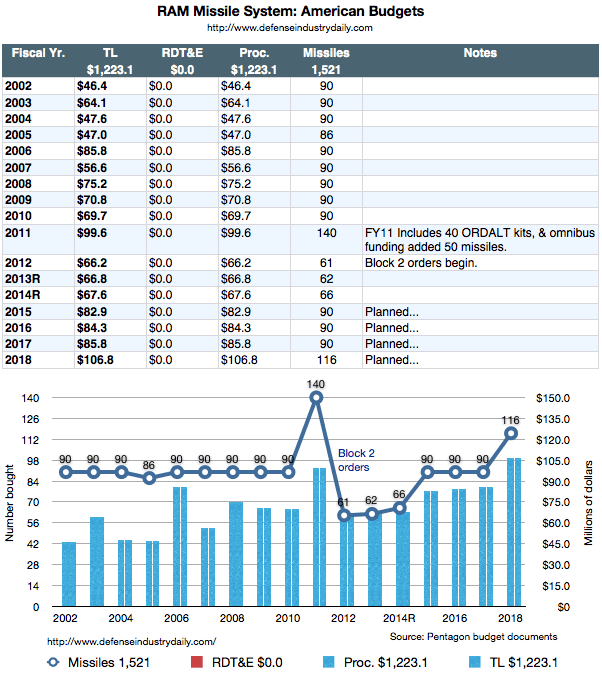
These budgets do not include international orders.
Contracts & Key Events
Unless otherwise stated, all contracts are awarded by the Naval Sea Systems Command in Washington, DC to Raytheon Company in Tucson, AZ. It should be noted, however, that the RAM Guided Missile Weapon System is co-developed and co-produced under a NATO Cooperative Program between the United States’ and Federal Republic of Germany’s governments.
FY 2016 – 2024
(click to view full)
February 1/24: Raytheon won a $13.4 million deal to exercise options for design and engineering support services for the Rolling Airframe Missile on January 25, 2024. Work will be performed in Tucson, Arizona and is expected to be completed by March 2028. The Rolling Airframe Missile (RAM) is a lightweight, quick-reaction, fire-and-forget missile system designed for ship self-defense against anti-ship missiles and aircraft. It was jointly developed by the United States and Germany to provide close-in defense capabilities for naval vessels.
July 14/23: Improvement Program Raytheon won a $28 million deal for design agent and engineering support services for the Rolling Airframe Missile upgraded MK 31 Guided Missile Weapon System Improvement Program. This contract includes options which, if exercised, would bring the cumulative value of this contract to $282,551,290. This contract combines purchases for the Navy (74%); and the governments of Qatar, Japan, and Egypt, under the Foreign Military Sales (FMS) program. Work will be performed in Tucson, Arizona, and is expected to be completed by September 2025. If all options are exercised, work will continue through June 2028.
August 16/22: Guided Missile Weapon System Improvement Program Raytheon Missiles and Defense won a $50 million contract modification to exercise options for fiscal 2022 design agent and engineering support services for the Rolling Airframe Missile (RAM) upgraded MK-31 Guided Missile Weapon System Improvement Program. Work will be performed in Tucson, Arizona, and is expected to be completed by July 2023. The Naval Sea Systems Command, Washington, DC, is the contracting activity.
April 14/21: Live-Fire The US Navy announced a successful live-fire exercise of its Rolling Airframe Missile from the littoral combat ship USS Charleston on Monday. The launching of the SeaRAM missiles from the San Diego-based vessel was a part of exercises involving all of the ship’s weaponry, and occurred on Thursday, the Navy said. SeaRAM missiles, also known as RIM-116 RAM missiles, are lightweight, quick-reaction missiles designed to defeat cruise missiles and asymmetric air and surface threats. Equipped with Phalanx search-and-track radar and Electro Optic sensor, 11-missile pods are carried within launchers aboard the ship.
April 1/21: Round Pack Raytheon Missiles and Defense won a $130 million contract modification to exercise options for fiscal 2021 for the Rolling Airframe Missile Block 2/2A Guided Missile Round Pack, spare replacement components and recertification. The RIM-116 Rolling Airframe Missile (RAM) is a small, lightweight, infrared homing surface-to-air missile in use by the German, Japanese, Greek, Turkish, South Korean, Saudi Arabian, Egyptian, Mexican and US Navies. This deal combines purchases for the U.S. government (66%); and the governments of Japan, Turkey and United Arab Emirates (34% combined) under the Foreign Military Sales (FMS) program.
September 30/20: Japan The US State Department approved the potential Foreign Military Sales of rolling airframe missile (RAM) Block 2 tactical missiles to Japan. The US State Department has approved the potential foreign military sale (FMS) of rolling airframe missile (RAM) Block 2 tactical missiles to Japan. Under the estimated $55.311 million sale, Japan has requested for up to 51 Rolling Airframe Missiles (RAM) Block 2 Tactical Missiles, RIM-116C, and related equipment. Japan has also sought for RAM Guided Missile Round Pack Tri-Pack shipping and storage containers, as well as operator manuals and technical documentation.
September 22/20: Improvement Raytheon won a $60.5 million deal to exercise options for design agent and engineering support services for the Rolling Airframe Missile (RAM) MK-31 Guided Missile Weapon System improvement program. The MK-31 RAM Guided Missile Weapon System is a cooperative development and production program conducted jointly by the US and the Federal Republic of Germany under memoranda of understanding. Per the agreement, the company will provide support for the maintenance of current weapon system capability. Additionally, the unit will resolve issues through design, systems, software maintenance, reliability, quality assurance and logistics engineering services. Work will take place in Arizona and Kentucky. Estimated completion will be by December 2021.
April 18/19: US-Germany The US Navy awarded Raytheon $72.2 million to support the US-Germany Guided Missile Tech Improvement Program. The contract modification provides design agent and engineering services for the Rolling Airframe Missile (RAM) MK-31 Guided Missile Weapon System Improvement Program. The MK-31 RAM system is a cooperative development and production program conducted jointly by the US and the Federal Republic of Germany under memoranda of understanding. The RAM system is designed to destroy anti-ship missiles. Its passive radio frequency and infrared guidance design provide high-firepower capability for engaging multiple threats simultaneously. Under the program, the company will help maintain the current RAM weapon system and provide design, systems, software maintenance, reliability, maintainability, quality assurance and logistics engineering support. Work will take place in the US and is scheduled to be complete by September 2022.
March 20/19: Germany The US Naval Sea Systems Command awarded RAM-System, Germany an €81.4 million ($92.4 million) and $1.1 million contract modification for the German Navy’s requirements for Rolling Airframe Missile (RAM) MK49 guided missile launching systems. The RAM is a small, lightweight, infrared homing surface-to-air missile that together with the Mk 49 Guided Missile Launching System (GMLS) and support equipment, make up the RAM Mk 31 Guided Missile Weapon System (GMWS). It is designed to provide anti-ship missile defense for multiple ship platforms. The Federal Republic of Germany will fully fund the contract. The RAM MK 31 guided missile weapon system is an international cooperative development, production and in-service program between the U.S. and German governments. The participating governments operate under a series of memorandums of agreement/memorandums of understanding that establish the business principles for program execution along with contracting and financial agreements. The contract also includes associated shipboard hardware and spares. Work will take place in Germany as well as the US and is scheduled to be completed by December 2023.
March 8/19: Replacement Components The US Naval Sea Systems Command awarded Raytheon Missile Systems a $91.9 million option to a previously awarded contract for MK 44 Rolling Airframe Missile (RAM) Block 2 guided missile round pack and spare replacement components. RAM is a ship self-defense weapon designed to protect ships of all sizes, ranging from 500-ton fast attack craft to 95,000-ton aircraft carriers. The lightweight, supersonic, quick-reaction, fire-and-forget weapon is designed to attack enemy helicopters, aircraft, and surface craft. RAM Block 2 has a large rocket motor, advanced control section, and an enhanced RF receiver, which is able to detect quiet threat emitters. It is more maneuverable and has longer range than its predecessors. The MK 44 guided missile round pack and the MK 49 guided missile launching system, which hold 21 missiles, comprise the MK 31 guided missile weapon system. An International Cooperative Program between the US and Federal Republic of Germany’s governments co-developed and co-produced RAM Guided Missile Weapon System. Work will take place in Germany as well as various locations within the US and is scheduled to be completed by November 2021.
July 24/18: Design & Engineering Raytheon Missile Systems is set to provide a number of support services for the Navy’s RAM Mk-31 system. The $64.4 million cost-plus-fixed-fee contract provides for design agent and engineering support services for the Mk-31 Guided Missile Weapon System Improvement Program. The MK-31 guided missile weapon system is co-developed and co-produced under a NATO cooperative program between the United States and German governments to provide a small, all-weather, low-cost self-defense system against aircraft and cruise missiles. The RAM weapon system consists of a 21-round missile launcher, below-deck electronics, and a guided missile round pack. This contract combines purchases for the Navy, Germany and Egypt. In addition, this contract also includes a number of options which, if exercised, would bring the cumulative value to $301.7 million. Work will be performed in Tucson, Arizona, and is expected to be completed September 2020.
July 2/18: German contract The German defense manufacturer RAM-System is being tapped by the US Navy for work on its Rolling Airframe Missile (RAM) system. The firm-fixed-price un-definitized contract is valued at $68 million provides for work on the RAMs MK 49 Guided Missile Launching System as well as associated shipboard hardware and spares. The Rolling Airframe Missile Guided Missile Weapon System is co-developed and co-produced under an International Cooperative program between the US and Federal Republic of Germany’s governments. The RAM system is a supersonic, lightweight, quick-reaction, fire-and-forget weapon, designed to attack enemy helicopters, aircraft, and surface craft. It uses passive RF and infrared guidance for engaging several threats simultaneously. The MK 44 guided missile round pack and the MK 49 guided missile launching system together hold 21 missiles. Existing shipboard sensors can provide the system with target and pointing information. Work will be performed at various locations in Germany and the US, including Louisville, Kentucky; Ulm, Germany and Schrobenhausen, Germany. Work is scheduled for completion by September 2022.
May 14/18: RAM heads towards the Middle East Raytheon Missile Systems will deliver Rolling Airframe Missiles (RAM) to Qatar as part of US foreign military sales. The contract is valued at over $242 million and provides for the delivery of RAM Block 2 guided missile round pack, missile ordnance alterations, and spares. RAM is a missile system designed to provide anti-ship missile defense for multiple ship platforms. The RAM MK-31 guided missile weapon system is co-developed and co-produced under a NATO cooperative program between the United States and Germany. It provides a small, all-weather, low-cost self-defense system against aircraft and cruise missiles. The launching system and missiles comprise the weapon system. The round pack consists of a 5-inch supersonic missile and a launching canister, which slides into the launcher and provides the interface with the carried missile. This contract includes options which, if exercised, would bring the cumulative value of this contract to $529 million. This contract combines purchases for the Navy and the governments of Qatar, Egypt, and Turkey. Work will be performed at multiple locations, including Ottobrunn, Germany and Tucson, Arizona, and is expected to be completed by September 2023.
December 18/17: Contracts-Engineering Support Raytheon won Thursday, a $22.5 million US Navy modified contract for support services on the Rolling Airframe Missile Mark-31 Guided Missile Weapon System. The agreement covers design agent and engineering support services for the Rolling Airframe Missile (RAM) upgraded MK-31 Guided Missile Weapon System Improvement program—a joint effort conducted by both Washington and Germany. Work will take place mostly in Tucson, Arizona, with some work taking place in Louisville, Kentucky. The contract is expected to be completed by September 2019.
August 21/17: Upgrades planned for the RIM-116C Rolling Airframe Missile (RAM) Block 2B will include improved seeker and missile-to-missile link (MML) capability. Known as the RAM Block 2B Raid Engineering Change Proposal (ECP), the enhancements will increase the missile’s ability to deal with complex multi-missile raids—in effect allowing missiles to talk to each other. Raytheon’s Block 2B upgrades have aimed to increase the use of kinematic and sensor upgrades, designed to expand the missile’s engagement envelope, so as to defeat more manoeuvrable and higher-speed anti-ship cruise missiles.
June 28/17: RAMSYS GmbH has being awarded a $92.3 million contract for design and development work on the Rolling Airframe Missile Block 2B (RAM) in a deal fully funded by the German government. Work will be conducted mainly at Ueberlingen, Germany, and several other sites across the country with a completion date scheduled for June 2021. The program is a joint effort between the the German and US navies, with other allies including South Korea, Japan, Egypt, Greece deploying the system on board vessels that include aircraft carriers, amphibious assault ships and littoral combat ships.
May 19/17: Raytheon has received a $26.8 million contract for the engineering and support of the MK-31 Rolling Airframe Missile (RAM). The US Navy contract was awarded as part of a joint cooperative development and production program between the United States and Germany under a memorandum of understanding. The program is meant to test reliability, along with maintenance, logistics, and software issues, and work is expected to be completed by September 2018. The RAM is designed for point-defense against anti-ship missiles and can be deployed on ships of any size. . It uses passive radio frequency and infrared guidance systems to track and destroy targets.
February 21/17: The UAE will become the first Middle East operator of Raytheon’s RIM-116 Rolling Airframe Missile (RAM) Block 2 close-in weapon system. While the number of systems ordered remains unknown, the systems will be installed on the Emirate’s Baynunah-class corvettes, of which six vessels will be manufactured. Improvements made on the system’s predecessor include kinematic and sensor upgrades to expand the missile’s engagement envelope in order to defeat more maneuverable and higher speed anti-ship cruise missiles. Furthermore, the Block 2 upgrade significantly expands the missile’s effective engagement envelope by introducing a larger dual-thrust rocket motor and independent four-canard control actuator system to increase effective range by about 50% and deliver a three-fold improvement in maneuverability.
May 19/16: Raytheon’s SeaRam anti-ship defense system has undergone its most rigorous testing in recent US Navy testing. Targets successfully engaged involved two supersonic missiles flying in complex, evasive maneuvers which the system successfully took down with the Rolling Airframe Missile (RAM) Block 2 missiles. The SeaRAM is an upgrade of Phalanx Block 1B and it swaps out the gatling gun with an 11-round Rolling Airframe Missile guide.
January 13/16: The US Navy successfully tested a Rolling Airframe Missile (RAM) Block II from the SeaRAM anti-ship missile defense system for the first time. SeaRAM, used on the Independence class of Littoral Combat Ships, successfully detected, tracked and engaged an inbound threat, and fired a RAM Block II that successfully intercepted the target. The SeaRam system utilized Raytheon’s Phalanx Close-In Weapon System for the test which is a rapid-fire, computer-controlled radar and 20mm gun system that acquires, tracks and destroys enemy threats that have penetrated all other ship defense systems. The two systems combined can also be found on the Navy’s destroyers.
January 7/16: The DoD has awarded Raytheon $66.5 million to provide Navy Rolling Airframe Missile (RAM) Block 2 guided missile round pack requirements. The RAM defense system uses an infrared homing surface-to-air missile to provide anti-ship missile defense from multiple vessels, and is developed jointly by the US and Germany. The contract will see the manufacture and assembly of RAM Block 2 MK 44 Mod 4 guided missile round packs for the US Navy, with options that could include a foreign military sale to Japan. A sale to Japan would see the value of the contract rise to $142 million.
FY 2014-2015
September 21/15: The Navy has test fired a Rolling Airframe Missile Block 1A from an Independence-class Littoral Combat Ship, the USS Coronado (LCS-4). The trimaran’s SeaRAM air defense system fired the missile as part of a risk-reduction and certification trial. The SeaRAM system incorporates the Rolling Airframe Missile and the Block 1B Phalanx Close-In Weapon System (CIWS) as a more flexible air defense system, trading bolt-on versatility for a reduced missile load compared with the RAM system on its own.
May 18/15: The Navy announced Friday that it has achieved Initial Operating Capability with the Block II Rolling Airframe Missile aboard the USS Arlington (LPD 24). The joint program with Germany was recently included as part of a $1.6 billion overhaul package by the US Navy intended to provide improved protection to carriers and amphibious ships.
May 11/15: The Navy is planning to spend $1.6 billion on carrier and amphibious ship defenses in order to protect the Service’s fleet of F-35s. The new defenses will focus on supersonic threats, with a series of overhauled technologies including new missiles and radars set to be integrated into Ship Self Defense Systems (SSDS). Key components of these future systems include the Rolling Airframe Missile and the Evolved Sea Sparrow Missile.
Aug 27/14: Block 2. Raytheon delivers the 1st RAM Block 2 missile to the US Navy, as part of the company’s 2012 Low Rate Initial Production contract. Sources: Raytheon, “Raytheon delivers first Block 2 Rolling Airframe Missiles to US Navy”.
1st Block 2 delivery
July 30/14: GAO Report. The US GAO releases Report #GAO-14-749, “Littoral Combat Ship: Additional Testing and Improved Weight Management Needed Prior to Further Investments.” It looks at weight issues within the 2 Littoral Combat Ship classes. Though Freedom Class LCS 5 and beyond will make enough changes to meet their required design margin:
“Another proposed change would increase commonality and combat capability by replacing the Freedom variant’s rolling airframe missile system with the heavier [SeaRAM] missile system found on the Independence variant. While the specifics of this potential change have not yet been determined or approved, Navy technical experts told us that such a modification would subsequently increase the Freedom variant’s weight and could also result in center of gravity changes.”
June 24/14: FY 2014. A $73.4 million firm-fixed-price contract for FY 2014 rolling airframe missile (RAM) guided-missile round pack requirements for the U.S. and allied navies, including 23% of the contract’s value for Japan, spares for the Federal Republic of Germany, and testing equipment upgrade and replacement requirements. All funds are committed immediately.
This contract involves foreign military sales to Japan (23%). Work will be performed in Tucson, AZ (49.7%); Ottobrunn, Germany (42.7%); Rocket Center, West Virginia (4.5%), and Andover, Massachusetts (3.1%); it is expected to be complete by November 2016. This contract was not competitively procured (N00024-14-C-5417).
FY 2014: USA, Japan
Jan 3/14: Raytheon in Tucson, AZ receives a $52.1 million Design Agent Engineering and Technical Support Services modification for maintainence of, and improvements to, the Mk15 Phalanx, Land-based Phalanx, and SeaRAM weapon systems.
Work will be performed in Tucson, AZ, and is expected to be complete by January 2015. $12.5 million is committed immediately from a wide array of USN FY 2014 and FY 2013 R&D, weapons, and shipbuilding budget lines, plus a US Army budget. Of that, $4 million will expire on Sept 30/13 (N00024-12-C-5405).
Dec 9/13: Support. Raytheon in Tucson, AZ receives a $35 million contract modification, exercising an option for MK-31 RAM’s FY 2014 design agent engineering services. This will include improvement program support, guided-missile round pack support, and guided-missile launching system support.
$8.2 million in USN FY 2014 R&D, operations, and Deutsche Marine funding is committed immediately. Work will be performed in Tucson, AZ, and is expected to be complete by September 2014 (N00024-10-C-5432).
FY 2013
German multi-year order; Block 2 goes from tests to fleet firing; SeaRAM may now equip both LCS types.

(click to view full)
Sept 10/13: SeaRAM. A $136.2 million contract to overhaul and upgrade 19 MK 15 Phalanx systems, and produce 4 new SeaRAM systems. This contract provides purchases for the U.S. Navy (80%), Japan (15%), the US Army (4%) and Pakistan (1%) under the foreign military sales (FMS) program; and all funds are committed immediately. $55 million will expire at the end of the current fiscal year, on Sept 30/13.
Another $94.8 million in options exist for a FY 2014 buy of 12 more Phalanx upgrades, and another 4 SeaRAM systems, to bring the total contract to $231 million.
Work will be performed in Louisville, KY (26%); Anaheim, CA (16%); Melbourne, FL (11%); Dayton, OH (11%); Syracuse, NY (10%); McKinney, TX (5%); Andover, MA (5%); Bloomington, MN (5%); Radford, VA (5%); Salt Lake City, UT (3%); and Tucson, AZ (3%), and is expected to be complete by September 2017. This contract was not competitively procured in accordance with FAR 6.302-1(a)(2)(iii) “one responsible supplier” provisions (N00024-13-C-5406). Sources: Pentagon | Raytheon Sept 11/13 release.
Aug 6/13: Block 2. The US Navy has completed the first RAM Block 2 fleet firing with a pair of tests from USS Arlington [LPD 24] and the Navy’s Self Defense Test Ship. The missiles went 4/4 against sub-sonic and supersonic maneuvering targets. The USN intends to achieve Initial Operational Capability in 2014. Raytheon, Aug 6/13 release.
July 25/13: LCS standardization? During House Armed Service Committee hearings on the Littoral Combat Ship, Assistant Secretary of the Navy Sean J. Stackley says that the Navy is strongly considering standardizing both ship classes on the SeaRAM configuration. The Freedom Class currently uses the full RAM installation, while the Independence Class trimaran uses the SeaRAM system with an integrated radar but fewer missiles. HASC video.
(click to view full)
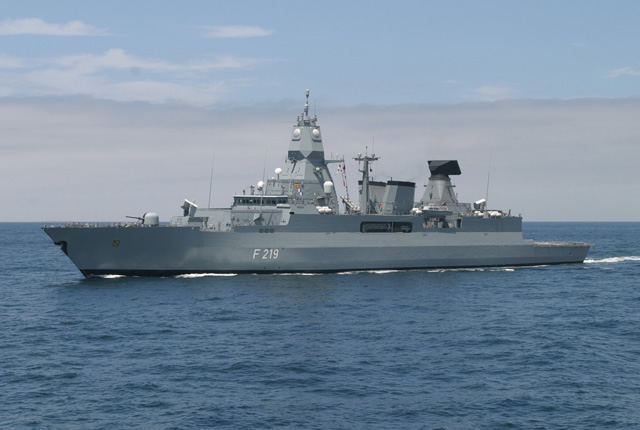
March 28/13: Germany. The German government places a $343.6 million contract with Raytheon’s partner RAMSYS GmbH in Ottobrunn, Germany for 445 RIM-116 Block 2 All-Up-Round missiles between now and January 2019, to insert into their MK-44 Mod 4 RAM Guided Missile Round Packs. As one might expect, the Germans use RAM missiles on several of their ship classes. $1.3 million is committed immediately.
Work will be performed in Tucson, AZ (49.7%); Ottobrunn, Germany (42.7%); Rocket Center, WVA (4.5%); and Andover, MA (3.1%). This contract was not competitively procured (N00024-13-C-5459). See also Raytheon.
German multi-year order
Dec 20/12: USA FY 2013. A $45.6 million firm-fixed-price FY 2013 option for 61 Rolling Airframe Missile Block 2 (MK-44 Mod 4) guided-missile round pack all-up-round missiles. All contract funds are committed immediately.
Work will be performed in Tucson, ArZ (49.7%), Ottobrunn, Germany (42.7%), Rocket Center, WVA (4.5%), and Andover, MA (3.1%), and is expected to be complete by February 2015 (N00024-12-C-5450).
Dec 14/12: Ship sets. Raytheon in Tucson, AZ receives a $12.3 million firm-fixed-price contract modification for 4 refurbished and upgraded Rolling Airframe Missile MK 49 Mod 3 guided-missile launch systems and associated hardware. These 21-missile launch packs will equip the San Antonio Class LPD 27 John P. Murtha (2 systems), and the Freedom Class ships LCS 9 and LCS 11 (1 each). All funds are committed on award, and there are options for 4 additional launch systems.
At the time of award, a $5.5 million option is also exercised for 2 remanufactured MK 49 launch packs, with Mod 3 updates and associated hardware. They’ll equip the Freedom Class ships LCS 13 and LCS 15.
Work will be performed in Tucson, AZ, and is expected to be complete by December 2015. This contract was not competitively procured pursuant to 10 U.S.C. 2304c1 (N00024-11-C-5448).
Nov 27/12: Support. Raytheon in Tucson, AZ receives a $12 million cost-plus-fixed-fee contract modification to exercise an option for FY 2013 Design Agent Engineering Services for MK-31 RAM support services, providing maintenance and resolving issues through design, software maintenance, and engineering.
Work will be performed in Tucson, AZ, and will run until September 2013. $44,800 will be obligated at the time of award (N00024-10-C-5432).
Nov 9/12: Support. An $11.3 million contract modification exercises the FY 2013 option for MK-31 design agent engineering services. Work will be performed in Tucson, AZ and is expected to be complete by September 2013 (N00024-10-C-5432).
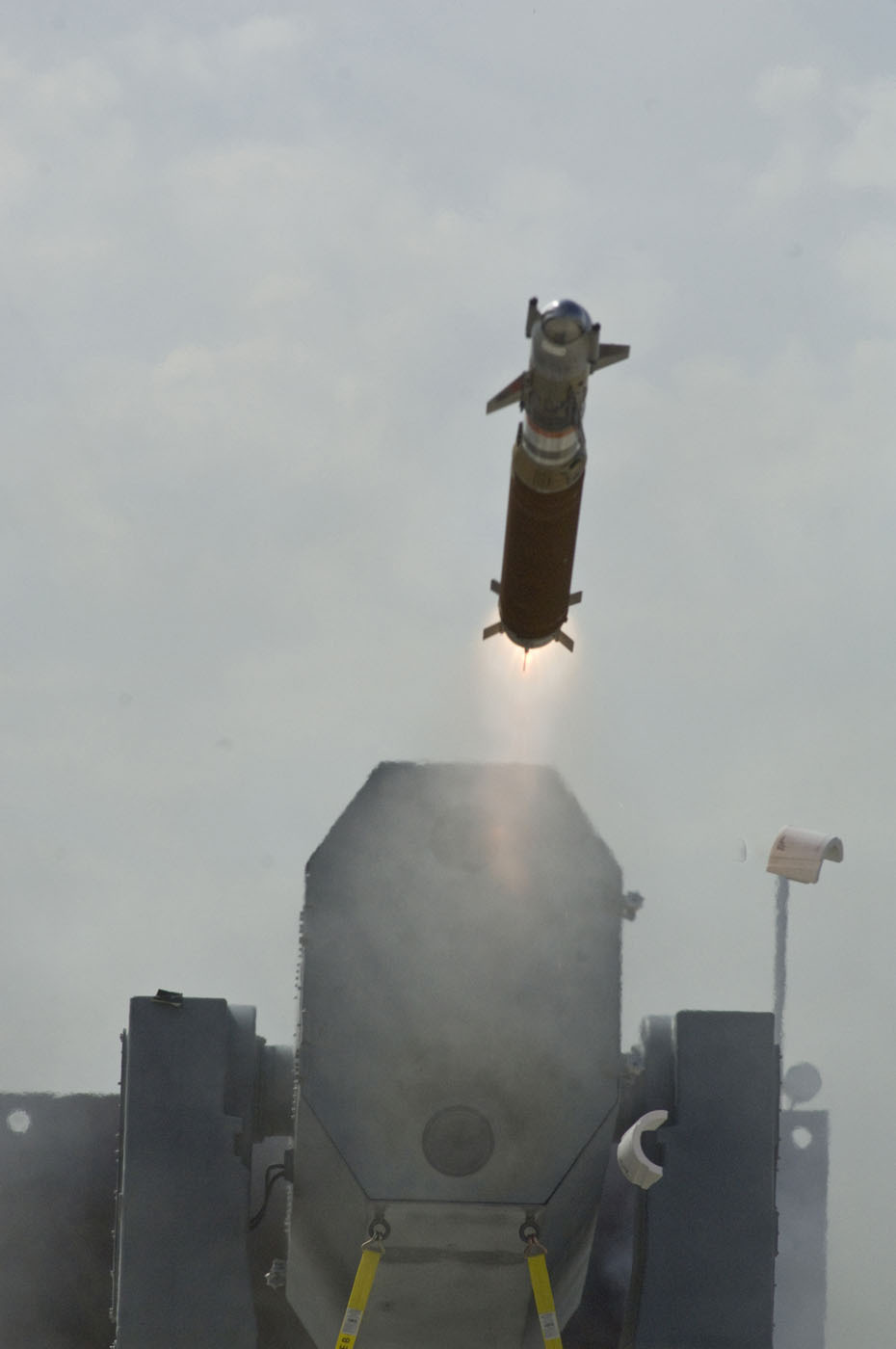
Oct 22/12: Test. Raytheon announces that its RAM Block 2 has successfully completed its 3rd guided test vehicle flight, using production-representative hardware, in a 2 missile salvo. The engagement resulted in a direct hit on the target.
“Raytheon was awarded a low-rate production contract this year calling for 51 RAM Block 2 missiles. The company is scheduled to deliver 25 [RIM-116] Block 2 missiles during the integrated testing phase of this program.”
FY 2012
Business as usual.
(click to view full)
July 30/12: FY 2012. A $51.7 million firm-fixed-price contract for 51 MK-44 Mod 4 Rolling Airframe Missile (RAM) Block 2 guided missile round pack all-up-rounds. In other words, the missiles and storage/interface tubes that fit into the launchers.
Work will be performed in Tucson, AZ (49.7%); Ottobrunn, Germany (42.7%); Rocket City, WVA (4.5%); and Andover, MA (3.1%), and is expected to be complete by September 2014. This contract includes options which could bring the cumulative value of this contract to $105.8 million, and presumably about 105 missiles.
This contract was not competitively procured (N00024-12-C-5450).
May 17/12: Ship sets. Raytheon in Tucson, AZ receives a $57.9 million contract modification, covering FY 2012 requirements for MK 15 Phalanx Close-In Weapon Systems (CIWS). It includes MK 15 Mod 31 CIWS SeaRAM missile upgrade kits and conversions in support of Austal’s forthcoming LCS 10 and 12; as well as Phalanx Block 1B BL2 upgrade kits and conversions, 2 Phalanx Block 1Bs for the forthcoming DDG 116 destroyer, MK 15 CIWS hardware product improvements and ancillary equipment, Block 1B Ordalt (Ordnance Alternation) kits; and MK 15 CIWS Block 1B Class A overhauls.
Work will be performed in Louisville, KY (39%); Germany (12%); Palm Bay, FL (12%); Tucson, AZ (9%); Pittsburgh, PA (8%); Burlington, VT (6%); Andover, MA (4%); Syracuse, NY (4%); Long Beach, CA (1%); Radford, VA (1%); Bloomington, MN (1%); Salt Lake City, UT (1%); Norcross, GA (1%); and New Albany, IN (1%); and is expected to be complete by September 2015. $24.2 million will expire at the end of the current fiscal year, on Sept 30/12 (N00024-10-C-5427).
Jan 19/12: Support. A $30 million cost-plus-fixed-fee contract modification for the MK-31 RAM system’s FY 2012 design agent engineering services. they’ll work to maintain current system capability, as well as resolve issues through design, systems, software maintenance, reliability, maintainability, quality assurance and logistics engineering.
Work will be performed in Tucson, AZ, and is expected to be complete by September 2012. $342,272 will expire at the end of the current fiscal year (N00024-10-C-5432).
Dec 6/11: FY 2012. A $22.2 million contract modification for the production of 50 Block 1 MK-44 Mod 2 Rolling Airframe Missile (RAM) guided missile round pack all-up-rounds.
Work will be performed in Tucson, AZ (49.7%); Ottobrunn, Germany (42.7%); Rocket City, WVA (4.5%); and Andover, MA (3.1%), and is expected to be complete by February 2014 (N00024-08-C-5401).
FY 2010 – 2011
US orders; Major UAE order; Block 2 initial integration & tests.
(click to view full)
Sept 15/11: Block 2 tests. Raytheon and Germany’s RAMSYS announce that they have finished RAM Block 2 missile upgrade and integration testing in the 5 control test vehicle flights, meeting all upgrade requirements. They’re not done yet, however. The program will begin guided flight tests at the end of 2011, and is expected to enter low rate production in late 2012.
Aug 25/11: Ship sets. A not-to-exceed $161 million contract modification to previously awarded contract for MK15 Mod 31 SeaRAM systems in support of Independence Class ships LCS 6 Jackson and LCS 8 Montgomery, and Japan’s “DDH 2405 helicopter destroyer.” It will also buy Phalanx CIWS Block 1B class “A” overhauls, and land-based Phalanx Weapon System class “A” overhauls.
Japan’s “DDH-2405” may be the first ship of Japan’s new “22DH” project to field 800 foot, 30,000t vessels that are larger than its existing 18,000t Hyuga Class. The Hyuga Class are properly characterized as LPH helicopter carriers, and 22DHs could be classed as escort carriers, but Japan’s constitution forbids them from owning aircraft carriers. The SH-60 Seahawk helicopters on board JMSDF Hyuga and JMSDF Ise certainly proved themselves in the wake of the 2011 tsunami, which should mute any domestic criticism.
Work will be performed in Louisville, KY (30%); Andover, MA (19%); Tucson, AZ (9%); Germany (7%); Syracuse, NY (7%); Long Beach, CA (6%); Radford, VA (6%); Burlington, VT (6%); Palm Bay, FL (2%); Pittsburgh, PA (2%); Bloomington, MN (2%); Salt Lake City, UT (2%); Norcross, GA (1%); and New Albany, IN (1%). Work is expected to be complete by September 2015, but $90.7 million will expire at the end of the current fiscal year, on Sept 30/11 (N00024-10-C-5427).
Aug 1/11: Ship sets. A $7.4 million contract modification for 3 refurbished and upgraded RAM MK 49 Mod 3 Guided Missile Launch Systems with associated hardware, for use on LHA 7 (unnamed, America Class escort carrier, 2) and LCS 5 (Detroit, Freedom Class Littoral Combat Ship, 1).
Work will be performed in Tucson, AZ, and is expected to be complete by March 2013. Contract funds will not expire at the end of the current fiscal year (N00024-11-C-5448).
June 30/11: FY 2011. A $57.9 million contract modification for 90 Block 1 MK-44 Mod 2 RAM guided-missile round pack all-up-rounds, and 40 ordnance alteration kits. This contract modification includes options, which, if exercised, would bring the cumulative value of this modification to $113 million.
Work will be performed in Tucson, AZ (49.7%); Ottobrunn, Germany (42.7%); Rocket City, WVA (4.5%); and Andover, MA (3.1%); and is expected to be complete by December 2013 (N00024-08-C-5401).
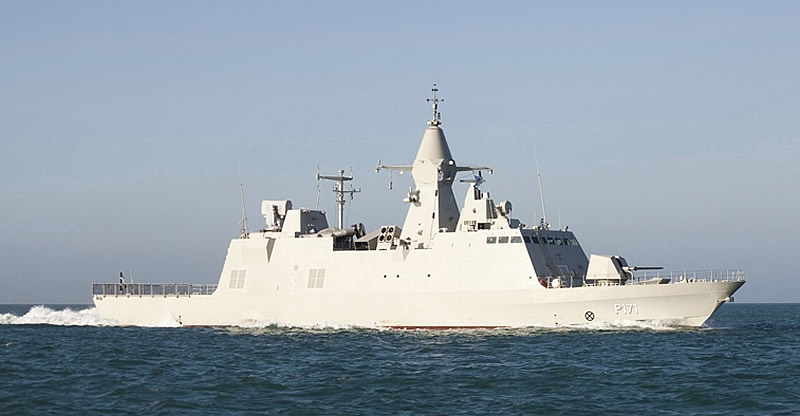
Feb 23/11: UAE. At IDEX 2011, the UAE announces an AED 800.5 million ($218 million) order for Raytheon’s RAM missile systems. The missiles equip the UAE’s new Baynunah-class corvettes, built in country by Abu Dhabi Ship Building (ADSB).
The initial ship of class UAENS Al Hesen was a significant exhibit at the show. Jane’s.
UAE order
Nov 23/10: Block 2 test. Raytheon announces that its RAM Block 2 missile has completed the 4th and final controlled test vehicle flight. This test measured kinematic performance and stability, with attention to the missile’s rocket motor, airframe, control section, and autopilot software. Raytheon will build 25 Block 2 missiles during the design and development test period, and expects a low rate initial production contract to follow.
Oct 29/10: Ship sets. A $17.7 million fixed-price contract for 2 refurbished and upgraded rolling airframe missile (RAM) MK 49 Mod 3 guided missile launch systems (GMLS) with associated hardware. They’ll be mounted on the USA’s LPD 26, a San Antonio Class large amphibious ship. The contract also involves 1 new MK 49 Mod 3 system, which will be mounted on Egypt’s new Ambassador III Class fast missile craft. Note that the MK 49 needs to add the MK 44 guided missile round pack to become a fully effective MK 31 RAM missile system.
This contract combines purchases for the U.S. Navy (37.1%) and the government of Egypt (62.9%) under the Foreign Military Sales program. It includes options which could bring the cumulative value of this contract to $32.8 million. Work will be performed in Tucson, AZ, and is expected to be complete by January 2013. This contract was not competitively procured (N00024-11-C-2404).
July 8/10: Sub-contractors. LaBarge, Inc. announces a $1.2 million contract from Raytheon to provide printed circuit card assemblies for the RAM missile system.
LaBarge already produces a variety of complex wiring harnesses for the system, and will perform this new work at its Tulsa, OK facility. Production is expected to begin in July 2010 and continue through June 2011.
July 2/10: Support. A $44.5 million cost-plus-fixed-fee contract for the MK-31 rolling airframe missile (RAM) guided missile weapon system’s FY 2010 design agent engineering services. The support covers maintenance, and adds design, systems, software maintenance, reliability, maintainability, quality assurance, and logistics engineering services as necessary. The contract includes options which would bring the cumulative value of this contract to $167.3 million, if exercised.
Work will be performed in Tucson, AZ, and is expected to be complete by September 2010. $2.25 million will expire at the end of the current fiscal year, on Sept 30/10. This contract was not competitively procured (N00024-10-C-5432).
May 24/10: LCS. Raytheon announces that its SeaRAM system successfully completed 2 blast test missile launches aboard the USS Independence [LCS 2], designed to test the structural integrity of both the weapon system and the ship. The launches clear the way for SeaRAM’s live-fire testing on that Littoral Combat Ship class later in 2010.
SeaRAM cuts the number of available missile pack rounds from 21 to 11, but marries the RAM launcher to the 20mm Mk15 Phalanx’s base structure and engagement radar, in order to create a truly bolt-on air defense option for ships. In the Independence Class, the system is also integrated into the ship’s wider combat system.
May 21/10: Block 2. A $10.8 million contract modification to increase the ceiling amount to previously awarded contract, for the “rebaselining of the system design and development” of the RAM Block 2 upgrade. Work will be performed in Tucson, AZ, and is expected to be complete by December 2011.
According to Raytheon representatives, what’s really happening is an extension of the program’s schedule, as well as about a year’s worth of added work from Navy requests. The net effect is to more or less restore the requirements that the program began with 4 years ago, with some changes in light of subsequent tests. Raytheon has now run 3 control test vehicle launches, with 1 to go. Guided test launches will be next, with Navy testing expected to begin with about 25 Design-Test/ Operational-Test missiles in Q1 2012 (N00024-07-C-5454).
RAM Block 2 rebaselined
March 23/10: Testing. A Germany Navy video shows an exercise held off the Cape of Good Hope, whose stormy seas keep the area clear enough to allow live missile tests. The video shows AS.34 Kormoran anti-ship missiles being intercepted by older RIM-7 SeaSparrow missiles… but the RAM system on F215 Brandenburg misses the target drone.
Missed
Oct 16/09: Block 2. A $7.7 million modification to previously awarded contract to increase the ceiling amount for System Design and Development of the RAM Block 2 upgrade. The funds will cover additional guidance section design verification testing, to ensure that the software interfaces properly with the missile’s hardware guidance section. Work will be performed in Tucson, AZ and is expected to be complete by August 2011 (N00024-07-C-5454).
FY 2008 – 2009
Orders: USA, Egypt.

(click to view full)
July 20/09: SeaRAM. A $16.8 million modification to a previously awarded contract for 2 more MK 15 Mod 31 CIWS SeaRAM weapon systems, ancillary equipment, spares, and support. Unlike the Mk 44 launchers, SeaRAM systems have only 11 missiles in the launcher, in order to fit within the self-contained Mk 15 Phalanx mounting.
Work will be performed in Louisville, KY (33%); Tucson, AZ (8%); Andover, MA (6%); Pittsburgh, PA (4%); Mechanicsville, MD (3%); Fort Defiance, AZ (3%); Bloomington, MN (2%); Santa Clara, CA (2%); Munich, Germany (37%); and Athens, Greece (2%), and is expected to be complete by September 2011. Contract funds in the amount of $9.2 million will expire at the end of the current fiscal year (N00024-07-C-5444).
June 8/09: FY 2009. A $56.4 million modification to previously awarded contract for the production of 90 Block 1 MK-44 Mod 2 rolling airframe missile (RAM) guided missile round pack (GMRP) all-up-rounds (AURs), and 40 ordnance alteration kits. This contract modification includes options which would bring the cumulative value of this modification to $118 million, if exercised.
GMRPs are the 21-round missile launchers used by the RAM system, and 90 GMRP AURs is the standard annual American order. The total FY 2009 RAM missile budget is $70.8 million.
Work will be performed in Tucson, AZ (49.7%); Ottobrunn, Germany (42.7%); Rocket City, WVA (4.5%); and Andover, MA (3.1%), and is expected to be complete by December 2011 (N00024-08-C-5401).
Jan 16/09: Ship sets. Raytheon in Tucson, AZ receives an $18.8 million contract modification buy 4 of their Mk 49 MOD 3 Guided Missile Launcher Systems (GMLS), which hold the full 21-missile Mk 44 packs. The Mk 49 systems will be installed on the amphibious assault ship LPD 25 Arlington, and the first-of-class CVN 78 Gerald R. Ford aircraft carrier. Another 10 ORDALT (ORDnance ALTeration) Mod 1 to Mod 3 GMLS Ordalt Kits will also be provided as part of this order, and will be used to upgrade a number of Mk49 systems around the fleet.
Work will be performed in Ottobrunn, Germany (50%), Louisville, KY (45%) and Tucson, AZ (5%) and is expected to be complete by February 2012 (N00024-06-C-5402).
Oct 15/08: Sub-contractors. BAE Systems spinoff Atlantic Inertial Systems (AIS) announces a production order from Diehl BGT Defence GmbH worth about $3 million for the second batch of its SiARS Micro-Electro Mechanical Systems (MEMS) Inertial Measurement Unit (IMU). The order follows AIS’ successful completion of design, qualification and initial production deliveries.
IMU systems offer a way to precisely measure distance and vector from a known launch point, without requiring GPS or external aids that may not be available. MEMS technology helps this IMU perform that job reliably in a violently spinning missile like RAM.
AIS has been involved in the RAM program for a number of years, and their release says they anticipate receiving annual production orders into the next decade. The firm has facilities in Cheshire CT, USA, and in Plymouth, UK, employing over 800 personnel worldwide.
June 11/08: FY 2008. A $59.5 million contract for the production of 90 Block 1 MK-44 Mod 2 Rolling Airframe Missile (RAM) Guided Missile Round Pack All-Up-Rounds, and 60 ORDALT(ORDnance ALTeration, usually means upgrades) Kits.
Work will be performed in Tucson, AZ (49.7%), Ottobrunn, Germany (42.7%), Rocket City, WVA (4.5%), and Andover, MA (3.1%) and is expected to be complete by May 2011. (N00024-08-C-5401).
Dec 31/07: Egypt. Egypt’s order comes in – see Sept 28/07, as Raytheon receives $72.5 million modification to previously awarded contract for 139 Block 1 MK-44, Mod 2 Rolling Airframe Missile (RAM) Guided Missile Round Pack (GMRP) All-Up-Rounds.
Work will be performed in Ottobrunn, Germany (49%), Tucson, AZ (44%), Rocket City, WVA (6%), and Andover, MA (1%), and is expected to be complete by January 2011. This modification supports the Republic of Egypt (100%) under the Foreign Military Sales Program (N00024-04-C-5456).
Egypt
FY 2006 – 2007
Orders: USA, UAE, South Korea; Export requests: Egypt; RIM-116 Block 2 development contract; Shingo Prize for the factory; SeaRAM picked for LCS-2 trimarans.

Sept 28/07: The US DSCA announces [PDF format] Egypt’s formal request for up to 139 RIM-116B Block 1A Rolling Airframe Missiles (RAM) with MK-44 Guided Missile Round Packs, containers, support equipment, spare and repair parts, publications and technical data, maintenance, personnel training and training equipment, U.S. Government, contractor engineering and logistics technical support services, and other related elements of logistics support. The systems will be installed on Egypt’s new Ambassador MK III Fast Missile Craft [PDF format] boats for air defense, along with the 20mm Mk 15 Phalanx CIWS. See also Feb 10/06 entry.
The total value, if all options are exercised, could be as high as $125 million. The prime contractor will be Raytheon Systems Corporation in Tucson, AZ. There are no offset agreements associated with this potential sale, and implementation will not require the assignment of any additional U. S. Government or contractor personnel in country.
DSCA request: Egypt (139)
Aug 15/07: LCS. A $5.8 million firm-fixed-price modification under previously awarded contract for the fabrication, test, and delivery of one (1) MK 15 MOD 31 PHALANX SeaRAM Close-In weapon System (CIWS). As noted above, the SeaRAM uses the Phalanx system’s integrated radar, and will equip the USA’s Littoral Combat Ships. Work will be performed in Louisville, KY, and is expected to be complete by September 2009 (N00024-04-C-5460).
June 5/07: Raytheon announces a contract for 7 RAM Block 1A systems with Abu Dhabi Ship Building of the United Arab Emirates. The direct commercial sale, valued at $76.5 million, calls for the systems to be delivered starting in December 2007, and installed on 6
of the UAE’s new 70m Baynunah Class corvettes. The agreement also provides for an on-shore Rolling Airframe Missile test and training system, spares support and other services. Raytheon release.
The RAM system was not originally slated to equip the UAE’s new corvettes, but in 2006 the UAE decided that escalating regional tensions and anti-ship missile proliferation required improved inner layer defenses. The system will be mounted near the ship’s rear, atop the helicopter hangar. Outer defense will be handled by Raytheon’s RIM-162 Evolved Sea Sparrow Missiles fired from Mk56 vertical launchers, while last-ditch defense will rely on the corvette’s Oto Melara 76mm naval gun and 30mm secondary guns.
RAM backfit for UAE
May 24/07: Support. Raytheon Co. in Tucson, AZ received an $11.6 million cost-plus-fixed-fee contract for 70,590 engineering man-hour design agent engineering services for the MK-31 Rolling Airframe Missile (RAM) guided missile weapon system, and associated efforts. Work will be performed in Tucson, AZ and is expected to be complete by September 2007.
Support procured under this contract is required to maintain current weapon system capability, as well as resolve issues through design, systems, software maintenance, reliability, maintainability, quality assurance and logistics engineering services. The contract was not competitively procured by The Naval Sea Systems Command in Washington, DC (N00024-07-C-5443).
May 8/07: Block 2. Raytheon Missile Systems in Tucson, AZ received a $105.5 million cost-plus scheduled event-based incentive-fee contract for system design and development of the Block 2 upgrade to the RAM MK31 Guided Missile Weapon System, in support of the Program Executive Office-Integrated Weapon Systems. “The Block 2 upgrade will enable the RAM missile to more effectively counter the emerging threat of more maneuverable anti-ship missiles.” Details regarding the Block 2 upgrade are given in the RAM System section.
Work will be performed in Tucson, AZ and is expected to be complete by December 2010. The contract was not competitively procured by the Naval Sea Systems Command in Washington, DC (N00024-07-C-5454).
See also Raytheon’s June 27/07 release, which announces the contract as “$145.4 million… for production and enhancement of its Rolling Airframe Missile program. Nearly $105.5 million will go to the development of Rolling Airframe Missile Block 2…”
RAM Block 2 development
March 6/07: FY 2007. Raytheon Company in Tucson, AZ received a $39.9 million firm-fixed-price modification to previously awarded contract (N00024-04-C-5456) for production of 90 Block 1 MK 44 Mod 2 Rolling Airframe Missile (RAM) Guided Missile Round Packs, and 90 MK 20 Mod 2 RAM Active Optical Target Detectors. This represents the full FY 2007 request.
Work will be performed in Tucson, AZ (50%) and Ottobrunn, Germany (50%), and is expected to be complete by March 2009. The Naval Sea System Command in Washington, DC issued the contract.
Feb 8/07: Shingo Prize. Raytheon Missile Systems’ (RMS) Louisville, KY facility has captured a prestigious Shingo Prize for Excellence in Manufacturing, marking the 4th consecutive year that various Raytheon facilities have won. The Louisville facility manufactures the Phalanx CIWS and RAM/SeaRAM systems. See full DID coverage.
April 11/06: South Korea. Raytheon announces a $17.4 million contract for production 30 RAM Block 1/HAS (helicopter, aircraft, surface) tactical guided missile round packs and test equipment design maintenance for the South Korean RAM program.
RAM Block 1/HAS is the ship self-defense weapon of choice for the country’s KDX II, or Chungmugong Yi Sunshin Class destroyers. Note that the KDX-IIs will also use longer range Standard SM-2 Block IIA missiles as part of their surface-air missile armament.
Raytheon reports that they also have contracts to supply launchers for South Korea’s future KDX III AEGIS destroyers and LPX Dodoko Class amphibious assault ships.
South Korea
April 4/06: RAM on LCS. Raytheon Company has announces that it will install the SeaRAM anti-ship missile defense weapon system on General Dynamics’ trimaran design for the Littoral Combat Ship (LCS). SeaRAM combines upgraded MK 15 Phalanx Block 1B close in weapon system’s radar & infrared sensors and Rolling Airframe Missile (RAM) Block 1A Helicopter, Aircraft, and Surface (HAS) guided missiles. Raytheon will work with General Dynamics to integrate SeaRAM with the LCS combat management system.
RAM for LCS-2 Class
April 3/06: FY 2006. Raytheon Co. in Tucson, AZ received a $77 million firm-fixed-price modification to previously awarded contract for production of 90 Rolling Airframe Missile (RAM) Block 1/HAS MK-44, Mod 3 all-up-round tactical guided missile round packs (GMRP). This is the USA’s full procurement amount for FY 2006, similar to the 86 GMRP requested in FY 2005 and the 90 missiles in the FY 2007 budget request. This contract also covers 120 RAM Block 1/HAS MK-44, Mod 3 ordnance alteration (ORDALT) kits.
Work will be performed in Tucson, AZ (50%) and Ottobrunn, Germany (50%), and is expected to be complete by March 2009 (N00024-04-C-5456).
Feb 10/06: Egypt. Raytheon announces that the Egyptian navy will outfit its new Ambassador III Class Fast Missile Craft with Rolling Airframe Missile (RAM) launching systems. Raytheon’s Mk49 RAM launchers and associated RAM Block 1A missiles will provide the primary ship self-defense capability for the Fast Missile Craft, built by VT Halter Marine in Gulfport, MS.
Approximately 50% of the production work will be performed at Raytheon Missile System facilities in Louisville, KY and Tucson, AZ with the remaining half to be completed by RAM-System GmbH of Ottobrunn, Germany.
Egypt picks RAM for FACs
Additional Readings
* Raytheon – Rolling Airframe Missile (RAM) Guided Missile System.
* Raytheon – SeaRAM Anti-Ship Missile Defense System.